5
European Cup / Champions League
First · 1991–92
Latest · 2014–15View winning seasons
1991–92 · 2005–06 · 2008–09 · 2010–11 · 2014–15
Futbol Club Barcelona
A member-owned Catalan club whose football identity connects youth development, technical play and the search for positional control. Different generations have interpreted that identity in different ways.
Overview
Historical assessment
Overall Historical Index
98/100Football Legends DB editorial assessment
Football Legends DB editorial / historical index. This is not an official FIFA or UEFA ranking, a live form table or a player rating.
Version 1.0: editors assess eight dimensions from 0–100 using the cited historical record. The overall score is their equally weighted arithmetic mean, rounded to the nearest whole number. Trophy totals are evidence, not points automatically added to a formula.
Assessment guide: 0–39 limited documented impact; 40–59 established national contribution; 60–79 sustained national or continental influence; 80–94 major international influence; 95–100 a historical benchmark across generations. These are editorial judgements, not measured percentiles. Missing evidence means no published index.
World titles and sustained success across eras inform the historical and international assessments. Scores may be revised when the evidence or editorial assessment changes.
Assessment notes · An editorial assessment of five European Cups, domestic achievements and the lasting influence of Cruyff, Guardiola and La Masia. These historical scores are separate from current form.
Current chapter
Season
2026–27Verified
The 2025–26 league championship was Barcelona’s twenty-ninth. Flick’s current team and the return to Camp Nou are presented separately from the completed eras of Cruyff, Guardiola and Luis Enrique.
Honours
First · 1991–92
Latest · 2014–15First · 1928–29
Latest · 2025–26First · 1909–10
Latest · 2024–25First · 1983–84
Latest · 2025–26First · 2009
Latest · 2015First · 1978–79
Latest · 1996–97First · 1992
Latest · 2015First · 1957–58
Latest · 1965–66First · 1982–83
Latest · 1985–86First · 1948–49
Latest · 1952–53First · 1948–49
Latest · 1951–52History
Gamper’s foundation, early champions and Kubala’s generation preceded the move to Camp Nou in 1957.
Tactical identity · An expanding institution and attacking tradition
Michels and Cruyff helped end the league-title wait in 1974, bringing Dutch collective ideas into Catalan football.
Tactical identity · Collective movement and positional interchange
Cup Winners’ Cups in 1979 and 1982 and the 1985 league title marked a period that also included Maradona’s brief spell.
Tactical identity · Different coaching approaches around individual creators
Four consecutive league titles and Koeman’s Wembley winner gave Cruyff’s coaching project its defining honours.
Tactical identity · Width, passing triangles and a controlling midfield
Explore the defining match ↗Ronaldo’s cup-winning season under Robson preceded Van Gaal’s league titles and Figo’s role in the centenary team.
Tactical identity · Explosive individual attacks and structured possession
Rijkaard recovered attacking confidence around Ronaldinho and a developing academy midfield, culminating in Paris in 2006.
Tactical identity · Wide creators and midfield support
Explore the defining match ↗The 2009 treble and 2011 European final linked collective pressing to exceptional midfield control.
Tactical identity · Positional occupation, short passing and coordinated pressing
Explore the defining match ↗Luis Enrique’s side added more direct attacking routes through Messi, Suárez and Neymar, winning another treble in 2015.
Tactical identity · Midfield control with rapid forward combinations
Explore the defining match ↗New academy players and experienced recruits shaped a new team. Flick’s consecutive league titles and the stadium return gave the rebuild major milestones.
Tactical identity · Renewed youth contribution and collective pressure
Defining games
European Cup final
FC Barcelona 1–0 Sampdoria
After extra time
Wembley Stadium, London
An extra-time free kick decided the final and gave Cruyff’s Dream Team its defining European achievement.
Champions League final
Eto’o and Belletti overturned Arsenal’s lead as Rijkaard’s generation secured the club’s second European crown.
Champions League final
Eto’o and Messi scored against the holders to complete Guardiola’s first-season league, cup and Champions League treble.
Champions League final
Pedro, Messi and Villa scored in a commanding Wembley performance by the team built around the academy midfield.
Champions League final
Rakitić, Suárez and Neymar delivered the final win that made Barcelona the first club to complete the European treble twice.
Legends

Forward
Henry’s legacy connects Arsenal’s record scorer with Barcelona’s adaptable left-sided forward and France’s tournament winner. His invention and finishing coexist with difficult finals and a complicated international ending.

Forward
Ronaldo linked explosive carrying with elite finishing. His Barcelona and Inter peak, 2002 World Cup return and more economical Madrid years reveal different versions of the same central threat.

Defender
Puyol showed how covering, intervention timing and shared responsibility could support the attacking ambition of Barcelona and Spain.

Midfielder
A midfielder who made collective intelligence visible through the movement and decisions surrounding each pass.

Forward
Barcelona’s record scorer combined 672 goals with 305 club-credited assists across 778 appearances. His career runs from the right wing through the false-nine role to a freer playmaking position; Argentina’s 2022 World Cup triumph completed the defining chapter of his international career.
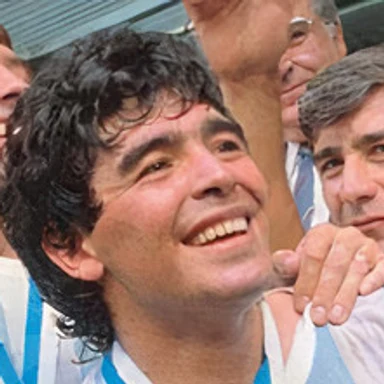 Photo: Unknown author. Source and license in Image credits.
Midfielder
Maradona showed how individual invention could expand a team’s possibilities, while his interrupted career left a complex sporting and cultural legacy.

Forward
Cruyff made the centre-forward position a starting point rather than a fixed address. His movement linked collective pressing, possession and positional exchange, ideas he later taught from the touchline.
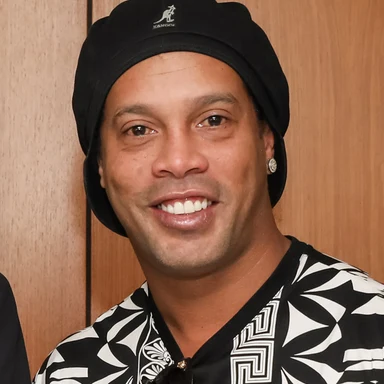 Photo: Marcos Corrêa/PR. Source and license in Image credits.
Forward
His Barcelona peak turned individual improvisation into a reliable source of chances. The later Libertadores win at Atlético Mineiro added a South American club chapter to an already international career.
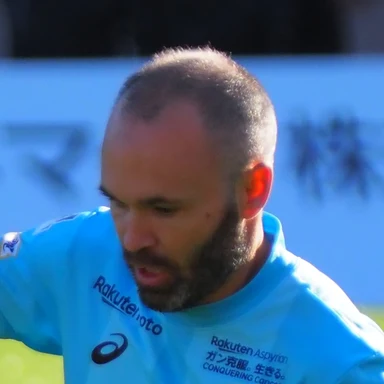 Photo: Tam Tam. Source and license in Image credits.
Midfielder
Iniesta gave possession a change of direction and pace. His pressure escapes, combinations and timely arrivals explain a legacy that reaches beyond the famous goals in London and Johannesburg.
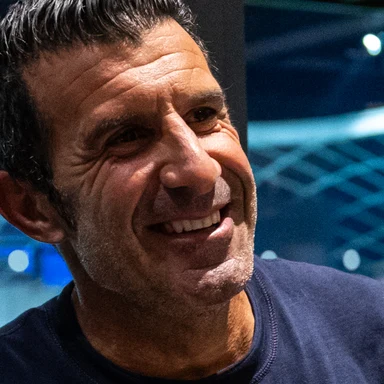 Photo: Žan Kolman. Source and license in Image credits.
Midfielder
A bridge between the touchline winger and the playmaker, with the patience to draw a defender and the technique to exploit the response.
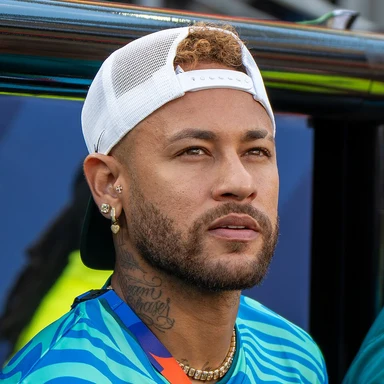 Photo: Bryan Berlin / WikiPortraits. Source and license in Image credits.
Forward
Neymar connects improvisation with collective attack: the Santos breakthrough, the complementary Barcelona forward and the Paris creator reveal different uses of the same technical imagination.
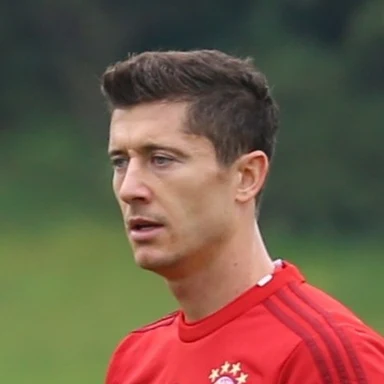 Photo: Rufus46. Source and license in Image credits.
Forward
A reference for the modern number nine: scoring precision supported by contact play, compact combinations and sustained adaptation.
Cruyff made the centre-forward position a starting point rather than a fixed address. His movement linked collective pressing, possession and positional exchange, ideas he later taught from the touchline.
Photo: Unknown author. Source and license in Image credits.Maradona showed how individual invention could expand a team’s possibilities, while his interrupted career left a complex sporting and cultural legacy.
Ronaldo linked explosive carrying with elite finishing. His Barcelona and Inter peak, 2002 World Cup return and more economical Madrid years reveal different versions of the same central threat.
Photo: Žan Kolman. Source and license in Image credits.A bridge between the touchline winger and the playmaker, with the patience to draw a defender and the technique to exploit the response.
Photo: Marcos Corrêa/PR. Source and license in Image credits.His Barcelona peak turned individual improvisation into a reliable source of chances. The later Libertadores win at Atlético Mineiro added a South American club chapter to an already international career.
Henry’s legacy connects Arsenal’s record scorer with Barcelona’s adaptable left-sided forward and France’s tournament winner. His invention and finishing coexist with difficult finals and a complicated international ending.
Puyol showed how covering, intervention timing and shared responsibility could support the attacking ambition of Barcelona and Spain.
A midfielder who made collective intelligence visible through the movement and decisions surrounding each pass.
Barcelona’s record scorer combined 672 goals with 305 club-credited assists across 778 appearances. His career runs from the right wing through the false-nine role to a freer playmaking position; Argentina’s 2022 World Cup triumph completed the defining chapter of his international career.
Photo: Tam Tam. Source and license in Image credits.Iniesta gave possession a change of direction and pace. His pressure escapes, combinations and timely arrivals explain a legacy that reaches beyond the famous goals in London and Johannesburg.

An emerging example of the centre-back as both a defender of space and an organiser of the next possession. His career remains open.
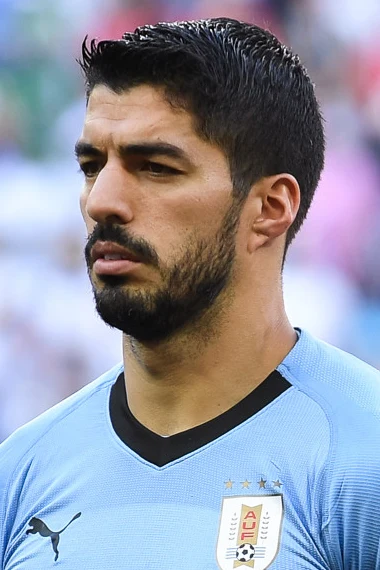 Photo: Какая то женщина / soccer.ru. Source and license in Image credits.
Uruguay’s record scorer, a Copa América champion and a central partner in Barcelona’s Messi–Suárez–Neymar attack.
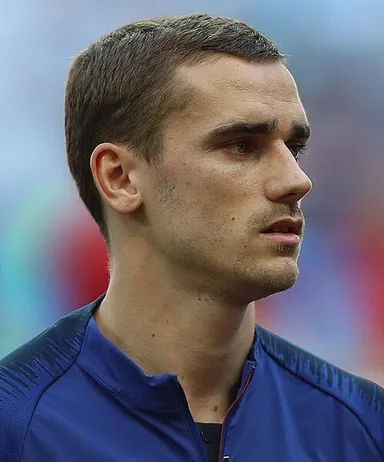 Photo: Антон Зайцев. Source and license in Image credits.
A link between Simeone’s compact Atlético and France’s tournament successes, with roles ranging from second striker to creative midfielder.
Photo: Bryan Berlin / WikiPortraits. Source and license in Image credits.Neymar connects improvisation with collective attack: the Santos breakthrough, the complementary Barcelona forward and the Paris creator reveal different uses of the same technical imagination.
Photo: Rufus46. Source and license in Image credits.A reference for the modern number nine: scoring precision supported by contact play, compact combinations and sustained adaptation.

Yamal’s career is still unfolding. His early tournament and club success offers a study of how a young winger can combine individual duels with collective creation, while his role and responsibilities continue to develop.
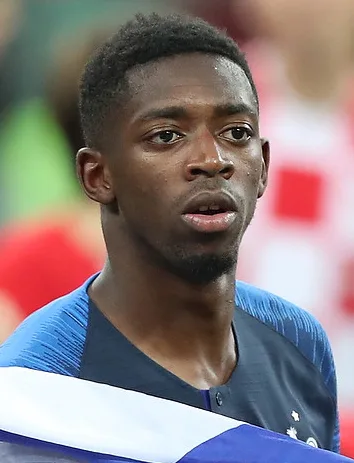
From Rennes and Dortmund to Barcelona and Paris, Dembélé’s active career connects unpredictable dribbling with a growing responsibility to create, finish and press for the team.

From Las Palmas to Barcelona and Spain, Pedri’s developing career shows how preparation, support and control can create opportunities for an entire team.
Coaching legacy
Club tenure only. Honours include senior first-team league, cup, super cup, continental and world titles where verified. European titles count European Cup / Champions League wins.

1971–1975 · 1976–1978
Linked collective movement and positional ideas to the 1973–74 league winners, later returning to win the 1978 cup.
1988–1996
The Dream Team won four consecutive leagues and the 1992 European Cup while making a football philosophy part of the club’s identity.
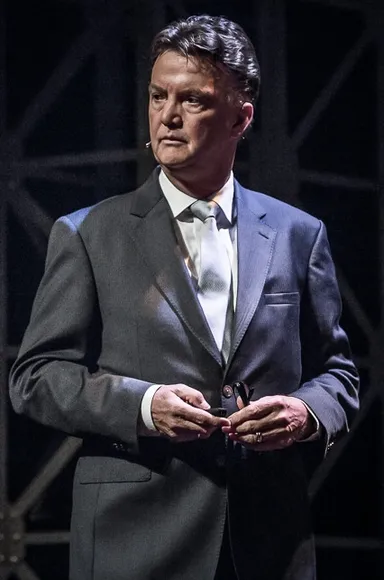 Photo: Congres in Beeld from Eindhoven, The Netherlands. Source and license in Image credits.
1997–2000 · 2002–2003
Won the 1998 league-and-cup double and retained the league in the club’s centenary year.
2003–2008
Restored confidence around Ronaldinho, won consecutive leagues and delivered the 2006 Champions League.

2008–2012
Coordinated pressing and midfield control brought fourteen first-team trophies in four seasons.
First team only; Barcelona B in 2007–2008 is excluded

2014–2017
The Messi–Suárez–Neymar attack won the 2015 treble, followed by another league title and three consecutive cups across his tenure.
First team only; Barcelona B in 2008–2011 is excluded

2024–present
Won the league in each of his first two seasons, with the second secured in May 2026.
Snapshot through 15 September 2026
Club identity
Cruyff’s positional game and Guardiola’s midfield structures made spacing, possession and collective pressing central reference points for later teams.
La Masia links sporting education to personal and academic development. Xavi, Iniesta and Messi made the academy-to-first-team connection visible at the highest level.
The crest combines Saint George’s cross and the Catalan flag with the club colours, connecting city, region and team.
Members form part of the club’s institutional identity, preserving a relationship between supporters and governance.
The UNICEF agreement signed in 2006 connected the first-team shirt to a wider commitment to children’s rights.
The Dream Team and Guardiola’s academy-centred midfield became reference points for coaches beyond Barcelona.
Identity
Stadium
Current home / Barcelona
Opened on 24 September 1957. Renovation moved home matches to Montjuïc from 2023; the first-team return took place on 22 November 2025. The original opening and the later reopening are separate milestones.
Rivalries
Repeated contests for Spanish and European honours connect two different institutional identities. Di Stéfano’s Madrid, Cruyff’s Barcelona and the Ronaldo–Messi years each gave the rivalry a new footballing form.
Barcelona’s Catalan identity and Madrid’s role in the capital give the fixture symbolism beyond results; neither club’s support can be reduced to a single political position.
Development
Founded · 1979
Opening of the original residence; youth football predates it.
A shared education in football, study and personal development supports the transition from youth teams to the first team.
Historical role
Xavi, Iniesta and Messi occupied all three places on the 2010 Ballon d’Or podium, giving the development model worldwide recognition.
Famous graduates
Collection
Kits
Home kit / 1991–92
Home kit / 2008–09
Home kit / 2014–15
Commercial
TECHNICAL SUPPLIER
Kit studies are abstract colour and pattern references, not reproductions of official shirts.
Records
League, Copa del Rey, Champions League, Spanish Super Cup, UEFA Super Cup and Club World Cup.
As of 2026-09-15Four seasons in charge; fourteen of nineteen available trophies.
As of 2026-09-15