
Athletic
- Change of direction
- Elite
- Balance in possession
- Elite
- Short acceleration
- Elite

Lionel Andrés Messi Cuccittini
Argentina’s World Cup-winning captain and Barcelona’s record scorer, a forward whose dribbling, passing and finishing repeatedly collapsed the distinction between creator and goalscorer.
Club-listed 5 ft 7 in / 148 lb, converted and rounded to the nearest centimetre / kilogram. Not a live measurement.
Inter Miami player profile ↗ · Checked 2026-09-10Senior club · all competitions
Completed club records only; not a complete career total.
Active club snapshots and records with another scope are excluded. Assist totals are not combined across incompatible definitions.
Stored archive snapshots, not live counters. Missing values are not zero; records with different scopes are never added together.
G/M = goals ÷ appearances. G+A = goals + assists. Per-90 metrics use documented minutes.
Senior international · all competitions
Snapshot · 10 Jun 2026
Stored archive snapshots, not live counters. Missing values are not zero; records with different scopes are never added together.
G/M = goals ÷ appearances. G+A = goals + assists. Per-90 metrics use documented minutes.
In context
Barcelona’s record scorer combined 672 goals with 305 club-credited assists across 778 appearances. His career runs from the right wing through the false-nine role to a freer playmaking position; Argentina’s 2022 World Cup triumph completed the defining chapter of his international career.
Reading the game
Lionel Messi matters because he changed the relationship between creating a chance and finishing it. Teams usually distribute those responsibilities: one player advances possession, another supplies the final pass, and a forward attacks the goal. Messi could take over each stage within the same move. A defender approaching him therefore faced several problems at once. Closing the route to goal could release a runner; protecting the passing lane could leave room for a carry.
His Barcelona career offers a way to study that problem across different systems. The young right winger attacked inward towards his stronger left foot. Guardiola's false nine moved the receiving point into midfield without removing the threat to the penalty area. Later, playing beside Luis Suárez and Neymar, or creating from deeper positions, he rearranged the balance between scorer and organiser again. These were changes in how teammates occupied space, not simply new position labels. Argentina's later tournament successes added another setting in which those abilities could work. Understanding Messi means following those relationships: with the ball, with the players around him and with opponents whose choices he repeatedly narrowed.
Historical references support the chronology; tactical explanations are museum editorial analysis.
Historical references: False nines and real nines ↗ · How Barcelona overcame Juventus in Berlin ↗ · Argentina retain the Copa América in 2024 ↗ · Leo Messi — FC Barcelona record ↗
Career
| Period | Club | Apps | Goals | Assists | G/M | G+A/M |
|---|---|---|---|---|---|---|
| 2004—2021 | FC BarcelonaSeventeen first-team seasons produced the club records for appearances, goals and trophies. Senior club · all competitions Captaincy · #30 / 19 / 10Performance record
| 778 | 672 | 305 | 0.86 | 1.26 |
| 2021—2023 | Paris Saint-GermainConsecutive Ligue 1 titles and the 2022 Trophée des Champions. The final 75-match total includes his farewell against Clermont. Senior club · all competitions Senior · #30Performance record
| 75 | 32 | 35 | 0.43 | 0.89 |
| 2023—Now | Inter Miami CFOfficial all-competitions snapshot at his 100th Inter Miami appearance. Senior club · all competitions Captaincy · #10Performance record
| 100 | 86 | 55 | 0.86 | 1.41 |
Stored archive snapshots, not live counters. Missing values are not zero; records with different scopes are never added together.
G/M = goals ÷ appearances. G+A = goals + assists. Per-90 metrics use documented minutes.
Honours
Argentina · world
Argentina · continental
FC Barcelona · continental
FC Barcelona · league
FC Barcelona · domestic cup
FC Barcelona · domestic cup
FC Barcelona · continental
FC Barcelona · world
Paris Saint-Germain · league
Paris Saint-Germain · domestic cup
Inter Miami CF · continental
Inter Miami CF · league
Inter Miami CF · league
Argentina · continental
European Sports Media · individual
France Football · individual
Story
Club chapter
Messi entered a Barcelona attack already shaped by Ronaldinho's invention and Samuel Eto'o's movement. Beginning on the right gave him a useful starting picture: the touchline on one side, the pitch opening towards his left foot on the other. Short touches allowed him to challenge a full-back without committing the ball beyond recovery. The threat was not only to beat that opponent, but to carry diagonally into the next defender's territory.
As his influence increased, the wing became a point of departure rather than a boundary. Guardiola's arrival accelerated the move towards an attack built around his decisions; the central deployment at the Bernabéu in May 2009 made that shift especially visible.
Historical references: Messi in the 2009 Bernabéu Clásico ↗ · Leo Messi — FC Barcelona record ↗
Explore club contextClub chapter
Moving Messi inside did not mean asking him to wait between the centre-backs. He could drop towards Xavi and Andrés Iniesta, creating another passing option beyond the opposition midfield. A centre-back following him risked opening a channel for a wide forward; staying in line could allow Messi to receive and turn. The problem depended on coordinated runs and Barcelona's ability to keep the ball moving, not on his position alone.
Once facing forward, he could combine, accelerate through a gap or arrive late to finish. The role joined midfield influence to penalty-area access. The 2011 Wembley final became a clear illustration of that combination, while the following season pushed its scoring possibilities further.
Historical references: UEFA Champions League technical report 2010/11 ↗ · Leo Messi — FC Barcelona record ↗ · Lionel Messi — official season ledger ↗
Explore club contextClub chapter
With Suárez occupying central defenders and Neymar threatening from the left, Messi could begin on the right without returning to the limitations of a conventional winger. He could find Suárez early, switch the attack towards Neymar or combine inside while a teammate supplied width. The 2014/15 side made his passing and the other forwards' movement mutually useful, especially when an attack accelerated before the defence could settle.
Later Barcelona versions asked more of him earlier in moves. Deeper receptions and diagonal passes helped connect possession to the penalty area. His eventual captaincy accompanied that growing responsibility. The distinction matters: increasing creative involvement expanded his influence, but also exposed how much an attack could depend on one player's solutions.
Historical references: How Barcelona overcame Juventus in Berlin ↗ · Lionel Messi: Champions League Forward of the Season ↗ · Leo Messi — FC Barcelona record ↗
Explore club contextCareer chapter
Argentina's Copa América victories in 2021 and 2024 framed the 2022 World Cup triumph. Across this late-career phase, Messi's influence was increasingly organised around when to engage. Receiving in front of or between defensive lines let him connect play without repeatedly racing beyond the last defender. A pause could attract pressure before a pass or a short acceleration changed the situation.
This was not simply the old Barcelona role transplanted into a national team. Teammates' running and support made selective involvement workable. The trophies changed a long-running international narrative, but the football explanation is collective: Argentina found ways to preserve his decisive actions within a functioning team, rather than requiring him to supply every action himself.
Historical references: World Cup 2022: physical demands of tactical roles ↗ · Argentina: ball proximity in possession ↗ · Argentina retain the Copa América in 2024 ↗ · Messi reaches 200 Argentina appearances and 120 goals — 10 June 2026 ↗
Profile
False nine
Also plays · Inverted winger / Advanced playmaker
Messi receives between lines, carries through compressed central spaces and can turn the same body position into a shot, combination or disguised final pass.
Close control
Chance creation
Finishing
Spatial interpretation
Illustrative role zones · not tracking data
Messi's short touches keep the ball available for another decision. He can slow a defender, shift his balance and accelerate before that defender has reset. The carry is therefore a sequence of adjustments rather than one long sprint. Starting from the right also gives a left-footed carrier routes towards goal and across the pitch; even a small inward movement can change the defender's angle of approach.
The useful information is often a defender's movement, not merely a teammate's location. When an opponent steps towards him, Messi can release the space that opponent has left. From the right half-space he can threaten a diagonal carry and a pass through the centre from similar body positions. Short combinations keep him involved after releasing the ball, while switches of play punish a defence that crowds his side.
His left foot supplies the main threat, but the finish is not a single repeated solution. Opening his body can suggest the far corner; delaying contact or changing the release can expose the near post. A chip answers a goalkeeper advancing to narrow the angle. Because a shot can follow immediately after a carry, defenders must close space without presenting the lane he wants to use.
Dropping away from a striker's starting position can make him harder to assign to one marker. He looks for receiving pockets rather than continually occupying the last line. Lower-intensity movement is part of that positioning, not proof of disengagement. Its effectiveness still depends on others stretching the pitch and defending transitions: selective movement creates a team-design problem as well as an individual advantage.
Right winger, roaming forward, false nine, right-sided creator and free attacking playmaker describe changing starting points. The underlying question stays consistent: where can he receive with several dangerous options? His later roles trade some repeated running for access to the ball and control over the next action.
Historical references: UEFA Champions League technical report 2010/11 ↗ · False nines and real nines ↗ · How Barcelona overcame Juventus in Berlin ↗ · World Cup 2022: physical demands of tactical roles ↗ · Argentina: ball proximity in possession ↗ · Leo Messi — FC Barcelona record ↗
Reading the game
| Era / team | Primary Role | Tactical Character |
|---|---|---|
| 2004–2009Barcelona | Right winger / roaming forward | Starts wide, isolates the full-back and carries diagonally; increasing freedom brings him towards central scoring positions. |
| 2009–2014Barcelona | False nine | Drops towards midfield to add a passing option, then combines or attacks the space behind a defender who follows. |
| 2014–2017Barcelona | Right-sided forward / creator | Connects with Suárez centrally and Neymar on the far side; right-sided creation supports both combinations and faster transitions. |
| 2017–2021Barcelona | Free attacking playmaker | Receives earlier in moves to connect progression with the final pass or shot, increasing both influence and creative responsibility. |
| 2021–2024Argentina | Free forward | Uses selective movement between the lines, with nearby support and runners allowing decisive passes and short accelerations. |
Historical references: Messi in the 2009 Bernabéu Clásico ↗ · UEFA Champions League technical report 2010/11 ↗ · How Barcelona overcame Juventus in Berlin ↗ · Lionel Messi: Champions League Forward of the Season ↗ · World Cup 2022: physical demands of tactical roles ↗ · Argentina: ball proximity in possession ↗ · Leo Messi — FC Barcelona record ↗
Reading the game
Many dribbles solve the first confrontation but leave the ball too far away for the next action. Messi's close control often preserves that next action. A short touch can become another change of direction, a pass or a shot. This helps explain why compressed space could amplify his advantage: the defender had less time to recover between those possibilities.
A defender reads shoulders, hips and the position of the ball to anticipate what happens next. Messi could make those clues ambiguous. The stance for an inward carry might also permit a reverse pass or a quick finish. The advantage was not mystery for its own sake; postponing the defender's commitment could create the brief window a teammate needed.
Passing did not necessarily conclude his involvement. After combining, he could reappear in the space opened by the exchange and become the finisher. That continuity distinguishes a scoring playmaker from a creator whose work ends at the final pass. The receiving player, the runner and the return ball all matter; this was individual ability expressed through combinations.
His roles changed without forcing a clean choice between goals and invention. A deeper Messi could still draw attention because defenders knew he might continue towards goal; a higher Messi could still organise the attack because dropping was always available. Teams could move his starting position while retaining that dilemma. The balance varied with teammates, age and the demands of the competition.
Historical references: UEFA Champions League technical report 2010/11 ↗ · False nines and real nines ↗ · How Barcelona overcame Juventus in Berlin ↗ · World Cup 2022: physical demands of tactical roles ↗ · Argentina: ball proximity in possession ↗
Reading the game
False nine
The 2010/11 version shows how an individual role can fit a collective structure. Messi could move towards midfield while Pedro and David Villa threatened beyond him, with Xavi and Iniesta sustaining the combinations. His freedom did not empty the forward line because teammates supplied depth. Wembley is a useful reference for studying those relationships, rather than treating freedom as the absence of positional organisation.
Central scorer / creator
In 2011/12, the same broad central role produced an exceptional concentration of goals. The important distinction is between leaving the penalty area and abandoning it: Messi could help construct a move and still become its destination. This version directs attention to repeat access to scoring positions, the timing of arrivals and the supply around him. A scoring peak need not be identical to a team's most balanced season.
Right-sided forward / creator
The 2014/15 side offered a different solution. Suárez gave the attack a central reference and Neymar a threat on the opposite side, allowing Messi to create from the right and then join the finish. He could help release other elite scorers instead of occupying every decisive position himself. This version is especially useful for understanding how passing range and transition play can complement, rather than replace, close combinations.
Free attacking playmaker
By 2018/19, Messi's contribution often joined earlier construction to the final action. Receiving deeper could help Barcelona advance, but it also required him to cover more stages of an attack. His Champions League scoring that season sits alongside the team's semi-final elimination, a reminder that individual decisiveness and collective resilience are different questions. This is a peak of responsibility as well as attacking execution.
Historical references: UEFA Champions League technical report 2010/11 ↗ · How Barcelona overcame Juventus in Berlin ↗ · Barcelona see off Juventus to claim fifth title ↗ · Lionel Messi: Champions League Forward of the Season ↗ · Lionel Messi — official season ledger ↗
Statistics
| Season | Club | Apps | Goals | G/M |
|---|---|---|---|---|
| 2025 | Inter Miami CF Senior club · all competitions Performance record
| 49 | 43 | 0.88 |
| 2024 | Inter Miami CF Senior club · all competitions Performance record
| 25 | 23 | 0.92 |
| 2023 | Inter Miami CF Senior club · all competitions Performance record
| 14 | 11 | 0.79 |
| 2022–23 | Paris Saint-Germain Senior club · all competitions Performance record
| 41 | 21 | 0.51 |
| 2021–22 | Paris Saint-Germain Senior club · all competitions Performance record
| 34 | 11 | 0.32 |
| 2020–21 | FC Barcelona Senior club · all competitions | 47 | 38 | 0.81 |
| 2019–20 | FC Barcelona Senior club · all competitions | 44 | 31 | 0.70 |
| 2018–19 | FC Barcelona Senior club · all competitions | 50 | 51 | 1.02 |
| 2017–18 | FC Barcelona Senior club · all competitions | 54 | 45 | 0.83 |
| 2016–17 | FC Barcelona Senior club · all competitions | 52 | 54 | 1.04 |
Stored archive snapshots, not live counters. Missing values are not zero; records with different scopes are never added together.
G/M = goals ÷ appearances. G+A = goals + assists. Per-90 metrics use documented minutes.
Completed senior club seasons through 2025; competitive first-team matches only. Barcelona’s 2008–09 record follows the club’s published 51 appearances. Assists retain each source’s definition and are not combined into a career total. The ongoing Miami spell and Argentina record are separate milestone snapshots, not live totals.
Club competitions
| Competition | Apps | Goals | G/M |
|---|---|---|---|
UEFA Champions League2004–2023Main competition only; qualifying rounds excluded. | 163 | 129 | 0.79 |
Stored archive snapshots, not live counters. Missing values are not zero; records with different scopes are never added together.
G/M = goals ÷ appearances. G+A = goals + assists. Per-90 metrics use documented minutes.
International
International career
AFA’s official 10 June 2026 snapshot records 200 senior appearances and 120 goals; the archive does not silently extrapolate beyond that dated source.
Reading the game
Messi's legacy is partly a change in what an attacking player could be expected to supply. His career made it harder to separate the principal scorer from the principal creator when describing a team's best attacker. That does not establish a universal template: few players can carry the same combination of responsibilities, and a side still needs width, depth and protection when possession is lost. His example is most useful when it prompts questions about how exceptional skills interact with a collective structure.
The Guardiola-era false nine remains an especially clear tactical image, although Messi did not invent the idea of a forward withdrawing into midfield. Barcelona repeatedly adjusted the setting around him, and he became inseparable from the football identity of that period without being its only author. Argentina's later success broadened the picture beyond one club system and changed the meaning attached to earlier international disappointments. Neither trophies alone nor isolated technical clips explain that history. The lasting subject is how his control, timing and range of choices changed the decisions available to everyone else on the pitch.
Historical references: False nines and real nines ↗ · Argentina retain the Copa América in 2024 ↗ · Leo Messi — FC Barcelona record ↗
Archive
False Nine · editorial peak 2009—2019
Frank Rijkaard · Pep Guardiola · Luis Enrique · Lionel Scaloni
Thierry Henry— Overlapping FC Barcelona era · Carles Puyol— Overlapping FC Barcelona era · Xavi— Overlapping FC Barcelona era · Ronaldinho— Overlapping FC Barcelona era
Ronaldinho and renewal — FC Barcelona · Guardiola’s positional game — FC Barcelona · A second treble — FC Barcelona · League champions and a changing attack — Paris Saint-Germain

Positional football architect
2007—2026 · Barcelona · Bayern Munich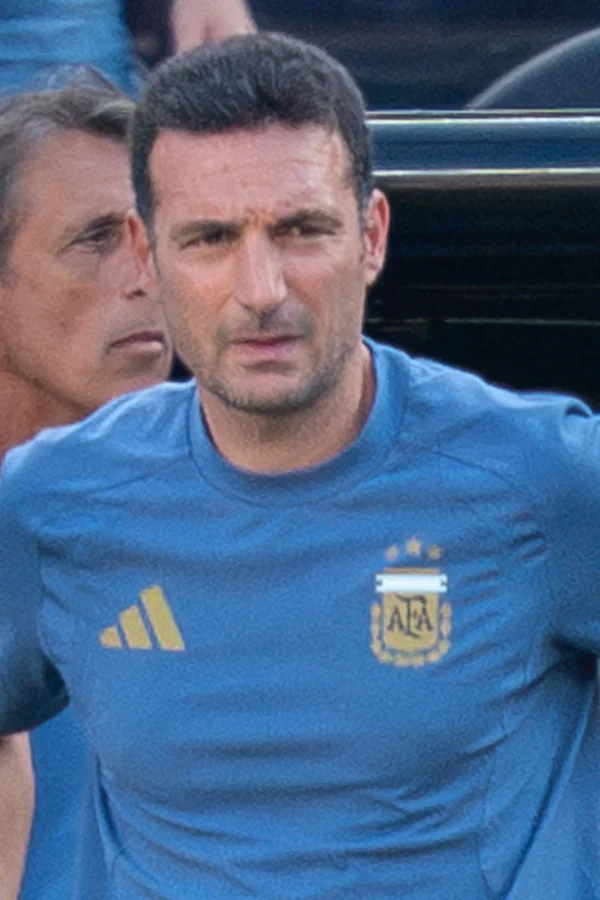 Photo: Bryan Berlin. Source and license in Image credits.
Argentina’s adaptable world champion
2016—Present · Argentina
Collective intensity and attacking freedom
2008—Present · Barcelona · Paris Saint-Germain
Collective pressing, player development and adaptable attacking structures
2009—Present · Tottenham Hotspur · Paris Saint-Germain
AS Monaco · Juventus · Arsenal
1994—2014
Barcelona
1999—2014
Barcelona · Al Sadd
1998—2019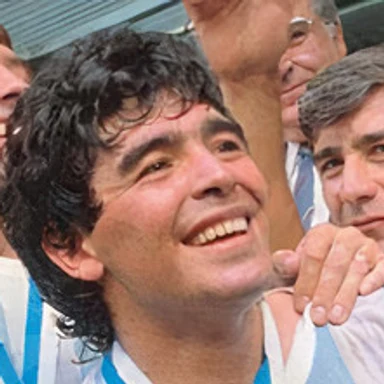 Photo: Unknown author. Source and license in Image credits.
Argentinos Juniors · Boca Juniors · Barcelona
1976—1997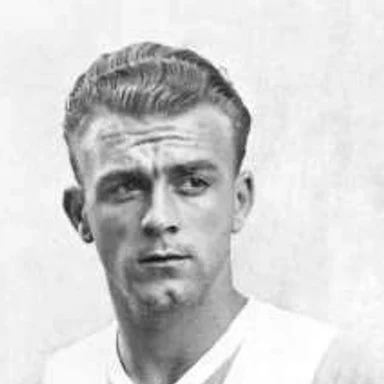 Photo: Unknown author. Source and license in Image credits.
River Plate · Huracán · Millonarios
1945—1966
Racing Club · Inter Milan
2015—Present
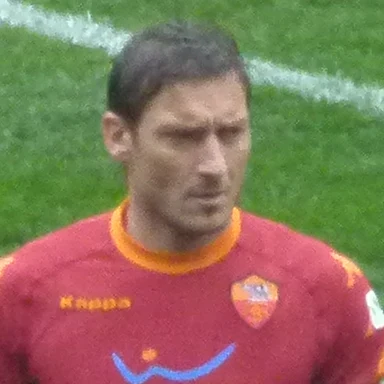 Photo: Totti_2011.jpg : Tontotti derivative work: TFCforever ( talk ). Source and license in Image credits.
AS Roma
1993—2017Statistics are displayed only within the scope supported by each cited source.
FC BarcelonaMessi in the 2009 Bernabéu ClásicoUEFAUEFA Champions League technical report 2010/11UEFAFalse nines and real ninesUEFAHow Barcelona overcame Juventus in BerlinUEFABarcelona see off Juventus to claim fifth titleUEFALionel Messi: Champions League Forward of the SeasonFIFA Training CentreWorld Cup 2022: physical demands of tactical rolesFIFA Training CentreArgentina: ball proximity in possessionCONMEBOLArgentina retain the Copa América in 2024UEFALionel Messi — UEFA Champions League statistical recordFC BarcelonaLeo Messi — FC Barcelona recordParis Saint-GermainThanks Leo — Paris Saint-Germain recordInter Miami CFLeo Messi reaches 100 Inter Miami appearancesArgentine Football AssociationMessi reaches 200 Argentina appearances and 120 goals — 10 June 2026FC Barcelona Players AssociationLionel Messi — official season ledgerFC BarcelonaMessi, three-time winner of the Pichichi Trophy and Golden Shoe AwardSporting NewsLionel Messi — completed 2021/22 and 2022/23 PSG statisticsInter Miami CFLionel Messi named Inter Miami CF 2023 MVPInter Miami CFTop five moments of Messi’s 2024 MVP seasonInter Miami CFRoad to Glory — 2025 season in reviewInter Miami CFLionel Messi wins eighth Ballon d’Or