Johan Cruyff ↗
Barcelona head coach
Documented history
Guardiola played in Cruyff’s Dream Team before returning to Barcelona as a coach.

Positional football architect
A coach whose teams use positional structure, patient circulation and aggressive counter-pressing to control territory as well as possession. Stepped down at Manchester City in 2026 and became a City Football Group global ambassador; this is not recorded as permanent retirement.
Premier League · 2017/18
Manchester City · one completed league season only; not a full managerial career total.
PPG uses three points for a win and one for a draw in league matches.
Stored archive snapshots, not live counters. Missing values are not zero; records with different scopes are never added together.
Win rate = wins ÷ matches. Points per game requires an explicit scoring convention; cup records are not silently treated as league points.
Career origins
Guardiola came through Barcelona’s youth teams and became a midfielder in Johan Cruyff’s Dream Team. He returned to the club as Barça B coach in 2007, before taking charge of the first team in 2008.
Barcelona head coach
Guardiola played in Cruyff’s Dream Team before returning to Barcelona as a coach.
Midfielder
Played in the Dream Team after progressing through the club’s youth system.
Head coach
Led the B team to promotion before receiving the first-team appointment.
Head coach
Succeeded Frank Rijkaard and began his first senior season.
Barcelona won La Liga, the Copa del Rey and the Champions League in 2008/09.
The continuity between academy, midfield and dugout helps frame his later emphasis on spacing and passing options. The influence of Cruyff is central, but Guardiola’s subsequent teams should not be treated as copies of one fixed model.
Tactics
Coaching identity
Use the ball and the arrangement around it to control where the game is played. Guardiola changes roles and structures, but repeatedly seeks a free receiver, pressure after a loss and protection behind the attack.
Usually compresses the pitch high up.
Immediate pressure after losing possession.
Uses the ball to control space and rhythm.
Width often held by wingers or advanced full-backs.
Progression is structured rather than hurried.
Tactical analysis
The spare player is a route through pressure, not an end in itself. The goalkeeper can help outnumber the first pressing line; a midfielder or defender can then carry the advantage into the next line.
A wide player stretches the defence and a forward threatens behind it. Those positions can create room for an interior receiver. Moving everyone toward the ball would remove the very space the combination needs.
An attack is incomplete if a turnover leaves the centre unprotected. Players behind and around the ball need distances that support an immediate challenge or an organised retreat.
Short construction draws opponents forward. The goalkeeper’s longer pass must remain an option when the first line cannot be played through safely.
Receivers at different heights and angles give the ball-carrier more than a straight pass. An interior can connect the pivot, winger and forward without standing beside them.
A marked teammate can set the ball to a free runner. The first pass attracts attention; the next connection exploits the space that attention leaves.
The nearest player challenges the receiver while teammates close the useful exits. A lone sprint without supporting positions is not a collective counter-press.
At Bayern, central movements from full-back helped overload midfield while wingers held the outside. The role is a solution to spacing, not an obligation for every lineup.
Haaland gave the 2023 team a central target and depth runner. Positional play could coexist with an early forward pass instead of demanding a long sequence every time.
Illustrative sequence, not a measured event model.
Use the spare player in build-up, but keep the longer exit available.
Hold width, circulate patiently and find a receiver between defensive lines.
Use secure possession without removing the depth that keeps opponents back.
Recover central protection rather than continuing an unsupported chase.
Interpretation is editorial, not an official rating or a direct quotation. Match results, team statistics and formations retain their documented sources.
Tactical analysis
Signature systems, tactical evolution and defining teams are read together. A starting formation does not describe every phase of play.
The 2011 side connected Busquets, Xavi and Iniesta with Messi dropping toward midfield. Wide forwards supplied depth around that movement rather than simply joining him near the ball.
The false nine altered the relationship between midfield and the front line. Its value depended on the runs and spacing of the surrounding players, not just Messi’s nominal position.
2010/11 Champions League winner
Bayern added central full-back movements to a squad with powerful wide attackers. Lahm could influence midfield while the wingers attacked individual defenders on the outside.
The Bundesliga dominance did not produce a European title: three consecutive Champions League semi-final exits make this a period of both innovation and competitive limits.
Three Bundesliga titles in three seasons
Bayern Munich · 2013/14–2015/16
The league campaign provided a sustained test of attacking occupation and repeated pressure. Its numbers describe one completed season, not a subjective rating of the coach.
One hundred points required weekly repeatability, not only a handful of showcase performances. The league record complements the tactical account without pretending to measure every coaching contribution.
2017/18 Premier League champions
Premier League · 2017/18 · team statistics
In possession, Stones stepped out beside Rodri, leaving three defenders behind a midfield pair. Haaland occupied the highest line while the attacking midfielders and wingers connected the spaces behind him.
UEFA’s final analysis records a less fluent game against Inter. The treble also required adaptation when the usual passing routes were blocked; control was not identical to effortless circulation.
2022/23 Premier League, FA Cup and Champions League treble
Barcelona3–1Manchester United
Final
Pedro, Messi and Villa scored at Wembley. The match is a reference for how midfield support and forward movement can turn possession into repeated dangerous attacks.
Bayern Munich0–4Real Madrid
Semi-final · second leg · Real Madrid advanced 5–0 on aggregate.
Ramos’s early headers and Madrid’s subsequent attacks exposed Bayern’s inability to control the tie. The lesson includes set-piece defending and responses to a changed score, not simply the amount of possession.
Manchester City1–0Inter Milan
Final
Rodri supplied the winning goal in a tight final. Inter disrupted City’s construction, making resilience and adjustments as important as the team’s familiar combinations.
Interpretation is editorial, not an official rating or a direct quotation. Match results, team statistics and formations retain their documented sources.
Profile
Cancelo describes daily technical and tactical learning under a demanding coach. This supports a picture of leadership through precise feedback and repeated rehearsal. The interpretation is not that every player responds identically: learning new roles takes time and a sustainable workload.
Tactical analysis
Barcelona’s 2011 final remains a reference for the relationship between a dropping forward and a technically fluent midfield. Its influence should not erase the exceptional players who made it work.
From full-backs entering midfield to Stones advancing from defence, the important change was functional: a player’s defensive starting position no longer defined his attacking job.
The 2018 league record and the 2023 European final illustrate different tests. One demanded sustained dominance; the other required a solution in a difficult single match.
Editorial comparison of recurring tendencies, not a ranking. Both coaches adapt; neither has used one unchanging approach across every team and era.
| Dimension | Pep Guardiola | José Mourinho ↗ |
|---|---|---|
| Core philosophy | Create control through positioning and possession | Choose the plan that best solves the match problem |
| Defensive control | Prepare recovery pressure around the attacking structure | Protect central space and coordinate the defensive block |
| Transitions | Recover quickly or restore protection after a loss | Exploit the opponent’s disorder after a regain |
| Opponent adaptation | Adjust roles and routes within positional principles | Prominent opponent-specific changes to shape and risk |
Interpretation is editorial, not an official rating or a direct quotation. Match results, team statistics and formations retain their documented sources.
Career
| Period | Organisation | Role |
|---|---|---|
| 2007—2008 | Head coach | |
| 2008—2012 | Manager | |
| 2013—2016 | Head coach | |
| 2016—2026 | Manchester CityAnnounced departure after ten seasons. | Manager |
Stored archive snapshots, not live counters. Missing values are not zero; records with different scopes are never added together.
Win rate = wins ÷ matches. Points per game requires an explicit scoring convention; cup records are not silently treated as league points.
Honours
Senior first-team club honours through 2025/26, including domestic super cups. Barcelona B, individual awards and friendly tournaments are excluded.
Barcelona
Barcelona
Barcelona
Managerial record
Managerial record
Managerial record
Bayern Munich
Bayern Munich
Manchester City
Manchester City
Manchester City
Manchester City
Senior first-team club honours through 2025/26, including domestic super cups. Barcelona B, individual awards and friendly tournaments are excluded.
Stored archive snapshots, not live counters. Missing values are not zero; records with different scopes are never added together.
G/M = goals ÷ appearances. G+A = goals + assists. Per-90 metrics use documented minutes.
Archive

AS Monaco · Juventus · Arsenal
1994—2014Part of Guardiola’s first Barcelona treble-winning side.

FC Barcelona · Paris Saint-Germain · Inter Miami CF
2004—PresentBuilt Barcelona’s false-nine structure around Messi’s movement, creation and finishing.

Barcelona · Al Sadd
1998—2019Organised the passing rhythm of Guardiola’s Barcelona midfield.
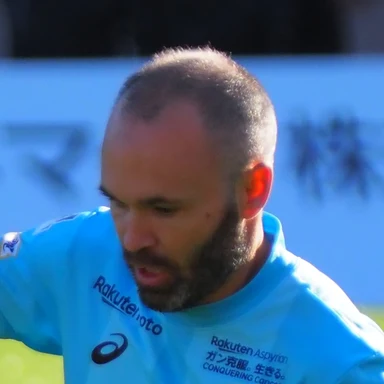 Photo: Tam Tam. Source and license in Image credits.
FC Barcelona · Vissel Kobe · Emirates Club
2002—2024Connected midfield possession to progression between the lines at Barcelona.
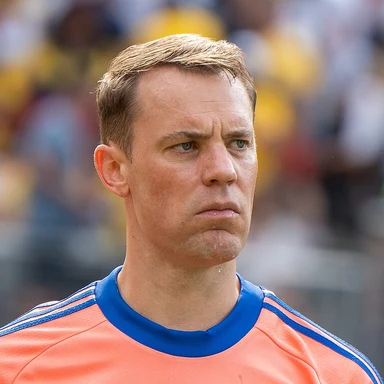 Photo: Bryan Berlin / WikiPortraits. Source and license in Image credits.
Schalke 04 · Bayern Munich
2006—PresentWorked together as player and head coach; see the overlapping club or national-team career entries.
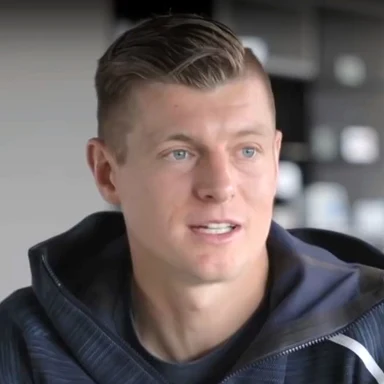 Photo: Real Madrid (YouTube channel). Source and license in Image credits.
Bayern Munich · Bayer Leverkusen · Real Madrid
2007—2024Worked together as player and head coach; see the overlapping club or national-team career entries.
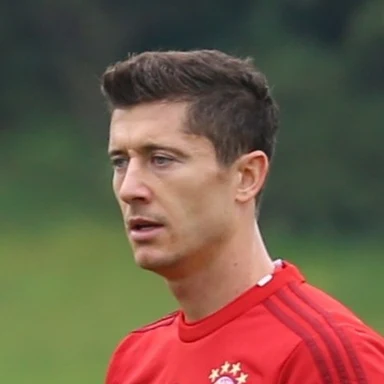 Photo: Rufus46. Source and license in Image credits.
Delta Warsaw · Legia Warsaw II · Znicz Pruszków
2005—PresentWorked together as player and head coach; see the overlapping club or national-team career entries.
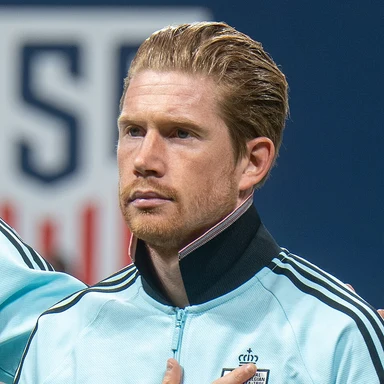 Photo: Bryan Berlin. Source and license in Image credits.
KRC Genk · Chelsea · Werder Bremen
2008—PresentWorked together as player and head coach; see the overlapping club or national-team career entries.
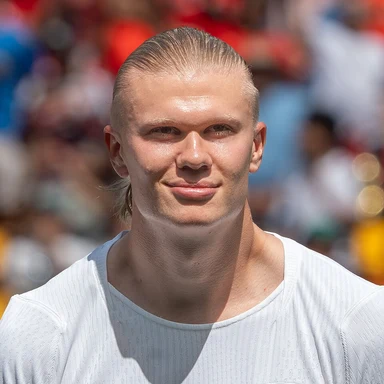 Photo: Bryan Berlin. Source and license in Image credits.
Bryne · Molde · Red Bull Salzburg
2016—PresentWorked together as player and head coach; see the overlapping club or national-team career entries.
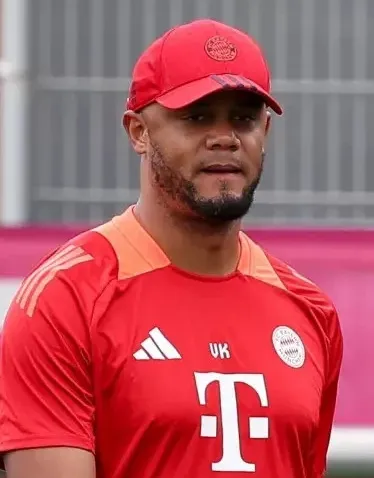 Photo: ManuluxWiki. Source and license in Image credits.
Anderlecht · Hamburger SV · Manchester City
2003—2020The club captain in Guardiola’s first two City league titles, scoring the decisive Leicester winner in 2019.
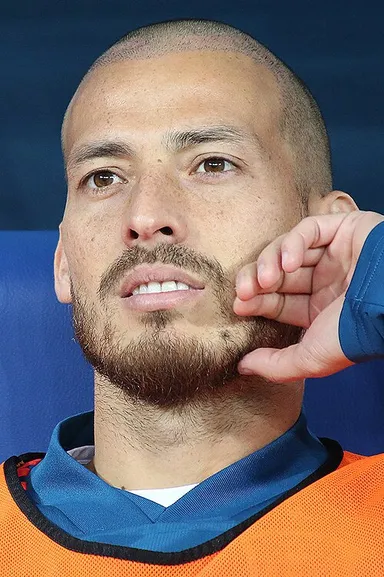 Photo: Кирилл Венедиктов. Source and license in Image credits.
Eibar · Celta Vigo · Valencia
2004—2023The left-sided midfield creator in Guardiola’s 100-point champions and 2018/19 domestic treble.
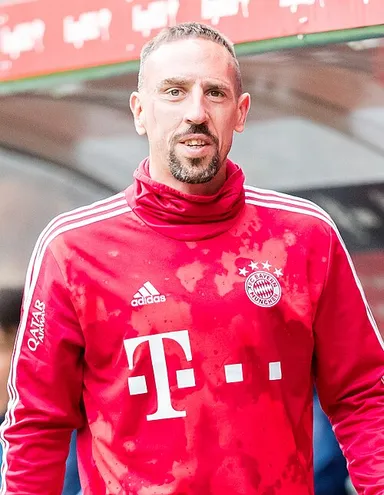 Photo: Sven Mandel. Source and license in Image credits.
US Boulogne · Olympique Alès · Stade Brestois
2000—2022The left-sided dribbler and connector across Guardiola’s three Bayern seasons.
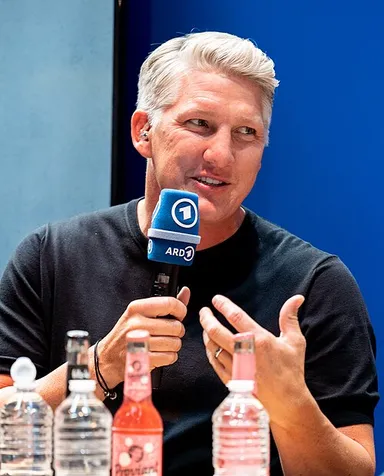 Photo: Anne Barth / re:publica. Source and license in Image credits.
Bayern Munich · Manchester United · Chicago Fire
2002—2019A central midfield reference during Guardiola’s first two Bayern league-winning seasons, before leaving in 2015.
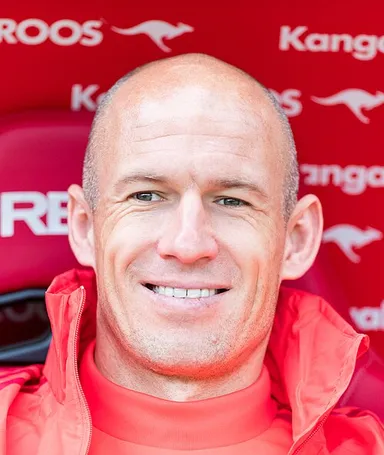 Photo: Sven Mandel. Source and license in Image credits.
FC Groningen · PSV Eindhoven · Chelsea
2000—2021Robben’s right-sided scoring threat remained central to Guardiola’s three Bundesliga-winning Bayern seasons.
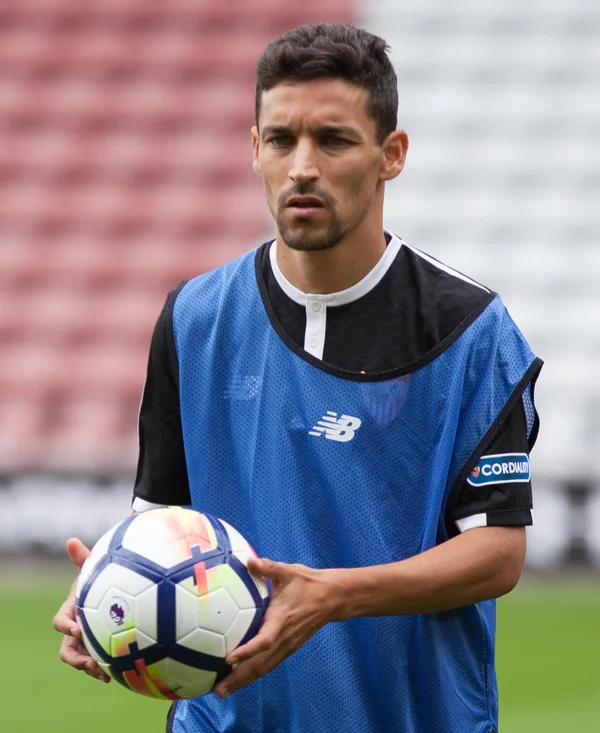 Photo: Steve Hogg / Solent Creatives. Source and license in Image credits.
Sevilla · Manchester City
2003—2024Guardiola also used Navas at right-back during their 2016/17 Manchester City season.
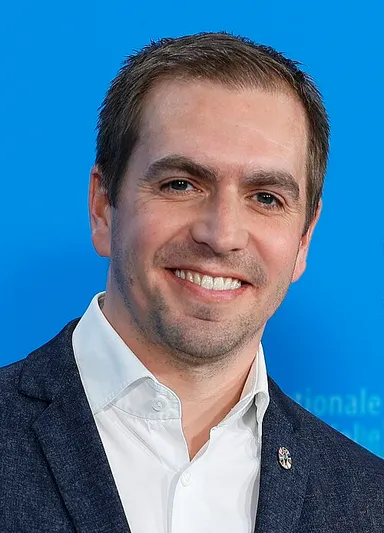 Photo: Elena Ternovaja. Source and license in Image credits.
Bayern Munich · VfB Stuttgart
2002—2017Lahm’s positional intelligence linked the flank and central midfield in Guardiola’s Bayern.

Adaptive tournament manager
1992—Present · AC Milan · Real Madrid
Balanced high-tempo organiser
1979—2018 · Bayern Munich · Real Madrid
Positional football visionary
1985—2013 ·
Collective intensity and attacking freedom
2008—Present · Barcelona · Paris Saint-GermainCareer and honour facts cite their underlying sources, including clubs and governing bodies. Tactical readings are identified as editorial analysis.
Manchester CityPep Guardiola — a transformative managerAccessed 2026-09-01Manchester CityGuardiola to step down after incredible decadeAccessed 2026-09-01FC Bayern MünchenFC Bayern coach historyAccessed 2026-09-01Premier LeagueManchester City — completed 2017/18 Premier League recordAccessed 2026-09-14UEFABayern 0–4 Real Madrid — 2014 semi-finalAccessed 2026-09-14Coaches’ VoicePep Guardiola — positional play and tactical developmentAccessed 2026-09-14UEFABarcelona 3–1 Manchester United — 2011 finalAccessed 2026-09-14FC BayernBayern under Guardiola and AncelottiAccessed 2026-09-14Manchester CityManchester City’s 2017/18 recordsAccessed 2026-09-14UEFAManchester City 1–0 Inter — UEFA technical analysisAccessed 2026-09-14Manchester CityJoão Cancelo on learning under GuardiolaAccessed 2026-09-14FC BarcelonaJosep Guardiola — Barcelona 2008–2012Accessed 2026-09-14FC BarcelonaJosep Guardiola — player and coaching originsAccessed 2026-09-14Manchester CityGuardiola departure announcement, 2026Accessed 2026-09-14