
Defining football actions
- Finishing
- Generational
- Depth runs
- Elite
- Physical presence
- Elite
- Tight-space creation
- Moderate
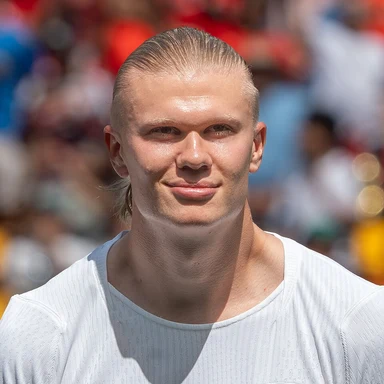 Photo: Bryan Berlin. Source and license in Image credits.
Erling Braut Haaland
A centre-forward who stretches the last line and converts service with powerful, economical movements.
Senior club · all competitions
Completed club records only; not a complete career total.
Active club snapshots and records with another scope are excluded. Assist totals are not combined across incompatible definitions.
Stored archive snapshots, not live counters. Missing values are not zero; records with different scopes are never added together.
G/M = goals ÷ appearances. G+A = goals + assists. Per-90 metrics use documented minutes.
Senior international · all competitions
Through 11 July 2026
Stored archive snapshots, not live counters. Missing values are not zero; records with different scopes are never added together.
G/M = goals ÷ appearances. G+A = goals + assists. Per-90 metrics use documented minutes.
In context
Haaland gives possession teams an immediate depth threat. His first City season demonstrated how a specialist box scorer could change the final action of an established attacking system.
Reading the game
Erling Haaland matters because he makes space behind a defence valuable before the ball reaches it. His starting position, acceleration and repeated runs force centre-backs to consider retreating even when their team wants to press. That tension gives a possession side a direct route to goal and can leave more room for the creators underneath him. The finishing is the visible conclusion of work that often takes place outside the camera's immediate focus.
His rise through Salzburg and Dortmund established an unusually forceful runner; the move to Manchester City tested that threat against opponents defending much closer to their own goal. He had to remain available through long spells of circulation, then act inside a brief opening. City's 2023 treble showed that a specialist centre-forward could coexist with intricate positional play. It also sharpened a useful question about evaluating strikers: how much influence is carried by a run that receives no pass? Haaland does not need to organise every attack to change its possibilities. Understanding him means connecting the quality of the service to the movement that makes the service worth attempting.
Historical references support the chronology; tactical explanations are museum editorial analysis.
Historical references: Haaland’s development and transfer to City ↗ · City v Dortmund, 2022: rotations and the winning finish ↗ · City v Leipzig, 2023: movement, pressure and rebounds ↗
Career
| Period | Club |
|---|---|
| 2016—2017 | BryneFirst senior first-team spell. |
| 2017—2019 | MoldeNorwegian top-flight development. |
| 2019—2020 | Red Bull SalzburgEuropean scoring breakthrough. |
| 2020—2022 | Borussia DortmundGerman Cup-winning chapter. Senior club · all competitions Performance record
|
| 2022—Now | Manchester CityManchester City totals cover the four completed seasons from 2022/23 through 2025/26; the ongoing 2026/27 season is excluded. Senior club · all competitions Senior · #9Performance record
|
Stored archive snapshots, not live counters. Missing values are not zero; records with different scopes are never added together.
G/M = goals ÷ appearances. G+A = goals + assists. Per-90 metrics use documented minutes.
Honours
Manchester City · continental
Manchester City · league
Borussia Dortmund · domestic cup
Manchester City · domestic cup
Manchester City · domestic cup
Manchester City · domestic cup
Manchester City · continental
Manchester City · world
Premier League · individual
Story
Career chapter
Bryne and Molde gave Haaland a senior education before the European spotlight arrived. His physical threat developed alongside the practical work of a striker: recognising when a defender had turned towards the ball, choosing a channel and arriving with a finish available. The moves between clubs changed the speed and quality of the service around him.
At Salzburg, the Champions League breakthrough in autumn 2019 made those habits visible against a wider range of opponents. The hat-trick on his competition debut against Genk was a striking introduction, but the broader lesson was repeatability. Well-timed movement could create another opportunity after the previous one had gone. Dortmund then offered the next test in a stronger domestic league.
Historical references: Haaland’s development and transfer to City ↗ · Dortmund’s signing of Haaland ↗ · Erling Haaland — biographical and career reference ↗
Club chapter
Dortmund placed Haaland ahead of creative players who could release the ball quickly. His runs into the channels stretched the centre-backs, while short exchanges allowed him to start outside the box and finish inside it. The important relationship was between the runner's timing and the passer's next touch: speed alone could not rescue a run made before the ball was ready.
The 2021 German Cup final, in which he scored twice against Leipzig, brought that direct threat into a decisive match. This period also included injury interruptions, especially in his final season. The subsequent move to City therefore carried both a proven scoring method and a new question about how it would function with less open grass ahead.
Historical references: Haaland’s development and transfer to City ↗ · Haaland’s scoring movement at Dortmund ↗ · Erling Haaland — biographical and career reference ↗
Explore club contextClub chapter
City's first season with Haaland required coordination between a forward looking beyond the defence and teammates accustomed to controlling the ball in front of it. Staying high could occupy both central defenders while the wingers held the touchlines. An early pass remained available, but patience around the box also became part of his job.
The spring version, with John Stones moving into midfield alongside Rodri, gave that arrangement a more secure platform. Against Leipzig at home, Haaland combined lay-offs, pressure on the goalkeeper and reactions to rebounds. His contribution to the treble therefore involved several phases of an attack, even when the final touch remained the most memorable one.
Historical references: City v Dortmund, 2022: rotations and the winning finish ↗ · City v Leipzig, 2023: movement, pressure and rebounds ↗ · Erling Haaland — biographical and career reference ↗
Explore club contextCareer chapter
After the treble, the task became sustaining an advantage against increasingly familiar opponents. City’s 2023/24 title campaign included a foot-injury absence, while the following season exposed how much a centre-forward depends on the team's ability to bring the ball into useful areas. The answer was not simply to make more runs: their timing had to fit the available passing lanes.
A further league Golden Boot in 2025/26 showed sustained output across different campaigns. Norway's run to the 2026 World Cup quarter-finals added a distinct international chapter. Those developments extend the record without closing the argument about his peak; an active player's career continues to acquire new tactical and competitive contexts.
Historical references: Haaland’s 2023/24 season and the Luton partnership ↗ · City’s 2024/25 forwards: season review ↗ · City’s 2025/26 forwards: season review ↗ · Norway senior team: results and international records ↗
Profile
Centre-forward
Also plays · Poacher / Depth runner
Moved away from a marker before sprinting into the blind side, then finished with few touches. His reach makes low crosses and imperfect passes usable.
Finishing
Depth runs
Acceleration
Physical presence
Illustrative role zones · not tracking data
Haaland often begins near a defender's shoulder, where watching both him and the passer is difficult. A curved approach can keep him onside while preparing a straight acceleration towards goal. The run becomes dangerous when it matches the passer's ability to release the ball. Against a deeper defence, the same calculation happens over a few metres rather than a long sprint.
He can move away from the ball before attacking its likely destination. That first movement gives the marker a decision to make; the second tries to arrive while the defender is still adjusting. Low crosses, cut-backs and rebounds require different routes. The common feature is a last change of position that creates room for a shot without demanding a dribble past the opponent.
His left foot supplies power and placement with a short sequence between receiving and striking. The first touch can direct the ball into his stride; a first-time finish removes that extra touch altogether. His reach also permits contact when the service is behind him or high off the ground. These adaptations expand the range of usable chances, although an awkward contact still carries a cost in control.
When a direct pass arrives, he can use his body to keep the centre-back away and return the ball to a supporting midfielder. The useful action is often a simple lay-off followed by movement towards goal. Holding off a challenge does not automatically create a passing lane, however. Support distance and the quality of his first contact determine whether the team can keep advancing.
His size and acceleration can hurry a goalkeeper or close a centre-back, but pressing works through the route he blocks as well as the player he approaches. A teammate must cover the next outlet. The Leipzig away leg in 2023 showed that a front press could still leave a spare midfielder. His defensive contribution should therefore be read with the distances and coverage around him.
Historical references: Haaland’s scoring movement at Dortmund ↗ · City v Dortmund, 2022: rotations and the winning finish ↗ · City v Leipzig, 2023: movement, pressure and rebounds ↗ · Leipzig v City, 2023: the limits of the front press ↗ · Haaland’s 2023/24 season and the Luton partnership ↗
Reading the game
| Era / team | Primary Role | Tactical Character |
|---|---|---|
| 2016–2019Bryne / Molde | Developing central striker | Learns to time channel runs and prepare the finish as the speed of senior football increases. |
| 2019–2020Red Bull Salzburg | Direct runner on the European stage | Attacks space quickly and repeats runs as the team turns regained possession towards goal. |
| 2020–2022Borussia Dortmund | Transition striker | Combines channel runs with short exchanges ahead of creative midfielders and wide players. |
| 2022–2023Manchester City | Positional-play centre-forward | Holds the last line, attacks deliveries and offers direct play within a possession structure. |
| 2023–2026Manchester City / Norway | Established scoring reference | Adjusts movement to different service and defensive density; club and international contexts remain distinct. |
Historical references: Haaland’s development and transfer to City ↗ · Dortmund’s signing of Haaland ↗ · Haaland’s scoring movement at Dortmund ↗ · City v Dortmund, 2022: rotations and the winning finish ↗ · City v Leipzig, 2023: movement, pressure and rebounds ↗ · Haaland’s 2023/24 season and the Luton partnership ↗ · City’s 2024/25 forwards: season review ↗ · City’s 2025/26 forwards: season review ↗ · Norway senior team: results and international records ↗
Reading the game
A large stride covers ground quickly, but it is only useful to a striker if the ball remains reachable at the end of it. Haaland can organise his approach so the final step becomes part of the finish. The combination of reach and timing makes a pass look easier than it was, particularly when he arrives between a defender and the goalkeeper.
A centre-back who follows his run may lose contact with the midfield; one who steps forward risks leaving space behind. Haaland can keep that dilemma alive through repeated positioning on the last line. The benefit belongs partly to teammates receiving elsewhere. This is why a low touch count can coexist with influence, while still requiring the team to exploit the space created.
A saved shot or blocked header is another movement cue. Haaland can adjust his feet and redirect his body while defenders are reacting to the first effort. The value is not a vague appetite for goals: it is arriving with a usable striking surface and enough balance to finish the loose ball. His Leipzig performance offers several concrete examples of that reset.
He can threaten in open space, contest a direct delivery or wait for a short opening inside a crowded box. These are different demands on one position. His adaptation at City shows that specialising in goals need not mean relying on a single type of chance. The limitation is equally clear: if progression and service fail, he is less equipped to rebuild the attack from deep.
Historical references: Haaland’s scoring movement at Dortmund ↗ · City v Dortmund, 2022: rotations and the winning finish ↗ · City v Leipzig, 2023: movement, pressure and rebounds ↗ · Leipzig v City, 2023: the limits of the front press ↗ · Haaland’s 2023/24 season and the Luton partnership ↗ · City’s 2024/25 forwards: season review ↗
Reading the game
Transition striker
The 2020/21 Dortmund version brought depth runs together with rapid combinations around the box. Winning the German Cup and leading the Champions League scoring list were the competitive markers. The tactical distinction was access to space before the defence fully reset: Haaland could receive while moving, keep a defender behind his body and reach the shot quickly. It was a peak of direct attacking force rather than constant involvement in midfield circulation.
Positional-play centre-forward
In the treble season, his high central position supplied a destination for City's patient circulation and a threat when they chose to play early. The team could rotate around him without leaving the penalty area empty. The Leipzig second leg showed how he could link a move and then finish its rebound. The collective peak depended on a secure structure behind the attackers as well as the striker's conversion of chances.
Centre-forward combining with a playmaker
The five-goal match at Luton in February 2024 provides a focused view of the partnership with Kevin De Bruyne, who assisted the first four. Haaland's routes gave the passer clear targets, while the timing of the service let him finish in stride. This version illustrates coordination rather than an isolated scoring total. It also sits within a season interrupted by injury, so one spectacular evening should not stand in for uninterrupted dominance.
Historical references: Haaland’s development and transfer to City ↗ · Haaland’s scoring movement at Dortmund ↗ · City v Dortmund, 2022: rotations and the winning finish ↗ · City v Leipzig, 2023: movement, pressure and rebounds ↗ · Haaland’s 2023/24 season and the Luton partnership ↗
Statistics
| Season | Club | Apps | Goals | G/M |
|---|---|---|---|---|
| 2025–26 | Manchester City Senior club · all competitions Performance record
| 52 | 38 | 0.73 |
| 2024–25 | Manchester City Senior club · all competitions Performance record
| 48 | 34 | 0.71 |
| 2023–24 | Manchester City Senior club · all competitions | 45 | 38 | 0.84 |
| 2022–23 | Manchester City Senior club · all competitions | 53 | 52 | 0.98 |
| 2021–22 | Borussia Dortmund Senior club · all competitions | 30 | 29 | 0.97 |
| 2020–21 | Borussia Dortmund Senior club · all competitions | 41 | 41 | 1.00 |
Stored archive snapshots, not live counters. Missing values are not zero; records with different scopes are never added together.
G/M = goals ÷ appearances. G+A = goals + assists. Per-90 metrics use documented minutes.
Selected complete seasons in all competitions, through 2025/26. The 2024/25 figures follow City’s inclusion of the 2025 Club World Cup. Earlier seasons and unverified assists are not filled with estimates.
International
International career
Norway senior record through 11 July 2026: 55 appearances and 62 goals. Youth internationals are excluded.
Reading the game
Haaland's historical significance is still developing, but his early elite career has already made a clear contribution to the discussion of centre-forward play. He showed that an attack organised around patient possession could gain from a striker whose greatest influence lay on its farthest line. Depth, physical contact and the ability to finish quickly became ways of making that possession consequential. The relationship is reciprocal: good service enables the scorer, while his movement gives the passer a reason to attempt a more dangerous ball.
The City treble and Norway's later return to the World Cup belong to different collective stories. Neither should make every match of his career look inevitable. Defenders can deny him space, passing lanes can close, and injury can interrupt a season. Those limits make the successful adaptations more informative. His record invites attention to work that conventional touch-based descriptions can miss: occupying a marker, delaying a run and repositioning after a shot. An active career leaves the final judgement open, but it already offers a strong example of how a specialist scorer can change the geometry of a sophisticated attack.
Historical references: City v Leipzig, 2023: movement, pressure and rebounds ↗ · Leipzig v City, 2023: the limits of the front press ↗ · Haaland’s 2023/24 season and the Luton partnership ↗ · Norway senior team: results and international records ↗
Archive
Poacher · editorial peak 2022—2024
Kevin De Bruyne— Overlapping Manchester City era · Jude Bellingham— Overlapping Borussia Dortmund era · Rodri— Overlapping Manchester City era
Cup winners and another Wembley final — Borussia Dortmund · Guardiola’s evolving control — Manchester City
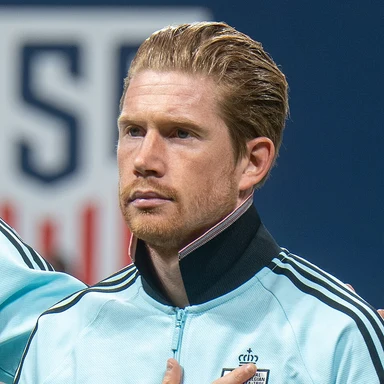 Photo: Bryan Berlin. Source and license in Image credits.
KRC Genk · Chelsea · Werder Bremen
2008—Present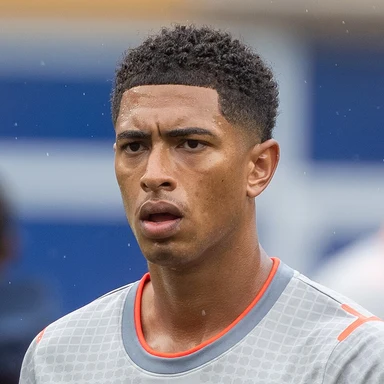 Photo: Bryan Berlin / WikiPortraits. Source and license in Image credits.
Birmingham City · Borussia Dortmund · Real Madrid
2019—Present
Villarreal CF · Atlético Madrid · Manchester City
2015—Present
Palmeiras · Real Madrid · Olympique Lyonnais
2022—Present Photo: Jonesy702. Source and license in Image credits.
Liverpool · Leeds United · Manchester City
1993—2012 Photo: Save the Dream from Doha, Qatar. Source and license in Image credits.
Platense · AS Monaco · Juventus
1994—2015Statistics are displayed only within the scope supported by each cited source.
Manchester CityHaaland’s development and transfer to CityBorussia DortmundDortmund’s signing of HaalandBundesligaHaaland’s scoring movement at DortmundUEFACity v Dortmund, 2022: rotations and the winning finishUEFACity v Leipzig, 2023: movement, pressure and reboundsUEFALeipzig v City, 2023: the limits of the front pressManchester CityHaaland’s 2023/24 season and the Luton partnershipManchester CityCity’s 2024/25 forwards: season reviewManchester CityCity’s 2025/26 forwards: season reviewManchester CityHaaland’s first four City seasons: appearances and goalsNorwegian Football FederationNorway senior team: results and international recordsWikipedia (cited biographical reference)Erling Haaland — biographical and career reference