10

League titles
First · 1936–37
Latest · 2023–24View winning seasons
1936–37 · 1967–68 · 2011–12 · 2013–14 · 2017–18 · 2018–19 · 2020–21 · 2021–22 · 2022–23 · 2023–24
Manchester City Football Club
City’s history includes the Mercer–Allison team, relegations and a modern period of sustained success. The 2012 title connected a long wait with a new era.
Overview
Historical assessment
Overall Historical Index
91/100Football Legends DB editorial assessment
Football Legends DB editorial / historical index. This is not an official FIFA or UEFA ranking, a live form table or a player rating.
Version 1.0: editors assess eight dimensions from 0–100 using the cited historical record. The overall score is their equally weighted arithmetic mean, rounded to the nearest whole number. Trophy totals are evidence, not points automatically added to a formula.
Assessment guide: 0–39 limited documented impact; 40–59 established national contribution; 60–79 sustained national or continental influence; 80–94 major international influence; 95–100 a historical benchmark across generations. These are editorial judgements, not measured percentiles. Missing evidence means no published index.
World titles and sustained success across eras inform the historical and international assessments. Scores may be revised when the evidence or editorial assessment changes.
Assessment notes · The assessment balances ten top-flight championships, the 2023 European title and influential modern football against earlier interruptions and relegations. The 2014 academy campus is distinguished from the club’s much older youth system.
Current chapter
Season
2026–27Verified
City appointed Maresca on a contract through summer 2029 after Guardiola’s departure. The 2026 domestic cup double belongs to Guardiola’s completed tenure; the new season is a separate chapter.
Honours
First · 1936–37
Latest · 2023–24First · 1903–04
Latest · 2025–26First · 1969–70
Latest · 2025–26First · 1937
Latest · 2024First · 2022–23
Latest · 2022–23First · 1969–70
Latest · 1969–70First · 2023
Latest · 2023First · 2023
Latest · 2023History
The club traces its origins to St Mark’s in West Gorton; the Manchester City name followed in 1894.
Billy Meredith’s goal won the final, establishing the first major success of the Manchester City name.
The move to Moss Side began eighty years at the ground remembered for the Kippax.
The 1934 FA Cup and 1937 league title were followed by relegation in 1938. The sequence captures the uncertainty of early Maine Road history.
Tactical identity · Attacking ambition supported by Swift in goal
The 1956 FA Cup winners used Revie in a withdrawn centre-forward role. Trautmann’s final performance became the most enduring image of the campaign.
Tactical identity · A centre-forward dropping into midfield
Promotion in 1966 preceded the 1968 league title, 1969 FA Cup and two cup triumphs in 1970. The coaching partnership shaped an attacking identity.
Tactical identity · Fast wide attacks and runners arriving from midfield
Explore the defining match ↗Book won the 1976 League Cup and came close to another league title in 1977. Established defenders and attacking width sustained the team.
Tactical identity · Experienced defending and purposeful wide delivery
Royle’s 1999 play-off comeback began successive promotions. Another relegation followed before Keegan’s 2002 second-tier championship restored top-flight status.
Tactical identity · Direct forward partnerships and collective resilience
Explore the defining match ↗City left Maine Road for the stadium built for the 2002 Commonwealth Games, after its conversion for football.
The 2008 takeover preceded the recruitment and coaching work that produced a new winning cycle.
The 2011 FA Cup preceded a first league title in 44 years. Kompany’s leadership and a complementary attacking group made the final-day breakthrough possible.
Tactical identity · A strong central spine and Silva’s space between lines
Explore the defining match ↗The 2014 league and League Cup double confirmed City’s staying power. Another League Cup arrived in 2016 before the managerial handover.
Tactical identity · Attacking width and combinations around two forwards
Six league titles included the 100-point season and four in succession. The 2023 European treble joined an earlier domestic treble, before a final domestic cup double in 2026.
Tactical identity · Positional play, counter-pressing and adaptable build-up
Explore the defining match ↗Defining games
Cup Winners’ Cup final
Manchester City 2–1 Górnik Zabrze
Praterstadion, Vienna
Young and Lee scored as Mercer and Allison’s side added European success to its league and domestic cup achievements.
Division Two play-off final · third tier
Manchester City 2–2 Gillingham
After extra time · won 3–1 on penalties
Wembley, London
Horlock and Dickov rescued a two-goal deficit late on. Weaver’s shootout saves secured promotion, a vital step in the recovery rather than a top-flight title.
Premier League
Manchester City 3–2 Queens Park Rangers
Etihad Stadium, Manchester
Džeko and Agüero scored in stoppage time to turn defeat into the title. City finished level on points with United and won on goal difference.
FA Cup final
Manchester City 6–0 Watford
Wembley, London
A record-equalling final margin completed the Premier League, FA Cup and League Cup treble. City had also won that season’s Community Shield.
Champions League final
Rodri’s second-half finish and late defensive interventions secured the first European Cup, completing a league, FA Cup and Champions League treble.
Legends
Goalkeeper
The goalkeeper of the 1934 FA Cup and 1937 league champions later became a journalist and died in the Munich air disaster.
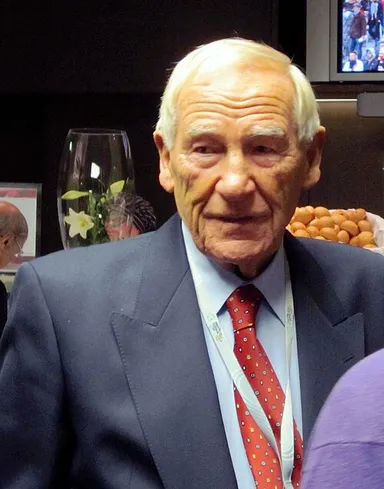 Photo: Jörg Zägel. Source and license in Image credits.
Goalkeeper
A post-war goalkeeper whose remarkable 1956 final became part of the club’s memory; his influence outlasted that single match.
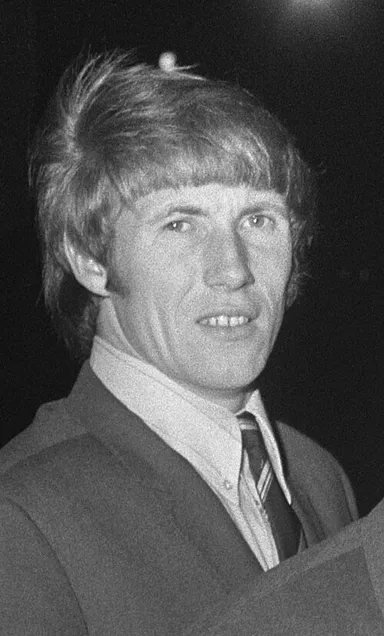 Photo: Bert Verhoeff for Anefo. Source and license in Image credits.
Midfielder
His running range, touch and goals connected defence to attack in Mercer and Allison’s strongest teams.
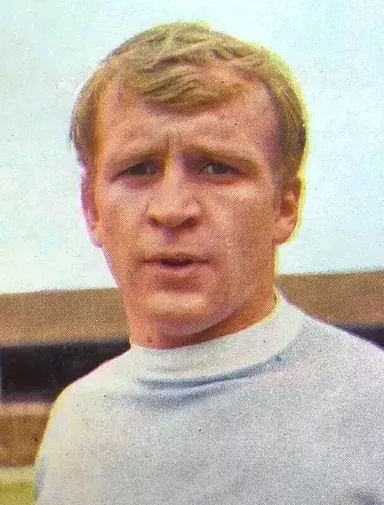 Photo: Panini. Source and license in Image credits.
Forward
An energetic scorer whose penalty in Vienna helped turn domestic success into a European trophy.
 Photo: Matthew04020. Source and license in Image credits.
Forward
The right winger’s direct runs and delivery supplied a complementary threat to Bell and Lee.
Defender
A locally developed player who grew from a half-back into an authoritative central defender and captain.
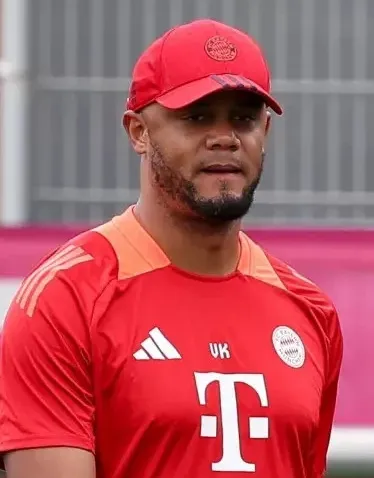 Photo: ManuluxWiki. Source and license in Image credits.
Defender
The captain’s defending and leadership spanned the first modern league title and Guardiola’s domestic treble.
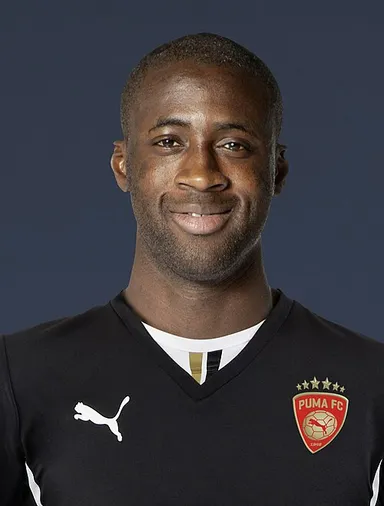 Photo: Puma. Source and license in Image credits.
Midfielder
A midfielder able to control deep possession or surge forward, giving the early title-winning teams a powerful change of pace.
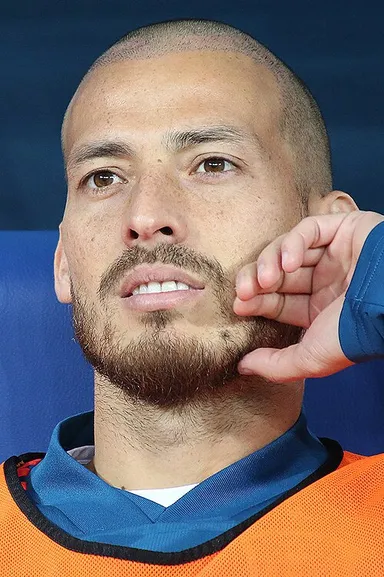 Photo: Кирилл Венедиктов. Source and license in Image credits.
Midfielder
Close control, scanning and short combinations helped City keep possession while opening spaces between defenders.
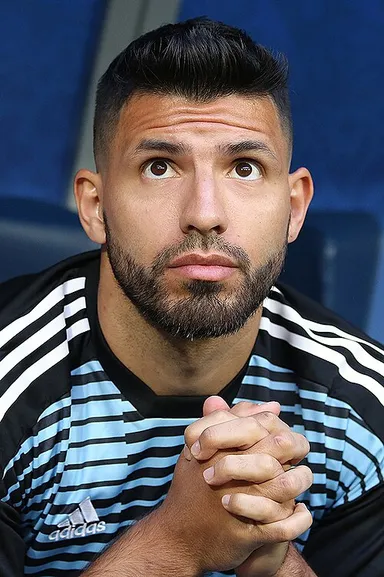 Photo: Кирилл Венедиктов. Source and license in Image credits.
Forward
The record scorer’s 2012 title-winning goal became a symbol, sustained by a decade of sharp movement and finishing.
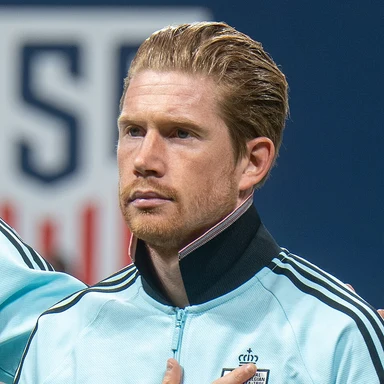 Photo: Bryan Berlin. Source and license in Image credits.
Midfielder
Early deliveries and incisive through balls gave a possession-based team a way to accelerate immediately.

Midfielder
The holding midfielder connected the team through positioning and passing, and scored the winning goal in the 2023 European final.
The goalkeeper of the 1934 FA Cup and 1937 league champions later became a journalist and died in the Munich air disaster.
Photo: Jörg Zägel. Source and license in Image credits.A post-war goalkeeper whose remarkable 1956 final became part of the club’s memory; his influence outlasted that single match.
Photo: Bert Verhoeff for Anefo. Source and license in Image credits.His running range, touch and goals connected defence to attack in Mercer and Allison’s strongest teams.
Photo: Panini. Source and license in Image credits.An energetic scorer whose penalty in Vienna helped turn domestic success into a European trophy.
Photo: Matthew04020. Source and license in Image credits.The right winger’s direct runs and delivery supplied a complementary threat to Bell and Lee.
A locally developed player who grew from a half-back into an authoritative central defender and captain.
Photo: ManuluxWiki. Source and license in Image credits.The captain’s defending and leadership spanned the first modern league title and Guardiola’s domestic treble.
Photo: Puma. Source and license in Image credits.A midfielder able to control deep possession or surge forward, giving the early title-winning teams a powerful change of pace.
Photo: Кирилл Венедиктов. Source and license in Image credits.Close control, scanning and short combinations helped City keep possession while opening spaces between defenders.
Photo: Кирилл Венедиктов. Source and license in Image credits.The record scorer’s 2012 title-winning goal became a symbol, sustained by a decade of sharp movement and finishing.
Photo: Bryan Berlin. Source and license in Image credits.Early deliveries and incisive through balls gave a possession-based team a way to accelerate immediately.
The holding midfielder connected the team through positioning and passing, and scored the winning goal in the 2023 European final.
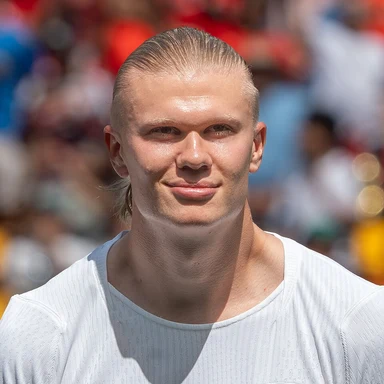 Photo: Bryan Berlin. Source and license in Image credits.
Haaland gives possession teams an immediate depth threat. His first City season demonstrated how a specialist box scorer could change the final action of an established attacking system.
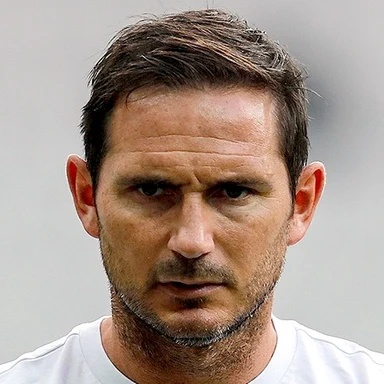 Photo: Mehdi Bolourian / Fars Media Corporation. Source and license in Image credits.
Lampard made midfield scoring repeatable through timing and technique, while his later European role showed the value of changing the next decision to suit the team.
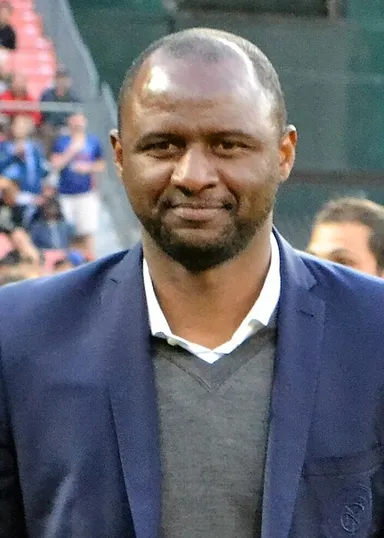 Photo: Simon Heseltine. Source and license in Image credits.
A midfielder whose authority came from linking the challenge to the next useful action for the team.
 Photo: Jonesy702. Source and license in Image credits.
An early movement and a clean strike could turn a crowded penalty area into a clear chance.
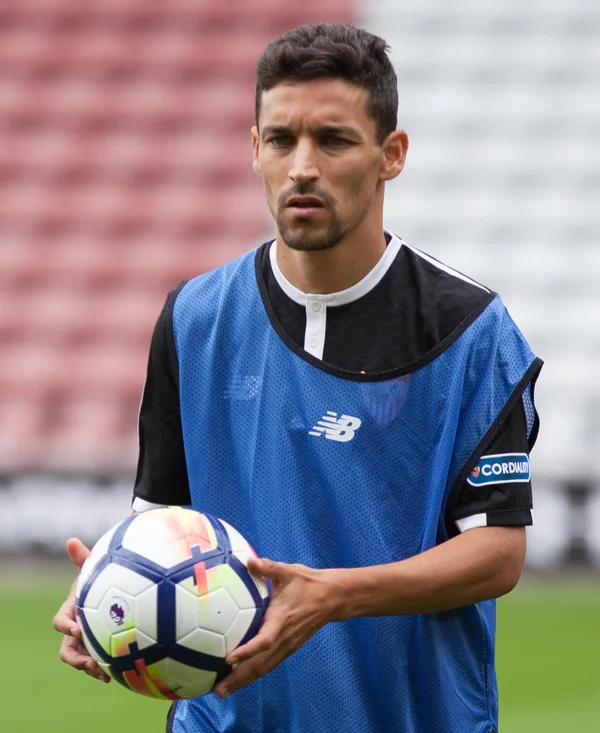 Photo: Steve Hogg / Solent Creatives. Source and license in Image credits.
He carried Sevilla’s right-sided attacking identity through different coaches and two spells. His later influence came from choosing when to overlap and deliver, as well as the speed that defined his youth.
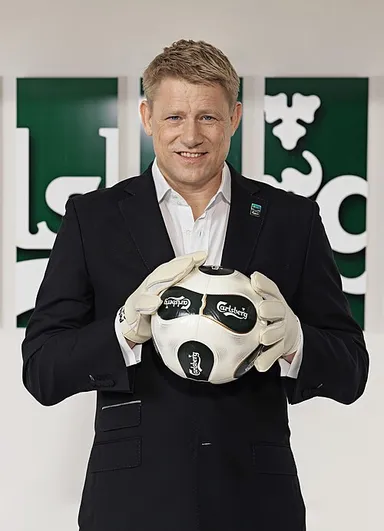 Photo: Carlsberg. Source and license in Image credits.
Schmeichel helped make the goalkeeper an initiator as well as a last line of defence. His value lay in combining the save, the recovery and the next attacking action. Denmark’s European title and United’s first Premier League dynasty show how that contribution could shape two very different teams.
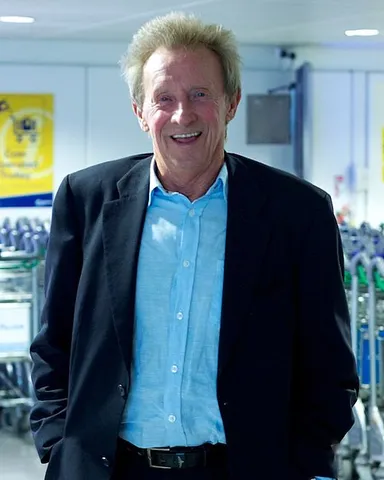 Photo: Danny Molyneux. Source and license in Image credits.
Law’s place in United history is both individual and collective: a Ballon d’Or-winning scorer who helped restore Busby’s team alongside Charlton and Best. The statue of the three outside Old Trafford preserves that shared identity. Scotland’s 55-cap, 30-goal record gives his legacy a second centre of gravity beyond his club career.
Coaching legacy
Club tenure only. Honours include senior first-team league, cup, super cup, continental and world titles where verified. European titles count European Cup / Champions League wins.
1932–1946
The 1934 FA Cup preceded City’s first league title in 1937, before relegation and wartime disruption.
1950–1963
Built the 1956 FA Cup winners around the withdrawn centre-forward role associated with Don Revie.
1965–1971
Working with Malcolm Allison, built the team that won the league, FA Cup, League Cup and Cup Winners’ Cup.
Managerial spell only; the later general-manager role is excluded. The Cup Winners’ Cup is separate from the European Cup.
1974–1979
The former captain led City to the 1976 League Cup and the 1977 league runners-up position.
Main permanent spell; brief caretaker returns are excluded.
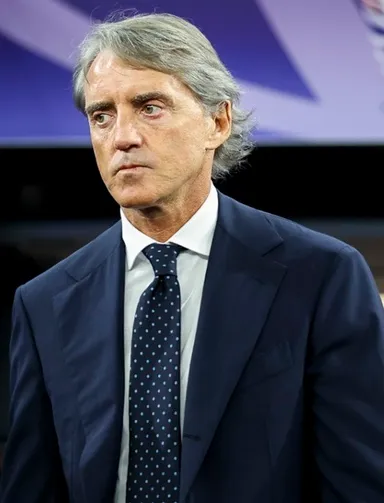 Photo: M.Sadegh Nikgostar. Source and license in Image credits.
2009–2013
The 2011 FA Cup ended a 35-year major-trophy wait; the 2012 league title followed through a dramatic final day.
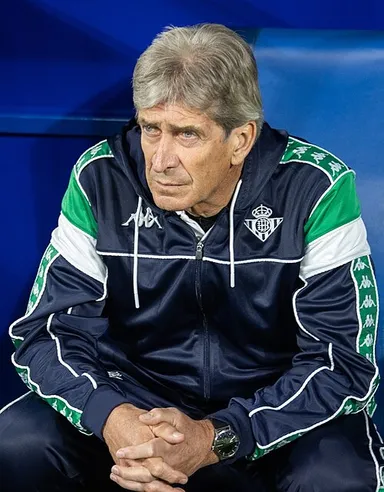 Photo: Vyacheslav Evdokimov. Source and license in Image credits.
2013–2016
An attacking side won the 2014 league and League Cup double, with another League Cup in 2016.

2016–2026
Evolving positional play produced the 100-point season, domestic treble, European treble and four successive league titles.
Completed City tenure through 2025–26, including the 2026 FA Cup and League Cup double.
Club identity
Mercer and Allison’s direct attacking combinations and Guardiola’s positional control share an interest in proactive football, with different methods.
The move from Moss Side to east Manchester changed the matchday setting while memories of Maine Road remained part of supporter identity.
Sky blue and the memory of the Kippax link the modern stadium to older generations; the 93:20 goal gives that history a precise shared moment.
Kompany, Silva and Agüero established a durable core. De Bruyne and Rodri then added different strengths as the team’s methods changed.
The campus opened in 2014 brings youth and senior development closer together; the club’s youth history extends far beyond the building’s age.
The 1970 Cup Winners’ Cup and 2023 Champions League are different achievements, separated by more than half a century.
Identity
Stadium
Current home / Manchester
Built for the 2002 Commonwealth Games and converted for football before City moved in for 2003–04. The opening date and City’s first season are different.
Former home / Manchester
Eighty years in Moss Side encompassed championships, relegations and the Kippax. The final first-team match was played in May 2003.
Rivalries
The city rivalry connects neighbouring clubs whose fortunes have changed across generations.
The 2012 league title was decided on goal difference between the two clubs; City’s 2023 European treble followed United’s 1999 achievement.
Development
Founded · 2014
The current campus opened in 2014; the youth system is much older.
The campus places youth development, elite development and first-team training near one another, combining coaching facilities with preparation for senior football.
Historical role
Doyle and Oakes represent the older development tradition. Foden, Richards and Wright-Phillips show later routes from youth football into the first team, before and after the campus opened.
Famous graduates
Collection
Kits
Home kit / 1969–70
Home kit / 2011–12
Home kit / 2022–23
Commercial
MAIN SHIRT
TECHNICAL SUPPLIER
Kit studies are abstract colour and pattern references, not reproductions of official shirts.
Records
Separate from the ten top-flight championships. The 1999 third-tier play-off win was promotion, not a league championship.
As of 2026-09-15