

The football behind Frank Lampard’s ratings
- Timing the late arrival
- Generational
- Ball-striking range
- Elite
- Purposeful midfield passing
- Elite
- Sustained involvement
- Elite
- One-against-one dribbling
- Good
- Specialist defensive coverage
- Good
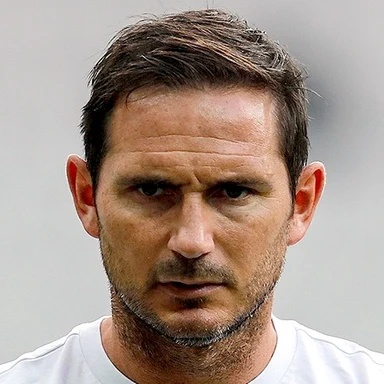 Photo: Mehdi Bolourian / Fars Media Corporation. Source and license in Image credits.
Frank James Lampard
Chelsea’s record scorer combined timed midfield arrivals with early passing, reliable ball striking and the ability to adapt to deeper responsibilities.
Senior club · all competitions
Completed club records only; not a complete career total.
Active club snapshots and records with another scope are excluded. Assist totals are not combined across incompatible definitions.
Stored archive snapshots, not live counters. Missing values are not zero; records with different scopes are never added together.
G/M = goals ÷ appearances. G+A = goals + assists. Per-90 metrics use documented minutes.
Senior international · all competitions
England · completed senior career, 1999–2014
Stored archive snapshots, not live counters. Missing values are not zero; records with different scopes are never added together.
G/M = goals ÷ appearances. G+A = goals + assists. Per-90 metrics use documented minutes.
In context
Lampard made midfield scoring repeatable through timing and technique, while his later European role showed the value of changing the next decision to suit the team.
Reading the game
Frank Lampard made arriving from midfield into a repeatable source of goals. The important action often began before he entered the penalty area: a pass into the striker, a moment spent outside a defender’s attention, then a run towards the space the attack had opened. He was dangerous because the movement connected with a reliable finish, rather than because he spent every attack waiting beside the centre-forward. That distinction also helps explain his creative value. Lampard could release a runner early, switch the point of attack or keep a possession moving before becoming its eventual target. His Chelsea career therefore offers a useful study of how midfield responsibility and scoring ambition can coexist. They required teammates who could hold the ball, occupy defenders and protect the space he left. Later, when his role became deeper and his playing time changed, reading the next action remained valuable. The record of 211 Chelsea goals captures the scale of the contribution; the more revealing question is how his decisions repeatedly made the next chance possible.
Historical references support the chronology; tactical explanations are museum editorial analysis.
Historical references: Chelsea: Lampard’s 648 appearances and 211 goals ↗ · Chelsea: the passing behind Lampard’s goals ↗ · Chelsea: Lampard describes arriving from midfield ↗ · Chelsea: Lampard’s later role in a midfield pair ↗
Career
| Period | Club | Apps | Goals | G/M |
|---|---|---|---|---|
| 1995—2001 | West Ham UnitedPremier League record only: 148 appearances, 24 goals and twelve assists. Domestic and European cup matches are excluded; the Swansea loan is listed separately. Senior club · league only Senior · #18Performance record
| 148 | 24 | 0.16 |
| 1995—1995 | Swansea CityA short loan in the 1995/96 season. The nine league appearances and one goal here are a subset of Swansea’s eleven appearances across competitions. His first senior goal came during this spell. Senior club · league only Loan | 9 | 1 | 0.11 |
| 2001—2014 | ChelseaComplete competitive Chelsea record: 648 appearances and 211 goals. The 429 Premier League appearances and 147 league goals are included within this total. Assists are left blank for the all-competition record; the separately verified league total is 89. He captained the 2012 and 2013 European finals in John Terry’s absence, rather than serving as the permanent captain throughout the spell. Senior club · all competitions Senior · #8 | 648 | 211 | 0.33 |
| 2014—2015 | Manchester CityOne Manchester City season produced 38 appearances and eight goals across competitions. The 32 Premier League appearances and six goals below are included in this figure. Senior club · all competitions Senior · #18 | 38 | 8 | 0.21 |
| 2015—2016 | New York City FCNew York City’s completed record includes 31 appearances and fifteen goals. The regular-season league rows total 29 appearances and fifteen goals, with two additional playoff appearances included only in the club aggregate. Last played in 2016; retirement announced in February 2017. Senior club · all competitions Senior · #8 | 31 | 15 | 0.48 |
Stored archive snapshots, not live counters. Missing values are not zero; records with different scopes are never added together.
G/M = goals ÷ appearances. G+A = goals + assists. Per-90 metrics use documented minutes.
Honours
West Ham United · continental
Chelsea · league
Chelsea · domestic cup
Chelsea · domestic cup
Chelsea · domestic cup
Chelsea · continental
Chelsea · continental
Premier League · individual
Football Writers’ Association · individual
Story
Career chapter
Lampard’s development began with West Ham and included a short Swansea loan in 1995, where he scored his first senior goal. Regular Premier League football came gradually rather than as an immediate entitlement. By the time he joined Chelsea in 2001, he had accumulated 148 league appearances for West Ham. He had also helped West Ham win the 1999 Intertoto Cup, scoring in the final at Metz. Under Claudio Ranieri, the challenge became turning that experience into a dependable place in a team with growing European ambitions. Playing every league match in 2003/04 illustrates the responsibility he had earned. The later reputation for goals rested on these years of learning where a midfielder could support, circulate and then advance.
Historical references: West Ham: the 1999 Intertoto Cup final ↗ · Chelsea: Lampard’s playing career and honours ↗ · Premier League: Lampard’s completed league record ↗ · StatMuse: Lampard’s twenty Premier League seasons ↗ · Swansea: Lampard’s formative loan spell ↗
Career chapter
The two goals at Bolton in April 2005 secured Chelsea’s first league title for fifty years. They became an emblem of Lampard’s attacking influence, but his eighteen league assists that season show why goals alone leave the picture incomplete. Mourinho’s team could balance his forward runs with protection behind him and a striker able to occupy defenders. A second title followed in 2006. Under subsequent coaches, the same qualities found different combinations: the left-footed winner in the 2009 FA Cup final, then 22 league goals and fourteen assists in Ancelotti’s 2009/10 double. This was midfield production supported by a collective structure.
Historical references: Chelsea: Lampard’s playing career and honours ↗ · Chelsea: the passing behind Lampard’s goals ↗ · Chelsea: Bolton, Wembley and Lampard’s scoring record ↗ · Premier League: Lampard’s 22 goals and 14 assists in 2009/10 ↗
Career chapter
The later Chelsea years required more than repeating the same forward runs. In the 2012 Champions League final, Lampard captained the side with John Terry suspended and worked alongside John Obi Mikel in a deeper midfield. Holding the team together mattered as much as reaching the opposite box. He scored in the shoot-out, which decided the trophy but added nothing to his official goal total. The following May brought a different landmark: two goals at Aston Villa took him beyond Bobby Tambling’s Chelsea record. He also captained the Europa League final victory, before completing his Chelsea playing career in 2014.
Historical references: Chelsea: Lampard’s 648 appearances and 211 goals ↗ · Chelsea: Lampard and Cech remember Munich in 2012 ↗ · Chelsea: the captains of the European cup finals ↗ · Chelsea: Bolton, Wembley and Lampard’s scoring record ↗
Career chapter
Leaving Chelsea did not immediately end Lampard’s ability to read the penalty area. His equaliser against his former club for Manchester City in September 2014 came from arriving to meet a teammate’s delivery, a familiar movement in an unfamiliar shirt. That season produced eight goals across 38 competitive appearances. New York City followed, with fifteen goals in 31 appearances and the club’s first hat-trick. These totals describe separate competitions and workloads, not a seamless continuation of his Chelsea peak. His final playing season was 2016; the retirement announcement came in February 2017. Later coaching belongs to another part of his football life.
Historical references: Manchester City: Lampard’s one season in Manchester ↗ · New York City: Lampard’s retirement and club record ↗
Profile
Box-to-Box Midfielder
Also plays · Advanced Playmaker
Connects possession with early passes, then advances when forwards have occupied defenders. Finishes cutbacks, rebounds and longer-range chances, while midfield cover helps make the runs sustainable. Later deeper roles ask for more selective movement and central protection.
Timing the late arrival
Purposeful midfield passing
Ball-striking range
Sustained involvement
Illustrative role zones · not tracking data
Lampard’s run was often the second movement in an attack. A forward received, a defender adjusted, and the midfielder entered the space opened by that exchange. Starting deeper could make him harder to pass between markers than a striker already standing on the last line. The purpose was not simply to run late: it was to arrive when the delivery and the defensive distraction coincided. Going too early would remove the advantage and leave midfield short of support.
Power from outside the box was only part of Lampard’s shooting. He could meet a cutback, finish a rebound or adjust to a ball arriving across his body. The left-footed winner against Everton in 2009 offers a useful reminder that the preferred foot did not define every solution. Penalties also formed a substantial part of his scoring, particularly in 2009/10. The total should therefore be read as a mixture of open-play positioning, striking technique and set-piece responsibility.
Lampard could make the attacking pass as well as receive it. Early balls into Drogba or beyond a defender connected the midfield to the front line without requiring a long dribble first. His outside-foot assist against Manchester City in 2007 illustrates how direction and bend could create a route the defence had not closed. A simpler return pass mattered too: keeping the move alive gave him another opportunity to advance. Creating and finishing were successive possibilities within the same possession.
A productive forward run still creates a space behind it. Lampard’s role worked best when the team could secure possession and cover that space, rather than asking every midfielder to attack at once. His later use in a deeper pair changed the priorities: offer an outlet, protect the centre and choose a forward pass without automatically following it into the box. The Munich final is an example of that different responsibility, not proof that his entire career was played as a holding midfielder.
Historical references: Chelsea: the passing behind Lampard’s goals ↗ · Chelsea: Lampard describes arriving from midfield ↗ · Chelsea: Lampard’s later role in a midfield pair ↗ · Chelsea: Lampard and Cech remember Munich in 2012 ↗ · Chelsea: Bolton, Wembley and Lampard’s scoring record ↗ · StatMuse: Lampard’s twenty Premier League seasons ↗ · Manchester City: Lampard’s one season in Manchester ↗
Reading the game
| Era / team | Primary Role | Tactical Character |
|---|---|---|
| 1995–2004West Ham / Swansea / Chelsea | Build a dependable central role | Learns to connect circulation, support and forward movement before becoming a title-winning reference. |
| 2004–2010Chelsea / England | Combine the supply with the late arrival | Creates and finishes while teammates secure the ball and protect the space behind him. |
| 2010–2014Chelsea / England | Choose forward runs from a deeper starting point | Increasingly shares deeper midfield duties, particularly in the 2012 European campaign. |
| 2014–2016Manchester City / New York City | Keep the timing as the workload changes | Uses selective movement and penalty-area reading in shorter final club chapters. |
Historical references: Chelsea: the passing behind Lampard’s goals ↗ · Chelsea: Lampard describes arriving from midfield ↗ · Chelsea: Lampard’s later role in a midfield pair ↗ · Chelsea: Lampard and Cech remember Munich in 2012 ↗ · StatMuse: Lampard’s twenty Premier League seasons ↗ · Swansea: Lampard’s formative loan spell ↗ · Manchester City: Lampard’s one season in Manchester ↗ · New York City: Lampard’s retirement and club record ↗
Reading the game
Lampard stayed involved after the initial shot or cross. A loose ball could become another chance if he had read where the action was moving and kept a useful distance from it. This is an interpretation of his recurring scoring movements, not a claim to a measured advantage in every rebound situation.
The long sequence of Premier League appearances made his attacking contribution available across changing opponents and coaches. Reliability did not mean every action succeeded or that later injuries disappeared. It meant teammates could repeatedly plan around a midfielder who offered the pass, supported the next phase and remained a credible finishing option.
A right-footed midfielder could still solve a decisive moment with his left, as the 2009 FA Cup final demonstrated. The value lies in avoiding an extra adjustment when the chance is already open. That option complements his powerful preferred-foot shooting without implying equal accuracy from both feet in every setting.
Lampard’s deeper European role required him to judge when the team needed stability more than another attacking run. The change makes adaptability a concrete football skill: the same passing and anticipation could serve a different starting position. It did not erase the scorer, but altered when that part of his game should appear.
Historical references: Chelsea: Lampard describes arriving from midfield ↗ · Chelsea: Lampard’s later role in a midfield pair ↗ · Chelsea: Lampard and Cech remember Munich in 2012 ↗ · Chelsea: Bolton, Wembley and Lampard’s scoring record ↗ · Premier League: Lampard’s completed league record ↗ · StatMuse: Lampard’s twenty Premier League seasons ↗
Reading the game
Box-to-box midfielder with a creative brief
Thirteen league goals and eighteen assists show a midfielder supplying attacks as well as ending them. Chelsea’s structure allowed Lampard to advance while retaining protection behind the ball. The Bolton double gives the season a defining image, but the broader version includes circulation, early passing and sustained involvement across all 38 league matches.
Scoring and creating from central midfield
The shared reference season for both rating panels combines 22 league goals with fourteen assists. Ten of the goals were penalties, which keeps the scoring breakdown honest without diminishing the responsibility. Ancelotti’s team gave his timed arrivals productive relationships ahead and around him. This is the strongest attacking version here, not an assertion that he was equally dominant in every midfield task.
Deeper central midfielder and final captain
Eleven league goals still show an attacking contribution, but the European final is the reason to distinguish this version. Alongside Mikel, Lampard helped maintain the central structure against Bayern and captained the side in Terry’s absence. The peak is contextual: a major achievement through adapted duties, rather than a claim that his athletic or scoring maximum came in 2012.
Historical references: Chelsea: the passing behind Lampard’s goals ↗ · Chelsea: Lampard and Cech remember Munich in 2012 ↗ · Chelsea: the captains of the European cup finals ↗ · Chelsea: Bolton, Wembley and Lampard’s scoring record ↗ · Premier League: Lampard’s 22 goals and 14 assists in 2009/10 ↗ · StatMuse: Lampard’s twenty Premier League seasons ↗
Statistics
| Season | Club | Apps | Goals | Assists | G/M | G+A/M |
|---|---|---|---|---|---|---|
| 2016 | New York City FC Senior club · league only | 19 | 12 | — | 0.63 | — |
| 2015 | New York City FC Senior club · league only | 10 | 3 | — | 0.30 | — |
| 1995/96 | Swansea City Senior club · league only | 9 | 1 | — | 0.11 | — |
| 2014/15 | Manchester City Senior club · league only Performance record
| 32 | 6 | 1 | 0.19 | 0.22 |
| 2013/14 | Chelsea Senior club · league only Performance record
| 26 | 6 | 2 | 0.23 | 0.31 |
| 2012/13 | Chelsea Senior club · league only Performance record
| 29 | 15 | 1 | 0.52 | 0.55 |
| 2011/12 | Chelsea Senior club · league only Performance record
| 30 | 11 | 5 | 0.37 | 0.53 |
| 2010/11 | Chelsea Senior club · league only Performance record
| 24 | 10 | 2 | 0.42 | 0.50 |
| 2009/10 | Chelsea Senior club · league only Performance record
| 36 | 22 | 14 | 0.61 | 1.00 |
| 2008/09 | Chelsea Senior club · league only Performance record
| 37 | 12 | 10 | 0.32 | 0.59 |
Stored archive snapshots, not live counters. Missing values are not zero; records with different scopes are never added together.
G/M = goals ÷ appearances. G+A = goals + assists. Per-90 metrics use documented minutes.
Twenty Premier League seasons reconcile to 609 appearances, 177 goals and 102 assists. StatMuse supplies those league rows, including 38 appearances in 2003/04 and six goals in 2013/14. Swansea’s nine league appearances and New York’s 29 regular-season appearances are separate competitions; New York playoffs are included only in its club aggregate. Cup matches must not be inferred by adding league rows to club totals.
Club competitions
| Competition | Apps | Goals | G/M |
|---|---|---|---|
Premier LeaguePremier League · West Ham, Chelsea and Manchester CityThe complete Premier League total across three clubs. Swansea and MLS are excluded. League assists use the Premier League convention; these season rows are already included in the relevant club totals. Performance record
| 609 | 177 | 0.29 |
UEFA Champions LeagueChampions League proper · Chelsea and Manchester CityUEFA’s main-competition tally: 102 Chelsea appearances and three for Manchester City, with all 23 goals for Chelsea. Qualifying matches and shoot-out kicks are excluded; broader records including qualifying use a different appearance count. | 105 | 23 | 0.22 |
Stored archive snapshots, not live counters. Missing values are not zero; records with different scopes are never added together.
G/M = goals ÷ appearances. G+A = goals + assists. Per-90 metrics use documented minutes.
International
International career
Lampard played at EURO 2004 and three World Cups, finishing with 106 England appearances and 29 goals. Three goals in Portugal made 2004 his most productive finals tournament. The World Cup record was different: ten appearances without an officially awarded goal. Injury ruled him out of EURO 2012.
Senior international · tournament splits
| Competition | Apps | Goals | G/M |
|---|---|---|---|
FIFA World CupWorld Cup finals · 2006, 2010 and 2014Five appearances in 2006, four in 2010 and one in 2014. The unawarded shot against Germany remains outside the official scoring record. Qualifiers are excluded. | 10 | 0 | 0.00 |
UEFA European ChampionshipEURO finals · Portugal 2004Four matches and three goals in 2004. England did not qualify in 2008; Lampard was injured before the 2012 tournament. Shoot-out penalties are excluded. | 4 | 3 | 0.75 |
Stored archive snapshots, not live counters. Missing values are not zero; records with different scopes are never added together.
G/M = goals ÷ appearances. G+A = goals + assists. Per-90 metrics use documented minutes.
Reading the game
Lampard expanded expectations of what a midfielder could contribute to an attack without becoming a permanent forward. His value was not that he ignored the position’s other duties, but that he found repeatable ways to connect them with scoring. Pass, support, arrive and recover formed a sequence that other players could understand and accommodate. Studying him also means resisting an explanation based only on hard work. Repetition required technical quality, judgment about when to move and an ability to strike different kinds of ball. Nor should every season be compressed into the image of the same tireless runner. The attacking freedom of the double-winning team and the responsibility of the Munich final asked for different choices. England provided another reminder that outstanding club combinations do not automatically reproduce themselves in a different collective. His international record deserves its own context rather than borrowed club honours. Lampard’s lasting lesson is that football intelligence can appear in the timing of an ordinary-looking action. A run that begins a second later, or a pass played before the obvious opening, can turn dependable technique into an exceptional career.
Historical references: Chelsea: the passing behind Lampard’s goals ↗ · Chelsea: Lampard describes arriving from midfield ↗ · Chelsea: Lampard and Cech remember Munich in 2012 ↗ · England: Lampard’s international career ↗
Archive
Box-to-Box Midfielder · editorial peak 2009—2010
Harry Redknapp · Claudio Ranieri · José Mourinho · Guus Hiddink · Carlo Ancelotti · Roberto Di Matteo · Rafael Benítez · Manuel Pellegrini · Patrick Vieira · Sven-Göran Eriksson · Fabio Capello · Roy Hodgson
Andriy Shevchenko— Overlapping Chelsea era · Sergio Agüero— Overlapping Manchester City era · Jesús Navas— Overlapping Manchester City era · Gianfranco Zola— Overlapping Chelsea era
Mourinho’s first Chelsea — Chelsea · The first league and cup double — Chelsea · The Munich breakthrough — Chelsea · Two more league-winning systems — Chelsea · Pellegrini sustains the challenge — Manchester City

Adaptive tournament manager
1992—Present · AC Milan · Real Madrid
Elite knockout strategist
2000—Present · Real Madrid · Inter Milan Photo: Barcex (Wikimedia Commons); crop by EndzoneEnthusiast. Source and license in Image credits.
Discipline and defensive balance
1982—2018 · AC Milan · Real Madrid Photo: Міністерство молоді та спорту України. Source and license in Image credits.
Dynamo Kyiv · AC Milan · Chelsea
1994—2012 Photo: Кирилл Венедиктов. Source and license in Image credits.
Independiente · Atlético Madrid · Manchester City
2003—2021 Photo: Steve Hogg / Solent Creatives. Source and license in Image credits.
Sevilla · Manchester City
2003—2024
Liverpool · LA Galaxy
1998—2016
Manchester United · Preston North End · Waterford
1956—1976 Photo: Bryan Berlin / WikiPortraits. Source and license in Image credits.
Birmingham City · Borussia Dortmund · Real Madrid
2019—PresentLiverpool · LA Galaxy
1998—2016 Photo: Barcex. Source and license in Image credits.
Haarlem · Feyenoord · PSV
1979—1998Photo: Bryan Berlin / WikiPortraits. Source and license in Image credits.Birmingham City · Borussia Dortmund · Real Madrid
2019—PresentStatistics are displayed only within the scope supported by each cited source.
West Ham UnitedWest Ham: the 1999 Intertoto Cup finalChelsea FCChelsea: Lampard’s 648 appearances and 211 goalsChelsea FCChelsea: Lampard’s playing career and honoursChelsea FCChelsea: the passing behind Lampard’s goalsChelsea FCChelsea: Lampard describes arriving from midfieldChelsea FCChelsea: Lampard’s later role in a midfield pairChelsea FCChelsea: Lampard and Cech remember Munich in 2012Chelsea FCChelsea: the captains of the European cup finalsChelsea FCChelsea: Bolton, Wembley and Lampard’s scoring recordPremier LeaguePremier League: Lampard’s completed league recordPremier LeaguePremier League: Lampard’s 22 goals and 14 assists in 2009/10StatMuseStatMuse: Lampard’s twenty Premier League seasonsNational Football TeamsNational Football Teams: Lampard’s Swansea and New York league seasonsSwansea CitySwansea: Lampard’s formative loan spellManchester CityManchester City: Lampard’s one season in ManchesterNew York City FCNew York City: Lampard’s retirement and club recordThe FAEngland: Lampard’s international careerRSSSFRSSSF: Lampard’s complete England match logUEFAUEFA: Lampard ruled out of EURO 2012FIFAFIFA: the unawarded goal against Germany in 2010UEFAUEFA: Lampard’s Champions League playing recordWikipedia (cited biographical reference)Frank Lampard — biographical and career reference