


The football behind Sergio Agüero’s ratings
- Preparation and finishing
- Elite
- Balance under contact
- Elite
- Penalty-area movement
- Elite
- Short combinations
- Excellent
- Collective pressing
- Good
- Aerial and defensive coverage
- Limited
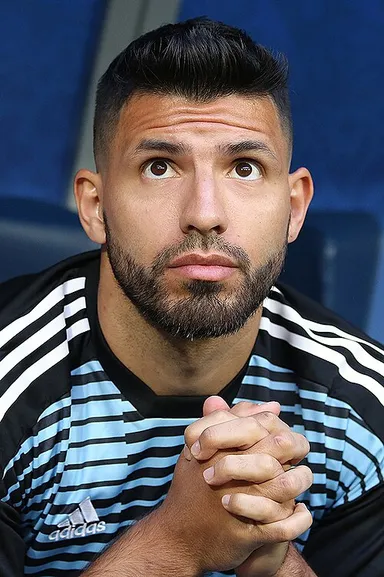 Photo: Кирилл Венедиктов. Source and license in Image credits.
Sergio Leonel Agüero del Castillo
A compact, explosive finisher whose close control and movement made the smallest spaces dangerous.
Senior club · all competitions
Completed club records only; not a complete career total.
Active club snapshots and records with another scope are excluded. Assist totals are not combined across incompatible definitions.
Stored archive snapshots, not live counters. Missing values are not zero; records with different scopes are never added together.
G/M = goals ÷ appearances. G+A = goals + assists. Per-90 metrics use documented minutes.
Senior international · all competitions
Argentina · completed senior record, 2006–2021
Stored archive snapshots, not live counters. Missing values are not zero; records with different scopes are never added together.
G/M = goals ÷ appearances. G+A = goals + assists. Per-90 metrics use documented minutes.
In context
City’s record scorer combined the defining 93:20 moment with a decade of repeatable penalty-area craft and tactical adaptation.
Reading the game
Sergio Agüero made the space immediately around a centre-back feel unsafe. A defender could be close enough to touch him and still arrive too late, because a short movement, a balanced first touch and a quick finish belonged to the same action. His threat was not simply speed over an open pitch. It was the ability to accelerate while keeping the ball close enough to shoot before the opponent recovered. The title-winning goal against Queens Park Rangers in 2012 remains the most vivid example, but a decade of scoring at Manchester City gives that moment its proper scale. He repeatedly found ways to finish attacks while the team around him changed. At Atlético, movement alongside another striker had helped him develop; in Manchester, he eventually learned to connect those instincts to Guardiola’s spacing and defensive demands. This profile uses 2018/19 as the shared reference for both evaluation panels. It treats the explosive arrival, the Golden Boot season and the more tactically integrated later striker as related versions, while allowing each to keep its own context. Agüero matters because exceptional penalty-area craft could evolve without losing its decisive purpose.
Historical references support the chronology; tactical explanations are museum editorial analysis.
Historical references: Manchester City: Agüero’s record and 93:20 ↗ · Manchester City: Agüero’s 2018/19 season ↗ · Manchester City: Agüero on developing under Guardiola ↗ · UEFA: Atlético’s 2010 Europa League final victory ↗
Career
| Period | Club | Apps | Goals | G/M |
|---|---|---|---|---|
| 2003—2006 | IndependienteIndependiente · league-only spell; wider club coverage is recorded separately. Senior club · league only Senior · #10 | 54 | 23 | 0.43 |
| 2006—2011 | Atlético MadridAtlético Madrid · league-only spell; wider club coverage is recorded separately. Senior club · league only Senior · #10 | 175 | 74 | 0.42 |
| 2011—2021 | Manchester CityManchester City · league-only spell; wider club coverage is recorded separately. Senior club · league only Senior · #16 / 10 | 275 | 184 | 0.67 |
| 2021—2021 | FC BarcelonaFC Barcelona · league-only spell; wider club coverage is recorded separately. Senior club · league only Senior · #19 | 4 | 1 | 0.25 |
Stored archive snapshots, not live counters. Missing values are not zero; records with different scopes are never added together.
G/M = goals ÷ appearances. G+A = goals + assists. Per-90 metrics use documented minutes.
Honours
Atlético Madrid · continental
Atlético Madrid · continental
Manchester City · league
Manchester City · domestic cup
Manchester City · domestic cup
Manchester City · domestic cup
Argentina · continental
Sergio Agüero · individual
Sergio Agüero · individual
Story
Career chapter
Agüero emerged from Independiente’s academy and made his first-team debut in 2003, aged fifteen. The move to Atlético Madrid in 2006 brought a different test: finding space against more organised opposition while learning the relationships around him. His partnership with Diego Forlán gave the attack two players who could move away from a fixed central position. Agüero could receive, turn and then attack the next gap, rather than remain a target waiting for service. Atlético’s 2010 Europa League victory gave that period a major team achievement. Forlán scored both final goals against Fulham; Agüero’s place in the story is the partnership and the attacking work that supported it.
Historical references: Atlético Madrid: five seasons, appearances, goals and assists ↗ · Independiente: a tribute to its academy graduate ↗ · UEFA: Atlético’s 2010 Europa League final victory ↗
Career chapter
Joining City in 2011, Agüero quickly made the Premier League look familiar. The opening season ended with the decisive exchange with Mario Balotelli and the winner against QPR, securing the club’s first league championship since 1968. That sequence combined urgency with control: he stayed upright, moved the ball beyond a challenge and finished before the chance disappeared. The following years required more than repeating one famous moment. Working under Roberto Mancini and then Manuel Pellegrini, he became the attack’s reliable scoring reference. His 26 league goals earned the 2014/15 Golden Boot, showing how a season of repeated movements and finishes could carry weight even without another league title.
Historical references: Manchester City: Agüero’s record and 93:20 ↗ · Manchester City: club trophy chronology ↗ · Manchester City: the 2014/15 Golden Boot ↗
Career chapter
Guardiola’s arrival in 2016 changed the requirements around City’s centre-forward. Agüero still needed to occupy the box, but also to connect passes, recognise pressing cues and preserve useful distances to the midfield. The adjustment was a process rather than proof that his earlier game had been incomplete. By 2018/19, those duties supported a striker who remained exceptionally dangerous near goal. His sharp-angle opener against Liverpool in January showed the familiar compact technique inside a more coordinated team. City retained the league and won both domestic cups that season. His contribution was 21 league goals and 32 across all competitions, with the Community Shield forming a separate fourth trophy.
Historical references: Manchester City: Agüero’s 2018/19 season ↗ · Manchester City: Agüero on developing under Guardiola ↗ · Manchester City: the January 2019 win over Liverpool ↗
Career chapter
The final City years brought further trophies but less continuous playing time. Agüero left in 2021 with 260 goals in 390 appearances and five Premier League titles. For Argentina, the Copa América victory that summer finally added a senior tournament crown after the painful finals of 2014, 2015 and 2016. He appeared four times in the winning campaign, without playing in the final. Barcelona offered a new club chapter, but it lasted only five competitive appearances and one goal. Health problems led to his retirement that December. The brief ending should remain distinct from the peak: it explains the career’s conclusion without redefining the player who had shaped the previous decade.
Historical references: Manchester City: Agüero’s retirement and fifteen trophies ↗ · Barcelona: Agüero’s five appearances and retirement ↗ · Agüero: league seasons and senior international match register ↗ · AFA: Agüero reaches one hundred senior appearances ↗ · Manchester City: Argentina win the 2021 Copa América ↗
Profile
Complete Forward
Also plays · Poacher
Occupy the centre-backs, change the receiving angle and finish quickly. The 2018/19 version also connects short passes and presses within Guardiola’s collective structure, keeping penalty-area threat as the central purpose.
Finishing with little preparation
Balance in tight spaces
Short acceleration and separation
Anticipation inside the box
Illustrative role zones · not tracking data
Agüero’s control often had an immediate destination. He could place the ball just outside a defender’s reach while keeping his own next step short enough to strike. The Liverpool finish in January 2019 is a useful reference: receiving in a restricted area did not require a lengthy reset before shooting. His balance mattered because it preserved the choice of finish under contact. This is different from measuring technique by the number of touches or tricks a player performs before the final action.
His most valuable acceleration could occur inside a crowded penalty area. A small pause invited the defender to settle, then a diagonal movement changed the line of the pass. He could attack a cutback, move across the near post or arrive behind an opponent watching the ball. These movements made the passer’s job clearer. They also explain why a short striker could remain a central scoring reference: gaining a playable angle mattered more than winning every aerial collision against a taller centre-back.
The later City version could step towards midfield, return a pass and move forward again instead of treating involvement and finishing as separate jobs. A short exchange might draw a marker out; the next run could use the space that marker had left. Guardiola’s structure gave those actions a shared purpose, with wide players stretching the defence and midfielders supporting the next pass. Agüero was a participant in that circulation, while his strongest contribution remained turning the final opening into a credible shot.
Improved work without the ball did not make him a defensive midfielder or a dominant aerial target. His pressing mattered when its angle helped teammates close the next route. Asking him to chase every opponent independently would weaken that coordination and remove him from useful attacking positions. The assessment therefore rewards anticipation, composure and finishing more strongly than tackling or aerial defence. It also distinguishes quick movement in small spaces from the sustained running demands placed on a winger or a midfielder.
Historical references: Manchester City: Agüero’s record and 93:20 ↗ · Premier League: Agüero’s player card and finishing analysis ↗ · Manchester City: Agüero’s 2018/19 season ↗ · Manchester City: Agüero on developing under Guardiola ↗ · Manchester City: the January 2019 win over Liverpool ↗
Reading the game
| Era / team | Primary Role | Tactical Character |
|---|---|---|
| 2003–2006Independiente | A young attacker learning senior football | Use acceleration and close control while adapting to first-team competition. |
| 2006–2011Atlético Madrid | A moving partner in a two-striker attack | Receive away from the centre-backs and attack gaps alongside Forlán. |
| 2011–2016Manchester City | City’s central scoring reference | Combine with different partners while repeatedly finding the final shooting space. |
| 2016–2019Manchester City | A scorer connected to the positional structure | Add coordinated pressing and short combinations while keeping a central threat. |
| 2019–2021Manchester City / FC Barcelona | Selective involvement and the final chapter | Bring established finishing craft to reduced playing time and a brief Barcelona spell. |
Historical references: Manchester City: Agüero’s record and 93:20 ↗ · Manchester City: Agüero’s retirement and fifteen trophies ↗ · Atlético Madrid: five seasons, appearances, goals and assists ↗ · Barcelona: Agüero’s five appearances and retirement ↗ · Independiente: a tribute to its academy graduate ↗ · Agüero: league seasons and senior international match register ↗ · Manchester City: the 2014/15 Golden Boot ↗ · Manchester City: Agüero’s 2018/19 season ↗ · Manchester City: Agüero on developing under Guardiola ↗ · UEFA: Atlético’s 2010 Europa League final victory ↗
Reading the game
Agüero could absorb a challenge without allowing it to dictate the whole move. Keeping his feet and the ball close preserved a route to goal after a defender appeared to have closed it. The famous QPR finish makes that quality visible, but the useful lesson is technical: balance creates another decision before the opportunity disappears.
The striking action did not always require a large swing or a clear central lane. A compact preparation could send the ball past a goalkeeper from an angle that looked protected. His Liverpool opener illustrates the combination of touch, timing and force; it should not be reduced to power alone, because the preparation created the chance to use it.
The Golden Boot and the long City scoring record show that his impact extended beyond a small collection of dramatic goals. Repeated positioning and preparation allowed different teammates to find the same dependable target. The consistency was built from football actions, not a claim that he played every match or that injuries never interrupted a season.
Agüero’s evolution under Guardiola is valuable precisely because the scoring instinct remained recognisable. He added more coordinated pressing and combinations around it, allowing an established specialist to fit a different collective model. The change was not an abandonment of what made him dangerous; it was a better connection between that danger and the movements of the team.
Historical references: Manchester City: Agüero’s record and 93:20 ↗ · Manchester City: Agüero’s retirement and fifteen trophies ↗ · Manchester City: the 2014/15 Golden Boot ↗ · Manchester City: Agüero’s 2018/19 season ↗ · Manchester City: Agüero on developing under Guardiola ↗ · Manchester City: the January 2019 win over Liverpool ↗
Reading the game
Mobile centre-forward in Mancini’s attack
The 2011/12 version combines quick changes of direction with immediate scoring impact. The QPR winner is its defining memory, but the season’s league contribution also matters. This is the younger attacker adapting to Mancini’s side, not the later Guardiola reference with all of its additional collective duties.
Scoring reference under Pellegrini
The 2014/15 season foregrounds repeated scoring: 26 Premier League goals brought the Golden Boot. Pellegrini’s attacking environment gave his runs and combinations a different setting from the later positional system. This version highlights the reliable scorer over a league campaign without importing the domestic trophies of 2018/19.
Centre-forward in Guardiola’s positional attack
Both rating panels use the 2018/19 City striker. His penalty-area threat now sits within more developed combinations and pressing responsibilities. The Liverpool finish and the domestic title campaign anchor the interpretation; the grades do not combine every career-best physical quality into an imaginary all-time version.
Historical references: Manchester City: Agüero’s record and 93:20 ↗ · Agüero: league seasons and senior international match register ↗ · Manchester City: the 2014/15 Golden Boot ↗ · Manchester City: Agüero’s 2018/19 season ↗ · Manchester City: Agüero on developing under Guardiola ↗ · Manchester City: the January 2019 win over Liverpool ↗
Statistics
| Season | Club | Apps | Goals | G/M |
|---|---|---|---|---|
| 2021/22 | FC Barcelona Senior club · league only | 4 | 1 | 0.25 |
| 2020/21 | Manchester City Senior club · league only | 12 | 4 | 0.33 |
| 2019/20 | Manchester City Senior club · league only | 24 | 16 | 0.67 |
| 2018/19 | Manchester City Senior club · league only | 33 | 21 | 0.64 |
| 2017/18 | Manchester City Senior club · league only | 25 | 21 | 0.84 |
| 2016/17 | Manchester City Senior club · league only | 31 | 20 | 0.65 |
| 2015/16 | Manchester City Senior club · league only | 30 | 24 | 0.80 |
| 2014/15 | Manchester City Senior club · league only | 33 | 26 | 0.79 |
| 2013/14 | Manchester City Senior club · league only | 23 | 17 | 0.74 |
| 2012/13 | Manchester City Senior club · league only | 30 | 12 | 0.40 |
Stored archive snapshots, not live counters. Missing values are not zero; records with different scopes are never added together.
G/M = goals ÷ appearances. G+A = goals + assists. Per-90 metrics use documented minutes.
Twenty league-season rows total 508 appearances and 282 goals. They follow the NFT register except for Atlético’s 2007/08 goals, where nineteen is used in line with the corroborating sources. The first row belongs to the 2002/03 competition season although the debut took place in 2003. Cup matches and youth internationals are excluded. Wider club aggregates already contain their league subsets and should not be added to this series. Season assists remain null.
Club competitions
| Competition | Apps | Goals | G/M |
|---|---|---|---|
Premier LeaguePremier League · Manchester City, 2011–2021The Premier League player card gives 275 appearances, 184 goals and 47 assists. The surrounding 2019 analysis has an earlier snapshot; the completed player-card totals are used here. These assists are league-only, not City’s all-competition total. Performance record
| 275 | 184 | 0.67 |
La LigaLa Liga · Atlético Madrid and BarcelonaAtlético’s 175/74 league subset plus Barcelona’s 4/1. This is separate from the clubs’ wider published aggregates; the 2007/08 Atlético season uses nineteen league goals. | 179 | 75 | 0.42 |
UEFA Champions LeagueChampions League · main competition, 2008–2021UEFA’s main-competition record covers Atlético, City and Barcelona. Qualifying rounds and Europa League matches are excluded. The 2021 final ended in defeat; no Champions League winner’s honour is assigned. | 79 | 41 | 0.52 |
Stored archive snapshots, not live counters. Missing values are not zero; records with different scopes are never added together.
G/M = goals ÷ appearances. G+A = goals + assists. Per-90 metrics use documented minutes.
International
International career
A senior career of 101 appearances and 41 goals included three World Cups and five Copa América tournaments, ending with the 2021 continental title. The 2005 and 2007 U20 world titles and 2008 Olympic gold belong to separate age-group competitions.
Senior international · tournament splits
| Competition | Apps | Goals | G/M |
|---|---|---|---|
FIFA World CupWorld Cup finals · 2010, 2014 and 2018Three appearances in 2010, five in 2014 and four in 2018; both goals came in 2018. AFA and NFT corroborate twelve finals appearances. Qualifiers and youth World Cups are excluded. | 12 | 2 | 0.17 |
Copa AméricaCopa América · 2011, 2015, 2016, 2019 and 2021Five finals tournaments, including four appearances in the 2021 winning squad. The Copa América total is part of the senior international record, not an additional set of caps. | 24 | 9 | 0.38 |
Stored archive snapshots, not live counters. Missing values are not zero; records with different scopes are never added together.
G/M = goals ÷ appearances. G+A = goals + assists. Per-90 metrics use documented minutes.
Reading the game
Agüero’s place in football history rests on both a moment and a method. The QPR winner gave Manchester City a memory that can be identified by a clock reading, yet the larger career explains why the ball reaching him felt like a genuine possibility of a goal. His method joined movement, balance and a short route from control to shooting. It worked with different partners and survived substantial changes in the way City attacked. The later willingness to take on more collective work adds depth to the scorer’s reputation without turning him into a player with no limitations. Injuries interrupted seasons, aerial dominance was not his defining strength, and a Champions League title remained outside his playing record. Argentina’s 2021 Copa América provided a senior international success distinct from his earlier youth and Olympic achievements. Barcelona’s brief chapter and the health-related retirement ended the playing story sooner than a conventional farewell might have allowed. What remains is more useful than a highlight reel alone: a demonstration that a centre-forward can make a small space decisive, repeat that skill across years and keep learning how to serve the team around it.
Historical references: Manchester City: Agüero’s record and 93:20 ↗ · Manchester City: Agüero’s retirement and fifteen trophies ↗ · Barcelona: Agüero’s five appearances and retirement ↗ · Agüero: league seasons and senior international match register ↗ · Manchester City: Agüero on developing under Guardiola ↗ · Manchester City: Argentina win the 2021 Copa América ↗
Archive
Complete Forward · editorial peak 2018—2019
Oscar Ruggeri · Julio César Falcioni · Javier Aguirre · Quique Sánchez Flores · Roberto Mancini · Manuel Pellegrini · Pep Guardiola · Ronald Koeman
Kevin De Bruyne— Overlapping Manchester City era · Frank Lampard— Overlapping Manchester City era · Rodri— Overlapping Manchester City era · Jesús Navas— Overlapping Manchester City era
Relegation, Torres and a European return — Atlético Madrid · Mancini ends the wait — Manchester City · Pellegrini sustains the challenge — Manchester City · Guardiola’s evolving control — Manchester City
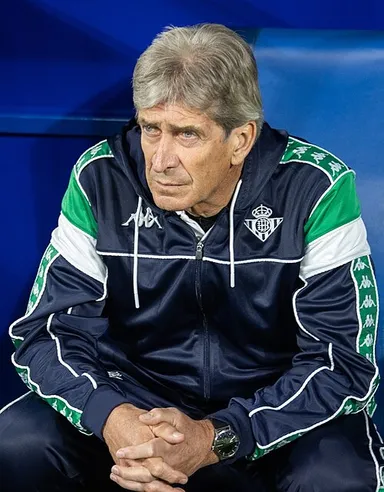 Photo: Vyacheslav Evdokimov. Source and license in Image credits.
Attacking fluency built on continuity
1988—Present · Manchester City · Real Betis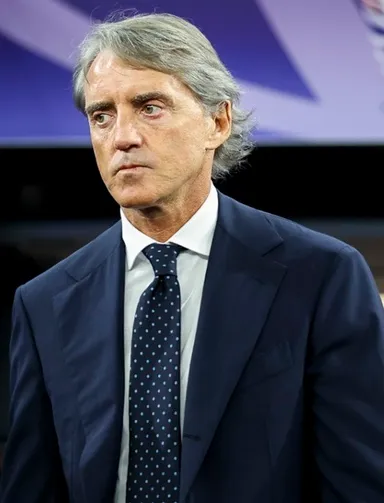 Photo: M.Sadegh Nikgostar. Source and license in Image credits.
Creative attacking play supported by midfield balance
2001—Present · Inter Milan · Manchester City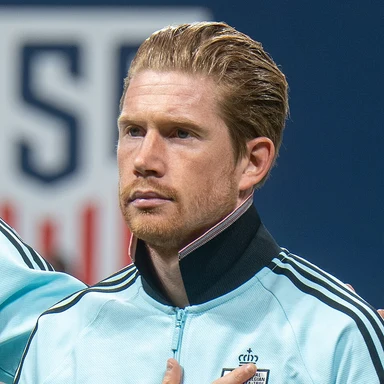 Photo: Bryan Berlin. Source and license in Image credits.
KRC Genk · Chelsea · Werder Bremen
2008—Present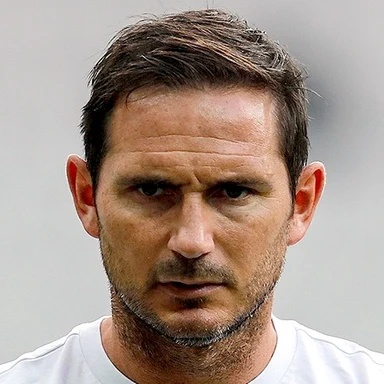 Photo: Mehdi Bolourian / Fars Media Corporation. Source and license in Image credits.
West Ham United · Swansea City · Chelsea
1995—2017
Villarreal CF · Atlético Madrid · Manchester City
2015—Present
FC Barcelona · Paris Saint-Germain · Inter Miami CF
2004—Present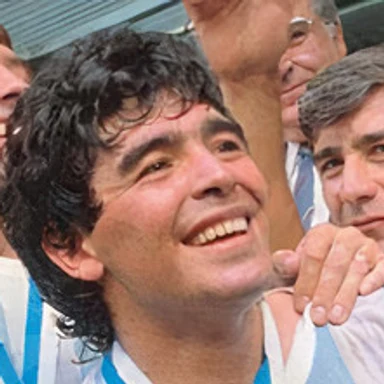 Photo: Unknown author. Source and license in Image credits.
Argentinos Juniors · Boca Juniors · Barcelona
1976—1997 Photo: Unknown author. Source and license in Image credits.
River Plate · Huracán · Millonarios
1945—1966
AS Monaco · Juventus · Arsenal
1994—2014
Cruzeiro · PSV · Barcelona
1993—2011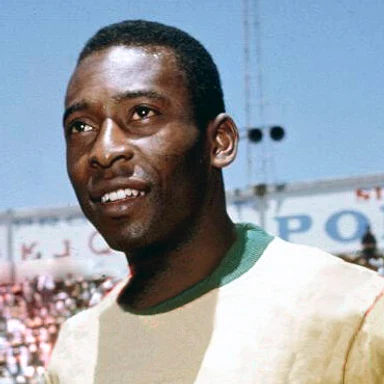 Photo: Unknown author. Source and license in Image credits.
Santos · New York Cosmos
1956—1977Statistics are displayed only within the scope supported by each cited source.
Manchester CityManchester City: Agüero’s record and 93:20Manchester CityManchester City: Agüero’s retirement and fifteen trophiesManchester CityManchester City: club trophy chronologyAtlético MadridAtlético Madrid: five seasons, appearances, goals and assistsFC BarcelonaBarcelona: Agüero’s five appearances and retirementIndependienteIndependiente: a tribute to its academy graduateEl GráficoEl Gráfico: Agüero’s completed career statisticsNational Football TeamsAgüero: league seasons and senior international match registerBDFutbolBDFutbol: Agüero’s league season registerAFAAFA: Agüero reaches one hundred senior appearancesRSSSFRSSSF: alternative international registerPremier LeaguePremier League: Agüero’s Hall of Fame inductionPremier LeaguePremier League: Agüero’s player card and finishing analysisManchester CityManchester City: the 2014/15 Golden BootManchester CityManchester City: Agüero’s 2018/19 seasonManchester CityManchester City: Agüero on developing under GuardiolaManchester CityManchester City: the January 2019 win over LiverpoolUEFAUEFA: Atlético’s 2010 Europa League final victoryUEFAUEFA: Argentine players’ Champions League recordsManchester CityManchester City: Agüero’s youth international achievementsManchester CityManchester City: Argentina win the 2021 Copa AméricaUEFAUEFA: Atlético win the 2010 Super Cup