11

La Liga
First · 1939–40
Latest · 2020–21View winning seasons
1939–40 · 1940–41 · 1949–50 · 1950–51 · 1965–66 · 1969–70 · 1972–73 · 1976–77 · 1995–96 · 2013–14 · 2020–21
Club Atlético de Madrid, S.A.D.
Madrid’s red-and-white club connects the early Metropolitano, the Calderón and a modern European revival, with academy captains and returning leaders at its heart.
Overview
Historical assessment
Overall Historical Index
88/100Football Legends DB editorial assessment
Football Legends DB editorial / historical index. This is not an official FIFA or UEFA ranking, a live form table or a player rating.
Version 1.0: editors assess eight dimensions from 0–100 using the cited historical record. The overall score is their equally weighted arithmetic mean, rounded to the nearest whole number. Trophy totals are evidence, not points automatically added to a formula.
Assessment guide: 0–39 limited documented impact; 40–59 established national contribution; 60–79 sustained national or continental influence; 80–94 major international influence; 95–100 a historical benchmark across generations. These are editorial judgements, not measured percentiles. Missing evidence means no published index.
World titles and sustained success across eras inform the historical and international assessments. Scores may be revised when the evidence or editorial assessment changes.
Assessment notes · An editorial assessment balancing eleven league titles, distinct European trophies, influential managers and academy continuity. European final appearances are not counted as titles.
Current chapter
Season
2026–27Verified
Simeone and Koke remain part of the 2026–27 first team. Griezmann’s transfer to Orlando closes his second Atlético spell; his achievements belong to the archive.
Honours
First · 1939–40
Latest · 2020–21First · 1959–60
Latest · 2012–13First · 1985
Latest · 2014First · 2009–10
Latest · 2017–18First · 1961–62
Latest · 1961–62First · 2010
Latest · 2018First · 1974
Latest · 1974First · 1941–47
Latest · 1941–47First · 1951
Latest · 1951History
Founded in Madrid on 26 April 1903.
Zamora won the first two championships during the Aviación period. Herrera’s side added consecutive titles in 1950 and 1951.
Tactical identity · Successive attacking generations
Villalonga’s cup winners reached the European final. Rafael García Tinte took charge for the delayed replay in Stuttgart.
Tactical identity · Wide creativity and shared goalscoring
Explore the defining match ↗The stadium move accompanied league success and the 1974 European Cup final. Luis Aragonés coached the subsequent world-title victory.
Tactical identity · Technical forwards supported by experienced midfielders
Explore the defining match ↗Futre’s direct running became an enduring image of the period. The 1991 and 1992 national cups preceded a new generation.
Tactical identity · Individual acceleration with collective support
A balanced side won the cup in Zaragoza and completed the league title at the Calderón in May.
Tactical identity · A connected midfield and complementary strikers
Explore the defining match ↗Relegation in 2000 led to two seasons in the second division. Torres emerged during rebuilding; Forlán’s goals secured the 2010 Europa League.
Tactical identity · Rebuilding around young leaders and decisive forwards
Explore the defining match ↗European success in 2012 and a cup win at the Bernabéu in 2013 preceded the 2014 league title and two Champions League finals.
Tactical identity · Compact lines, collective defending and fast transitions
Explore the defining match ↗The 2017 stadium move was followed by the 2018 Europa League and Super Cup. A reshaped team won the 2021 league.
Tactical identity · Adapting the shape while retaining collective discipline
Defining games
Cup Winners’ Cup final · replay
Atlético Madrid 3–0 Fiorentina
Replay after a 1–1 draw in May
Neckarstadion, Stuttgart
After May’s 1–1 draw, the replay was delayed by the World Cup. Jones, Mendonça and Peiró scored under Rafael García Tinte.
Intercontinental Cup · second leg
Atlético Madrid 2–0 Independiente
2–1 on aggregate · 1974 edition played in 1975
Vicente Calderón, Madrid
Irureta and Ayala reversed the first-leg defeat. The 1974-edition trophy was decided in April 1975, with a 2–1 aggregate win.
Copa del Rey final
Pantić’s extra-time header won the ninth national cup. The league title followed in May to complete the double.
Europa League final
Atlético Madrid 2–1 Fulham
After extra time
Hamburg Arena, Hamburg
Forlán scored both goals, the winner late in extra time, to beat Fulham in the inaugural Europa League final.
La Liga
Godín’s equaliser and a collective defensive effort earned the point needed to secure the title on the final day.
Legends
Forward
A Madrid-born goalscorer associated with the consecutive league champions of 1950 and 1951.
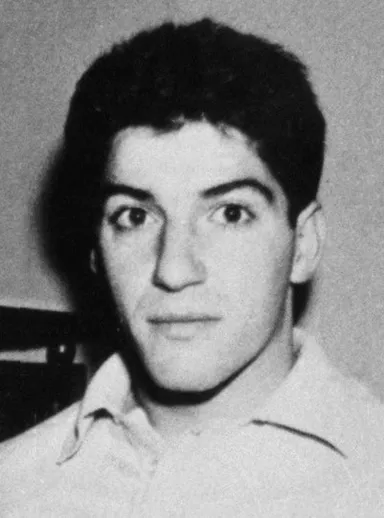 Photo: Unknown authorUnknown author. Source and license in Image credits.
Winger
The long-serving captain and left winger linked the first national cups to the club’s first European trophy.
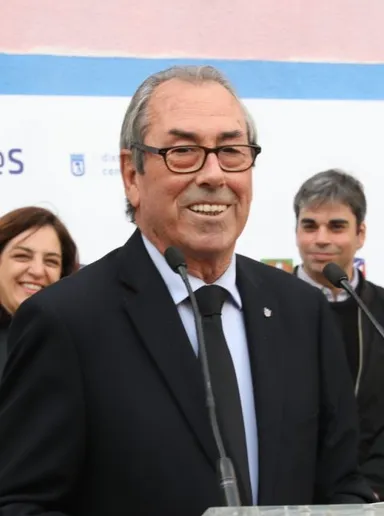 Photo: Diario de Madrid. Source and license in Image credits.
Midfielder
An enduring midfield leader who lifted the Intercontinental Cup and held the appearance record before Koke.
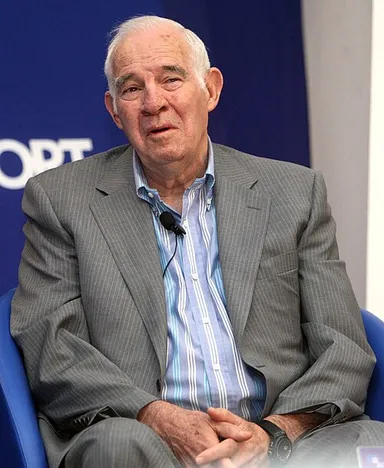 Photo: Doha Stadium Plus Qatar. Source and license in Image credits.
Forward
A scoring and organising forward who moved directly from the playing side into the managerial story.
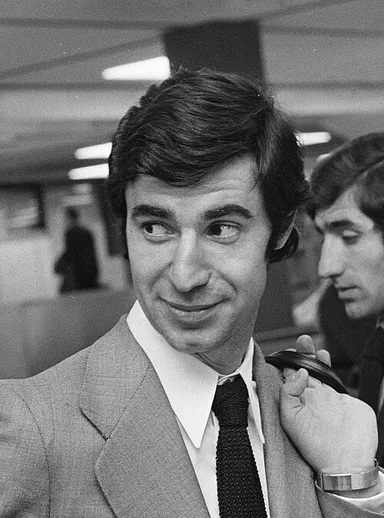 Photo: Hans Peters for Anefo. Source and license in Image credits.
Forward
The elegant penalty-area forward became a defining figure of the first Calderón generation.
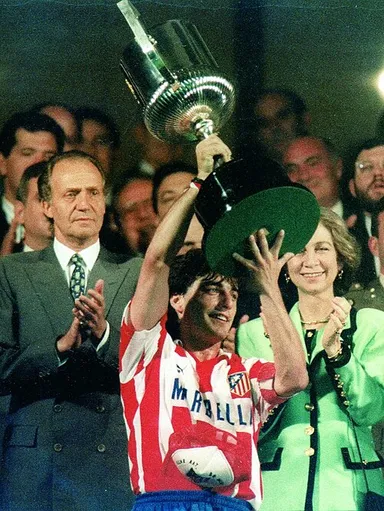 Photo: DIARIO AS. Source and license in Image credits.
Winger
A direct dribbler and supporter favourite whose speed and improvisation shaped the late-1980s and early-1990s attack.
Forward
His ability to receive, protect and connect the ball complemented the midfield runners in Antić’s double-winning team.
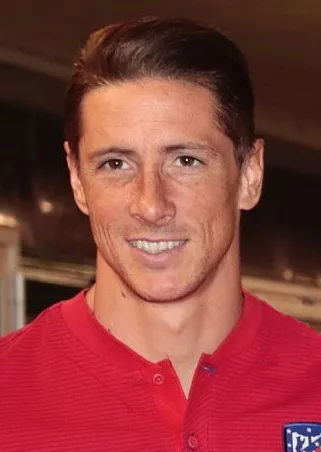 Photo: cristina cifuentes. Source and license in Image credits.
Forward
The academy striker became a young captain during rebuilding, then returned for a second spell and the 2018 Europa League triumph.
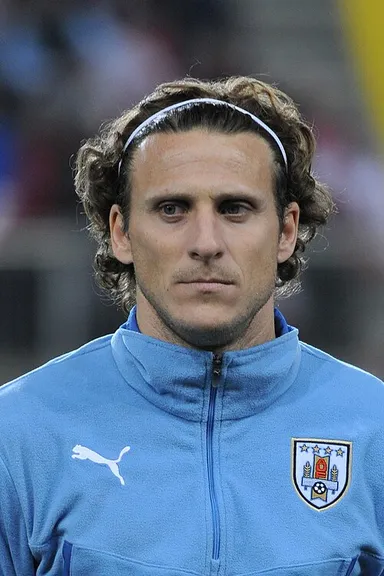 Photo: Ailura. Source and license in Image credits.
Forward
Two goals in Hamburg ended the long wait for another major European cup and made finishing the centre of the 2010 story.
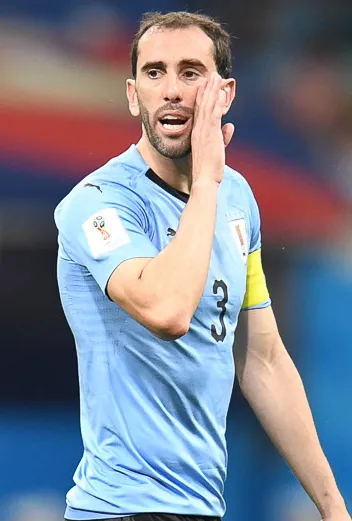 Photo: Анна Нэсси. Source and license in Image credits.
Defender
The defensive leader’s header at the Camp Nou secured the 2014 league championship.
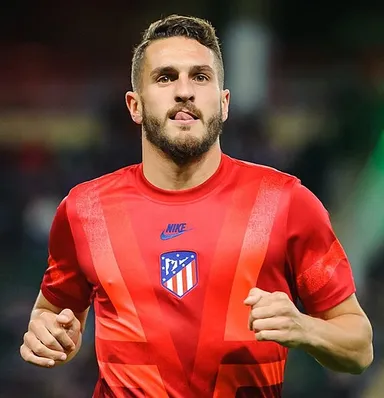 Photo: Анна Нэсси. Source and license in Image credits.
Midfielder
The academy midfielder and captain became the club’s appearance leader and reached the 700-match milestone.
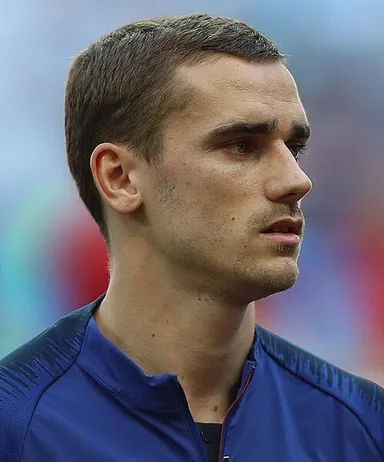 Photo: Антон Зайцев. Source and license in Image credits.
Forward
Movement between midfield and attack made him a creative leader and the club’s record scorer across two spells.
A Madrid-born goalscorer associated with the consecutive league champions of 1950 and 1951.
Photo: Unknown authorUnknown author. Source and license in Image credits.The long-serving captain and left winger linked the first national cups to the club’s first European trophy.
Photo: Diario de Madrid. Source and license in Image credits.An enduring midfield leader who lifted the Intercontinental Cup and held the appearance record before Koke.
Photo: Doha Stadium Plus Qatar. Source and license in Image credits.A scoring and organising forward who moved directly from the playing side into the managerial story.
Photo: Hans Peters for Anefo. Source and license in Image credits.The elegant penalty-area forward became a defining figure of the first Calderón generation.
Photo: DIARIO AS. Source and license in Image credits.A direct dribbler and supporter favourite whose speed and improvisation shaped the late-1980s and early-1990s attack.
His ability to receive, protect and connect the ball complemented the midfield runners in Antić’s double-winning team.
Photo: cristina cifuentes. Source and license in Image credits.The academy striker became a young captain during rebuilding, then returned for a second spell and the 2018 Europa League triumph.
Photo: Ailura. Source and license in Image credits.Two goals in Hamburg ended the long wait for another major European cup and made finishing the centre of the 2010 story.
Photo: Анна Нэсси. Source and license in Image credits.The defensive leader’s header at the Camp Nou secured the 2014 league championship.
Photo: Анна Нэсси. Source and license in Image credits.The academy midfielder and captain became the club’s appearance leader and reached the 700-match milestone.
Photo: Антон Зайцев. Source and license in Image credits.Movement between midfield and attack made him a creative leader and the club’s record scorer across two spells.

Rodri’s influence comes from keeping an ambitious team connected. Major titles and individual awards mark an active career built on positioning, passing judgment and defensive responsibility.

Elite goal protection across different defensive systems, with the 2022 European final as a defining reference.
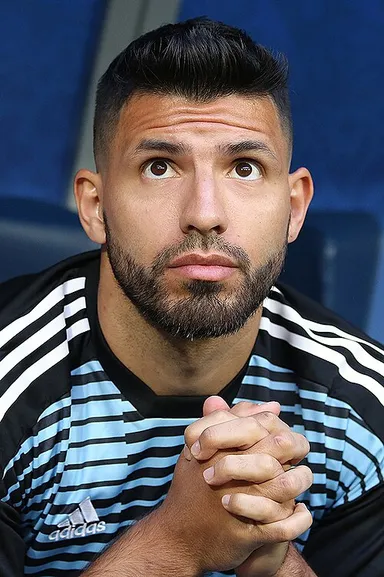 Photo: Кирилл Венедиктов. Source and license in Image credits.
City’s record scorer combined the defining 93:20 moment with a decade of repeatable penalty-area craft and tactical adaptation.
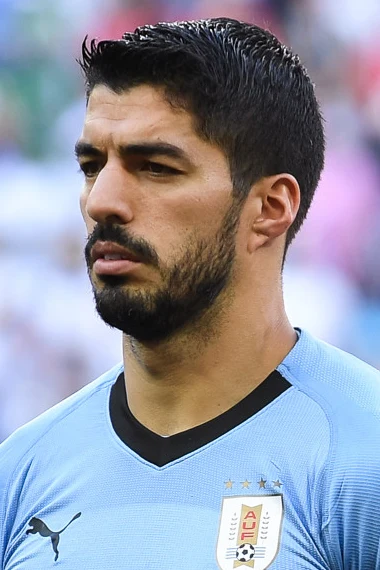 Photo: Какая то женщина / soccer.ru. Source and license in Image credits.
Uruguay’s record scorer, a Copa América champion and a central partner in Barcelona’s Messi–Suárez–Neymar attack.
Coaching legacy
Club tenure only. Honours include senior first-team league, cup, super cup, continental and world titles where verified. European titles count European Cup / Champions League wins.
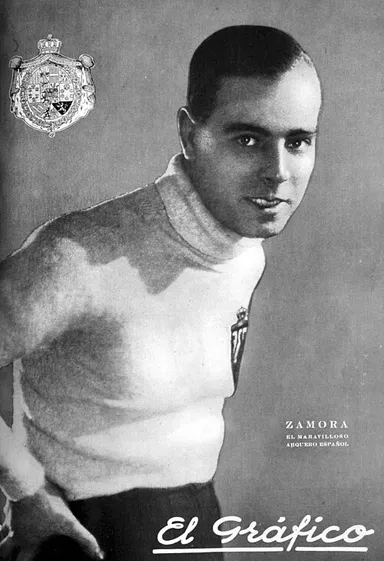 Photo: El Gráfico. Source and license in Image credits.
1939–1946
Led the first two league titles during the Athletic Aviación period.
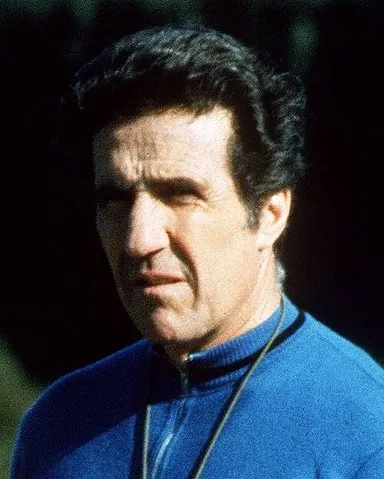 Photo: Original: Unknown authorUnknown author
Derivative work: Виктор Не Вацко. Source and license in Image credits.
1949–1953
His 1950 and 1951 champions established another title-winning generation at the old Metropolitano.
1959–1962
Won the 1960 and 1961 cups and led the European campaign to its first final. Rafael García Tinte coached the September 1962 replay.
Photo: Doha Stadium Plus Qatar. Source and license in Image credits.1974–1980 · 1982–1987 · 1991–1993 · 2001–2003
The former attacking leader won the Intercontinental Cup, a league and three national cups as coach, later returning to guide promotion.
 Photo: Sladjana Vujic. Source and license in Image credits.
1995–1998 · 1999 · 2000
Combined Kiko’s linking play, Pantić’s delivery and a balanced midfield in the 1996 double.
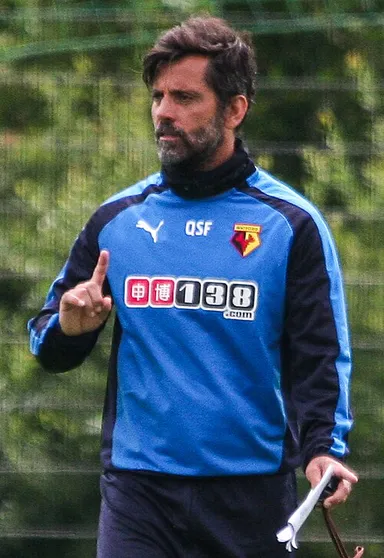 Photo: Franziska. Source and license in Image credits.
2009–2011
Led the 2010 Europa League winners, restoring a European trophy before Simeone’s arrival.

2011–present
Two leagues, two Europa Leagues, a Copa del Rey and three super cups define his first eight trophies. The 2014 and 2016 Champions League finals were runner-up finishes.
European Cup / Champions League titles only in the European-title column
Club identity
Simeone’s compact defending is one major chapter in a history that also contains Collar’s wing play, Futre’s dribbling and Antić’s balanced midfield.
Returning figures such as Luis Aragonés, Torres and Simeone connect different sporting generations without erasing periods of crisis.
International forwards from Futre to Forlán and Griezmann complemented academy leaders, bringing different forms of attacking invention.
The academy joins football development to education. Torres, Gabi and Koke show how youth pathways can produce senior leaders.
The red-and-white shirt, Calderón memories and the inherited Metropolitano name maintain links across changing homes.
The 1962 breakthrough, intercontinental title and three Europa Leagues carry distinct meanings. European Cup final defeats are recorded alongside success.
Identity
Stadium
Current home / Madrid
Atlético opened its new football home against Málaga on 16 September 2017. The name recalls the earlier Metropolitano at a different site.
Former home / Madrid
The riverside stadium hosted the intercontinental champions, the 1996 double and the early Simeone years.
Former home / Madrid
A separate historical ground, remembered by the museum for the 1950s champions and the first European trophy. Wartime interruptions are part of its history.
Rivalries
Madrid’s city rivalry links national cup finals, league races and the European finals of 2014 and 2016.
Atlético’s 1960 cup breakthrough and 2013 win at the Bernabéu are part of a history larger than the two Champions League final defeats.
Development
The academy combines sporting progression with educational and social development, supporting players beyond the demands of match results.
Historical role
Torres, Gabi, Koke and Saúl show how academy graduates became first-team leaders. Senior signings such as Forlán and Griezmann belong to the recruitment story.
Famous graduates
Collection
Kits
Home kit / 1961–62
Home kit / 1995–96
Home kit / 2013–14
Commercial
TECHNICAL SUPPLIER
Kit studies are abstract colour and pattern references, not reproductions of official shirts.
Records
The club’s 700th-appearance tribute is a historical milestone, not his current running total. Koke remains active in the 2026–27 squad.
As of 2026-09-15The 2026 final ended 2–2 after extra time and was lost 3–4 on penalties; a runner-up finish adds no title.
As of 2026-09-15The President Cup ran from 1941 to 1947; the Eva Duarte title was won in 1951. They remain separate from the ten Copas del Rey and two modern Spanish Super Cups.
As of 2026-09-15The 1962 Cup Winners’ Cup and 1974-edition Intercontinental Cup are separate trophies. The latter was won in April 1975.
As of 2026-09-15Two leagues, one national cup, two Europa Leagues and three super cups. Champions League runner-up finishes do not add titles.
As of 2026-09-15