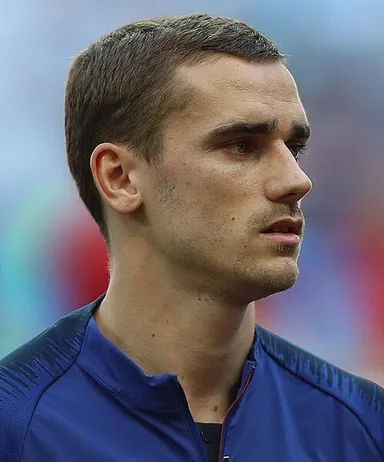
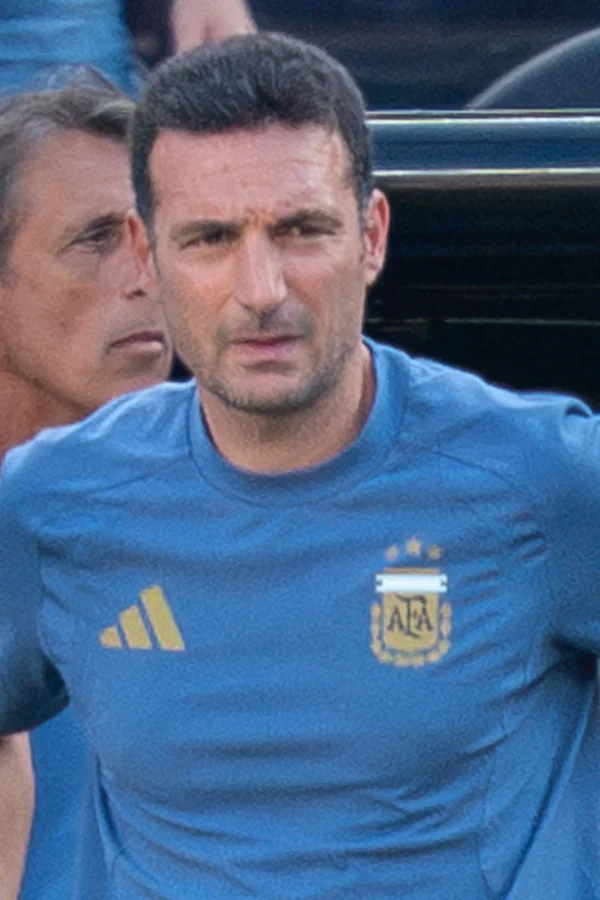
Diego Simeone — historical portraitPhoto: Carlos Delgado / Wikimedia Commons. Source and license in Image credits.
Coach profileActive

ARG · 2000s–2020s · 2006—Present

Diego Simeone

Collective resistance, adaptable structure

Simeone made Atlético a sustained challenger by connecting defensive distances, forward outlets and collective conviction. His career also shows adaptation: the familiar 4-4-2 developed alongside wing-back systems and different ways of carrying an attacking threat.

Full name
Diego Pablo Simeone
Birthplace
Buenos Aires, Argentina
Coaching since
2006
Latest archived appointment
Atlético Madrid · 2011 — Present
Nationality
Argentina
Born
28 Apr 1970
Primary shape
4-4-2
Appointments
7
Selected honours
10

Documented performance

Atlético · first 800 official matches · 2012–2026

Atlético first team · all official competitions · the club’s published 800-match milestone against Villarreal. Historical snapshot, not a current appointment total. Uses the club’s W–D–L convention; no league PPG is assigned to mixed competitions.

Matches
800
Wins
470
Draws
168
Losses
162
Win rate
58.8%
Sources & methodology

Stored archive snapshots, not live counters. Missing values are not zero; records with different scopes are never added together.

Win rate = wins ÷ matches. Points per game requires an explicit scoring convention; cup records are not silently treated as league points.

01

Career origins

From midfield competitor to collective organiser

Documented history

Simeone moved directly from the end of his playing career at Racing into coaching in 2006. Titles in Argentina came before the long Atlético appointment; this was not an assistant-to-head-coach pathway.

Key influences

Marcelo Bielsa

Former Argentina national-team coach

Documented history

Simeone played for Bielsa with Argentina and publicly expressed admiration for his professionalism before facing him in the 2012 final. That documented relationship does not make their tactical models identical.

Formative years

  1. 1994–1997 / 2003–2005

    Learning Atlético from inside the team

    Atlético Madrid ↗

    Player

    Two playing spells included the 1995/96 league-and-cup double. Returning as coach therefore meant working in a club whose expectations and identity he already knew.

  2. 2006

    Racing: the first coaching responsibility

    Racing Club

    Head coach

    The club where he finished playing became the starting point of his managerial career, followed later that year by Estudiantes.

  3. 2006–2008

    Two Argentine championships

    Estudiantes de La Plata / River Plate

    Head coach

    Estudiantes won the 2006 Apertura under Simeone; River followed with the 2008 Clausura. These were separate short-tournament titles, not two full European-style league seasons.

  4. 2009–2011

    Different problems before Madrid

    San Lorenzo / Catania / Racing Club

    Head coach

    After San Lorenzo, a spell at Catania brought a different competitive context. Simeone later singled it out as an important encounter with difficulties unlike those he had known in Argentina, before returning to Racing.

  5. 2011–2012

    A return followed by immediate European success

    Atlético Madrid ↗

    Head coach

    He arrived in December 2011 and won the Europa League the following May. The early success established the working foundation for a much longer project.

Breakthrough · 2006

The Estudiantes breakthrough

Estudiantes de La Plata

2006 champions

Argentine Apertura

Documented history

On 13 December 2006, Estudiantes beat Boca Juniors 2–1 in the title play-off. Verón captained Simeone’s side as the club returned to the top of Argentine football after 23 years.

Editorial interpretation

The early career combined championship pressure with more constrained environments. Atlético’s later identity should be read as a coaching response shaped across those settings, not simply a replay of his combative playing image.

How it shaped their coaching

Editorial interpretation

His distinction between playing on instinct and maintaining a team’s balance helps explain the shift from individual competitor to collective organiser.

Career origins · sources
02

Tactics

Tactical identity

Playing principles and tactical tendencies · qualitative assessment.

Coaching identity

Make every line part of the contest

Simeone’s football is an argument for collective organisation rather than a fixed depth of defending. Compactness, a credible forward outlet and players willing to adjust their jobs make the structure work.

  • Compact distances
  • Selective pressure
  • Forward outlets

Tactical principles

Protect the centre together

The defensive unit must move as a group; a compact block loses its purpose if the next line does not cover the player stepping out.

Keep an exit from pressure

A forward connection gives a deep block a way to advance. Without it, clearances simply restart the opponent’s attack.

Change the shape, preserve the distances

Back-four and back-five systems offer different cover and width. Their value depends on where the midfield and forwards move, not just the defensive headcount.

03

Tactical analysis

Football philosophy

Start with the team you have

In his 2014 UEFA interview, Simeone framed coaching around exposing strengths and concealing weaknesses. The implication is practical: choose the distances and responsibilities the squad can sustain, rather than impose one idealised possession model.

A formation is not a behaviour

UEFA’s analysis of the Manchester City tie shows how the same back-five framework can defend extremely deep or support a forceful attacking phase. Line height, wing-back ambition and pressure on the ball determine the actual game.

Experience does not win the next final

Before facing Athletic in 2012, Simeone warned that knowing the pressure of a final guarantees nothing. His public message connects emotional preparation with the immediate contest rather than treating past success as protection.

Tactical principles

Cover behind the first challenge

The block works when nearby players protect the space vacated by a challenge. Read compactness as a relationship between lines, not eleven players permanently retreating towards their own goal.

Let the forwards connect the block

The 2016 return to 4-4-2 restored familiar relationships around Griezmann and a partner. A second forward can support the first pass out instead of leaving the striker alone against recovering defenders.

Use the wing-backs to advance

The 2020/21 switch to three centre-backs gave the flanks greater attacking responsibility while retaining two forward references. Width became a route forward, not simply another layer of defensive cover.

Raise pressure when the middle is lost

In Porto, advancing Griezmann and Llorente after half-time helped Atlético contest the game further upfield. The adjustment addressed access to midfield, not merely the nominal formation.

Treat set pieces as an attacking route

Godín’s header from Koke’s corner at the Camp Nou secured the draw Atlético needed in 2014. A well-organised side can turn a restart into a decisive attack even when open-play opportunities are limited.

Keep the attacking cost visible

The 2022 City tie exposed the trade-off: very deep protection can restrict an opponent but reduce one’s own attacking time. Surviving a phase and creating enough chances to win a tie are different tasks.

Transition sequence

  1. 01Win the ball with cover close enough to contest the second action.
  2. 02Find the forward connection before the opponent reforms its lines.
  3. 03Support the receiver with a runner, not only a hopeful clearance.
  4. 04Advance the wide player when central cover is secure.
  5. 05If the break closes, reconnect the team rather than force an isolated attack.

Illustrative sequence, not a measured event model.

Match-state management

Defending a narrow advantage

Shorten distances while retaining an outlet; the 2014 title decider rewarded resilience without abandoning a route to goal.

Unable to reach midfield

Move the pressure forward as in Porto, accepting that higher wing-backs also leave space behind.

Recovering from a deficit

Change the attacking occupation: Carrasco’s half-time introduction in the 2016 final helped produce an equaliser.

Playing with fewer players

Reassign roles without removing every attacking option; Griezmann became the central outlet in Porto’s closing phase.

Tactical analysis · sources and scope

Interpretation is editorial, not an official rating or a direct quotation. Match results, team statistics and formations retain their documented sources.

04

Tactical analysis

Signature systems & defining teams

Signature systems, tactical evolution and defining teams are read together. A starting formation does not describe every phase of play.

2013–2014

The title-winning compact block ↗

4–4–2 · Schematic, not tracking data

The 2013/14 side made mutual cover and competitive continuity its base. At the Camp Nou, losing Diego Costa and Arda Turan to injury did not end its challenge; a set-piece equaliser preserved the championship position.

Tactical evolution

A collective defensive reference with two forward connections and an important role for restarts.

Defining team · documented record

2013/14 LaLiga champions

2020–2021

Renewing the attack through wing-backs ↗

3–5–2 · Schematic, not tracking data

With three centre-backs, the 2020/21 team gave its flanks greater responsibility and kept two players ahead. Suárez added a penalty-area reference; the title was won with a different attacking balance from the first championship side.

Tactical evolution

An additional centre-back supported a broader set of attacking routes, rather than simply adding a defender.

Defining team · documented record

2020/21 LaLiga champions · 86 points

LaLiga 2020/21 · 38 matches

League wins
26
League goals
67
2021–2022

One framework, different heights ↗

5–3–2 · Schematic, not tracking data

Porto and Manchester City in 2021/22 illustrate opposite uses of a back five: push the game forward through wider pressure, or close space close to goal. The contrast is central to understanding Simeone beyond a single defensive label.

Tactical evolution

Wing-back height and the forwards’ defensive roles changed with the opponent and game state.

Defining team · documented record

Champions League quarter-finalists · 2021/22

Defining matches

UEFA Europa League · 2011/12

Atlético Madrid3–0Athletic Club

Final

The first European confirmation

Falcao scored twice before the interval and Diego completed the win. Within his first season, Simeone had turned an established attacking reference into the decisive weapon of a European final.

La Liga · 2013/14

Barcelona1–1Atlético Madrid

Final matchday

A championship secured away from home

After two early injuries and Sánchez’s opener, Godín headed in Koke’s corner. Atlético’s 1–1 draw was enough: the result tested their organisation and recovery after disruption, not merely their ability to protect an early lead.

UEFA Champions League · 2015/16

Real Madrid1–1Atlético Madrid

Final · 1–1 after extra time · Real Madrid won 5–3 on penalties

A recovery that did not become a trophy

Carrasco’s equaliser brought Atlético back after Ramos’s opener and Griezmann’s missed penalty. The match remained 1–1 after extra time; Real Madrid won the shoot-out 5–3. A final reached and a final won remain different achievements.

Tactical analysis · sources and scope

Interpretation is editorial, not an official rating or a direct quotation. Match results, team statistics and formations retain their documented sources.

05

Profile

Management style

Leadership, preparation and shapes in context.

Introduce responsibility progressively

Discussing Lemar in 2018, Simeone explained that he initially reduced defensive obligations to release the player’s talent before incorporating collective work. This is role-specific integration, not evidence that every player receives identical instructions.

Give the group a common explanation

The 2014 group ethic was built around knowing how the team needed to play. Interpreted as a management principle, that common explanation matters more than asking players for effort without specifying what their effort should protect.

Intensity with a coaching distance

Simeone distinguished a player’s instinct from a coach’s responsibility to maintain the team’s psychological balance. His touchline energy is visible; the useful coaching question is how that energy becomes clear, executable tasks.

Strengths & trade-offs

Strengths

  • Organised collective cover under pressure
  • Reassigning roles within a match
  • Sustaining a long-term competitive identity

Trade-offs

  • Deep defending can reduce the time available to attack
  • Advanced wing-backs leave recovery space behind them
  • A disconnected striker makes regains harder to retain
06

Tactical analysis

Why this coach matters

Breaking the two-club title pattern

The 2014 league success ended a Barcelona–Real Madrid sequence of titles; the 2021 championship showed Atlético could return to the summit with a changed squad and structure.

European stature, with its limits

Europa League and UEFA Super Cup victories sit alongside two Champions League final defeats. The record deserves both parts: sustained European relevance without rewriting near-misses as championships.

Continuity without a frozen playbook

The long Atlético appointment is not one unchanging defensive scheme. The shift towards three centre-backs and the contrasting use of wing-backs demonstrate an evolving set of solutions within a recognisable team identity.

Tactical analysis · sources and scope

Interpretation is editorial, not an official rating or a direct quotation. Match results, team statistics and formations retain their documented sources.

07

Career

Management career

Every senior appointment remains distinct in one compact record.
Managerial appointment record
PeriodOrganisationRole
2006—2006
Racing Club
Head coach
2006—2007
Estudiantes de La Plata
Head coach
2008—2008
River Plate
Head coach
2009—2010
San Lorenzo
Head coach
2011—2011
Catania
Head coach
2011—2011
Racing Club
Head coach
2011—Now
Atlético MadridAppointed in December 2011; contract extended to June 2027. The dated statistical snapshots below are not live appointment totals.
Performance record
Trophies
8
Head coach
Sources & methodology

Stored archive snapshots, not live counters. Missing values are not zero; records with different scopes are never added together.

Win rate = wins ÷ matches. Points per game requires an explicit scoring convention; cup records are not silently treated as league points.

Competition record

Competition record
CompetitionPeriodMatchesWDLWin %
Atlético · first 800 official matches

Atlético first team · all official competitions · the club’s published 800-match milestone against Villarreal. Historical snapshot, not a current appointment total. Uses the club’s W–D–L convention; no league PPG is assigned to mixed competitions.

2012–202680047016816258.8%
Atlético · first 500 LaLiga matches

LaLiga only · first 500 matches under Simeone. Overlaps the all-competition snapshot; these records must not be added together. Three points per win and one per draw.

2012–20255003061128261.2%
Atlético · title-winning league season

LaLiga 2020/21 only · complete 38-match championship season. A subset of both milestone records, not extra career matches.

2020/2138268468.4%
Sources & methodology

Stored archive snapshots, not live counters. Missing values are not zero; records with different scopes are never added together.

Win rate = wins ÷ matches. Points per game requires an explicit scoring convention; cup records are not silently treated as league points.

08

Honours

Major achievements

Documented senior head-coach team honours: two Argentine short-tournament championships and eight Atlético trophies in the club’s 800-match retrospective. Excludes playing honours, individual awards and friendly tournaments; not a live career counter.

DOMESTIC LEAGUE1

Argentine Primera División · Apertura

Estudiantes de La Plata

DOMESTIC LEAGUE1

Argentine Primera División · Clausura

River Plate

DOMESTIC LEAGUE2

La Liga

Atlético Madrid

DOMESTIC CUP1

Copa del Rey

Atlético Madrid

DOMESTIC CUP1

Supercopa de España

Atlético Madrid

CONTINENTAL2

UEFA Europa League

Atlético Madrid

CONTINENTAL2

UEFA Super Cup

Atlético Madrid

Selected trophies by club

Documented senior head-coach team honours: two Argentine short-tournament championships and eight Atlético trophies in the club’s 800-match retrospective. Excludes playing honours, individual awards and friendly tournaments; not a live career counter.

Sources & methodology

Stored archive snapshots, not live counters. Missing values are not zero; records with different scopes are never added together.

G/M = goals ÷ appearances. G+A = goals + assists. Per-90 metrics use documented minutes.

09

Archive

Connected archive

Relationships situate the manager inside the wider archive.

Sources

Career and honour facts cite their underlying sources, including clubs and governing bodies. Tactical readings are identified as editorial analysis.

UEFASimeone’s Atlético faith rewardedAccessed 2026-09-15Atlético MadridSimeone — official coaching chronologyAccessed 2026-09-15Atlético MadridA double-winning player returns as coachAccessed 2026-09-15Estudiantes de La PlataEstudiantes — the 2006 championshipAccessed 2026-09-15Atlético MadridSimeone — first 800 Atlético matchesAccessed 2026-09-15Atlético MadridSimeone — first 500 LaLiga matchesAccessed 2026-09-15LaLigaThe road to the 2020/21 championshipAccessed 2026-09-15UEFASimeone before the 2012 Europa League finalAccessed 2026-09-15UEFAAtlético 3–0 Athletic — 2012 finalAccessed 2026-09-15UEFAGodín heads Atlético to the league titleAccessed 2026-09-15UEFAThe 2016 final — a draw, then a shoot-outAccessed 2026-09-15UEFAAtlético reaping the benefits of Simeone’s approachAccessed 2026-09-15UEFAAtlético’s 2020/21 move to a back threeAccessed 2026-09-15UEFAPorto 1–3 Atlético — technical analysisAccessed 2026-09-15UEFAFive at the back — the 2021/22 technical reviewAccessed 2026-09-15UEFAReturning to 4-4-2 against PSVAccessed 2026-09-15Atlético MadridAtlético’s 2018/19 squadAccessed 2026-09-15Atlético MadridSimeone on integrating LemarAccessed 2026-09-15Atlético MadridSimeone on his formative Catania spellAccessed 2026-09-15Atlético MadridSimeone extends his contract to 2027Accessed 2026-09-15Atlético MadridReal Sociedad–Atlético — September 2026 previewAccessed 2026-09-15UEFAUEFA 2016/17 — Atlético team profileAccessed 2026-09-15