Dick Donald
Aberdeen chairman
Documented history
In his Aberdeen interview, Ferguson identifies Donald’s understanding and support as a major influence on the manager he became.

Era-building leader
A serial rebuilder whose Manchester United teams changed across generations while retaining pace, competitive authority and late-game conviction.
Manchester United · all competitions · 1986–2013
Manchester United first team · complete 1986–2013 appointment, all competitions including Charity/Community Shields. MUFCInfo match-ledger convention; excludes friendlies and Scottish appointments. The Premier League subset must not be added again. No league PPG is assigned to this mixed-competition record.
Stored archive snapshots, not live counters. Missing values are not zero; records with different scopes are never added together.
Win rate = wins ÷ matches. Points per game requires an explicit scoring convention; cup records are not silently treated as league points.
Career origins
Ferguson reached Manchester through Scottish management, not a direct appointment at an elite English club. Aberdeen was a formative workplace as well as a source of trophies.
Aberdeen chairman
In his Aberdeen interview, Ferguson identifies Donald’s understanding and support as a major influence on the manager he became.
East Stirlingshire / St Mirren
Manager
Early Scottish appointments preceded the move to Aberdeen in 1978.
Aberdeen
Manager
Ferguson credits his maturation at Aberdeen, including the support of chairman Dick Donald, as essential to his later work.
Aberdeen
Manager
The 1979/80 league title was the first of Ferguson’s three at Aberdeen. European success followed a domestic challenge already capable of lasting beyond a single cup tie.
Manager
Appointed in November 1986, he restored league success in 1992/93 after United’s long wait since 1967.
Aberdeen
1982/83 European Cup Winners’ Cup winnersEuropean Cup Winners’ Cup
Aberdeen defeated Real Madrid after extra time. The achievement demonstrated that a carefully developed Scottish team could challenge established European power.
His route helps explain why recruitment, standards and institutional support belong alongside match tactics in an account of his coaching.
Tactics
Coaching identity
Preserve the ambition while changing the team. Ferguson’s defining continuity was the ability to rebuild personnel and redistribute responsibilities across successive competitive cycles.
Varied across several generations of teams.
Front-foot pressure with strong wide support.
Comfortable with both circulation and early forward play.
Width and crossing were recurring attacking tools.
Teams often accelerated rapidly after regaining the ball.
Tactical analysis
The next successful team cannot simply inherit the previous side’s jobs. Recruitment and departures altered United’s balance, from established title winners to the younger Rooney–Ronaldo generation.
The European side of 2008 placed more emphasis on defensive security than the 1999 winners. Adaptation was compatible with attacking ambition, not a departure from it.
His Aberdeen recollections stress personal maturation and support from the club. Authority did not remove the need to learn from difficult experiences.
A forward threat makes defensive organisation useful: recovery should offer a route into attack, rather than merely another clearance.
Wide delivery can serve runners rather than a static target. Aberdeen’s winner in Gothenburg came from McGhee’s cross and Hewitt’s arrival.
The 2008 UEFA account highlights work on both closing games down and moving quickly from defence into attack. The two phases were designed together.
The 1999 final illustrates the value of different attacking options: both late scorers began as substitutes. It does not establish that every late substitution was successful.
Recruiting Ferdinand was part of a wider rebuilding process. The later attacking generation depended on a renewed defensive base, not only on forward talent.
Chasing an equaliser demands extra penalty-area presence; protecting a result demands cover. The Barcelona and Moscow finals show why one risk setting cannot describe his whole career.
Illustrative sequence, not a measured event model.
Maintain forward outlets without disconnecting midfield from the back line.
Reduce open space while retaining a threat that prevents uncontested pressure.
Add complementary runners and attacking options, accepting more transition risk.
Adjust attacking commitment to the opponent and tie situation, not just the club’s attacking reputation.
Interpretation is editorial, not an official rating or a direct quotation. Match results, team statistics and formations retain their documented sources.
Tactical analysis
Signature systems, tactical evolution and defining teams are read together. A starting formation does not describe every phase of play.
Collective development became a European challenge. In Gothenburg, Aberdeen carried a genuine attacking threat rather than relying solely on surviving pressure.
The learning period preceded United; it should not be reduced to a rehearsal of his later English teams.
1982/83 European Cup Winners’ Cup winners
The first Premier League title ended a wait stretching back to 1967. It established the foundation for repeated renewal rather than completing one permanent team.
Sustained domestic success followed the initial rebuilding period.
1992/93 Premier League champions
The 1999 final exposed the value of attacking depth when the starting plan did not secure control. Sheringham and Solskjær supplied the decisive late contributions.
The finish reflects squad options and persistence, not proof that the whole final was tactically comfortable.
1998/99 league, FA Cup and Champions League treble
Ronaldo and Rooney belonged to a rebuilt side with greater emphasis on collective defence. European success required managing games as well as accelerating through them.
The contrast with 1999 is an evolution in balance, not a claim that every match used the same formation.
2007/08 UEFA Champions League winners
Real Madrid1–2Aberdeen
Final · after extra time
Black opened the scoring; Juanito equalised from the penalty spot. Hewitt’s extra-time header from McGhee’s cross rewarded a team that continued to attack.
Manchester United2–1Bayern Munich
Final
Without the suspended Keane and Scholes, United struggled to control midfield. Sheringham redirected Giggs’ attempt for the equaliser, then flicked Beckham’s next corner toward Solskjær for the winner. Two connected set-piece actions changed a final Bayern had largely controlled.
Manchester United1–1Chelsea
Final · after extra time · Manchester United won 6–5 on penalties; the match score remained 1–1.
Ronaldo’s header was answered by Lampard. Chelsea also threatened the woodwork; the shoot-out outcome should not obscure how closely contested the match became.
Interpretation is editorial, not an official rating or a direct quotation. Match results, team statistics and formations retain their documented sources.
Profile
Ferguson’s Aberdeen recollections emphasise responsibility and trust. Reading his intensity only as intimidation misses the learning relationship he describes with chairman Dick Donald.
In the 1999 final Ferguson introduced Sheringham, then Solskjær with nine minutes remaining. Both supplied decisive contributions. The management lesson is to keep alternative attackers involved and ready; it is not evidence that substitutions remove risk or guarantee a late comeback.
A useful portrait includes the learner at Aberdeen as well as the commanding figure at United. His own recollections credit the environment around him, tempering the idea of success through force of personality alone.
Tactical analysis
His league record spans changing squads, not a single exceptional season.
The defensive evolution identified before the 2008 final complicates the idea of a manager defined only by attacking instinct.
Aberdeen’s European success belongs to his legacy in its own right, not merely as a prelude to Manchester.
Editorial comparison of recurring tendencies, not a ranking. Both coaches changed across eras.
| Dimension | Sir Alex Ferguson | Arsène Wenger ↗ |
|---|---|---|
| Team renewal | Repeated competitive rebuilding | Long-term technical development |
| Attacking route | Wide threat and adaptable transitions | Combinations and coordinated movement |
| European adaptation | Security around mobile attackers | Midfield support and situational adjustment |
| Institutional influence | Competitive standards across generations | Preparation, recruitment and technical identity |
Interpretation is editorial, not an official rating or a direct quotation. Match results, team statistics and formations retain their documented sources.
Career
| Period | Organisation | Role |
|---|---|---|
| 1974—1974 | East Stirlingshire | Manager |
| 1974—1978 | St Mirren | Manager |
| 1978—1986 | Aberdeen Performance record
| Manager |
| 1985—1986 | Scotland | Interim manager |
| 1986—2013 | Manchester United Manchester United first team · complete 1986–2013 appointment, all competitions including Charity/Community Shields. MUFCInfo match-ledger convention; excludes friendlies and Scottish appointments. The Premier League subset must not be added again. No league PPG is assigned to this mixed-competition record. Results after extra time where played; shoot-outs are separate. The 2008 Champions League final remains a 1–1 draw in this ledger.Performance record
| Manager |
Stored archive snapshots, not live counters. Missing values are not zero; records with different scopes are never added together.
Win rate = wins ÷ matches. Points per game requires an explicit scoring convention; cup records are not silently treated as league points.
| Competition | Period | Matches | W | D | L | Win % |
|---|---|---|---|---|---|---|
Manchester United · all competitions Manchester United first team · complete 1986–2013 appointment, all competitions including Charity/Community Shields. MUFCInfo match-ledger convention; excludes friendlies and Scottish appointments. The Premier League subset must not be added again. No league PPG is assigned to this mixed-competition record. Results after extra time where played; shoot-outs are separate. The 2008 Champions League final remains a 1–1 draw in this ledger. | 1986–2013 | 1,500 | 895 | 338 | 267 | 59.7% |
Premier League Manchester United · Premier League only, 1992/93–2012/13. Excludes earlier First Division matches, cups and Scottish appointments. | 1992–2013 | 810 | 528 | 168 | 114 | 65.2% |
Stored archive snapshots, not live counters. Missing values are not zero; records with different scopes are never added together.
Win rate = wins ÷ matches. Points per game requires an explicit scoring convention; cup records are not silently treated as league points.
Honours
Manchester United and Aberdeen honours only · 1978–2013. Includes community shields and the shared 1990 title; excludes St Mirren’s second-tier title and individual awards. Not a complete career total.
Manchester United
Manchester United
Manchester United
Manchester United
Manchester United
Managerial record
Managerial record
Manchester United
Manchester United
Aberdeen
Aberdeen
Aberdeen
Manchester United and Aberdeen honours only · 1978–2013. Includes community shields and the shared 1990 title; excludes St Mirren’s second-tier title and individual awards. Not a complete career total.
Stored archive snapshots, not live counters. Missing values are not zero; records with different scopes are never added together.
G/M = goals ÷ appearances. G+A = goals + assists. Per-90 metrics use documented minutes.
Archive

Sporting CP · Manchester United · Real Madrid
2002—PresentDeveloped from wide attacker into a decisive global forward at Manchester United.
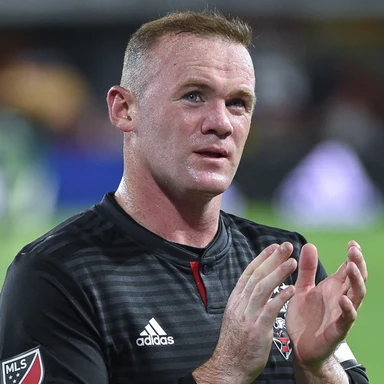 Photo: All-Pro Reels from District of Columbia, USA. Source and license in Image credits.
Everton · Manchester United · D.C. United
2002—2021Worked together as player and head coach; see the overlapping club or national-team career entries.
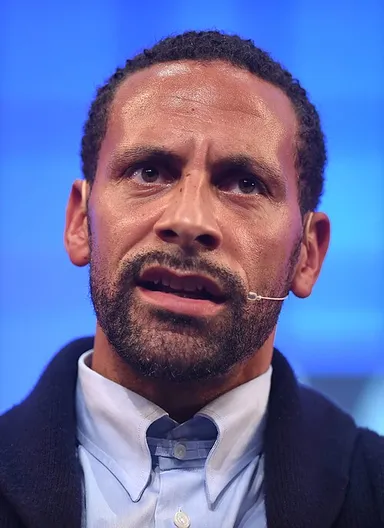 Photo: Web Summit. Source and license in Image credits.
West Ham United · Bournemouth · Leeds United
1996—2015A central defender in Ferguson’s six-title United cycle, including the 2008 European champions.
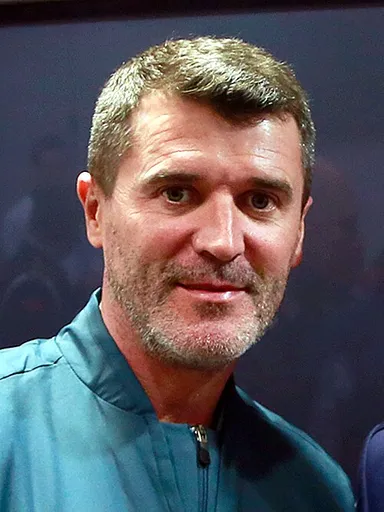 Photo: Irish Defence Forces from Ireland. Source and license in Image credits.
Cobh Ramblers · Nottingham Forest · Manchester United
1989—2006The central midfielder and captain who drove Ferguson’s 1999 treble campaign, missing the European final through suspension.
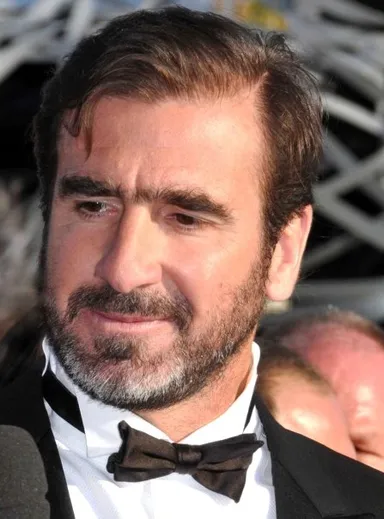 Photo: Georges Biard. Source and license in Image credits.
Auxerre · Martigues · Marseille
1983—1997The creative forward who connected Ferguson’s first Premier League title-winning sides.
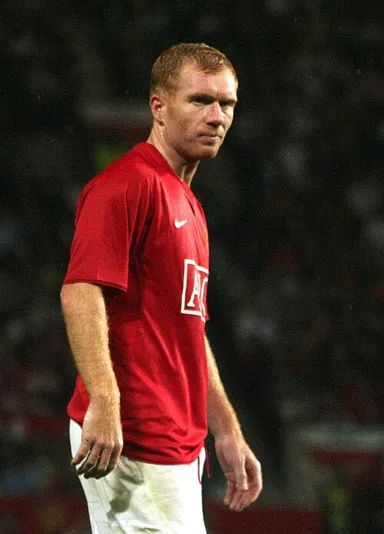 Photo: James Adams. Source and license in Image credits.
Manchester United
1994—2013Scholes linked midfield passing and late attacking arrivals throughout Ferguson’s United title-winning cycles.
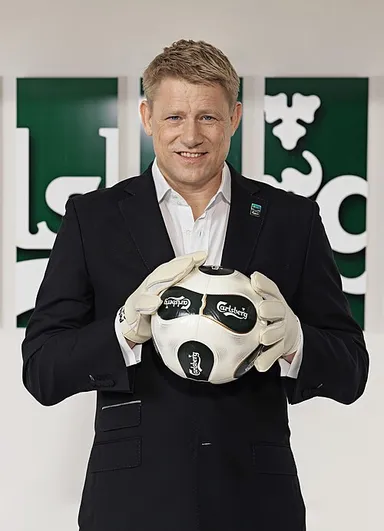 Photo: Carlsberg. Source and license in Image credits.
Gladsaxe-Hero · Hvidovre IF · Brøndby IF
1981—2003The goalkeeper in Ferguson’s first five Premier League titles, captaining United in the 1999 Champions League final.

Elite knockout strategist
2000—Present · Real Madrid · Inter Milan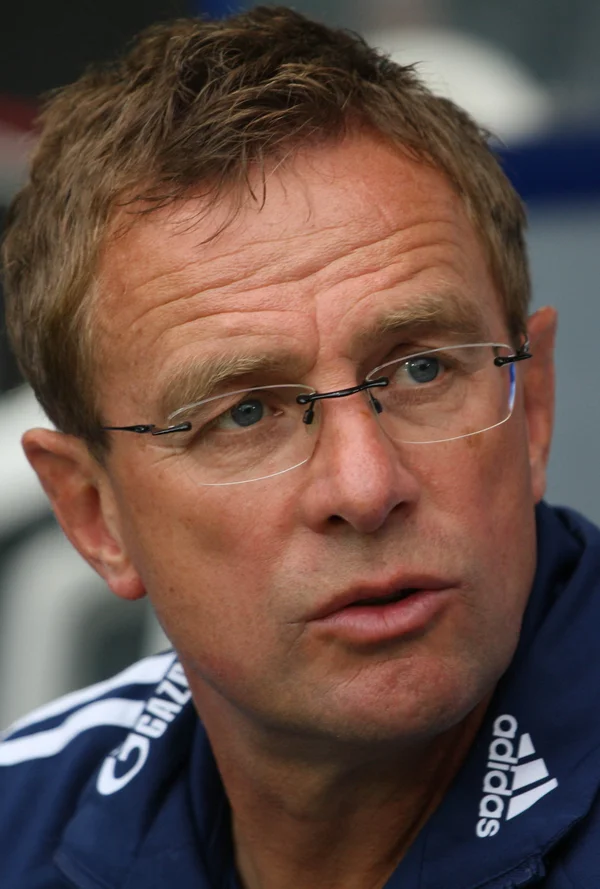 Photo: Thomas Rodenbücher / xtranews.de. Source and license in Image credits.
A pioneer of organised pressing
1983—Present ·
Developmental moderniser
1984—2018 · ArsenalQuiet systems manager
1974—1983 · LiverpoolCareer and honour facts cite their underlying sources, including clubs and governing bodies. Tactical readings are identified as editorial analysis.
Manchester UnitedManchester United history by decadeAccessed 2026-09-01MUFCInfoFerguson: complete Manchester United match ledgerAccessed 2026-09-15UEFA1999 final: substitutions and the two late cornersAccessed 2026-09-15Aberdeen FCAberdeen: official trophy chronologyAccessed 2026-09-14Aberdeen FCFerguson reflects on his Aberdeen apprenticeshipAccessed 2026-09-14UEFAFerguson — Scottish beginnings and coaching careerAccessed 2026-09-14Aberdeen FCReal Madrid 1–2 Aberdeen — 1983 finalAccessed 2026-09-14UEFAManchester United — the 1999 final revisitedAccessed 2026-09-14UEFAUnited’s defensive evolution before the 2008 finalAccessed 2026-09-14UEFAManchester United 1–1 Chelsea — 2008 final and shoot-outAccessed 2026-09-14Manchester UnitedManchester United — renewal in the 2000sAccessed 2026-09-14Manchester UnitedManchester United — league title chronologyAccessed 2026-09-14Premier LeagueFerguson and Wenger — Premier League Hall of FameAccessed 2026-09-14Premier LeagueFerguson and Wenger — English club honoursAccessed 2026-09-14Premier LeagueCompleted Premier League managerial recordsAccessed 2026-09-14