Premier League
Manchester United · league
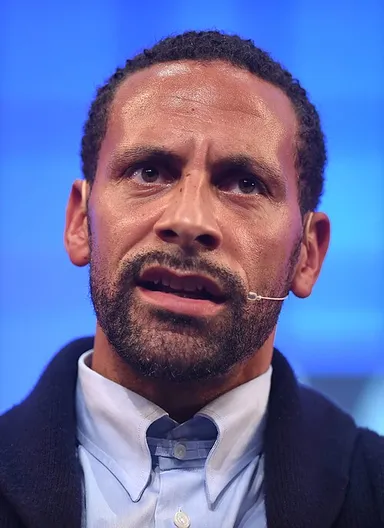 Photo: Web Summit. Source and license in Image credits.
Rio Gavin Ferdinand
Rio Ferdinand paired a defender’s reading of danger with the control and passing of a player comfortable in possession. Developed at West Ham and sharpened at Leeds, he became a central figure in Manchester United’s success under Sir Alex Ferguson. He won six Premier League titles and formed, with Nemanja Vidić, the centre-back partnership of the 2008 Champions League winners.
Senior club · all competitions
Completed club records only; not a complete career total.
Active club snapshots and records with another scope are excluded. Assist totals are not combined across incompatible definitions.
Stored archive snapshots, not live counters. Missing values are not zero; records with different scopes are never added together.
G/M = goals ÷ appearances. G+A = goals + assists. Per-90 metrics use documented minutes.
Senior international · all competitions
Stored archive snapshots, not live counters. Missing values are not zero; records with different scopes are never added together.
G/M = goals ÷ appearances. G+A = goals + assists. Per-90 metrics use documented minutes.
In context
Ferdinand helped broaden the model of an English centre-back: defensive security and comfort on the ball could belong to the same player. Six league titles and the Moscow triumph place him at the heart of Ferguson’s later United teams. His 2023 Premier League Hall of Fame induction recognises that playing career; it is distinct from a team trophy.
Reading the game
Rio Ferdinand paired a defender’s reading of danger with the control and passing of a player comfortable in possession. Developed at West Ham and sharpened at Leeds, he became a central figure in Manchester United’s success under Sir Alex Ferguson. He won six Premier League titles and formed, with Nemanja Vidić, the centre-back partnership of the 2008 Champions League winners.
Historical references support the chronology; tactical explanations are museum editorial analysis.
Historical references: UEFA: Ferdinand’s 455 United matches and personal honours ↗ · Premier League: Ferdinand’s playing style, career numbers and Hall of Fame induction ↗
Career
| Period | Club |
|---|---|
| 1996—2000 | West Ham UnitedFerdinand came through West Ham’s academy and made his first-team debut in 1996, before moving to Leeds in 2000. |
| 1996—1997 | BournemouthA Bournemouth loan during the 1996/97 season gave the young defender further first-team experience. |
| 2000—2002 | Leeds UnitedFerdinand joined Leeds in 2000 and established himself there before United signed him in 2002. |
| 2002—2014 | Manchester UnitedRio Ferdinand paired a defender’s reading of danger with the control and passing of a player comfortable in possession. Developed at West Ham and sharpened at Leeds, he became a central figure in Manchester United’s success under Sir Alex Ferguson. He won six Premier League titles and formed, with Nemanja Vidić, the centre-back partnership of the 2008 Champions League winners. Senior club · all competitions Performance record
|
| 2014—2015 | Queens Park RangersQueens Park Rangers was Ferdinand’s final club after leaving United; he retired in May 2015. |
Stored archive snapshots, not live counters. Missing values are not zero; records with different scopes are never added together.
G/M = goals ÷ appearances. G+A = goals + assists. Per-90 metrics use documented minutes.
Honours
Manchester United · league
Manchester United · domestic cup
Manchester United · continental
Manchester United · world
Rio Ferdinand · individual
Story
Club chapter
Ferdinand made his West Ham first-team debut in 1996 and gained further senior experience on loan at Bournemouth. Leeds signed him in 2000, before United brought him to Old Trafford in 2002 for a British-record transfer fee. He won the Premier League in his first United season, establishing the foundation of a twelve-year spell.
Explore club contextClub chapter
Vidić’s arrival in 2006 gave Ferdinand a complementary centre-back partner: aggressive intervention alongside anticipation, recovery pace and composed distribution. United won three consecutive league titles from 2006/07 to 2008/09. Ferdinand captained the side in the 2008 Champions League final in Moscow, where United beat Chelsea on penalties after a 1–1 draw.
Explore club contextCareer chapter
Ferdinand added league titles in 2010/11 and 2012/13, the latter in Ferguson’s final season. He left United in 2014 with 455 competitive appearances and eight goals, joined Queens Park Rangers and retired in May 2015. His last England appearance was in 2011, although he announced his international retirement in 2013.
Profile
Ball-Playing Centre-Back
Rio Ferdinand paired a defender’s reading of danger with the control and passing of a player comfortable in possession. Developed at West Ham and sharpened at Leeds, he became a central figure in Manchester United’s success under Sir Alex Ferguson. He won six Premier League titles and formed, with Nemanja Vidić, the centre-back partnership of the 2008 Champions League winners.
Composure and progression from centre-back
Anticipation and recovery behind the first challenge
Composure
Illustrative role zones · not tracking data
Ferdinand could receive under pressure, carry into an open lane or find a midfielder with a purposeful pass. His composure let United begin an attack without treating every defensive possession as an emergency clearance. The value lay in choosing when to advance and when to preserve the team’s shape, rather than in carrying forward at every opportunity.
Ferdinand’s recovery pace worked best with early recognition of the pass and careful positioning. When a partner stepped towards the ball, he could protect the space behind, follow a runner or delay an attacker until support arrived. This is a tactical interpretation of his documented partnership with Vidić, not a reconstructed tackle or interception statistic.
Historical references: Premier League: Ferdinand’s playing style, career numbers and Hall of Fame induction ↗ · UEFA: the Ferdinand–Vidić defensive partnership ↗
Editorial assessment
Historical role analysis
Seven qualitative bands · not measured scores
Editorial assessment of this period, not an official rating.
These bands are not percentiles or an overall ranking. The chart’s geometry represents ordered bands, not equal differences in ability.
Qualitative judgments describe football actions in context. They do not measure personality or medical fitness. Category assessments are editorial summaries, not averages. A lower defensive band describes the player’s role and contribution, not their value to the team.
Premier League: Ferdinand’s playing style, career numbers and Hall of Fame induction ↗Reading the game
| Era / team | Primary Role | Tactical Character |
|---|---|---|
| 1996–2002 | Composure and progression from centre-back | Ferdinand could receive under pressure, carry into an open lane or find a midfielder with a purposeful pass. His composure let United begin an attack without treating every defensive possession as an emergency clearance. The value lay in choosing when to advance and when to preserve the team’s shape, rather than in carrying forward at every opportunity. |
| 2006–2013 | Anticipation and recovery behind the first challenge | Ferdinand’s recovery pace worked best with early recognition of the pass and careful positioning. When a partner stepped towards the ball, he could protect the space behind, follow a runner or delay an attacker until support arrived. This is a tactical interpretation of his documented partnership with Vidić, not a reconstructed tackle or interception statistic. |
Historical references: Premier League: Ferdinand’s playing style, career numbers and Hall of Fame induction ↗ · UEFA: the Ferdinand–Vidić defensive partnership ↗
Reading the game
Ferdinand could receive under pressure, carry into an open lane or find a midfielder with a purposeful pass. His composure let United begin an attack without treating every defensive possession as an emergency clearance. The value lay in choosing when to advance and when to preserve the team’s shape, rather than in carrying forward at every opportunity.
Ferdinand’s recovery pace worked best with early recognition of the pass and careful positioning. When a partner stepped towards the ball, he could protect the space behind, follow a runner or delay an attacker until support arrived. This is a tactical interpretation of his documented partnership with Vidić, not a reconstructed tackle or interception statistic.
The personal honours list follows UEFA’s United-career summary: six Premier League titles, two League Cups, the 2008 Champions League and the 2008 Club World Cup. The FA Cup is absent from his winner’s medals, even though United won it during his spell.
Historical references: UEFA: Ferdinand’s 455 United matches and personal honours ↗ · Premier League: Ferdinand’s playing style, career numbers and Hall of Fame induction ↗ · The FA: Ferdinand’s absence from United’s FA Cup winners’ medals ↗ · UEFA: the Ferdinand–Vidić defensive partnership ↗
Reading the game
Vidić’s arrival in 2006 gave Ferdinand a complementary centre-back partner: aggressive intervention alongside anticipation, recovery pace and composed distribution. United won three consecutive league titles from 2006/07 to 2008/09. Ferdinand captained the side in the 2008 Champions League final in Moscow, where United beat Chelsea on penalties after a 1–1 draw.
Historical references: Premier League: Ferdinand’s playing style, career numbers and Hall of Fame induction ↗ · UEFA: the Ferdinand–Vidić defensive partnership ↗ · UEFA: Ferdinand captains United in the 2008 Champions League final ↗
Statistics
| Season | Club | Apps | Goals | G/M |
|---|---|---|---|---|
| 2012/13 | Manchester United Senior club · league only | 28 | 1 | 0.04 |
| 2008/09 | Manchester United Senior club · league only | 24 | 0 | 0.00 |
| 2007/08 | Manchester United Senior club · league only | 35 | 2 | 0.06 |
| 2006/07 | Manchester United Senior club · league only | 33 | 1 | 0.03 |
| 2002/03 | Manchester United Senior club · league only | 28 | 0 | 0.00 |
Stored archive snapshots, not live counters. Missing values are not zero; records with different scopes are never added together.
G/M = goals ÷ appearances. G+A = goals + assists. Per-90 metrics use documented minutes.
United’s complete record is 455 competitive appearances and eight goals; its Premier League subset is 312 appearances and seven goals. The season table contains selected league records only. The 504-match, 11-goal Premier League record spans all his clubs in that competition. Complete totals for his other clubs and all-competition assists remain unverified here.
Club competitions
| Competition | Apps | Goals | G/M |
|---|---|---|---|
Premier League2002/03–2013/14United’s complete record is 455 competitive appearances and eight goals; its Premier League subset is 312 appearances and seven goals. The season table contains selected league records only. The 504-match, 11-goal Premier League record spans all his clubs in that competition. Complete totals for his other clubs and all-competition assists remain unverified here. | 312 | 7 | 0.02 |
Stored archive snapshots, not live counters. Missing values are not zero; records with different scopes are never added together.
G/M = goals ÷ appearances. G+A = goals + assists. Per-90 metrics use documented minutes.
International
International career
Ferdinand made 81 senior appearances and scored three goals for England between 1997 and 2011. He played in the 2002 and 2006 World Cups, both ending in quarter-final exits. A knee injury ruled him out of the 2010 tournament before it began; that edition is not listed here as a played World Cup.
Reading the game
Ferdinand helped broaden the model of an English centre-back: defensive security and comfort on the ball could belong to the same player. Six league titles and the Moscow triumph place him at the heart of Ferguson’s later United teams. His 2023 Premier League Hall of Fame induction recognises that playing career; it is distinct from a team trophy.
Historical references: UEFA: Ferdinand’s 455 United matches and personal honours ↗ · Premier League: Ferdinand’s playing style, career numbers and Hall of Fame induction ↗
Archive
Ball-Playing Centre-Back · editorial peak 2006—2009
Harry Redknapp · David O’Leary · Sir Alex Ferguson
Cristiano Ronaldo— Overlapping Manchester United era · Wayne Rooney— Overlapping Manchester United era · David Beckham— Overlapping Manchester United era · Roy Keane— Overlapping Manchester United era
A flexible front line — Manchester United

Sporting CP · Manchester United · Real Madrid
2002—Present Photo: All-Pro Reels from District of Columbia, USA. Source and license in Image credits.
Everton · Manchester United · D.C. United
2002—2021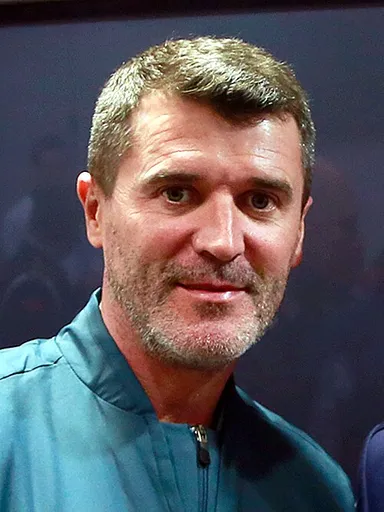 Photo: Irish Defence Forces from Ireland. Source and license in Image credits.
Cobh Ramblers · Nottingham Forest · Manchester United
1989—2006
Liverpool · LA Galaxy
1998—2016
Manchester United · Preston North End · Waterford
1956—1976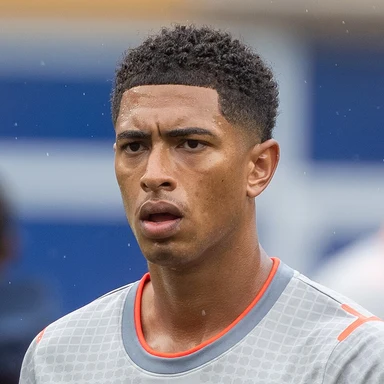 Photo: Bryan Berlin / WikiPortraits. Source and license in Image credits.
Birmingham City · Borussia Dortmund · Real Madrid
2019—Present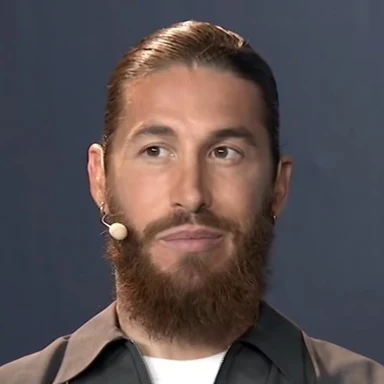 Photo: Real Madrid. Source and license in Image credits.
Sevilla · Real Madrid · Paris Saint-Germain
2004—Present
FC Barcelona Atlètic · Barcelona
2023—Present
AS Saint-Étienne B · AS Saint-Étienne · OGC Nice
2017—PresentStatistics are displayed only within the scope supported by each cited source.
UEFAUEFA: Ferdinand’s 455 United matches and personal honoursMUFCInfoMUFCInfo: Ferdinand’s United league and cup recordsPremier LeaguePremier League: Ferdinand’s playing style, career numbers and Hall of Fame inductionThe Football AssociationThe FA: Ferdinand’s retirement and senior England recordThe Football AssociationThe FA: Ferdinand’s absence from United’s FA Cup winners’ medalsNational Football TeamsNational Football Teams: Ferdinand’s league seasons and international appearancesUEFAUEFA: the Ferdinand–Vidić defensive partnershipUEFAUEFA: Ferdinand’s injury withdrawal before the 2010 World CupUEFAUEFA: Ferdinand’s last England match and international retirementUEFAUEFA: Ferdinand captains United in the 2008 Champions League final