


The football behind Wayne Rooney’s ratings
- Central finishing
- Elite
- Ball striking
- Elite
- Combination play
- Excellent
- Heading
- Excellent
- Repeated work
- Elite
- Defensive positioning
- Moderate
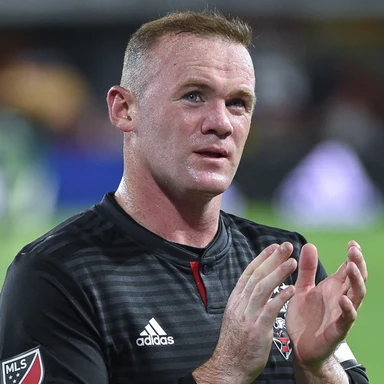 Photo: All-Pro Reels from District of Columbia, USA. Source and license in Image credits.
Wayne Mark Rooney
A forward whose scoring, passing and recovery running helped Manchester United rearrange their attack around different partners.
Senior club · all competitions
Completed club records only; not a complete career total.
Active club snapshots and records with another scope are excluded. Assist totals are not combined across incompatible definitions.
Stored archive snapshots, not live counters. Missing values are not zero; records with different scopes are never added together.
G/M = goals ÷ appearances. G+A = goals + assists. Per-90 metrics use documented minutes.
Senior international · all competitions
England · completed senior record, 2003–2018
Stored archive snapshots, not live counters. Missing values are not zero; records with different scopes are never added together.
G/M = goals ÷ appearances. G+A = goals + assists. Per-90 metrics use documented minutes.
In context
Rooney’s significance extends from record scoring to the work that connected an attack: different roles reveal different forms of his contribution.
Reading the game
Wayne Rooney makes the idea of a complete forward more demanding. Scoring was only one part of the job: he could receive underneath another striker, send the ball across the pitch, chase a full-back and still arrive to finish the next attack. Those actions were connected. A forward who helped regain possession could shape the transition himself; a player trusted to leave the centre could make room for a teammate without abandoning his own threat. At Manchester United, that range supported changing attacking partnerships rather than a single permanent arrangement. The most useful contrast is between the wide responsibilities visible in the 2009 European campaign and the concentrated scoring role of the following season. Neither version alone explains him. His England story adds a different perspective: the freedom and impact of EURO 2004 were not consistently reproduced at later major tournaments. Understanding Rooney therefore means holding contribution, responsibility and limitations together. Our assessment uses 2009/10 as a specific reference, while the surrounding chapters explain the other footballers he could become within the same career.
Historical references support the chronology; tactical explanations are museum editorial analysis.
Historical references: England: Wayne Rooney’s international record ↗ · Premier League: Rooney’s completed competition record ↗ · UEFA: Rooney’s wide role in the 2009 semi-final ↗
Career
| Period | Club | Apps | Goals | G/M |
|---|---|---|---|---|
| 2002—2004 | EvertonFirst Everton spell: 77 competitive appearances and 17 goals, derived from the official career aggregate of 117/28 minus the club-confirmed return spell of 40/11. League rows are a narrower scope. Senior club · all competitions Senior · #18 | 77 | 17 | 0.22 |
| 2004—2017 | Manchester UnitedCompleted Manchester United competitive record. Includes league and cup football; excludes friendlies and shootout conversions. Assists remain unknown because historical providers use different definitions. Senior club · all competitions Senior · #8 / 10 | 559 | 253 | 0.45 |
| 2017—2018 | EvertonThe return season contains 40 appearances and 11 goals across competitions. Its 31 league appearances and ten league goals are included here, not additional. Senior club · all competitions Senior · #10 | 40 | 11 | 0.28 |
| 2018—2019 | D.C. UnitedThe official player site lists 52 appearances and 25 goals across competitions. The club’s 48 appearances, 23 goals and 15 assists refer to MLS regular-season play only; the different scopes must not be added together. Senior club · all competitions Senior · #9 | 52 | 25 | 0.48 |
| 2020—2021 | Derby CountyFinal playing spell: 35 competitive appearances and seven goals. The 30 Championship appearances and six goals below are included in this total. Coaching matches are excluded. Senior club · all competitions Senior · #32 | 35 | 7 | 0.20 |
Stored archive snapshots, not live counters. Missing values are not zero; records with different scopes are never added together.
G/M = goals ÷ appearances. G+A = goals + assists. Per-90 metrics use documented minutes.
Honours
Manchester United · league
Manchester United · domestic cup
Manchester United · domestic cup
Manchester United · domestic cup
Manchester United · continental
Manchester United · continental
Manchester United · world
Manchester United · individual
Manchester United · individual
Manchester United · individual
Manchester United · individual
Manchester United · individual
Story
Career chapter
Rooney’s early impact was not just a matter of taking shots before defenders expected them. He could receive away from the last line, turn towards goal and carry the attack into a new area. The Everton breakthrough and four goals at EURO 2004 made that combination visible at very different levels. His later account of studying movement as a young player helps explain why the physical impression should not obscure the football intelligence. In this reading, the teenage version is defined by the freedom to connect and then accelerate, rather than by a fixed place on the team sheet.
Historical references: England: Wayne Rooney’s international record ↗ · England Football Learning: Rooney on finding space and practice ↗ · Premier League: Rooney’s completed competition record ↗
Career chapter
A hat-trick against Fenerbahçe on his United debut announced immediate scoring ambition. The years that followed demanded more than repeating that introduction. Playing in an attack that included Cristiano Ronaldo and, later, Carlos Tevez required changing relationships with the ball and with space. Rooney could help a move develop before entering its final phase. The 2008 European title is the collective landmark; the following season’s semi-final against Arsenal supplies a clear example of his wider duties. Helping protect the left side and then joining a decisive counterattack were compatible responsibilities, though they changed where his individual chances came from.
Historical references: UEFA: Rooney’s wide role in the 2009 semi-final ↗ · D.C. United: Rooney’s career milestones ↗
Career chapter
The departure of Ronaldo sharpened the question of who would finish United’s attacks. In 2009/10, Rooney’s answer involved more repeated arrivals in scoring positions, including an increasingly important headed finish. His 26 league goals and the individual awards provide the numerical and historical anchors. The next seasons did not simply preserve that arrangement: working underneath another forward reopened the space for combination and delivery. These versions should be separated when discussing his peak. A player can contribute more directly to the final shot in one season and influence more of the approach play in another without becoming a different kind of talent.
Historical references: England Football Learning: Rooney on finding space and practice ↗ · National Football Teams: Rooney’s league seasons and internationals ↗ · Manchester United: the 2010s, awards and changing attack ↗
Career chapter
Later Rooney was asked to shape more of the play from deeper positions, while the explosive separation of his youth became less dependable. Passing range remained useful, but dropping towards midfield could also remove a runner from the box. The Everton return, D.C. United spell and Derby player-coach role therefore need their own context. Against Orlando in 2018, a recovery tackle followed by the winning delivery to Luciano Acosta briefly brought several familiar qualities together. It is a revealing sequence, not proof that his physical peak lasted unchanged. Retirement in January 2021 closes the playing record before the separate story of full-time management.
Historical references: D.C. United: recovery and winning assist against Orlando ↗ · Derby County: Rooney joins from January 2020 ↗ · PFA: Rooney retires from playing in January 2021 ↗
Profile
Complete Forward
Also plays · Trequartista
Receives underneath a partner, passes forward early and returns to the box. Compact strength and powerful striking coexist with passing range and repeated recovery runs. The 2009/10 assessment emphasises a more central scoring role; wide support and later midfield work are separate career versions, not extra abilities stacked into one season.
Combination play
Ball striking
Work rate
Passing range
Illustrative role zones · not tracking data
Rooney’s carrying often began with a firm first touch into a direction he had already chosen. His compact strength helped him protect that route when a defender arrived beside him. The useful distinction is between escaping an opponent and repeatedly beating a settled block: he was particularly dangerous when a turn or loose ball opened a corridor, rather than needing every attack to become an extended dribbling duel.
Receiving underneath a striker gave Rooney a view of both the immediate combination and the far side. He could play a short return, release a diagonal runner or switch towards an advancing wide player. The pass mattered most when its timing preserved movement. A technically impressive long ball could still slow an attack if the receiver had to stop; range and useful creation are related, but separate, qualities.
The spectacular volley can hide the less dramatic preparation of a goal. Rooney’s best central scoring involved reading a delivery, changing speed and entering a gap before the defender could reset. His right-footed power widened the shooting options, while improvement in heading made crosses more productive. This is why the 2009/10 reference values anticipation and attacking movement alongside ball striking, rather than treating finishing as power alone.
Moving away from the centre could offer a midfielder a safe pass or draw a marker out. Its success depended on what happened next: another forward had to threaten the line, or Rooney had to return before the chance disappeared. This creates a practical limit to celebrating his versatility. Dropping deep was useful when it changed the defence; collecting the ball without a next runner could merely move possession further from goal.
Rooney could press a receiver, follow a wide opponent and recover after losing possession. Those actions helped an attack survive the moments when it did not have the ball. Yet intensity should not be confused with specialist defending or perfect discipline. The important questions are where his run sent the opponent and whether teammates could support it. Our evaluation rewards the repeated contribution while leaving defensive positioning below his strongest attacking skills.
Historical references: England Football Learning: Rooney on finding space and practice ↗ · UEFA: Rooney’s wide role in the 2009 semi-final ↗ · Manchester United: the 2010s, awards and changing attack ↗ · D.C. United: recovery and winning assist against Orlando ↗
Reading the game
| Era / team | Primary Role | Tactical Character |
|---|---|---|
| 2002–2004Everton / England | Roam and accelerate | Connect underneath a partner before attacking the next space. |
| 2004–2009Manchester United | Combine across the front line | Adapt the starting position to teammates; wide duties can support the whole attack. |
| 2009–2013Manchester United | Finish or support the runner | Alternate concentrated box work with a role beneath another striker. |
| 2013–2021Manchester United / Everton / D.C. United / Derby County | Create from deeper positions | Use passing range as explosive movement declines; a deeper role needs runners and defensive support. |
Historical references: England: Wayne Rooney’s international record ↗ · England Football Learning: Rooney on finding space and practice ↗ · UEFA: Rooney’s wide role in the 2009 semi-final ↗ · Manchester United: the 2010s, awards and changing attack ↗ · D.C. United: recovery and winning assist against Orlando ↗ · Derby County: Rooney joins from January 2020 ↗ · PFA: Rooney retires from playing in January 2021 ↗
Reading the game
A defender approaching Rooney could face a return pass, a turn or a shot. The threat came from keeping those choices credible within the same reception. It rewarded teammates who continued running rather than watching him, because he could use their movement before the defence settled around the ball.
Physical force helped him stay involved after contact, but its value extended beyond winning a collision. He could protect the ball and then find a teammate, or resist a challenge long enough to shoot. This connection between strength and the following decision is more informative than a simple description of aggression.
Rooney’s role could be arranged around another forward’s strengths. He might receive underneath, move outside or concentrate on the box. That adaptability did not mean the sacrifice was costless: each task altered his access to chances. It meant a manager had more ways to make talented attackers coexist within one functioning side.
His recovery and assist against Orlando showed his determination to stay involved. After the attack broke down, he won the ball back and found the decisive pass. One memorable move cannot sum up a career, but it shows how his work rate and passing complemented each other.
Historical references: England Football Learning: Rooney on finding space and practice ↗ · UEFA: Rooney’s wide role in the 2009 semi-final ↗ · D.C. United: recovery and winning assist against Orlando ↗
Reading the game
Roaming second striker
Four goals at EURO 2004 provide a concentrated view of the teenage threat. Rooney could connect with a partner and then attack the space ahead with little hesitation. This version is a tournament landmark rather than a claim that his entire career peaked at eighteen. Its appeal is the immediacy of the next action; later versions carried a broader set of collective responsibilities.
Flexible combining forward
The European champion version is best understood through relationships. Rooney could help move an attack from its first connection to its last run, alongside teammates with their own strong preferences. His work made room for several threats to exist together. This peak concerns collective fit, not his largest goal total, and should remain distinct from the more central scoring responsibility that followed.
Central complete forward
The reference for both rating systems is this United season: 26 league goals, with more attention directed towards occupying the scoring positions. Heading and repeated box movement complement the familiar powerful strike. The individual awards recognise the season, but do not make every attribute exceptional. Creation remains part of his game; the difference is the greater priority given to finishing the move.
Supporting forward and scorer
The 27 league goals show that receiving behind another forward did not remove scoring responsibility. Rooney could join the approach play and still become a finishing option, provided the movement ahead kept defenders occupied. This version helps explain the difference between starting position and final destination. The tactical question is how he reached the chance, rather than whether a formation graphic called him a ten or a nine.
Historical references: England: Wayne Rooney’s international record ↗ · National Football Teams: Rooney’s league seasons and internationals ↗ · Premier League: Rooney’s completed competition record ↗ · Manchester United: the 2010s, awards and changing attack ↗ · D.C. United: Rooney’s career milestones ↗
Statistics
| Season | Club | Apps | Goals | G/M |
|---|---|---|---|---|
| 2020–21 | Derby County Senior club · league only | 10 | 1 | 0.10 |
| 2019–20 | Derby County Senior club · league only | 20 | 5 | 0.25 |
| 2019 | D.C. United Senior club · league only | 28 | 11 | 0.39 |
| 2018 | D.C. United Senior club · league only | 20 | 12 | 0.60 |
| 2017–18 | Everton Senior club · league only | 31 | 10 | 0.32 |
| 2016–17 | Manchester United Senior club · league only | 25 | 5 | 0.20 |
| 2015–16 | Manchester United Senior club · league only | 28 | 8 | 0.29 |
| 2014–15 | Manchester United Senior club · league only | 33 | 12 | 0.36 |
| 2013–14 | Manchester United Senior club · league only | 29 | 17 | 0.59 |
| 2012–13 | Manchester United Senior club · league only | 27 | 12 | 0.44 |
Stored archive snapshots, not live counters. Missing values are not zero; records with different scopes are never added together.
G/M = goals ÷ appearances. G+A = goals + assists. Per-90 metrics use documented minutes.
Completed league seasons, 2002–2021, checked 15 September 2026. MLS rows contain regular-season matches only. The 2003/04 Everton row follows Opta’s 34 appearances rather than the 33 listed by National Football Teams; this reconciles the Premier League total of 491. Seasonal assists are unverified. League seasons are contained within all-competition club totals. The separate Premier League table uses the league’s own 103-assist definition.
Club competitions
| Competition | Apps | Goals | Assists | G/M | G+A/M |
|---|---|---|---|---|---|
Premier League2002–2018 · Everton and Manchester UnitedCompleted Premier League career, including both Everton spells. Uses the league’s assist definition. Already contained in club totals and league seasons. Historical ranking language in the 2018 article is not treated as current. Performance record
| 491 | 208 | 103 | 0.42 | 0.63 |
Major League Soccer2018–2019 · MLS regular seasonClub-confirmed regular-season record. Excludes playoffs and domestic cup matches; included in the 52/25 all-competition club aggregate. Performance record
| 48 | 23 | 15 | 0.48 | 0.79 |
Stored archive snapshots, not live counters. Missing values are not zero; records with different scopes are never added together.
G/M = goals ÷ appearances. G+A = goals + assists. Per-90 metrics use documented minutes.
International
International career
Rooney scored four times at EURO 2004 and represented England at three European Championships and three World Cups. He passed Bobby Charlton’s scoring mark in 2015. His international record ends with the November 2018 farewell appearance against the USA, after the initial retirement announcement in 2017. No senior international team title is attributed to him.
Senior international · tournament splits
| Competition | Apps | Goals | G/M |
|---|---|---|---|
UEFA European Championship2004, 2012, 2016 · England finals appearancesFinals only: 4/4 in 2004, 2/1 in 2012 and 4/1 in 2016. Qualifiers are excluded; these matches are already part of the senior record. | 10 | 6 | 0.60 |
FIFA World Cup2006, 2010, 2014 · England finals appearancesFinals only: four appearances in 2006, four in 2010 and three in 2014. His goal against Uruguay in 2014 is the sole finals goal. Qualifiers are excluded. | 11 | 1 | 0.09 |
Stored archive snapshots, not live counters. Missing values are not zero; records with different scopes are never added together.
G/M = goals ÷ appearances. G+A = goals + assists. Per-90 metrics use documented minutes.
Reading the game
Rooney’s historical importance lies in how much attacking work could fit inside one player. The record at Manchester United establishes the scoring achievement, but it does not reveal how often he also supplied the connection, the recovery run or the pass that allowed someone else to attack. His career asks an evaluator to distinguish versatility from vagueness. He was not equally effective everywhere, and an ability to hit a long pass did not automatically make him a specialist midfielder. What he offered was a large set of solutions that managers could arrange around different partners. The teenage Everton and England forward, the European champion willing to work from the flank, and the more concentrated penalty-area scorer belong to that same history. Later years showed both the durability of his passing intelligence and the cost of losing explosive movement. Internationally, a substantial scoring record coexists with unfulfilled tournament expectations; one does not cancel the other. His lasting value as a reference is practical: watch what a forward does between chances, and ask whether those actions make the whole attack function better.
Historical references: England: Wayne Rooney’s international record ↗ · Wayne Rooney: official club career statistics ↗ · UEFA: Rooney’s wide role in the 2009 semi-final ↗ · PFA: Rooney retires from playing in January 2021 ↗
Archive
Complete Forward · editorial peak 2009—2010
David Moyes · Sir Alex Ferguson · Louis van Gaal · José Mourinho · Sven-Göran Eriksson · Fabio Capello · Roy Hodgson · Ben Olsen · Phillip Cocu
Cristiano Ronaldo— Overlapping Manchester United era · Ángel Di María— Overlapping Manchester United era · Rio Ferdinand— Overlapping Manchester United era · Roy Keane— Overlapping Manchester United era
A flexible front line — Manchester United · A different European route — Manchester United

Elite knockout strategist
2000—Present · Real Madrid · Inter Milan
Era-building leader
1974—2013 · Manchester United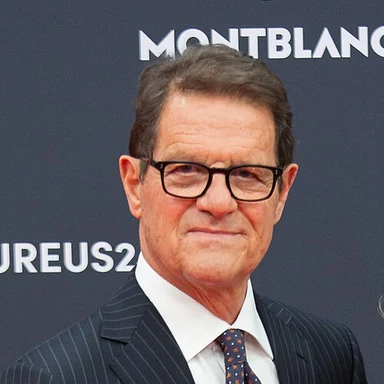 Photo: Barcex (Wikimedia Commons); crop by EndzoneEnthusiast. Source and license in Image credits.
Discipline and defensive balance
1982—2018 · AC Milan · Real Madrid
Sporting CP · Manchester United · Real Madrid
2002—Present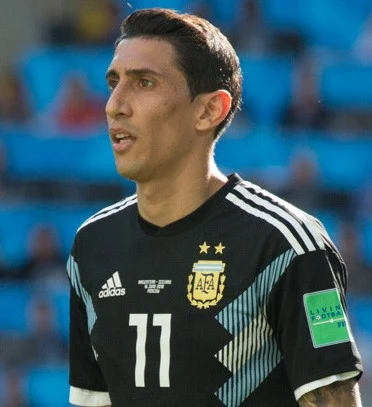 Photo: Екатерина Лаут. Source and license in Image credits.
Rosario Central · Benfica · Real Madrid
2005—Present Photo: Web Summit. Source and license in Image credits.
West Ham United · Bournemouth · Leeds United
1996—2015
Liverpool · LA Galaxy
1998—2016
Manchester United · Preston North End · Waterford
1956—1976 Photo: Bryan Berlin / WikiPortraits. Source and license in Image credits.
Birmingham City · Borussia Dortmund · Real Madrid
2019—Present
AS Monaco · Juventus · Arsenal
1994—2014
Cruzeiro · PSV · Barcelona
1993—2011 Photo: Unknown author. Source and license in Image credits.
Santos · New York Cosmos
1956—1977Statistics are displayed only within the scope supported by each cited source.
England FootballEngland: Wayne Rooney’s international recordEngland FootballEngland Football Learning: Rooney on finding space and practiceWayne RooneyWayne Rooney: official club career statisticsNational Football TeamsNational Football Teams: Rooney’s league seasons and internationalsSky Sports / OptaOpta: Rooney’s 2003/04 and 2004/05 league appearancesPremier LeaguePremier League: Rooney’s completed competition recordUEFAUEFA: Rooney’s wide role in the 2009 semi-finalManchester UnitedManchester United: the 2010s, awards and changing attackMUFCInfoMUFCInfo: Manchester United’s 2009/10 seasonD.C. UnitedD.C. United: Rooney’s career milestonesD.C. UnitedD.C. United: recovery and winning assist against OrlandoD.C. UnitedD.C. United: Rooney’s MLS regular-season playing recordDerby CountyDerby County: Rooney joins from January 2020Professional Footballers’ AssociationPFA: Rooney retires from playing in January 2021Irish IndependentRooney’s Manchester United trophies: participation recordFIFAFIFA: Rooney decides the 2008 Club World Cup finalWikipedia (cited biographical reference)Wayne Rooney — biographical and career reference