Bobby Robson
Senior coaching mentor
Documented history
Worked together in Portugal and Spain, moving from interpreting into a broader coaching apprenticeship.

Elite knockout strategist
The “Special One” built a career on compact organisation, opponent-specific preparation and transition attacks, winning every major UEFA men’s club competition and league titles in Portugal, England, Italy and Spain.
Premier League · 2004–2021
Chelsea, Manchester United and Tottenham. League matches only; not a full managerial career total.
PPG uses three points for a win and one for a draw in league matches.
Stored archive snapshots, not live counters. Missing values are not zero; records with different scopes are never added together.
Win rate = wins ÷ matches. Points per game requires an explicit scoring convention; cup records are not silently treated as league points.
Career origins
Mourinho entered coaching through study and practical work rather than a celebrated playing career. He studied sports science, coached young players in Portugal and attended coaching courses in Scotland. In his own account, becoming a coach was a gradual shift from wanting to play football to wanting to understand and teach it.
Working with Bobby Robson at Sporting CP, Porto and Barcelona brought him into elite professional environments. His initial interpreting role became part of a wider assistant-coaching apprenticeship. When Louis van Gaal succeeded Robson at Barcelona in 1997, Mourinho stayed. Van Gaal later entrusted him with leading the team in selected friendly and Catalan cup matches, giving him experience of making decisions from the bench.
His first senior head-coaching appointment was at Benfica in 2000. A subsequent spell at União de Leiria preceded his return to Porto as head coach in January 2002. These were steps into responsibility for an entire team, not simply a continuation of his work as an assistant.
Senior coaching mentor
Worked together in Portugal and Spain, moving from interpreting into a broader coaching apprenticeship.
Barcelona head coach
Gave Mourinho opportunities to lead the team and encouraged him to pursue head-coaching responsibility.
Sporting CP
Interpreter / assistant
A route into the daily work of a senior professional coaching staff.
Assistant to Bobby Robson
Continued working alongside Robson before their move to Barcelona.
Assistant coach
Worked with Robson and then Van Gaal, encountering different training methods and ideas.
Benfica / União de Leiria
Head coach
Early senior management before the step up to Porto.
Head coach
Appointed in January; European trophies followed in his next two full seasons.
UEFA Champions League
The 2003 UEFA Cup established Porto as European contenders. A year later, a 3–0 Champions League final win over Monaco confirmed their rise to the summit. Mourinho moved to Chelsea that summer.
The 2004 title is the archive’s chosen breakthrough, not the only possible turning point. It made the results of his preparation visible on club football’s biggest stage: a collective structure could compete with more celebrated collections of individual talent.
An apprenticeship across different coaching schools helps explain a manager who treats methods as tools rather than commandments. Analysis, training design and decisions from the bench connect this early story with his later emphasis on preparation, adaptable match plans and managing risk. It is a reading of his development, not proof that one mentor or episode explains every later tactical choice.
Tactics
Coaching identity
Adapt the plan to the players, the opponent and the score. Mourinho’s identity is less a fixed possession style than a method of managing risk in pursuit of victory.
Usually protects depth before committing the back line forward.
Pressing is trigger-led and adapted to the opponent rather than permanently high.
Does not treat possession volume as an objective by itself.
Uses wide outlets to escape pressure and launch transitions.
Favours early vertical access when the opponent’s structure opens.
Tactical analysis
The starting question is what gives this team the best chance of winning this match. Formation, pressing height and possession are means to that end. Calling Mourinho simply defensive misses the attacking ambition of his best transition teams.
Control can mean protecting central space, directing the opponent’s passing and choosing where to press. The ball is one instrument of control, not its only measure. A lower block is useful only when the team can still defend its box and threaten after a regain.
Keep defence and midfield connected. Protect passes through the centre, maintain cover behind pressure and direct attacks toward less dangerous wide areas.
Prepare the next attack while defending. On regaining possession, find a forward outlet quickly, with supporting runners attacking space before the opponent reorganises.
Prefer useful progression to circulation for its own sake. A striker can secure the first pass while wide runners or an attacking midfielder exploit the space beyond.
A lead, a deficit and an aggregate advantage create different problems. Substitutions and positioning change the balance between attacking numbers and protection behind the ball.
Identify the opponent’s key connections: who receives between the lines, which full-back advances, and where their recovery cover is weakest. Pressure and marking then target those connections.
Attacking roles do not remove defensive duties. Wide forwards may recover into midfield; central players protect a teammate who steps out to press.
Illustrative sequence, not a measured event model.
Balance attacking commitment with protection against the counter.
Remove avoidable risk without surrendering every attacking outlet.
Commit additional runners and accept greater exposure behind the ball.
Protect central space, manage restarts and retain a route out of pressure.
Interpretation is editorial, not an official rating or a direct quotation. Match results, team statistics and formations retain their documented sources.
Tactical analysis
Signature systems, tactical evolution and defining teams are read together. A starting formation does not describe every phase of play.
A diamond linked midfield protection to a creator behind two forwards.
Rise of the pragmatist: a compact midfield could press, recover possession and change attacking tempo rather than merely retreat.
2003/04 UEFA Champions League winners
Midfield cover supported quick wide attacks and a powerful central striker.
Defensive dominance with an attacking platform: protection around the holding midfielder freed runners to attack from wider and deeper positions.
2004/05 Premier League champions
Premier League · 2004/05 · team statistics
An adaptable block with a double pivot and clear counter-attacking outlets.
A plan shaped around the opponent: Inter could attack with multiple forwards, then reorganise their defensive roles when the tie demanded it.
2009/10 treble: Serie A, Coppa Italia and UEFA Champions League
A double pivot supported a creator and fast runners attacking beyond the ball.
Mourinho at maximum speed: forward passing and explosive running produced an attacking side that challenges the defensive-only caricature.
2011/12 La Liga champions
La Liga · 2011/12 · team statistics
Different squads required different outlets, pressing heights and defensive structures.
Continuity without a single template: the emphasis on risk and transitions remained, but execution varied. Later difficulties should be examined team by team rather than treated as proof of one inevitable tactical decline.
Roma won the inaugural UEFA Europa Conference League in 2021/22.
Monaco0–3Porto
Final
Porto converted a secure structure into decisive attacks. The match illustrates how a compact team can be purposeful with the ball rather than simply negative without it.
Barcelona1–0Inter Milan
Semi-final · second leg · Inter advanced 3–2 on aggregate.
Reduced to ten players, Inter protected the centre and their first-leg advantage. This exceptional match-state plan is not a universal description of their treble-winning season.
Bayern Munich0–2Inter Milan
Final
Inter combined defensive coordination with a reliable forward outlet. Their attacking threat made Bayern account for what could happen immediately after losing possession.
Interpretation is editorial, not an official rating or a direct quotation. Match results, team statistics and formations retain their documented sources.
Profile
Mourinho seeks clear roles, loyalty and competitive intensity. Public confrontation can redirect attention away from the dressing room, while shared adversity can strengthen bonds. This is an interpretation of his management approach, not a diagnosis of individual players.
Tactical analysis
A successful elite identity can be built around adaptation rather than a universal method of playing.
His strongest teams made compactness and coordinated responsibility central to their competitive identity.
Preparation for the next change of possession became a defining part of how his teams threatened opponents.
He helped make the management of score, risk and two-legged ties a prominent part of public tactical discussion.
The press conference, rivalry and the manager’s personality became part of the spectacle, alongside the football itself.
Editorial comparison of recurring tendencies, not a ranking. Both coaches adapt; neither has used one unchanging approach across every team and era.
| Dimension | José Mourinho | Pep Guardiola ↗ |
|---|---|---|
| Core philosophy | Pragmatism and opponent adaptation | Positional play and structured occupation of space |
| Possession | A tool chosen for the match problem | A central platform for attacking and defensive control |
| Defensive control | Protect space and organise the block | Combine ball retention, territory and recovery pressure |
| Transitions | A major attacking opportunity | Attack the opening while preserving counter-pressing cover |
| Opponent adaptation | Prominent changes to disrupt specific strengths | Adjust roles and positioning within structural principles |
| Match state | Explicit changes to the accepted level of risk | Often seek control through continued structural dominance |
Interpretation is editorial, not an official rating or a direct quotation. Match results, team statistics and formations retain their documented sources.
Career
| Period | Organisation | Role | Shape |
|---|---|---|---|
| 2000—2000 | BenficaFirst senior head-coach appointment; nine matches. | Head coach | — |
| 2001—2002 | União de Leiria | Head coach | — |
| 2002—2004 | PortoWon the UEFA Cup in 2003 and Champions League in 2004. | Head coach | 4-4-2 diamond |
| 2004—2007 | Manager | 4-3-3 | |
| 2008—2010 | Inter MilanCompleted the first continental treble by an Italian club in 2009–10. Official senior club matches · all competitions Results follow Inter’s official archive classification, including the Italian Super Cup.Performance record
| Head coach | 4-2-3-1 |
| 2010—2013 | Real MadridWon the 2011–12 league with a then-record 100 points and 121 goals. Official senior club matches · all competitions Performance record
| Head coach | 4-2-3-1 |
| 2013—2015 | Manager | 4-2-3-1 | |
| 2016—2018 | Manchester UnitedWon the League Cup and UEFA Europa League in his first season. | Manager | 4-2-3-1 |
| 2019—2021 | Head coach | — | |
| 2021—2024 | RomaWon the inaugural UEFA Europa Conference League in 2022. | Head coach | 3-4-2-1 |
| 2024—2025 | Fenerbahçe | Head coach | — |
| 2025—2026 | BenficaReturned to his first senior club on 18 September 2025. | Head coach | 4-2-3-1 |
| 2026—Now | Head coach | — |
Stored archive snapshots, not live counters. Missing values are not zero; records with different scopes are never added together.
Win rate = wins ÷ matches. Points per game requires an explicit scoring convention; cup records are not silently treated as league points.
Honours
Selected major honours; the displayed total covers only the listed competitions and seasons.
Managerial record
Managerial record
Porto
Porto
Porto
Chelsea
Managerial record
Chelsea
Managerial record
Inter Milan
Inter Milan
Inter Milan
Real Madrid
Real Madrid
Real Madrid
Roma
Selected major honours; the displayed total covers only the listed competitions and seasons.
Stored archive snapshots, not live counters. Missing values are not zero; records with different scopes are never added together.
G/M = goals ÷ appearances. G+A = goals + assists. Per-90 metrics use documented minutes.
Archive

Sporting CP · Manchester United · Real Madrid
2002—PresentThe attacking reference of Mourinho’s Real Madrid: 168 goals in 164 appearances across the three-season appointment.
 Photo: Real Madrid YouTube channel. Source and license in Image credits.
Olympique Lyonnais · Real Madrid · Al-Ittihad
2005—PresentWorked together as player and head coach; see the overlapping club or national-team career entries.
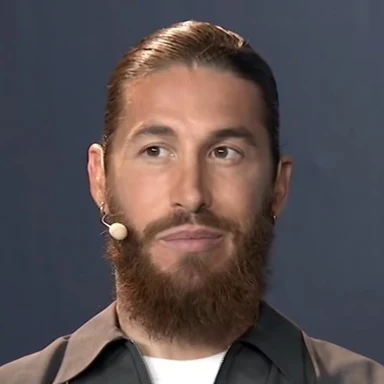 Photo: Real Madrid. Source and license in Image credits.
Sevilla · Real Madrid · Paris Saint-Germain
2004—PresentWorked together as player and head coach; see the overlapping club or national-team career entries.
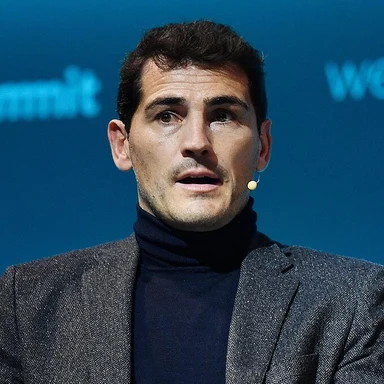 Photo: Web Summit. Source and license in Image credits.
Real Madrid · FC Porto
1999—2020Worked together as player and head coach; see the overlapping club or national-team career entries.
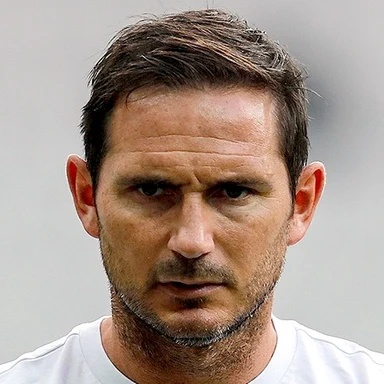 Photo: Mehdi Bolourian / Fars Media Corporation. Source and license in Image credits.
West Ham United · Swansea City · Chelsea
1995—2017Worked together as player and head coach; see the overlapping club or national-team career entries.
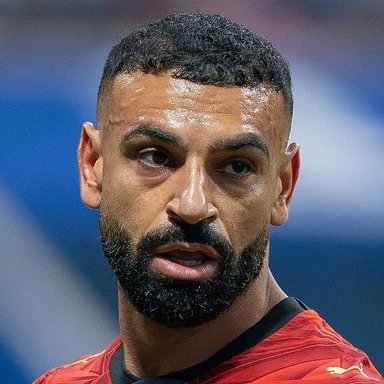 Photo: Bryan Berlin / WikiPortraits. Source and license in Image credits.
Al-Mokawloon · Basel · Chelsea
2010—PresentWorked together as player and head coach; see the overlapping club or national-team career entries.
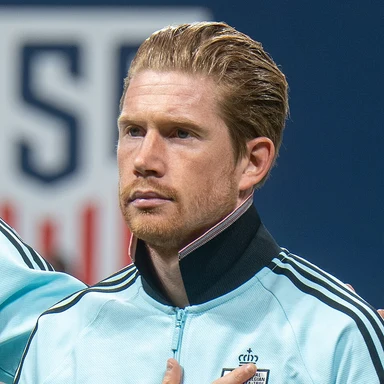 Photo: Bryan Berlin. Source and license in Image credits.
KRC Genk · Chelsea · Werder Bremen
2008—PresentWorked together as player and head coach; see the overlapping club or national-team career entries.
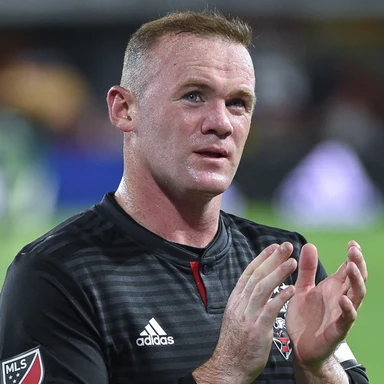 Photo: All-Pro Reels from District of Columbia, USA. Source and license in Image credits.
Everton · Manchester United · D.C. United
2002—2021Worked together as player and head coach; see the overlapping club or national-team career entries.
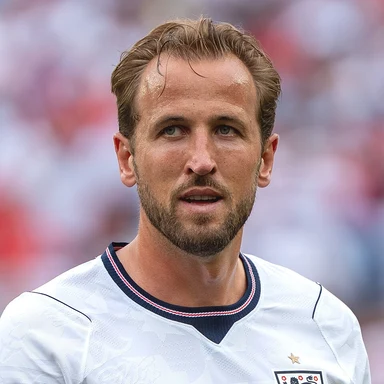 Photo: Bryan Berlin / WikiPortraits. Source and license in Image credits.
Tottenham Hotspur · Leyton Orient · Millwall
2011—PresentWorked together as player and head coach; see the overlapping club or national-team career entries.
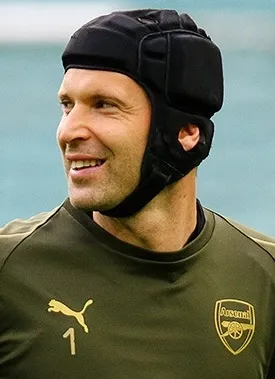 Photo: Amir Hosseini. Source and license in Image credits.
Chmel Blšany · Sparta Prague · Stade Rennais
1999—2019The goalkeeper in Mourinho’s first Chelsea league champions, later sharing the 2014/15 title with Courtois as first choice.
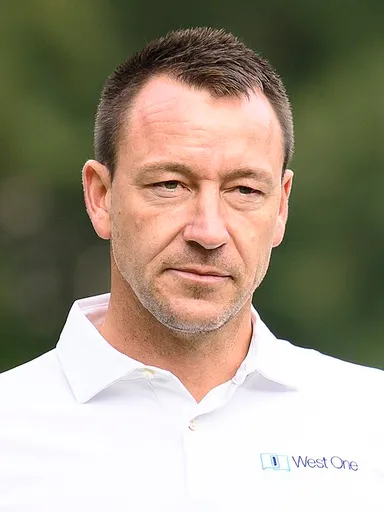 Photo: ChristopherJClarke. Source and license in Image credits.
Chelsea · Nottingham Forest ·
The captain at the heart of Mourinho’s Chelsea league champions in both managerial spells.
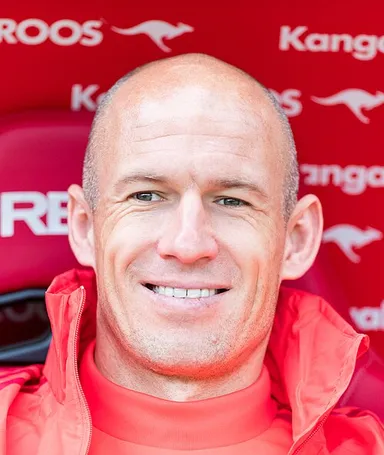 Photo: Sven Mandel. Source and license in Image credits.
FC Groningen · PSV Eindhoven · Chelsea
2000—2021The winger in Mourinho’s Chelsea league champions of 2004/05 and 2005/06.
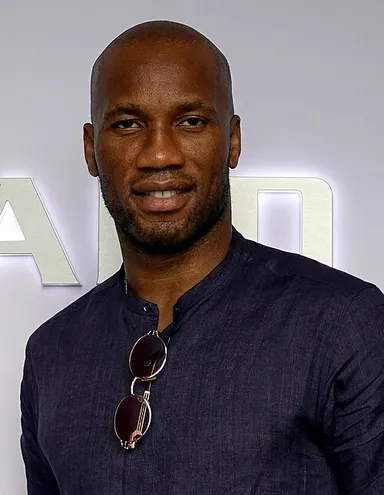 Photo: Y.Leclercq©. Source and license in Image credits.
Le Mans · Guingamp · Marseille
1998—2018Drogba’s hold-up play and finishing anchored Mourinho’s Chelsea attack across two spells.

Adaptive tournament manager
1992—Present · AC Milan · Real Madrid
Era-building leader
1974—2013 · Manchester United
Balanced high-tempo organiser
1979—2018 · Bayern Munich · Real Madrid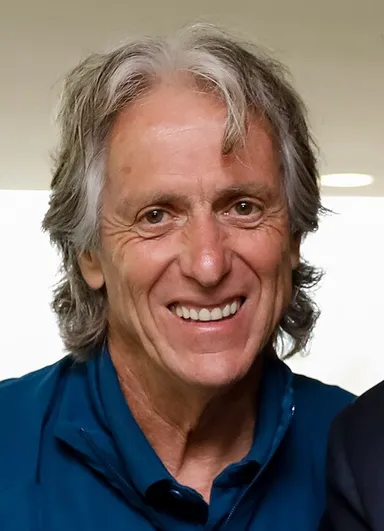 Photo: Palácio do Planalto. Source and license in Image credits.
An attacking organiser across football cultures
1989—Present · Benfica · FlamengoCareer and honour facts cite their underlying sources, including clubs and governing bodies. Tactical readings are identified as editorial analysis.
UEFAJosé Mourinho — coaching profileAccessed 2026-09-01UEFAJosé Mourinho on Benfica and his coaching evolutionAccessed 2026-09-01Real Madrid C.F.Real Madrid history, 2011–2020Accessed 2026-09-01Inter MilanThe 2010 treble, sixteen years onAccessed 2026-09-01SL BenficaPresentation of José MourinhoAccessed 2026-09-01UEFAUEFA Technical Newsletter 27 — Mourinho at PortoAccessed 2026-09-13Premier LeagueMourinho — Chelsea honours across two appointmentsAccessed 2026-09-13Manchester UnitedManchester United — the Mourinho yearsAccessed 2026-09-13UEFAMourinho — five European title wins through 2022Accessed 2026-09-13Premier LeaguePremier League managerial results — 31 January 2024 snapshotAccessed 2026-09-13ASJosé Mourinho — Real Madrid 2010–2013 resultsAccessed 2026-09-13Inter MilanJosé Mourinho — Inter managerial archiveAccessed 2026-09-13Coaches’ VoiceJosé Mourinho — tactical systems and adaptationAccessed 2026-09-14Premier LeagueChelsea 2004/05 — Premier League season recordAccessed 2026-09-14Real MadridReal Madrid 2011/12 — 100 points and 121 goalsAccessed 2026-09-14UEFABarcelona 1–0 Inter — 2010 semi-final second legAccessed 2026-09-14UEFAUEFA technical review — Porto’s diamond midfieldAccessed 2026-09-14UEFAMourinho on the systems used at ChelseaAccessed 2026-09-14UEFA · The Technician, January 2005José Mourinho — football education and formative influencesAccessed 2026-09-14UEFAThe master and his apprenticeAccessed 2026-09-14UEFAJosé Mourinho — early management and European breakthroughAccessed 2026-09-14Real MadridMourinho appointed Real Madrid head coach, June 2026Accessed 2026-09-14