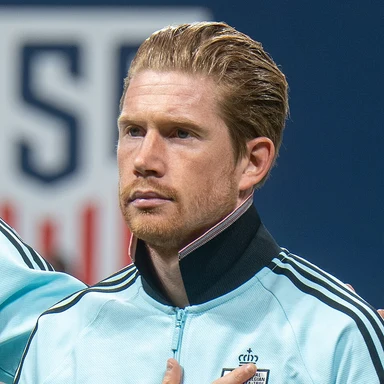
A Belgian creator whose early passes, deliveries from the right and powerful shooting connect midfield to the final run. Ten Manchester City seasons preceded a move to Napoli in 2025.
De Bruyne makes the next attacking action available earlier, combining ambitious delivery with movement and a credible finish. His continuing career includes distinct German, English and Italian chapters.
Editorial assessment of this period, not an official rating.
Assessment notes & sources
These bands are not percentiles or an overall ranking. The chart’s geometry represents ordered bands, not equal differences in ability.
Qualitative judgments describe football actions in context. They do not measure personality or medical fitness. Category assessments are editorial summaries, not averages. A lower defensive band describes the player’s role and contribution, not their value to the team.
Kevin De Bruyne changes how quickly an attack can become dangerous. A teammate may only be beginning a run when he delivers the ball into its eventual path. The pass does more than find an available player: its speed, bend and timing can make the defensive line turn before it has settled. This is why his familiar position to the right of midfield is so productive. From there he can cross behind defenders, combine inside or carry towards the penalty area without becoming a conventional touchline winger. His shooting makes that choice harder to defend, because retreating to protect the pass can concede a strike. The broader lesson is about coordination. A forward must recognise the same opening, and teammates behind the ball must support an ambitious decision that can lose possession. His best football combines individual invention with those shared responsibilities. Wolfsburg, Manchester City and Belgium supplied different settings for it; Napoli opens another chapter. The impressive totals matter, but the central idea is a midfielder who makes the next action available earlier.
Historical references support the chronology; tactical explanations are museum editorial analysis.
Factual senior spells and verified competition scope.
Club career statistical record
Period
Club
Apps
Goals
G/M
2008—2012
KRC GenkLeague record including the Belgian league playoff phase, as listed by National Football Teams. This spell includes the loan back from Chelsea after the January 2012 transfer; it is not a second set of appearances. Cup matches are excluded.
Senior club · league only
Senior · #14
93
15
0.16
2012—2014
ChelseaNine competitive first-team appearances, all in 2013/14. Loans at Genk and Werder Bremen are recorded in their own spells. The Premier League subset is three appearances, no goals and one assist. Chelsea’s 2012 Champions League and 2013 Europa League wins are not assigned as his honours.
Senior club · all competitions
Senior · #15
9
0
0.00
2012—2013
Werder BremenA season-long loan from Chelsea. The 33 appearances and ten goals cover the Bundesliga only; the German Cup is excluded.
Senior club · league only
Loan · #6
33
10
0.30
2014—2015
VfL WolfsburgBundesliga record across parts of three seasons. German Cup, Super Cup and European matches are excluded. The 2014/15 season uses the Bundesliga’s twenty-assist figure; different statistical providers apply different assist rules.
Senior club · league only
Senior · #14
52
13
0.25
2015—2025
Manchester CityCompleted City record using the club’s 422 appearances, 108 goals and 170 assists. The Premier League subset is 285 appearances, 72 goals and 118 assists, already included in these figures. Club trophy counts include squad honours and do not imply he played in every final.
Senior club · all competitions
Senior · #17
Performance record
Assists
170
G+A / match
0.66
G+A
278
Assists / match
0.40
422
108
0.26
2025—Now
NapoliOngoing Napoli spell; these figures cover only the completed 2025/26 Serie A season. They exclude cups and 2026/27 and are not a live career total. The 2025 Italian Super Cup was a squad honour; he did not play in the final.
Senior club · league only
Senior · #11
Performance record
Assists
2
G+A / match
0.39
G+A
7
Assists / match
0.11
18
5
0.28
Sources & methodology
Stored archive snapshots, not live counters. Missing values are not zero; records with different scopes are never added together.
Professional Footballers’ Association · individual
INDIVIDUAL1
UEFA Midfielder of the Season
UEFA · individual
03
Story
Defining chapters
2008—2014
Career chapter
Find the stage for the next pass
First-team football at Genk gave De Bruyne responsibility before the major transfer. He helped win the Belgian title in 2011, then signed for Chelsea in January 2012 while staying at Genk on loan for the rest of the season. A subsequent Werder Bremen loan produced ten Bundesliga goals in 33 appearances. Chelsea itself offered only nine competitive appearances before his departure in January 2014. Those stages should remain distinct: belonging to a club did not mean playing in its trophy-winning side. The German move became valuable because it provided sustained opportunities to connect his passing, movement and shooting in senior competition.
Wolfsburg gave De Bruyne room to attack a defence before it recovered its shape. His 2014/15 Bundesliga season brought ten goals and twenty assists under the league’s convention, alongside a German Cup victory and second place in the league. Two goals in a 4–1 win over Bayern made the threat especially visible: he could finish the move as well as supply it. Manchester City signed him in 2015. Under Manuel Pellegrini, his first season already included a League Cup and a Champions League semi-final. The next challenge was to retain that directness within a team increasingly asked to control territory and possession.
Under Pep Guardiola, De Bruyne increasingly created from the right interior channel, supported by the team’s spacing and circulation. The 2017/18 champions reached one hundred league points, and another title followed in 2019. His individual reference here is 2019/20: thirteen league goals and twenty assists, despite City finishing second. The season shows why personal peak and team honours are different questions. Recognition included the PFA players’ award, which he retained the following year. Later, fifteen league goals in 2021/22 highlighted how his shooting could become a larger part of the attack when the forward arrangement changed.
Erling Haaland supplied a powerful target for the early ball, but their partnership also allowed De Bruyne to run beyond a striker who came short. The 2022/23 treble included sixteen Premier League assists and a crucial equaliser away to Real Madrid in Europe. His Champions League final ended early through a hamstring injury; the trophy should not conceal that interrupted night. Further injury limited the following campaign, before his return helped the 2024 title run. He left City in 2025 with 422 competitive appearances, 108 goals and 170 assists. Napoli signed him that June, beginning a continuing career stage whose statistics are presented with explicit cutoffs.
Creates from the right interior channel with early crosses and through balls, carries when a defender closes the pass, and threatens goal with either foot. Forward movement and protection behind the ball help sustain the role.
Deliver before the line turnsCarry to change the passing laneTrade the pass and the runKeep the second foot available
Early delivery and passing weight
Right-channel crossing
Vision for the next run
Powerful shooting with either foot
CMAM
Illustrative role zones · not tracking data
Release the pass before the opening looks obvious
The useful question is often where a teammate will arrive, rather than where he is standing. De Bruyne can deliver while a defender is still deciding whether to step out or retreat. A firm pass reduces the time available to adjust, while its angle helps the receiver continue forward. This reading explains the value of an early release without treating every ambitious ball as correct. If the runner stops or the route closes, the same decision can surrender possession.
Use the right channel to go around the defence
From the space between the centre and the wing, he can bend a delivery behind the back line without first reaching the byline. The forward attacks the gap between the retreating defender and goalkeeper. A low cutback offers another route when the receiver is arriving later. These are different solutions to the same spatial problem: the defence may protect the direct path to goal while leaving a route around its shoulder. City’s width helps keep that route open.
Make the carry and the shot support the pass
De Bruyne can advance with the ball when a passing lane is closed. Drawing an opponent towards him may release a teammate; retreating instead gives him room to strike. His shooting with either foot makes it harder to defend by simply showing him one direction. The carry is usually purposeful rather than a sequence of decorative touches. Its value is the changed defensive decision at the end, whether he then shoots, crosses or plays a short combination.
Connect attacking freedom to support behind the ball
An advanced midfielder needs more than permission to attempt difficult passes. Teammates must offer a return option, stretch the opposite side and protect the centre if possession is lost. De Bruyne can press or recover after an attack, but using him as a specialist holding midfielder would change the task that makes him exceptional. With Haaland, the relationship also works in reverse: the striker can receive short and release his partner’s run. Creativity includes moving to receive the next pass.
A successful delivery must be reachable without forcing the forward to abandon his advantage. De Bruyne’s passing invites attention to that relationship between weight and timing. The spectacular distance is only one part of the skill; a shorter ball that preserves the runner’s stride can be just as decisive in opening the next action.
Keep a second striking direction available
Although right-footed, he has scored extensively with his left as well. That changes an opponent’s calculation when closing the shot: forcing an adjustment does not always remove the threat. The useful distinction is a credible alternative, rather than an assumption that every technique has identical accuracy or power on both sides.
Choose invention within the team’s structure
His passing can look impatient because it attacks an opening before the defence appears fully exposed. That is an editorial reading of the role, not a measured claim that risk always pays. The team’s spacing makes such attempts more useful, and knowing when to recycle possession remains part of the same creative responsibility.
Become the receiver as well as the supplier
The partnership with Haaland is more flexible than a fixed division between passer and scorer. When the striker comes towards the ball, De Bruyne can attack the space beyond him or arrive for a return. The movement prevents his creative role from becoming a stationary service position and gives defenders another runner to track.
Ten Bundesliga goals and twenty assists accompanied a cup-winning season. This version attacks before a defence settles, carrying or passing into the open field and retaining a finish of his own. It predates Guardiola’s positional structure and should be understood in Wolfsburg’s more transitional setting. Assist conventions differ between providers; the twenty here follows the Bundesliga figure.
2019/20
The full creative reference in Manchester
Right-sided interior and advanced playmaker
Thirteen league goals and twenty assists in 35 appearances define the shared reference for both rating panels. Delivery, vision and long-range shooting combine with midfield work and movement. City finished second, which keeps the individual assessment separate from a championship claim. The ratings describe this season’s role and capabilities; they do not pool his strongest attributes from every year.
2022/23
The treble partnership with Haaland
Advanced creator and runner behind the striker
Sixteen Premier League assists reflect the supply, while the equaliser in Madrid shows the independent shooting threat. Haaland’s depth gives the early ball a new target and his hold-up play can release De Bruyne in turn. The Champions League final ended early for him through injury. This is a peak of collective achievement and attacking partnership, with that limitation preserved.
League seasons only, through the completed 2025/26 season. City’s ten Premier League rows sum to 285 appearances, 72 goals and 118 assists; adding Chelsea gives 288, 72 and 119. City’s official season history supplies nine assists in 2015/16, rather than StatMuse’s seven. Wolfsburg 2014/15 uses the Bundesliga’s twenty assists. Genk includes league playoffs. Cup matches and 2026/27 are excluded; missing assists remain unknown, not zero.
Competition record
Club competitions
Competition statistical record
Competition
Apps
Goals
G/M
Premier LeaguePremier League · completed Chelsea and Manchester City recordThree Chelsea appearances plus 285 for City. All 72 goals came at City; the 119 assists comprise one for Chelsea and 118 for City. These are league figures, not all-competition club totals.
Performance record
Assists
119
G+A / match
0.66
G+A
191
Assists / match
0.41
288
72
0.25
BundesligaBundesliga · Bremen and Wolfsburg, 2012–2015Bremen’s 33 appearances and ten goals plus Wolfsburg’s 52 and thirteen. Cups are excluded. A combined assist total is left unknown because the selected records use different conventions.
85
23
0.27
Serie ASerie A · Napoli, completed 2025/26 seasonOnly the completed 2025/26 league season. Excludes cup matches and 2026/27; the continuing Napoli spell is not treated as a completed career.
Performance record
Assists
2
G+A / match
0.39
G+A
7
Assists / match
0.11
18
5
0.28
Sources & methodology
Stored archive snapshots, not live counters. Missing values are not zero; records with different scopes are never added together.
De Bruyne’s Belgium career includes the 2018 World Cup bronze medal and a goal against Brazil in that quarter-final. He has appeared at four World Cups and three European Championships through 2026. The federation record here is a dated snapshot of an ongoing international career.
Competition record
Senior international · tournament splits
Competition statistical record
Competition
Apps
Goals
G/M
FIFA World CupWorld Cup finals · 2014, 2018, 2022 and 2026Finals appearances only: four in 2014, six in 2018, three in 2022 and five in 2026. Qualifiers are excluded. The 2018 bronze medal is a tournament placing.
18
3
0.17
UEFA European ChampionshipEURO finals · 2016, 2020 and 2024Five matches in 2016 and four in each of the next two editions. EURO 2020 was played in 2021 but retains its official edition name. Qualifiers and shoot-outs are excluded.
13
2
0.15
Sources & methodology
Stored archive snapshots, not live counters. Missing values are not zero; records with different scopes are never added together.
De Bruyne offers a model of creativity that is direct without being simplistic. The decisive action can be an early cross, a short exchange or a carry that draws a defender before the pass. What links them is the ability to recognise a useful route and execute it while the opportunity still exists. His City years also show why a creator’s contribution should be read alongside the team around him. Width, forward movement and protection against counters made difficult passes worth attempting. An assist total records the final connection, but misses the earlier movement and the decisions that made that connection possible. Equally, injuries and changing workloads belong in the account; his most productive version cannot be projected onto every later season. The three versions here preserve those differences. Belgium’s tournament record and the continuing Napoli career need their own context rather than being absorbed into a single Manchester story. His enduring influence is visible in the expectation that an attacking midfielder can supply width, penetrate centrally and threaten goal within the same role. Assessing that influence requires watching both the ball and the runner he has noticed.
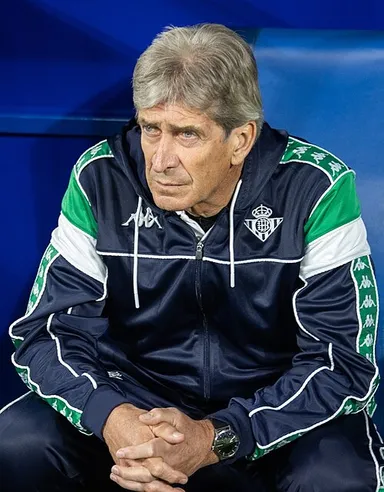
José Mourinho · Thomas Schaaf · Dieter Hecking · Manuel Pellegrini · Pep Guardiola · Antonio Conte · Roberto Martínez
Documented teammates
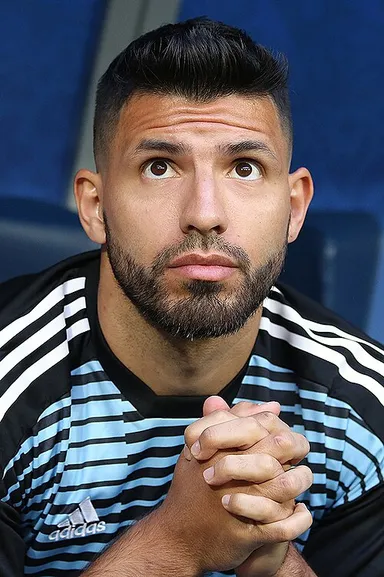
Erling Haaland— Overlapping Manchester City era · Rodri— Overlapping Manchester City era · Sergio Agüero— Overlapping Manchester City era · Jesús Navas— Overlapping Manchester City era
Overlapping club eras
Two more league-winning systems — Chelsea · Pellegrini sustains the challenge — Manchester City · Guardiola’s evolving control — Manchester City · Conte’s renewed champions — Napoli