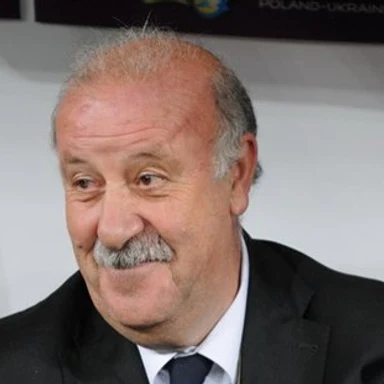
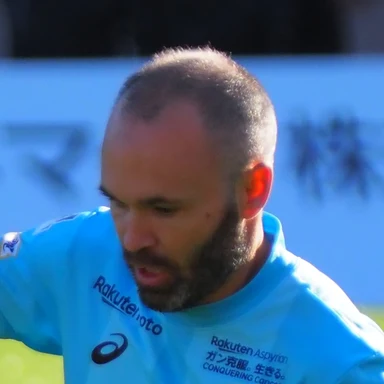
Barcelona and Spain’s midfield organiser combined constant observation, precise receiving and purposeful circulation, giving teammates better options before choosing the pass that broke the line.
Editorial assessment of this period, not an official rating.
Assessment notes & sources
These bands are not percentiles or an overall ranking. The chart’s geometry represents ordered bands, not equal differences in ability.
Qualitative judgments describe football actions in context. They do not measure personality or medical fitness. Category assessments are editorial summaries, not averages. A lower defensive band describes the player’s role and contribution, not their value to the team.
Xavi made a football match easier for the player receiving his next pass. Before the ball arrived, he checked the positions around him, adjusted his body and located an exit. After releasing it, he moved again, giving the team another usable angle. Those small actions explain more than the familiar description of a midfield metronome. His control was active: he could attract an opponent, change the direction of play and choose the moment when patient circulation became a decisive forward pass. Barcelona and Spain provided different settings for that intelligence, with exceptional teammates turning his decisions into a shared language. At his peak he usually worked as an interior, supported by a holding midfielder, rather than operating alone in front of the defence. He connected the foundation to the creative players and forwards without needing every attack to end with his own shot. The great finals reveal the rewards, but the repeated availability between their memorable moments is the essential lesson. Watch the movement before and after each touch, and the apparent simplicity becomes a demanding technical achievement.
Historical references support the chronology; tactical explanations are museum editorial analysis.
Factual senior spells and verified competition scope.
Club career statistical record
Period
Club
Apps
Goals
G/M
1998—2015
BarcelonaCompleted Barcelona first-team competitive record: 767 appearances and 85 goals. The club’s competition breakdown includes 157 Champions League appearances with qualifying; UEFA’s main-competition figure is 151. League seasons below are a subset of this total. Reserve-team matches and later coaching honours are excluded; assists remain unverified here. Shirt numbers 16 and 6 follow the club’s retrospective.
Senior club · all competitions
Captaincy · #16 / 6
767
85
0.11
2015—2019
Al SaddFour completed Qatar league seasons total 82 appearances and 21 goals. Domestic cups and AFC competition are excluded; this is not an all-competition Al Sadd total. The four player trophies are recorded separately from his subsequent coaching honours. Assists have not been verified.
Senior club · league only
Captaincy · #6
82
21
0.26
Sources & methodology
Stored archive snapshots, not live counters. Missing values are not zero; records with different scopes are never added together.
Xavi entered Barcelona’s first team in 1998 after growing through the club’s academy. The early seasons were an apprenticeship in responsibility, not a continuous procession of trophies. Playing near the base of midfield demanded an understanding of passing angles and the danger of losing possession in central areas. Changes of coach and teammates forced him to find continuity within an unsettled environment. Frank Rijkaard’s arrival in 2003 gradually gave that education a more coherent direction. The later master of circulation was being formed through ordinary decisions about where to stand, when to offer support and how to help the next player receive facing the game.
Rijkaard’s Barcelona allowed Xavi to become more influential beyond the deepest midfield position. League titles in 2005 and 2006 confirmed the team’s progress, although a serious knee injury restricted his contribution to the second campaign and its Champions League triumph. His European medal should therefore be distinguished from playing a decisive role in that final. By EURO 2008, he was central to a Spain side that trusted coordinated movement and intelligent passing. He scored against Russia in the semi-final and supplied Fernando Torres in the final. The tournament’s best-player award recognised how his choices helped turn collective possession into a winning attack.
Under Pep Guardiola, Xavi’s connections with Sergio Busquets, Andrés Iniesta and Lionel Messi made Barcelona’s passing structure unusually difficult to disrupt. The 2008/09 treble included his cross for Messi’s headed goal in Rome. Two years later at Wembley, his pass released Pedro for the opening goal, illustrating how circulation could suddenly become penetration. Spain’s 2010 World Cup victory belonged to the same broad period of influence, although the national team had its own personnel and balance. In the EURO 2012 final he supplied Jordi Alba and Fernando Torres. These achievements show a midfielder who could preserve possession and still recognise the moment to break the line.
The final Barcelona years asked Xavi to accept a different share of the work as the attack changed and younger midfielders took more minutes. He became club captain after Carles Puyol’s retirement and left in 2015 with another treble, making his final appearance in the Champions League final against Juventus. The substitute’s contribution was valuable without being identical to his earlier dominance. Al Sadd then provided four further playing seasons, ending in 2019 with a league title. His Qatar chapter produced four trophies as a player. Later coaching achievements belong to another career and must not inflate either the playing honours or the appearance record.
Scans before receiving, reopens passing angles after releasing the ball and accelerates when a runner appears beyond pressure. The peak interior works ahead of a holding midfielder; compact team distances support the counterpress.
The courage to remain availableSmall touches with a large consequenceIntelligence that teammates can usePatience with an attacking intention
First touch and body orientation
Short passing and support angles
Vision and through passing
Tempo and collective understanding
CMDM
Illustrative role zones · not tracking data
See the next action before receiving
Xavi’s receiving technique began with information. Repeated looks around the field helped him identify pressure, a free teammate and the direction of his next touch. An open body position could then turn a difficult reception into a pass made without an extra adjustment. The important detail is the relationship between observation and execution, not a claim that he always played first time. If the direct route closed, a short turn or a return pass could preserve the next opportunity rather than force a low-value attack.
Pass, move and restore the triangle
After passing, Xavi rarely treated his immediate task as finished. A few steps sideways or forward could reopen a lane and give the receiver a safe return option. Around Busquets and Iniesta, those changing triangles let Barcelona move through pressure without demanding a long carry from every player. This is an editorial interpretation of the team’s positional relationships. The quality depended on others holding useful distances and offering depth; Xavi’s movement organised connections rather than replacing the contribution of everyone around him.
Wait for the run, then accelerate
Circulation was useful because it changed what the defence had to protect. Xavi could keep the ball moving until an opponent stepped out, then find the player entering the space behind that movement. His delivery to Pedro at Wembley and the passes to Alba and Torres in the 2012 final offer clear examples of a forward destination. Tempo control therefore includes acceleration. Passing sideways without creating a better next action would miss the purpose of the patience that made his game so distinctive.
Defend through distances and the next pass
His defensive value began with staying connected to the players around the ball. Shorter distances made an immediate challenge or a blocked passing lane more plausible after possession was lost. They also reduced the need for repeated open-field races. Xavi could compete and recover, but his peak should not be assessed as though he were a dominant aerial defender or a lone holding midfielder. When opponents escaped the first pressure, the covering work of Busquets and the back line remained essential to the whole arrangement.
Receiving repeatedly in a crowded midfield means accepting responsibility before the crowd sees an obvious opening. Xavi kept presenting himself for that job. His composure was not simply a calm expression; it was the willingness to receive, decide and offer again while an opponent tried to remove the easy solution.
Small touches with a large consequence
A restrained turn could move the ball beyond a pressing foot and change the direction from which the next defender had to approach. The movement looked modest because it solved the immediate problem economically. Its value is easier to appreciate when the viewer follows the newly opened passing lane instead of waiting for a spectacular dribble.
Intelligence that teammates can use
His best decisions improved somebody else’s next action. A pass delivered to the correct foot, at a usable pace and with support nearby could let the receiver play forward immediately. That generosity was functional rather than decorative: the team gained time because several players could understand the same invitation before the defence adjusted.
Patience with an attacking intention
Xavi’s patience did not mean refusing risk. It meant trying to choose the risk when the receiver and surrounding movement made it worthwhile. The decisive assists in major finals matter because they expose that intention. The quiet passes and the penetrative pass were parts of the same process, not opposing styles of play.
EURO 2008 offers a concentrated version of his influence in a national team. Luis Aragonés’s side used close combinations and purposeful movement, with Xavi helping connect possession to the forwards. The semi-final goal and final assist give the tournament a visible attacking return, while the best-player award recognises the broader contribution. This is a tournament snapshot, not a full Barcelona season.
2008/09
The treble-winning interior
Interior connecting the base and the attack
The 2008/09 season placed Xavi inside Guardiola’s new Barcelona structure. Busquets provided a base, Iniesta could carry through pressure and Messi changed the problems facing defenders. Xavi kept the relationships usable and could supply the final delivery himself, as his cross to Messi in Rome demonstrated. The treble reflects a collective achievement whose midfield organisation was one essential component.
2010/11
The mature controller at Wembley
Advanced central organiser with a holding midfielder behind
The 2010/11 version is the shared reference for the numerical and qualitative assessments. Barcelona’s mature positional structure allowed Xavi to combine repeated availability with precise changes of pace. The pass to Pedro in the final captures the move from circulation to penetration. Ratings emphasise first touch, passing, awareness and tempo, while retaining the limits of his aerial game and isolated defensive coverage.
Seventeen Barcelona league seasons reconcile to 505 appearances and 58 goals. Four Al Sadd league seasons separately total 82 appearances and 21 goals. These rows exclude domestic cups, continental matches and Barcelona B. All season-level assists remain null because a consistent verified series has not been established; null is not zero.
Competition record
Club competitions
Competition statistical record
Competition
Apps
La LigaLa Liga · Barcelona, 1998–2015Completed league record, reconciling to the 17 season rows. It is a subset of the 767-match Barcelona total, not an additional club spell.
Performance record
Goals
58
Goals / match
0.11
505
UEFA Champions LeagueChampions League · main competition onlyUEFA’s 151 appearances exclude qualifying. Barcelona’s published breakdown gives 157 including qualifying; the six-match difference reflects scope. Goals and assists are not verified in this table.
151
Sources & methodology
Stored archive snapshots, not live counters. Missing values are not zero; records with different scopes are never added together.
Xavi’s senior Spain career ran from November 2000 to June 2014, spanning four World Cups and two European Championships with on-field appearances. The preferred RSSSF match register totals 133 caps and 13 goals. He won EURO 2008, the 2010 World Cup and EURO 2012. The RFEF profile publishes the same cap total but 12 goals; that discrepancy is retained below rather than silently reconciled.
Alternate historical scopes
RFEF: 133 appearances / 12 goals · The federation profile publishes 133 appearances and 12 goals. The goal count differs from RSSSF’s match register and National Football Teams; no unsupported explanation or extra goal has been inserted to reconcile the sources.
Competition record
Senior international · tournament splits
Competition statistical record
Competition
Apps
Goals
G/M
FIFA World CupWorld Cup finals · 2002, 2006, 2010 and 2014Three appearances in 2002, four in 2006, seven in 2010 and one in 2014. Qualifiers, youth World Cups and shoot-out kicks are excluded.
15
0
0.00
UEFA European ChampionshipEURO finals · 2008 and 2012Five appearances and one goal in 2008; six appearances and no goals in 2012. Xavi was an unused squad member in 2004, so that edition adds no appearance. Qualifiers are excluded.
11
1
0.09
Sources & methodology
Stored archive snapshots, not live counters. Missing values are not zero; records with different scopes are never added together.
Xavi leaves a way of watching midfield play as much as a collection of medals. His career invites attention to what happens before the obvious event: a glance, a change of angle, a teammate made easier to find. Barcelona and Spain turned those habits into unusually coherent collective football, but their success should not reduce him to a symbol of possession for its own sake. He helped possession acquire a direction. The passes that created goals in European finals show the attacking purpose behind the repetition. His story also explains why role matters. The young midfielder learning near the defence, the mature interior supported by Busquets and the experienced player accepting fewer minutes were related versions with different responsibilities. None required him to dominate every physical contest. The surrounding structure helped his particular strengths become decisive, while those strengths made the structure easier for others to use. That reciprocal relationship is the enduring lesson. Xavi showed that a player could command a match by improving the decisions available to teammates, and that apparent simplicity could be the result of extraordinary preparation rather than a lack of ambition.
Ronaldo, Figo and the centenary — Barcelona · Ronaldinho and renewal — Barcelona · Guardiola’s positional game — Barcelona · A second treble — Barcelona