

A striker who opens the whole attack
- Diagonal acceleration
- Generational
- Finishing across the goalkeeper
- Elite
- Final pass after drawing cover
- Elite
- Left-channel combinations
- Elite
- Aerial and defensive duties
- Moderate

Thierry Daniel Henry
A mobile scorer and creator who turned the left channel into a route to goal, combining explosive running with disguised finishing and the final pass.
Senior club · all competitions
Completed club records only; not a complete career total.
Active club snapshots and records with another scope are excluded. Assist totals are not combined across incompatible definitions.
Stored archive snapshots, not live counters. Missing values are not zero; records with different scopes are never added together.
G/M = goals ÷ appearances. G+A = goals + assists. Per-90 metrics use documented minutes.
Senior international · all competitions
Stored archive snapshots, not live counters. Missing values are not zero; records with different scopes are never added together.
G/M = goals ÷ appearances. G+A = goals + assists. Per-90 metrics use documented minutes.
In context
Henry’s legacy connects Arsenal’s record scorer with Barcelona’s adaptable left-sided forward and France’s tournament winner. His invention and finishing coexist with difficult finals and a complicated international ending.
Reading the game
Thierry Henry changed what a leading scorer could do before the shot. He could begin outside the centre-backs, move towards the ball and then attack the space their response created. From the left channel, his speed threatened the outside route while his right foot opened the far corner. The defender had to protect both without knowing whether Henry would finish or release a teammate. His ability to create was therefore part of the same problem as his scoring: committing another defender towards him could open the pass that made the whole attack work.
Arsenal gave that range a particularly expressive setting, with combinations and supporting runs turning a nominal centre-forward into a player who could influence an entire flank. Barcelona later asked him to fit his movement around other central threats, showing the difference between being an attack’s main reference and contributing within a more prescribed structure. France supplied another set of relationships and tournament demands. Across those settings, the useful thread is not simply pace. It is how he positioned himself to use it, and how the possibility of a pass made the next acceleration or finish more difficult to anticipate.
Historical references support the chronology; tactical explanations are museum editorial analysis.
Historical references: Premier League: Thierry Henry’s Hall of Fame profile ↗ · Premier League: Henry on the value of assists ↗ · Barcelona: Henry’s role in seven trophy wins ↗ · FIFA: Henry and Zidane against Brazil in 2006 ↗
Career
| Period | Club |
|---|---|
| 1994—1999 | AS MonacoMonaco first-team development, 1994–1999. The club documents the 1997 league title; complete appearances, goals and assists are not reconciled here. |
| 1999—1999 | JuventusThe short Juventus spell in 1999 is separate from both Monaco and Arsenal. Complete competitive totals remain unverified here. |
| 1999—2007 | ArsenalFirst Arsenal spell, 1999–2007. The combined 377 appearances and 228 goals are shown once in the club aggregate; they are not assigned to this spell or counted again on the return.Senior · #14 |
| 2007—2010 | BarcelonaBarcelona, 2007–2010: 121 official appearances, 49 goals and 27 club-credited assists. The archive’s 16 unofficial games and three unofficial goals are excluded. Senior club · all competitions Senior · #14Performance record
|
| 2010—2014 | New York Red BullsNew York, 2010–2014: 122 MLS regular-season appearances, 51 goals and 42 league-credited assists. Playoffs and friendlies are excluded; this is not an all-competitions total. Senior club · league only Senior · #14Performance record
|
| 2012—2012 | ArsenalArsenal loan, January–February 2012, within the New York years. It remains a separate spell; its goals are already included in Arsenal’s 228-goal combined record.Loan · #12 |
Stored archive snapshots, not live counters. Missing values are not zero; records with different scopes are never added together.
G/M = goals ÷ appearances. G+A = goals + assists. Per-90 metrics use documented minutes.
Honours
AS Monaco · league
Arsenal · league
Arsenal · domestic cup
Arsenal · domestic cup
FC Barcelona · league
FC Barcelona · domestic cup
FC Barcelona · continental
FC Barcelona · domestic cup
FC Barcelona · continental
FC Barcelona · world
New York Red Bulls · league
France · world
France · continental
France · world
Arsenal · individual
Arsenal · individual
Arsenal · individual
France · individual
France · individual
Story
Career chapter
Henry’s Monaco apprenticeship combined early senior opportunities with the demands of playing away from the centre of the attack. The league title in 1997 and France’s World Cup win in 1998 arrived before his best-known club role had fully formed. A short spell at Juventus in 1999 then interrupted any simple story of uninterrupted progress. Moving to Arsenal reunited him with Wenger and offered a different interpretation of his abilities. The important change was to bring a wide player’s movement into the striker’s responsibility, rather than asking him to forget the habits that could make him difficult to mark.
Historical references: Premier League: Thierry Henry’s Hall of Fame profile ↗ · FFF: Henry’s senior France record and honours ↗ · Monaco: Henry’s early development and 1997 title ↗
Career chapter
At Arsenal, Henry could leave the centre without ceasing to be the principal scoring threat. A defender following him towards the left risked opening a central lane; staying inside could give him space to turn and accelerate. Bergkamp’s combinations and the movement around that flank helped convert the dilemma into chances. The 2002/03 creative season and the unbeaten league campaign that followed reveal complementary versions of the same forward. Later, captaincy and European knockout matches brought different pressures, including the 2006 final defeat. His first spell established the scoring record, which the short 2012 return would extend.
Historical references: Arsenal: the final goal and the 228-goal club record ↗ · Premier League: Thierry Henry’s Hall of Fame profile ↗ · Premier League: Henry on the value of assists ↗ · Premier League: Henry’s 24 goals and 20 assists in 2002/03 ↗ · Arsenal: ten examples of Henry’s finishing ↗
Career chapter
Barcelona did not simply reproduce Arsenal’s arrangement with a different shirt. Henry joined in 2007 and had to fit his movement around an attack containing other players who wanted central access. Under Guardiola, starting from the left could help stretch the defence before a diagonal run attacked the space behind it. The 2008/09 season is the clearest version: his contribution supported a collective treble rather than an attack organised primarily around him. The two goals in the 6–2 win at Madrid capture that direct threat, while the wider season shows the importance of accepting a more defined place in the team.
Historical references: Barcelona: Henry’s role in seven trophy wins ↗ · Barcelona players archive: Henry’s official season records ↗
Career chapter
The move to New York in 2010 extended Henry’s playing career in a different competitive setting. His passing and combinations remained important as he took on a senior attacking role, and the 2013 Supporters’ Shield gave that chapter a collective landmark. The brief Arsenal loan in 2012 should be kept distinct: it was an interruption within his American years, not a second long English career. His final Arsenal goal at Sunderland provided an enduring moment without changing the scale of that return. By retirement in 2014, the story included adaptation and creation as well as the explosive running most associated with his peak.
Historical references: Arsenal: the final goal and the 228-goal club record ↗ · New York Red Bulls: Henry’s departure and 2013 Supporters’ Shield ↗
Profile
Complete Forward
Also plays · Inside Forward
Moves out of the centre to receive in the left channel, attacks diagonally and chooses between finishing and finding the free teammate. The Barcelona role gives the same movement a more defined starting position.
Acceleration
Open-field carrying
Finishing angles
Combination play
Illustrative role zones · not tracking data
Henry could move outside a centre-back’s immediate reach and receive with room to face the goal. Following him could expose the centre; declining to follow could leave a defender facing his acceleration. The movement mattered because it preserved both the shot and the pass. Simply standing wide would not create the same problem without a credible route back towards goal.
His long stride covered ground quickly, but the first change of direction often made that speed usable. A touch across the opponent or a pause could alter the defender’s stance before the acceleration. In a transition, he could carry far enough to draw cover and then release the ball. The best run was therefore not always the one he finished himself.
From the left, the right-footed finish across the goalkeeper became a recognisable pattern. Its effectiveness depended on the preceding touch and the keeper’s position, not merely on curling the ball. Henry could delay the strike, go nearer the near post or finish after a combination instead. That variation kept a familiar body shape from becoming a completely reliable instruction for the defender.
A forward who attracts cover can improve the next teammate’s situation without beating that extra opponent. Henry’s passing made this a regular possibility. He could combine briefly, find a runner across the attack or deliver from the left after drawing the back line towards him. His assist record reflects that contribution, although totals alone cannot explain the timing that made each pass useful.
Arsenal’s roaming striker and Barcelona’s left-sided attacker occupied some similar spaces for different collective reasons. At Barcelona, holding the flank before moving inside could help teammates use the centre. Against a settled low defence, neither role guaranteed a clear running lane. He still needed combinations and patient repositioning, while defensive work and the teammates behind him shaped how much freedom was available.
Historical references: Arsenal: the final goal and the 228-goal club record ↗ · Premier League: Thierry Henry’s Hall of Fame profile ↗ · Premier League: Henry on the value of assists ↗ · Premier League: Henry’s 24 goals and 20 assists in 2002/03 ↗ · Arsenal: ten examples of Henry’s finishing ↗ · Barcelona: Henry’s role in seven trophy wins ↗
Reading the game
| Era / team | Primary Role | Tactical Character |
|---|---|---|
| 1994–1999AS Monaco / Juventus | Wide apprenticeship before Arsenal | Develops senior movement before the central conversion in England. |
| 1999–2001Arsenal | A central role with room to move left | Wenger turns wide movement into a striker’s source of separation. |
| 2001–2006Arsenal | Scorer, carrier and creator | Combines central responsibility with left-channel receptions and final passes. |
| 2006France | France’s central tournament outlet | Runs beyond the midfield and attacks deliveries, as against Brazil in the quarter-final. |
| 2007–2010FC Barcelona | Width followed by the diagonal run | Starts left and times inward movement around the other forwards. |
| 2010–2014New York Red Bulls | Senior creator in New York | Passing and combinations remain central; the 2012 Arsenal loan is a separate spell. |
Historical references: Arsenal: the final goal and the 228-goal club record ↗ · Premier League: Thierry Henry’s Hall of Fame profile ↗ · Premier League: Henry on the value of assists ↗ · Premier League: Henry’s 24 goals and 20 assists in 2002/03 ↗ · Barcelona: Henry’s role in seven trophy wins ↗ · FIFA: Henry and Zidane against Brazil in 2006 ↗ · Monaco: Henry’s early development and 1997 title ↗ · New York Red Bulls: Henry’s departure and 2013 Supporters’ Shield ↗
Reading the game
Henry’s scoring threat made another defender’s attention understandable, but his response could be a pass. The receiver benefited from the space that attention had vacated. This linked individual danger with collective creation: his greatest value was sometimes the extra decision he forced on the defence before another Arsenal player took the shot.
His running was most dangerous when it reached a useful angle rather than merely gaining distance. Starting outside a defender could let him cross the opponent’s path towards goal. The defender then had to turn as well as run. A technical first touch and awareness of the goalkeeper turned athletic advantage into a finishing opportunity.
Leaving the striker’s central position was productive when someone could connect the move or occupy the space he had opened. Henry’s Arsenal relationships made that exchange especially valuable. The role should therefore be read through nearby movements as well as his own dribbling. A free forward still needs a team that can understand where the next pass will go.
Barcelona required him to share attacking importance rather than reproduce his Arsenal status. His productive 2008/09 campaign shows how an established scorer can remain decisive while accepting a different starting position and set of movements. Adaptation did not remove his identity; it changed when the familiar run, combination or finish best served the team.
Historical references: Premier League: Thierry Henry’s Hall of Fame profile ↗ · Premier League: Henry on the value of assists ↗ · Arsenal: ten examples of Henry’s finishing ↗ · Barcelona: Henry’s role in seven trophy wins ↗ · Barcelona players archive: Henry’s official season records ↗
Reading the game
Scoring creator from the left channel
The 2002/03 league season pairs 24 goals with 20 assists under the Premier League’s definition. It is a useful version for studying how Henry could attract attention and release a teammate without surrendering his own scoring responsibility. The individual production should be separated from the team outcome: Arsenal did not retain the league title that season.
Mobile central scoring reference
The 2003/04 version emphasises repeatable scoring within Arsenal’s fluid attacking relationships. Thirty league goals made him the main finisher, but his movement also helped teammates find space and combine. The unbeaten record belongs to the whole league team; it does not mean Arsenal went through every competition without a defeat.
Left-sided forward in a shared attack
In 2008/09, Henry’s runs from the left complemented Messi and Eto’o rather than asking them to support an Arsenal-style central reference. The 26 official goals establish a productive season, while the role shows that occupying width and attacking inside can be consecutive responsibilities. This is a distinct tactical version, not the period used for the numerical peak rating.
Historical references: Premier League: Thierry Henry’s Hall of Fame profile ↗ · Premier League: Henry’s 24 goals and 20 assists in 2002/03 ↗ · Premier League: Henry’s five consecutive 20-goal seasons ↗ · Barcelona: Henry’s role in seven trophy wins ↗ · Barcelona players archive: Henry’s official season records ↗
Statistics
| Season | Club | Apps | Goals | Assists | G/M |
|---|---|---|---|---|---|
| 2009–10 | FC Barcelona Senior club · all competitions | 32 | 4 | — | 0.13 |
| 2008–09 | FC Barcelona Senior club · all competitions | 42 | 26 | — | 0.62 |
| 2007–08 | FC Barcelona Senior club · all competitions | 47 | 19 | — | 0.40 |
| 2002–03 | Arsenal Senior club · league only Performance record
| — | 24 | 20 | — |
| 2011–12 | Arsenal Senior club · league only Performance record
| 4 | 1 | 0 | 0.25 |
| 2003–04 | Arsenal Senior club · league only Performance record
| 37 | 30 | 6 | 0.81 |
| 1999–00 | Arsenal Senior club · league only Performance record
| 31 | 17 | 8 | 0.55 |
Stored archive snapshots, not live counters. Missing values are not zero; records with different scopes are never added together.
G/M = goals ÷ appearances. G+A = goals + assists. Per-90 metrics use documented minutes.
Selected Arsenal rows are Premier League only; Barcelona rows include all official competitions. Club-archive unofficial games are excluded. Missing assists are not zero, and these different scopes must not be summed into a career total.
Club competitions
| Competition | Apps | Goals | Assists | G/M | G+A/M |
|---|---|---|---|---|---|
Premier League1999–2012Senior domestic league only. Assists follow the competition organiser’s definition. Performance record
| 258 | 175 | 74 | 0.68 | 0.97 |
Stored archive snapshots, not live counters. Missing values are not zero; records with different scopes are never added together.
G/M = goals ÷ appearances. G+A = goals + assists. Per-90 metrics use documented minutes.
International
International career
France senior career, 1997–2010: 123 appearances and 51 goals according to FFF. World champion in 1998 and European champion in 2000, with different roles across later tournaments. Youth matches and shoot-out conversions are excluded; a compatible career assist total is not supplied.
Reading the game
Henry’s lasting influence lies in joining the mobility of a winger to the scoring responsibility of a centre-forward. He made the left channel a place to receive, combine and threaten the goal rather than a starting point that dictated a single job. Arsenal’s record total and his league scoring awards establish the output, while the assists show why reducing him to a runner misses the structure of his game. The same player could carry a counterattack, supply the final pass or arrive to finish a move someone else had developed.
His Barcelona chapter adds the capacity to adapt to a team whose central spaces were shared with other exceptional forwards. Internationally, the 1998 world title, EURO 2000 and the 2006 final sit alongside less successful tournaments. The unpunished handball before France’s decisive goal against Ireland in 2009 also belongs in an honest account; Henry acknowledged the contact. It cannot be explained away by his achievements. A balanced legacy preserves both the exceptional football and its limits: freedom depended on teammates, not every final produced his best finishing, and one familiar attacking route still required continual variation against organised opposition.
Historical references: Arsenal: the final goal and the 228-goal club record ↗ · Premier League: Thierry Henry’s Hall of Fame profile ↗ · Barcelona: Henry’s role in seven trophy wins ↗ · FFF: Henry’s senior France record and honours ↗ · RMC: Henry acknowledges the handball against Ireland ↗
Archive
Complete Forward · editorial peak 2001—2006
Arsène Wenger · Frank Rijkaard · Pep Guardiola
Carles Puyol— Overlapping Barcelona era · Xavi— Overlapping Barcelona era · Lionel Messi— Overlapping Barcelona era · Ronaldinho— Overlapping Barcelona era
Lippi’s two cycles — Juventus · Wenger changes the horizon — Arsenal · The Invincibles — Arsenal · The move and the later cups — Arsenal · Ronaldinho and renewal — Barcelona · Guardiola’s positional game — Barcelona

Positional football architect
2007—2026 · Barcelona · Bayern Munich
Developmental moderniser
1984—2018 · Arsenal
Barcelona · Al Sadd
1998—2019
FC Barcelona · Paris Saint-Germain · Inter Miami CF
2004—Present Photo: Tam Tam. Source and license in Image credits.
FC Barcelona · Vissel Kobe · Emirates Club
2002—2024
AS Cannes · Bordeaux · Juventus
1989—2006 Photo: Klearchos Kapoutsis. Source and license in Image credits.
Nancy · Saint-Étienne · Juventus
1972—1987 Photo: Bryan Berlin / WikiPortraits. Source and license in Image credits.
Monaco · Paris Saint-Germain · Real Madrid
2015—Present
Cruzeiro · PSV · Barcelona
1993—2011 Photo: Unknown author. Source and license in Image credits.
Santos · New York Cosmos
1956—1977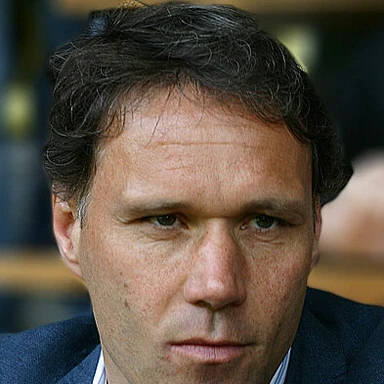 Photo: Paul Blank. Source and license in Image credits.
Statistics are displayed only within the scope supported by each cited source.
ArsenalArsenal: the final goal and the 228-goal club recordPremier LeaguePremier League: Thierry Henry’s Hall of Fame profilePremier LeaguePremier League: Henry on the value of assistsPremier LeaguePremier League: Henry’s 24 goals and 20 assists in 2002/03Premier LeaguePremier League: Henry’s five consecutive 20-goal seasonsArsenalArsenal: ten examples of Henry’s finishingFC BarcelonaBarcelona: Henry’s role in seven trophy winsFC BarcelonaBarcelona players archive: Henry’s official season recordsFC BarcelonaBarcelona: Henry’s 121 appearances, 49 goals and 27 assistsFFFFFF: Henry’s senior France record and honoursFIFAFIFA: Henry and Zidane against Brazil in 2006AS MonacoMonaco: Henry’s early development and 1997 titleNew York Red BullsNew York Red Bulls: Henry’s departure and 2013 Supporters’ ShieldMLSMLS: Henry’s regular-season and playoff records separatedRMC SportRMC: Henry acknowledges the handball against IrelandStatMuseThierry Henry — documented Premier League seasonsPremier LeagueThierry Henry — Premier League player recordFrench Football FederationThierry Henry — France senior recordArsenal F.C.History and honoursArsenal F.C.Thierry Henry archive