

A championship in his first Monaco season
AS Monaco
1987/88 French league championsFrench Division 1
Documented history
The immediate league success at Monaco established Wenger well before the Arsenal years that later defined his public image.

Developmental moderniser
A manager who joined player development, sports science and fluid attacking combinations into a long institutional project at Arsenal.
Arsenal · all competitions · 1996–2018
Arsenal first team · complete 1996–2018 appointment, all competitions. W-D-L follows the AISA Arsenal History Society ledger. The Premier League subset is not added again; no league PPG is assigned to this mixed-competition record.
Stored archive snapshots, not live counters. Missing values are not zero; records with different scopes are never added together.
Win rate = wins ÷ matches. Points per game requires an explicit scoring convention; cup records are not silently treated as league points.
Career origins
Wenger’s route ran through Nancy, Monaco and Nagoya before Arsenal. His methods developed through different football cultures rather than one uninterrupted English apprenticeship.
Nancy
Manager
His senior managerial career began at Nancy before Monaco recruited him in 1987.
AS Monaco
Manager
The 1988 French title and 1991 Coupe de France were followed by the 1992 Cup Winners’ Cup final and a 1994 Champions League semi-final. Working with Hoddle and later Weah, Wenger developed Monaco from domestic champions into a sustained European contender.
Nagoya Grampus Eight
Manager
At Nagoya, enthusiasm for extra practice taught him to explain recovery as carefully as training. The 1995 Emperor’s Cup, whose final took place in January 1996, and the March 1996 Super Cup gave this short appointment a concrete competitive return.
Manager
He joined Arsenal in 1996 and secured the league and FA Cup double in 1998.
AS Monaco
1987/88 French league championsFrench Division 1
The immediate league success at Monaco established Wenger well before the Arsenal years that later defined his public image.
The connection is broader than a formation: recruitment, learning habits and technical expression became parts of the same developmental project.
Tactics
Coaching identity
Develop the player and the team together. Wenger connected technical freedom to preparation, recruitment and relationships between players rather than treating attractive football as an isolated aesthetic.
Often supported an assertive territorial game.
Pressure varied across the long Arsenal tenure.
Technical combinations increasingly defined later sides.
Wide players and overlapping full-backs stretched the pitch.
Best sides attacked space with speed and close combinations.
Tactical analysis
Wenger’s account of Japan links training appetite with workload management. Better preparation serves technical performance; simply training more is not the same as learning better.
The DFB analysis highlights quick transitions and combinations around Henry and Bergkamp. The ball carrier benefits from teammates moving into useful space.
The late switch to three defenders in 2017 shows adaptation within an attacking identity. A different structure can support familiar creative ambitions.
The Invincibles could attack quickly after a regain. Their football should not be confused with possession at a uniformly slow tempo.
Bergkamp’s combinations provided a link between progression and the final action, while teammates attacked beyond or around him.
Henry’s movement into the left channel could start a combination rather than finish it; runners then attacked spaces opened by the defence’s response.
After Lehmann’s dismissal in 2006, Arsenal reorganised and still threatened through Henry. Defensive survival did not eliminate the need for an outlet.
The 2017 back three redistributed defensive responsibilities. The formation was a specific late-career adjustment, not a description of his entire Arsenal tenure.
Giroud’s introduction in the 2017 final produced the cross for Ramsey’s winner. A target and a midfield runner can offer complementary solutions.
Illustrative sequence, not a measured event model.
Create passing relationships that permit progression without sending every midfielder ahead of the ball.
Retain an outlet and useful distances between lines rather than relying on possession alone.
Add penetration and penalty-area support; circulation without runners may not threaten the goal.
Reorganise coverage while preserving a forward route; the 2006 final also shows the physical and spatial costs.
Interpretation is editorial, not an official rating or a direct quotation. Match results, team statistics and formations retain their documented sources.
Tactical analysis
Signature systems, tactical evolution and defining teams are read together. A starting formation does not describe every phase of play.
A league title arrived in his first season. Recruitment included Hoddle and Hateley, followed by Weah; the club also progressed deep into European competition.
This earlier period establishes that his coaching identity was developed before Arsenal.
1987/88 French league champions
Henry and Bergkamp connected the attack through movement and quick combinations. The supporting runs mattered as much as the nominal formation.
The unbeaten league campaign did not mean an unbeaten season across every competition.
2003/04 unbeaten Premier League champions
Arsenal · Premier League only · 2003/04
The final changed after an early red card. Arsenal took the lead but eventually conceded twice; the match is a study in adjustment under numerical disadvantage.
One exceptional match-state cannot be used as the default shape of a whole campaign.
2005/06 UEFA Champions League finalists
In the Cup final, Holding, Mertesacker and Monreal formed the back three, with Bellerín and Oxlade-Chamberlain as wing-backs. Ramsey and Xhaka supported Özil and Sánchez behind Welbeck. This was a redistribution of defensive and wide responsibilities, not simply an extra defender.
Wenger retained his attacking ambitions while changing the team’s supporting shape.
2016/17 FA Cup winners
Arsenal4–2Liverpool
League match
After exits from two cup competitions, Arsenal trailed Liverpool at half-time before recovering. The response protected the league campaign without erasing those cup setbacks.
Barcelona2–1Arsenal
Final
Lehmann’s dismissal forced a reorganisation. Campbell gave Arsenal the lead, but Eto’o and Belletti turned the final; the record is a defeat, not an unfinished victory.
Arsenal2–1Chelsea
Final
Sánchez scored first and Costa equalised after Chelsea were reduced to ten men. Wenger replaced Welbeck with Giroud in the 77th minute; the substitute supplied Ramsey’s winner. The change preserved a central striker while introducing a different link for the midfielder’s forward run. It secured Wenger’s seventh FA Cup, not evidence that one shape works in every match.
Interpretation is editorial, not an official rating or a direct quotation. Match results, team statistics and formations retain their documented sources.
Profile
Nutrition and training were not separate from the technical game he wanted. His influence concerned everyday professional habits as well as match-day selection.
Wenger recalled Japanese players’ appetite for extra practice, but also having to limit it. The management lesson is specific: enthusiasm does not remove the need to explain workload and recovery. More training is not automatically better preparation.
Wenger’s reflections on Japanese players describe enthusiasm that required guidance, not simply encouragement. Development includes protecting players from unproductive workload as well as granting responsibility.
Tactical analysis
Training habits and nutrition became visible elements of his influence on English club football.
The 2003/04 league achievement remains distinct from results in the cup competitions that season.
Monaco and Japan belong within his coaching story. The Arsenal years were an application and further development of earlier learning.
Editorial comparison of recurring tendencies, not a ranking. Both coaches changed across eras.
| Dimension | Arsène Wenger | Sir Alex Ferguson ↗ |
|---|---|---|
| Team renewal | Long-term technical development | Repeated competitive rebuilding |
| Attacking route | Combinations and coordinated movement | Wide threat and adaptable transitions |
| European adaptation | Midfield support and situational adjustment | Security around mobile attackers |
| Institutional influence | Preparation, recruitment and technical identity | Competitive standards across generations |
Interpretation is editorial, not an official rating or a direct quotation. Match results, team statistics and formations retain their documented sources.
Career
| Period | Organisation | Role | Trophies |
|---|---|---|---|
| 1984—1987 | Nancy | Manager | — |
| 1987—1994 | AS Monaco Monaco first-team appointment · club-published count of 349 matches. No league-only interpretation or unverified W-D-L split is applied. Performance record
| Manager | 2 |
| 1995—1996 | Nagoya Grampus Eight | Manager | 2 |
| 1996—2018 | Arsenal Arsenal first team · complete 1996–2018 appointment, all competitions. W-D-L follows the AISA Arsenal History Society ledger. The Premier League subset is not added again; no league PPG is assigned to this mixed-competition record. Performance record
| Manager | 17 |
Stored archive snapshots, not live counters. Missing values are not zero; records with different scopes are never added together.
Win rate = wins ÷ matches. Points per game requires an explicit scoring convention; cup records are not silently treated as league points.
| Competition | Period | Matches | W | D | L | Win % |
|---|---|---|---|---|---|---|
Arsenal · all competitions Arsenal first team · complete 1996–2018 appointment, all competitions. W-D-L follows the AISA Arsenal History Society ledger. The Premier League subset is not added again; no league PPG is assigned to this mixed-competition record. | 1996–2018 | 1,235 | 707 | 280 | 248 | 57.2% |
Premier League Arsenal · Premier League only, 1996/97–2017/18. Excludes cups and appointments in France and Japan. | 1996–2018 | 828 | 476 | 199 | 153 | 57.5% |
Monaco · all competitions Monaco first-team appointment · club-published count of 349 matches. No league-only interpretation or unverified W-D-L split is applied. | 1987–1994 | 349 | — | — | — | — |
Premier League · unbeaten season Arsenal · 2003/04 Premier League only. A 38-match season, not the 49-match unbeaten run across three seasons; domestic and European cups are excluded. | 2003/04 | 38 | 26 | 12 | 0 | 68.4% |
Stored archive snapshots, not live counters. Missing values are not zero; records with different scopes are never added together.
Win rate = wins ÷ matches. Points per game requires an explicit scoring convention; cup records are not silently treated as league points.
Honours
Arsenal, Monaco and Nagoya senior-team honours only. Includes community shields and the Japanese Super Cup; excludes individual awards. The 1995 Emperor’s Cup final was played in January 1996.
Arsenal
Arsenal
Arsenal
AS Monaco
AS Monaco
Nagoya Grampus Eight
Nagoya Grampus Eight
Arsenal, Monaco and Nagoya senior-team honours only. Includes community shields and the Japanese Super Cup; excludes individual awards. The 1995 Emperor’s Cup final was played in January 1996.
Stored archive snapshots, not live counters. Missing values are not zero; records with different scopes are never added together.
G/M = goals ÷ appearances. G+A = goals + assists. Per-90 metrics use documented minutes.
Archive

AS Monaco · Juventus · Arsenal
1994—2014Converted Henry into Arsenal’s central attacking reference and record goalscorer.
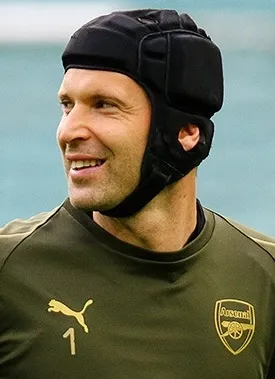 Photo: Amir Hosseini. Source and license in Image credits.
Chmel Blšany · Sparta Prague · Stade Rennais
1999—2019Wenger’s Arsenal goalkeeper from 2015 to 2018, winning the Golden Glove in his first season.
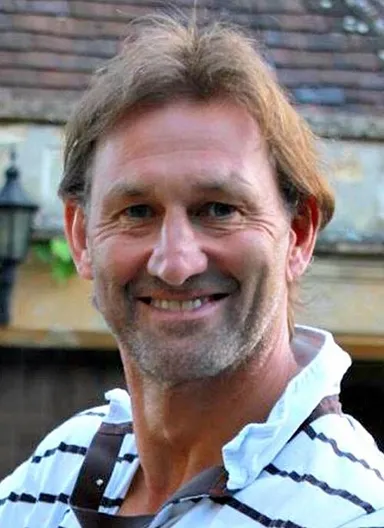 Photo: Jade Moulds. Source and license in Image credits.
Arsenal
1983—2002The inherited defensive captain in Wenger’s 1997/98 and 2001/02 Arsenal league-and-cup doubles.
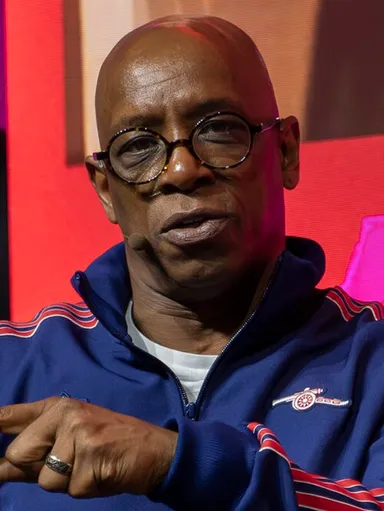 Photo: Duk3L1xon. Source and license in Image credits.
Crystal Palace · Arsenal · West Ham United
1985—2000An inherited Arsenal scorer whose final season brought Wenger’s first league-and-FA-Cup double in 1997/98.

Positional control with competitive adaptability
2016—Present · Arsenal
Detailed preparation, adaptable structures, European resilience
2004—Present · Sevilla · Villarreal
Midfield balance and dressing-room trust
2013—Present · Real Madrid
Era-building leader
1974—2013 · Manchester UnitedCareer and honour facts cite their underlying sources, including clubs and governing bodies. Tactical readings are identified as editorial analysis.
Arsenal F.C.The Wenger YearsAccessed 2026-09-01AISA Arsenal History SocietyWenger: completed Arsenal W-D-L recordAccessed 2026-09-15Arsenal Independent Supporters’ AssociationWenger’s completed Arsenal appointmentAccessed 2026-09-14Nagoya GrampusNagoya Grampus: official trophy chronologyAccessed 2026-09-14UEFAWenger’s unbeaten league season and European recordAccessed 2026-09-14Chelsea2017 FA Cup final: team sheet and substitutionsAccessed 2026-09-15ArsenalWenger on training and recovery in JapanAccessed 2026-09-14AS MonacoWenger — Monaco coaching archiveAccessed 2026-09-14ArsenalWenger on learning and training in JapanAccessed 2026-09-14DFB AkademieThe Invincibles — technical analysisAccessed 2026-09-14ArsenalArsenal’s unbeaten run and the Liverpool comebackAccessed 2026-09-14UEFABarcelona 2–1 Arsenal — 2006 finalAccessed 2026-09-14ArsenalArsenal 2–1 Chelsea — 2017 FA Cup finalAccessed 2026-09-14ArsenalWenger on the switch to 3-4-2-1Accessed 2026-09-14Premier LeagueFerguson and Wenger — Premier League Hall of FameAccessed 2026-09-14Premier LeagueFerguson and Wenger — English club honoursAccessed 2026-09-14Premier LeagueCompleted Premier League managerial recordsAccessed 2026-09-14