Premier League
Arsenal · league
 Photo: Duk3L1xon. Source and license in Image credits.
Ian Edward Wright
Ian Wright built his career on the fraction of a second between a defender watching the ball and noticing the striker. A late arrival in professional football, he developed at Crystal Palace before becoming Arsenal’s attacking catalyst. His sharp runs, quick finishes and appetite for another chance made him much more than an exuberant celebration.
Senior club · all competitions
Completed club records only; not a complete career total.
Active club snapshots and records with another scope are excluded. Assist totals are not combined across incompatible definitions.
Stored archive snapshots, not live counters. Missing values are not zero; records with different scopes are never added together.
G/M = goals ÷ appearances. G+A = goals + assists. Per-90 metrics use documented minutes.
Senior international · all competitions
Stored archive snapshots, not live counters. Missing values are not zero; records with different scopes are never added together.
G/M = goals ÷ appearances. G+A = goals + assists. Per-90 metrics use documented minutes.
In context
Wright connected Palace’s rise, George Graham’s disciplined Arsenal and Wenger’s first double-winning squad. His route into professional football also makes this a story of opportunity arriving late and being used fully. The record goals are the outcome; the football underneath is anticipation, separation and the willingness to attack the next chance.
Reading the game
Ian Wright built his career on the fraction of a second between a defender watching the ball and noticing the striker. A late arrival in professional football, he developed at Crystal Palace before becoming Arsenal’s attacking catalyst. His sharp runs, quick finishes and appetite for another chance made him much more than an exuberant celebration.
The role descriptions and qualitative levels are original editorial analysis. Historical references establish the career events and statistical scopes; they do not turn these judgements into official ratings. Missing all-competitions assists are left unknown rather than replaced by league assists or zeros.
Historical references support the chronology; tactical explanations are museum editorial analysis.
Historical references: Arsenal: Wright’s career, cup honours and club scoring record ↗ · National Football Museum: Wright’s professional breakthrough and retirement ↗
Career
| Period | Club | Apps | Goals | G/M |
|---|---|---|---|---|
| 1985—1991 | Crystal PalaceWright joined Crystal Palace from non-league Greenwich Borough in 1985, aged 21. His partnership with Mark Bright helped turn individual finishing into a shared attacking language. In the 1990 FA Cup final he came off the bench and scored twice against Manchester United in a 3–3 draw; Palace lost the replay. It was a breakthrough performance, not a cup-winning final. Senior club · all competitions | — | — | — |
| 1991—1998 | ArsenalThe Opta retrospective records 288 competitive Arsenal appearances and 185 goals. His Arsenal Premier League subtotal is 191 appearances and 104 goals. The full Premier League career adds West Ham’s 22 appearances and nine goals, giving 213 appearances, 113 goals and 22 assists. Those assists cover the competition across both clubs, not Arsenal’s entire competitive record. Senior club · all competitions Senior · #8 | 288 | 185 | 0.64 |
| 1998—1999 | West Ham UnitedAfter Arsenal, Wright played for West Ham, Nottingham Forest on loan, Celtic and Burnley before retiring in 2000. The later-club numbers displayed here are league appearances and goals from the season register. His short spell at Burnley helped the club win promotion; it is not presented as a league championship or an Arsenal honour. Senior club · league only | 22 | 9 | 0.41 |
| 1999—1999 | Nottingham ForestAfter Arsenal, Wright played for West Ham, Nottingham Forest on loan, Celtic and Burnley before retiring in 2000. The later-club numbers displayed here are league appearances and goals from the season register. His short spell at Burnley helped the club win promotion; it is not presented as a league championship or an Arsenal honour. Senior club · league only Loan | 10 | 5 | 0.50 |
| 1999—2000 | CelticAfter Arsenal, Wright played for West Ham, Nottingham Forest on loan, Celtic and Burnley before retiring in 2000. The later-club numbers displayed here are league appearances and goals from the season register. His short spell at Burnley helped the club win promotion; it is not presented as a league championship or an Arsenal honour. Senior club · league only | 8 | 3 | 0.38 |
| 2000—2000 | BurnleyAfter Arsenal, Wright played for West Ham, Nottingham Forest on loan, Celtic and Burnley before retiring in 2000. The later-club numbers displayed here are league appearances and goals from the season register. His short spell at Burnley helped the club win promotion; it is not presented as a league championship or an Arsenal honour. Senior club · league only | 15 | 4 | 0.27 |
Stored archive snapshots, not live counters. Missing values are not zero; records with different scopes are never added together.
G/M = goals ÷ appearances. G+A = goals + assists. Per-90 metrics use documented minutes.
Honours
Arsenal · league
Arsenal · domestic cup
Arsenal · domestic cup
Arsenal · continental
Story
Career chapter
Wright joined Crystal Palace from non-league Greenwich Borough in 1985, aged 21. His partnership with Mark Bright helped turn individual finishing into a shared attacking language. In the 1990 FA Cup final he came off the bench and scored twice against Manchester United in a 3–3 draw; Palace lost the replay. It was a breakthrough performance, not a cup-winning final.
Club chapter
After joining Arsenal in 1991, Wright scored in both the original 1993 FA Cup final and its replay against Sheffield Wednesday. Arsenal won that cup and the League Cup in the same season. He also contributed to the 1993/94 Cup Winners’ Cup campaign, but suspension kept him out of the final against Parma, where Alan Smith scored the winner.
Explore club contextClub chapter
On 13 September 1997, Wright’s hat-trick against Bolton took him past Cliff Bastin’s Arsenal record. His combination with Dennis Bergkamp joined runs beyond the defence to passing between the lines. His final Arsenal season brought the 1997/98 league-and-FA-Cup double; he left in 1998 with 185 competitive goals, a mark Thierry Henry surpassed in 2005.
Explore club contextCareer chapter
After Arsenal, Wright played for West Ham, Nottingham Forest on loan, Celtic and Burnley before retiring in 2000. The later-club numbers displayed here are league appearances and goals from the season register. His short spell at Burnley helped the club win promotion; it is not presented as a league championship or an Arsenal honour.
Profile
Poacher
Also plays · Complete forward
Ian Wright built his career on the fraction of a second between a defender watching the ball and noticing the striker. A late arrival in professional football, he developed at Crystal Palace before becoming Arsenal’s attacking catalyst. His sharp runs, quick finishes and appetite for another chance made him much more than an exuberant celebration.
Lose the marker before the pass
Read the goalkeeper, shorten the finish
Illustrative role zones · not tracking data
Editorial assessment
Historical role analysis
Seven qualitative bands · not measured scores
Editorial assessment of this period, not an official rating.
These bands are not percentiles or an overall ranking. The chart’s geometry represents ordered bands, not equal differences in ability.
Qualitative judgments describe football actions in context. They do not measure personality or medical fitness. Category assessments are editorial summaries, not averages. A lower defensive band describes the player’s role and contribution, not their value to the team.
Premier League: Wright’s career and West Ham subtotal ↗Reading the game
Wright’s movement was not simply about running faster. He could step away from the receiving lane, let the defender turn towards the ball and then change direction into the space behind. With a passer such as Bergkamp, the decisive advantage was often established before the ball arrived. He needed the right delivery, but helped create its target.
Wright could finish with either foot, lift the ball over an advancing goalkeeper or take the shot before a defender expected it. The common thread was a short decision window: read the goalkeeper’s movement and choose a finish without an unnecessary extra touch. His value was primarily as a scorer; this analysis does not recast him as the team’s main organiser.
Historical references: Opta: Wright’s complete Arsenal appearances and goals ↗ · Premier League: Wright’s career and West Ham subtotal ↗ · National Football Museum: Wright’s professional breakthrough and retirement ↗
Reading the game
After joining Arsenal in 1991, Wright scored in both the original 1993 FA Cup final and its replay against Sheffield Wednesday. Arsenal won that cup and the League Cup in the same season. He also contributed to the 1993/94 Cup Winners’ Cup campaign, but suspension kept him out of the final against Parma, where Alan Smith scored the winner.
On 13 September 1997, Wright’s hat-trick against Bolton took him past Cliff Bastin’s Arsenal record. His combination with Dennis Bergkamp joined runs beyond the defence to passing between the lines. His final Arsenal season brought the 1997/98 league-and-FA-Cup double; he left in 1998 with 185 competitive goals, a mark Thierry Henry surpassed in 2005.
Historical references: Opta: Wright’s complete Arsenal appearances and goals ↗ · Arsenal: Wright’s career, cup honours and club scoring record ↗ · Arsenal: Wright’s goals in both 1993 FA Cup final matches ↗ · Arsenal: Smith’s 1994 winner and Wright’s suspension ↗ · National Football Museum: Wright’s professional breakthrough and retirement ↗
Statistics
| Season | Club | Apps | Goals | G/M |
|---|---|---|---|---|
| 1997/98 | Arsenal Senior club · league only | 24 | 10 | 0.42 |
| 1996/97 | Arsenal Senior club · league only | 35 | 23 | 0.66 |
| 1995/96 | Arsenal Senior club · league only | 31 | 15 | 0.48 |
| 1994/95 | Arsenal Senior club · league only | 31 | 18 | 0.58 |
| 1993/94 | Arsenal Senior club · league only | 39 | 23 | 0.59 |
| 1992/93 | Arsenal Senior club · league only | 31 | 15 | 0.48 |
Stored archive snapshots, not live counters. Missing values are not zero; records with different scopes are never added together.
G/M = goals ÷ appearances. G+A = goals + assists. Per-90 metrics use documented minutes.
The season table covers Arsenal’s six Premier League seasons with Wright, totalling 191 appearances and 104 goals. His 1991/92 First Division season and cup matches remain outside this table. It must not be read as the 288-match, 185-goal competitive club record.
Club competitions
| Competition | Apps | Goals | G/M |
|---|---|---|---|
Premier League1992/93–1998/99The Opta retrospective records 288 competitive Arsenal appearances and 185 goals. His Arsenal Premier League subtotal is 191 appearances and 104 goals. The full Premier League career adds West Ham’s 22 appearances and nine goals, giving 213 appearances, 113 goals and 22 assists. Those assists cover the competition across both clubs, not Arsenal’s entire competitive record. Performance record
| 213 | 113 | 0.53 |
Premier League1992/93–1997/98The season table covers Arsenal’s six Premier League seasons with Wright, totalling 191 appearances and 104 goals. His 1991/92 First Division season and cup matches remain outside this table. It must not be read as the 288-match, 185-goal competitive club record. | 191 | 104 | 0.54 |
Stored archive snapshots, not live counters. Missing values are not zero; records with different scopes are never added together.
G/M = goals ÷ appearances. G+A = goals + assists. Per-90 metrics use documented minutes.
International
International career
Wright won 33 senior England caps and scored nine goals between 1991 and 1998. That international record is separate from his club scoring and includes qualifying matches and friendlies. This dossier does not attribute a World Cup or European Championship finals appearance to him simply because he played during those tournament cycles.
Reading the game
Wright connected Palace’s rise, George Graham’s disciplined Arsenal and Wenger’s first double-winning squad. His route into professional football also makes this a story of opportunity arriving late and being used fully. The record goals are the outcome; the football underneath is anticipation, separation and the willingness to attack the next chance.
Historical references: Arsenal: Wright’s career, cup honours and club scoring record ↗ · National Football Museum: Wright’s professional breakthrough and retirement ↗
Archive
Poacher · editorial peak 1992—1997
Steve Coppell · George Graham · Arsène Wenger
Dennis Bergkamp— Overlapping Arsenal era · Patrick Vieira— Overlapping Arsenal era · Tony Adams— Overlapping Arsenal era · Robbie Fowler— Overlapping England era
The back four and Anfield — Arsenal · Wenger changes the horizon — Arsenal
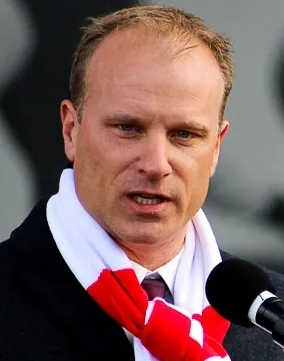 Photo: Kieran Clarke. Source and license in Image credits.
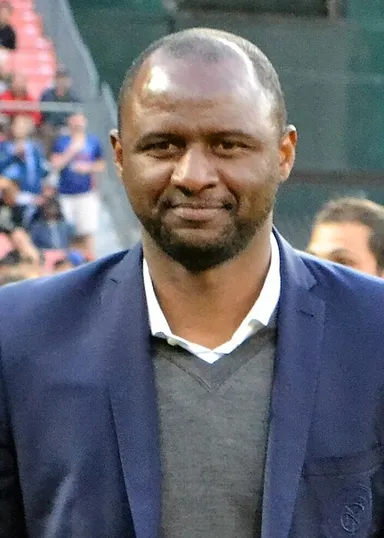 Photo: Simon Heseltine. Source and license in Image credits.
Cannes · AC Milan · Arsenal
1993—2011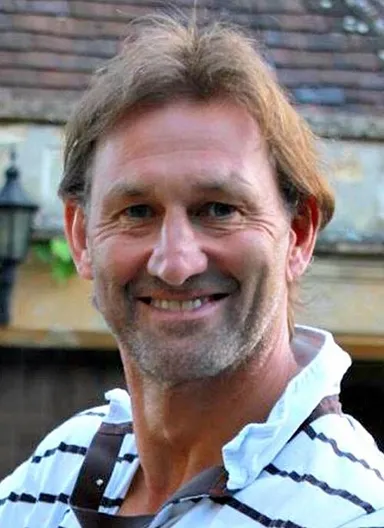 Photo: Jade Moulds. Source and license in Image credits.
Arsenal
1983—2002
Liverpool · LA Galaxy
1998—2016
Manchester United · Preston North End · Waterford
1956—1976 Photo: Bryan Berlin / WikiPortraits. Source and license in Image credits.
Birmingham City · Borussia Dortmund · Real Madrid
2019—Present Photo: Bryan Berlin. Source and license in Image credits.
Bryne · Molde · Red Bull Salzburg
2016—Present
Palmeiras · Real Madrid · Olympique Lyonnais
2022—Present Photo: Jonesy702. Source and license in Image credits.
Liverpool · Leeds United · Manchester City
1993—2012Statistics are displayed only within the scope supported by each cited source.
Opta via Sky SportsOpta: Wright’s complete Arsenal appearances and goalsArsenal FCArsenal: Wright’s career, cup honours and club scoring recordArsenal FCArsenal: Wright’s goals in both 1993 FA Cup final matchesArsenal FCArsenal: Smith’s 1994 winner and Wright’s suspensionPremier LeaguePremier League: Wright’s career and West Ham subtotalNational Football MuseumNational Football Museum: Wright’s professional breakthrough and retirementEngland FootballEngland Football: Wright’s 33 caps and nine goalsNational Football TeamsNational Football Teams: Wright’s league seasons and England datesCrystal PalaceCrystal Palace: Wright’s two goals in the drawn 1990 FA Cup final