

The football behind Patrick Vieira’s ratings
- Recovery touch and reach
- Generational
- Powerful progressive carrying
- Elite
- Midfield combinations
- Excellent
- Timing the forward run
- Elite
- Central protection
- Elite
- Finishing contribution
- Very Good
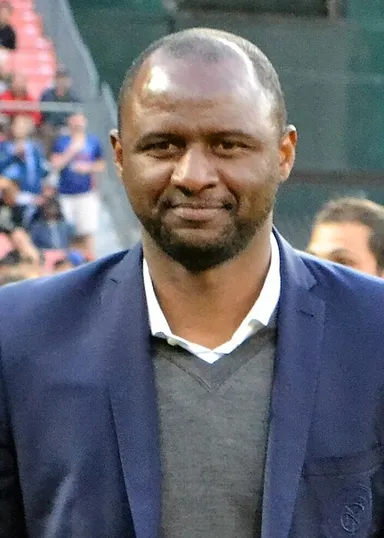 Photo: Simon Heseltine. Source and license in Image credits.
Patrick Paul Vieira
Arsenal’s Invincibles captain connected ball winning, powerful carrying and purposeful passing, then adapted his midfield responsibilities across France, Italy and Manchester City.
Senior club · all competitions
Completed club records only; not a complete career total.
Active club snapshots and records with another scope are excluded. Assist totals are not combined across incompatible definitions.
Stored archive snapshots, not live counters. Missing values are not zero; records with different scopes are never added together.
G/M = goals ÷ appearances. G+A = goals + assists. Per-90 metrics use documented minutes.
Senior international · all competitions
France · senior career, 1997–2009
Stored archive snapshots, not live counters. Missing values are not zero; records with different scopes are never added together.
G/M = goals ÷ appearances. G+A = goals + assists. Per-90 metrics use documented minutes.
In context
A midfielder whose authority came from linking the challenge to the next useful action for the team.
Reading the game
Patrick Vieira made winning the ball feel like the beginning of an attack rather than the end of a defensive task. His reach could interrupt a pass, but the next touch and the stride away from pressure were just as important. Arsenal found in him a midfielder who could contest the centre, carry the ball through it and join combinations close to goal. The familiar image of an imposing captain captures his authority without fully explaining the technique that made it useful. He could receive under contact, release a runner and arrive beyond an opponent who had expected him to remain behind the play. His partnerships also matter: Emmanuel Petit and later Gilberto Silva helped provide the balance in which those movements worked. France asked related but different questions, from a supporting role in 1998 to the influential midfield partnership with Claude Makelele in 2006. Vieira’s importance lies in connecting these responsibilities. Watch what happens after the challenge, and a player often remembered for confrontation becomes a lesson in turning regained possession into collective progress.
Historical references support the chronology; tactical explanations are museum editorial analysis.
Historical references: Arsenal: Vieira’s strength, skill and captaincy ↗ · Vieira: power, passing and the Premier League Hall of Fame ↗ · Patrick Vieira: France’s official profile and honours ↗ · Vieira creates and scores against Spain, 2006 ↗
Career
| Period | Club | Apps | Goals | G/M |
|---|---|---|---|---|
| 1993—1995 | CannesComplete senior league record at Cannes: 49 appearances and two goals across three season rows. Domestic cups, Europe and youth football are excluded; assists and early shirt-number history remain unverified. Senior club · league only | 49 | 2 | 0.04 |
| 1995—1996 | AC MilanTwo Serie A appearances in Milan’s 1995/96 championship season. This is a league-only record and does not represent all competitive appearances. The championship is included in the FFF personal honours register. Senior club · league only | 2 | 0 | 0.00 |
| 1996—2005 | ArsenalCompleted Arsenal competitive record: 406 appearances and 33 goals. The Premier League subset is 279 appearances and 28 goals. Career-wide PL assists cover Arsenal and Manchester City together, so they are not inserted as Arsenal all-competition assists. The 2005 final shoot-out winner is not an extra match goal. Senior club · all competitions Captaincy · #4 | 406 | 33 | 0.08 |
| 2005—2006 | JuventusJuventus league record only: 31 appearances and five goals. The 2005/06 title was removed and is not counted as a won honour. European and domestic cup appearances are outside this record. Senior club · league only | 31 | 5 | 0.16 |
| 2006—2010 | Inter MilanInter’s official archive totals 90 appearances and nine goals: league 67/6, Europe 12/1, and domestic cups including the Super Cup 11/2. Vieira departed in January 2010 after 16 appearances that season. The archive’s 2009/10 headings describe Inter’s eventual treble; the honours list here follows the FFF personal register and does not treat those headings as evidence that he received every later medal. Senior club · all competitions Senior · #14 | 90 | 9 | 0.10 |
| 2010—2011 | Manchester CityCompleted City competitive record: 46 appearances and six goals. The two league rows total 28 appearances and three goals; three further goals came in the 2011 FA Cup campaign. Later coaching and development work are excluded. Senior club · all competitions Senior · #24 | 46 | 6 | 0.13 |
Stored archive snapshots, not live counters. Missing values are not zero; records with different scopes are never added together.
G/M = goals ÷ appearances. G+A = goals + assists. Per-90 metrics use documented minutes.
Honours
AC Milan · league
Arsenal · league
Arsenal · domestic cup
Arsenal · domestic cup
Inter Milan · league
Inter Milan · domestic cup
Manchester City · domestic cup
France · world
France · continental
France · world
Patrick Vieira · individual
Story
Career chapter
Vieira began his senior career at Cannes, where first-team responsibility arrived while he was still a teenager. Moving to Milan in 1995 placed him inside an accomplished squad but offered little league playing time. Arsenal’s move in 1996 changed the opportunity rather than instantly creating the talent. He could now test his receiving, tackling and forward running repeatedly in a demanding league. Wenger’s developing team gave those qualities an increasingly clear purpose, with the midfielder expected to help the attack as well as protect it. The early transformation is best understood as ability finding regular responsibility, not as physical size alone overwhelming English football.
Historical references: Arsenal: Vieira’s strength, skill and captaincy ↗ · Vieira: league seasons and international match classification ↗ · Patrick Vieira: France’s official profile and honours ↗
Career chapter
Alongside Petit, Vieira could combine recovery work with progressive movement instead of being fixed to one narrow task. Arsenal’s 1997/98 double showed how the midfield supported both an established defence and a more imaginative attack. France’s World Cup victory followed, with Vieira contributing from a less central position in the hierarchy than he would occupy later. EURO 2000 and the 2001 Confederations Cup expanded his international achievements. At club level, the Premier League’s 2000/01 Player of the Season award recognised an individual peak even though Arsenal did not win the league. Another double in 2002 then connected that influence to a fresh collective success.
Historical references: Arsenal: Vieira’s strength, skill and captaincy ↗ · Vieira’s 2000/01 Player of the Season award ↗ · Patrick Vieira: France’s official profile and honours ↗
Career chapter
After taking the captaincy in 2002, Vieira became the most visible reference point in a team whose balance depended on several different strengths. Gilberto’s covering work, the wide players’ movement and the understanding between Bergkamp and Henry all helped make his forward actions effective. The unbeaten 2003/04 league campaign was the fullest expression of that arrangement. His goal at Tottenham, where Arsenal secured the title, showed a midfielder arriving at the end of an attack rather than merely starting it. In 2005, his winning penalty in the FA Cup final shoot-out became his Arsenal farewell. It was a decisive kick, but not an additional goal in the official match statistics.
Historical references: Arsenal: Vieira’s strength, skill and captaincy ↗ · Vieira remembers Arsenal’s unbeaten league season ↗ · Vieira scores as Arsenal clinch the title at Tottenham ↗
Career chapter
Vieira spent 2005/06 at Juventus before joining Inter after Juventus’s league title was removed. That summer, he helped France reach the World Cup final, creating and scoring against Spain before injury ended his own final early. Inter brought domestic success but increasingly interrupted playing time. He left for Manchester City in January 2010, before Inter completed their treble; his early-season appearances and the later celebrations must therefore be distinguished. City offered a more selective role in which experience and timely contributions still mattered. The 2011 FA Cup, including three goals during the campaign, closed his playing story with another trophy before retirement that summer.
Historical references: Vieira creates and scores against Spain, 2006 ↗ · Vieira’s injury in the 2006 World Cup final ↗ · Vieira leaves Juventus after the 2005/06 title is removed ↗ · Inter’s 2009/10 participants, including Vieira before departure ↗ · Vieira’s 46 City appearances and the 2011 FA Cup ↗
Profile
Box-to-Box Midfielder
Also plays · Holding Midfielder
Uses reach and body control to recover possession, carries through pressure and combines with runners ahead. Peak freedom depends on midfield cover, while later roles call for more selective movement.
Recovery touch and reach
Powerful progressive carrying
Midfield combinations
Timing the forward run
Illustrative role zones · not tracking data
Vieira’s long reach could interrupt an opponent without requiring him to arrive squarely in front of the ball. Yet reach only explains part of the action. Balance and the direction of the recovery touch determined whether the challenge produced usable possession or merely another loose ball. His best sequences linked the regain to a pass or carry before opponents reorganised. This is an editorial reading of his technique, not a claim that every tackle was clean or every aggressive decision improved the team’s position.
Once he had room to move, Vieira could cover ground with long strides while using his body to keep the ball beyond an immediate challenge. The carry forced a midfielder to retreat or another opponent to leave a passing lane unprotected. Its purpose was often to create a better release for somebody else rather than finish with a long solo run. That relationship between strength and ball control separates his progression from simply running fast into open grass; he could also escape contact before the space appeared.
His passing was most valuable when it connected directly to the movement around him. A short exchange could release a forward, while a continued run took Vieira beyond an opponent watching the ball. The Tottenham goal in 2004 and the combination with Ribéry against Spain in 2006 show different outcomes from this willingness to remain involved. He was not a specialist final-pass player controlling every attack. Instead, selective penetration from midfield added a threat that complemented the more frequent creative work of the forwards.
Calling Vieira a defensive midfielder can hide how often his best work required permission to leave the deepest position. Petit, Gilberto and Makelele offered different forms of support in different teams. When Vieira moved forward, somebody still needed to protect the route behind him. His own defensive judgment mattered too: pressing too early, chasing a challenge or conceding a needless foul could undermine the structure. The useful comparison is between coordinated movement and isolated effort, not between a supposedly physical player and supposedly technical teammates.
Historical references: Arsenal: Vieira’s strength, skill and captaincy ↗ · Vieira: power, passing and the Premier League Hall of Fame ↗ · Vieira remembers Arsenal’s unbeaten league season ↗ · Vieira scores as Arsenal clinch the title at Tottenham ↗ · Vieira creates and scores against Spain, 2006 ↗ · Vieira’s injury in the 2006 World Cup final ↗
Reading the game
| Era / team | Primary Role | Tactical Character |
|---|---|---|
| 1993–1996Cannes / AC Milan | Develop the central midfield range | Move from responsibility at Cannes to limited opportunities in Milan. |
| 1996–2002Arsenal | Connect recovery and progression | Use regular midfield responsibility to combine strength and passing. |
| 2002–2005Arsenal | Lead without losing the forward run | Coordinate central protection with selected attacking involvement. |
| 2005–2011Juventus / Inter / Manchester City | Adapt position and playing time | Balance experienced central support with more selective forward movement. |
Historical references: Arsenal: Vieira’s strength, skill and captaincy ↗ · Vieira remembers Arsenal’s unbeaten league season ↗ · Vieira: league seasons and international match classification ↗ · Vieira leaves Juventus after the 2005/06 title is removed ↗ · Vieira: Inter’s official competition archive ↗ · Vieira’s 46 City appearances and the 2011 FA Cup ↗
Reading the game
Vieira’s control mattered precisely because opponents tried to take away his space. A touch around a pressing leg, a protected turn or a pass made while being challenged could keep the attack moving. The physical advantage supported those choices; it did not replace the need to judge the ball’s speed and the next available angle.
His forward movement could turn a small opening into a significant gain before the next defender adjusted. The surprise was not only the speed but the starting point: a player who had just contested possession could suddenly be carrying beyond the midfield. That transition made his recoveries more threatening than a tackle viewed on its own.
The captaincy made Vieira a visible figure, but his value did not require attributing every success to his personality. He could set the competitive tone, demand involvement and take responsibility for a difficult moment. Those actions worked alongside the team’s quieter forms of leadership, its defensive organisation and the understanding built through repeated combinations.
The late midfield arrival was a selective weapon rather than a demand to enter the box every time. Vieira could recognise when the forwards had occupied the defenders and the next gap belonged to him. His goals at Tottenham and against Togo show how an organiser and ball winner could also become the player who completed the move.
Historical references: Arsenal: Vieira’s strength, skill and captaincy ↗ · Vieira: power, passing and the Premier League Hall of Fame ↗ · Vieira remembers Arsenal’s unbeaten league season ↗ · Vieira scores as Arsenal clinch the title at Tottenham ↗ · France’s 2006 World Cup victory over Togo ↗
Reading the game
Complete central midfielder before the captaincy
The 2000/01 version earned the Premier League Player of the Season award. It captures the range of a midfielder whose recoveries, carries and combinations could influence both ends without making him a specialist in every task. Arsenal finished behind Manchester United in the league, so this selection recognises individual influence rather than inventing a championship for the season.
Box-to-box captain with midfield cover
The 2003/04 season is the shared reference for both assessment panels. Vieira operated within a balanced team, combining central duels, purposeful progression and carefully chosen forward runs. Gilberto’s support and the attacking relationships around Henry and Bergkamp helped that freedom work. The unbeaten league title belongs to the whole side; his captaincy and midfield contribution explain a significant part of how it functioned.
France’s advancing midfielder beside Makelele
The 2006 World Cup version is a tournament-specific selection. Alongside Makelele, Vieira could support the defence and move forward to assist France’s attack. The Togo goal and his creation and scoring against Spain show why his influence went beyond recovery work. Injury forced him off in the final, a reminder that a strong tournament and its physical ending belong in the same assessment.
Historical references: Vieira: power, passing and the Premier League Hall of Fame ↗ · Vieira’s 2000/01 Player of the Season award ↗ · Vieira remembers Arsenal’s unbeaten league season ↗ · Vieira scores as Arsenal clinch the title at Tottenham ↗ · France’s 2006 World Cup victory over Togo ↗ · Vieira creates and scores against Spain, 2006 ↗ · Vieira’s injury in the 2006 World Cup final ↗
Statistics
| Season | Club | Apps | Goals | G/M |
|---|---|---|---|---|
| 2010/11 | Manchester City Senior club · league only | 15 | 2 | 0.13 |
| 2009/10 | Manchester City Senior club · league only | 13 | 1 | 0.08 |
| 2009/10 | Inter Milan Senior club · league only | 12 | 1 | 0.08 |
| 2008/09 | Inter Milan Senior club · league only | 19 | 1 | 0.05 |
| 2007/08 | Inter Milan Senior club · league only | 16 | 3 | 0.19 |
| 2006/07 | Inter Milan Senior club · league only | 20 | 1 | 0.05 |
| 2005/06 | Juventus Senior club · league only | 31 | 5 | 0.16 |
| 2004/05 | Arsenal Senior club · league only | 32 | 6 | 0.19 |
| 2003/04 | Arsenal Senior club · league only | 29 | 3 | 0.10 |
| 2002/03 | Arsenal Senior club · league only | 24 | 3 | 0.13 |
Stored archive snapshots, not live counters. Missing values are not zero; records with different scopes are never added together.
G/M = goals ÷ appearances. G+A = goals + assists. Per-90 metrics use documented minutes.
Twenty league rows cover six clubs, including split-club seasons in 1995/96 and 2009/10. The preferred Premier League series gives Arsenal 279 appearances and 28 goals, including 29/3 in 2003/04 and 30/5 in 2000/01; NFT instead lists 28/3 and 30/6 for those seasons. The PL source is used consistently for the English rows. Its career total of 307 appearances, 31 goals and 34 assists includes City. Season assists remain null, and overlapping club totals must not be added to these rows.
Club competitions
| Competition | Apps | Goals | G/M |
|---|---|---|---|
Premier LeaguePremier League · Arsenal and Manchester CityThe full Premier League career spans two clubs: Arsenal 279/28 and City 28/3. Assists use the league’s attribution and are not an all-competition club figure. Performance record
| 307 | 31 | 0.10 |
Serie ASerie A · Milan, Juventus and InterLeague only: Milan 2/0, Juventus 31/5 and Inter 67/6. The Juventus appearances remain valid even though the 2005/06 championship was removed. | 100 | 11 | 0.11 |
French Division 1French Division 1 · Cannes, 1993–1995Three senior league season rows, excluding cup and youth matches. | 49 | 2 | 0.04 |
Stored archive snapshots, not live counters. Missing values are not zero; records with different scopes are never added together.
G/M = goals ÷ appearances. G+A = goals + assists. Per-90 metrics use documented minutes.
International
International career
Vieira’s senior France record is 107 appearances and six goals. World champion in 1998, European champion in 2000 and Confederations Cup winner in 2001, he occupied different roles across those victories. The 2006 World Cup brought goals against Togo and Spain before injury in the final. His last international appearance came in June 2009.
Senior international · tournament splits
| Competition | Apps | Goals | G/M |
|---|---|---|---|
FIFA World CupWorld Cup finals · 1998, 2002 and 2006Two appearances in 1998, three in 2002 and seven in 2006. Both goals came in 2006; qualifiers and shoot-outs are excluded. | 12 | 2 | 0.17 |
UEFA European ChampionshipEURO finals · 2000 and 2004Six appearances in 2000 and three in 2004. No appearance is added for the injured, unused EURO 2008 squad member. | 9 | 0 | 0.00 |
Stored archive snapshots, not live counters. Missing values are not zero; records with different scopes are never added together.
G/M = goals ÷ appearances. G+A = goals + assists. Per-90 metrics use documented minutes.
Reading the game
Vieira’s legacy is strongest when power and technique are considered together. His size and competitive presence made him immediately recognisable, but the value of a recovery depended on whether the team could use the ball afterwards. He repeatedly supplied that connection through control, passing and forward movement. Arsenal gave the combination its most sustained setting, with the unbeaten captain becoming a reference for later generations of central midfielders. France adds an important variation: the young squad member, the European champion and the influential partner in the 2006 midfield were different responsibilities within one international career. Later spells also belong to the evaluation, showing how reduced availability changes what an experienced player can offer. The story should preserve mistakes, disciplinary costs and injury alongside authority and trophies. It should also recognise the teammates who covered when he advanced and the runners who gave his passes a destination. The lasting lesson is not that one dominant midfielder can perform everyone’s job. It is that a player with exceptional reach and movement can help connect the jobs, turning a contested central space into a platform from which the whole team can play.
Historical references: Arsenal: Vieira’s strength, skill and captaincy ↗ · Vieira: power, passing and the Premier League Hall of Fame ↗ · Patrick Vieira: France’s official profile and honours ↗ · Vieira’s injury in the 2006 World Cup final ↗ · Vieira’s 46 City appearances and the 2011 FA Cup ↗
Archive
Box-to-Box Midfielder · editorial peak 2003—2004
Luis Fernández · Fabio Capello · Arsène Wenger · Roberto Mancini · José Mourinho · Aimé Jacquet · Roger Lemerre · Jacques Santini · Raymond Domenech
Thierry Henry— Overlapping Arsenal era · Paolo Maldini— Overlapping AC Milan era · Alessandro Del Piero— Overlapping Juventus era · Gianluigi Buffon— Overlapping Juventus era
Capello’s sustained authority — AC Milan · Wenger changes the horizon — Arsenal · The Invincibles — Arsenal · The treble — Inter Milan · Mancini ends the wait — Manchester City

AS Monaco · Juventus · Arsenal
1994—2014
Padova · Juventus · Sydney FC
1991—2014
Parma · Juventus · Paris Saint-Germain
1995—2023AS Monaco · Juventus · Arsenal
1994—2014
AS Cannes · Bordeaux · Juventus
1989—2006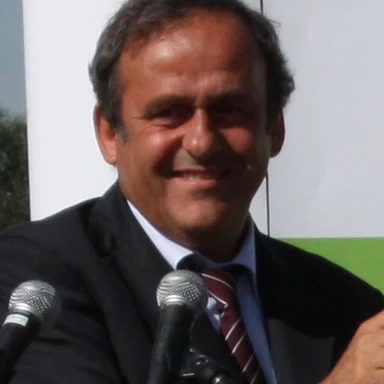 Photo: Klearchos Kapoutsis. Source and license in Image credits.
Nancy · Saint-Étienne · Juventus
1972—1987
Liverpool · LA Galaxy
1998—2016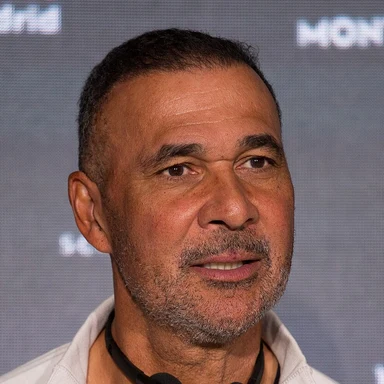 Photo: Barcex. Source and license in Image credits.
Haarlem · Feyenoord · PSV
1979—1998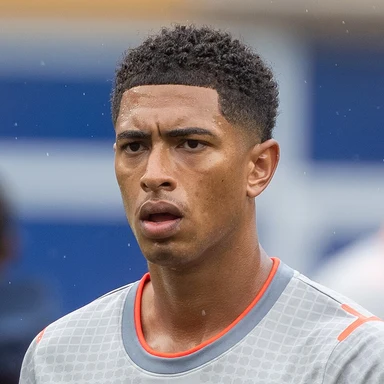 Photo: Bryan Berlin / WikiPortraits. Source and license in Image credits.
Birmingham City · Borussia Dortmund · Real Madrid
2019—PresentStatistics are displayed only within the scope supported by each cited source.
Arsenal FCArsenal: Vieira’s strength, skill and captaincyArsenal HistoryVieira: completed Arsenal appearance and goal recordPremier LeagueVieira’s Premier League seasonsPremier LeagueVieira: power, passing and the Premier League Hall of FamePremier LeagueVieira’s 2000/01 Player of the Season awardPremier LeagueVieira remembers Arsenal’s unbeaten league seasonPremier LeagueVieira scores as Arsenal clinch the title at TottenhamNational Football TeamsVieira: league seasons and international match classificationFFFPatrick Vieira: France’s official profile and honoursRSSSFVieira: complete France senior match registerFFFFrance’s 2006 World Cup victory over TogoFFFVieira creates and scores against Spain, 2006UEFAVieira’s injury in the 2006 World Cup finalUEFAVieira leaves Juventus after the 2005/06 title is removedInterVieira: Inter’s official competition archiveInterInter’s 2009/10 participants, including Vieira before departureManchester CityVieira’s 46 City appearances and the 2011 FA Cup