The football behind Steven Gerrard’s ratings
- Driven passing and switches
- Elite
- Ball striking from distance
- Generational
- Vertical running and support
- Elite
- Recovery effort
- Elite
- Risk selection
- Excellent
- Positional screening
- Very Good

Steven George Gerrard
Liverpool’s captain combined driving runs, powerful passing and decisive shooting, then adapted from central and right-sided duties to advanced and deeper midfield roles.
Senior club · all competitions
Completed club records only; not a complete career total.
Active club snapshots and records with another scope are excluded. Assist totals are not combined across incompatible definitions.
Stored archive snapshots, not live counters. Missing values are not zero; records with different scopes are never added together.
G/M = goals ÷ appearances. G+A = goals + assists. Per-90 metrics use documented minutes.
Senior international · all competitions
England · completed senior career, 2000–2014
Stored archive snapshots, not live counters. Missing values are not zero; records with different scopes are never added together.
G/M = goals ÷ appearances. G+A = goals + assists. Per-90 metrics use documented minutes.
In context
A midfielder whose individual initiative could change the match, and whose best roles gave that initiative a clear collective purpose.
Reading the game
Steven Gerrard could change a match before its shape had settled. A driven pass found a runner behind the defence; a recovery tackle became a forward surge; a difficult clearance returned towards goal with unusual speed. His appeal begins with that capacity to turn urgency into a technically demanding action. But the familiar image of the captain rescuing Liverpool only tells part of the story. Different teams asked him to supply width, join the striker, cover midfield or distribute from in front of the defence. The relationship between those jobs explains his career better than treating them as one permanent position. At his best, teammates gave his aggression a useful structure: somebody secured the centre while he attacked the space opening ahead. The famous finals made those qualities visible under extraordinary pressure, while ordinary league afternoons tested whether the same decisions were repeatable. His England career and Liverpool’s unsuccessful title challenges also belong in the picture. Gerrard matters because he shows both the power of individual initiative and the importance of arranging a team so that initiative helps everyone around it.
Historical references support the chronology; tactical explanations are museum editorial analysis.
Historical references: Steven Gerrard: Premier League Hall of Fame record ↗ · The FA: Liverpool and West Ham’s 2006 final ↗ · Gerrard on Torres and Liverpool’s midfield balance ↗ · Steven Gerrard: England’s official legend profile ↗
Career
| Period | Club | Apps | Goals | Assists | G/M | G+A/M |
|---|---|---|---|---|---|---|
| 1998—2015 | LiverpoolCompleted Liverpool competitive record. Appearances and goals follow the club; 145 assists follow LFChistory’s historical attribution, distinct from the Premier League’s 92 league assists. The honours register uses Liverpool’s eight named major honours plus the verified 2006 Community Shield appearance. It does not automatically assign every trophy won by the club during his contract. Senior club · all competitions Captaincy · #28 / 17 / 8Performance record
| 710 | 186 | 145 | 0.26 | 0.47 |
| 2015—2016 | LA GalaxyCompleted MLS regular-season record: 34 appearances, five goals and 14 assists under the Galaxy’s published convention. Playoffs, the US Open Cup and CONCACAF competition are excluded. The club separately reports 24 appearances across competitions in 2016; that figure must not be added to the regular-season career total because it overlaps. Senior club · league only Senior · #8Performance record
| 34 | 5 | 14 | 0.15 | 0.56 |
Stored archive snapshots, not live counters. Missing values are not zero; records with different scopes are never added together.
G/M = goals ÷ appearances. G+A = goals + assists. Per-90 metrics use documented minutes.
Honours
Liverpool · continental
Liverpool · continental
Liverpool · domestic cup
Liverpool · domestic cup
Liverpool · continental
Liverpool · domestic cup
Steven Gerrard · individual
Steven Gerrard · individual
Steven Gerrard · individual
Steven Gerrard · individual
Story
Career chapter
Gerrard made his Liverpool debut in November 1998, with the strength and range of his game still developing. Gérard Houllier’s side gave him a demanding education: win the ball, move it forward and learn when an ambitious action served the team. The 2000/01 cup treble accelerated that rise, including a goal in the UEFA Cup final against Alavés. Early injury problems and disciplinary mistakes were part of the learning rather than evidence of a finished all-round player. By October 2003, the captaincy made his responsibility explicit. The academy graduate was now expected to influence both the play and the response to adversity.
Historical references: Steven Gerrard: Liverpool’s completed playing record ↗ · Steven Gerrard: Liverpool season and competition ledger ↗
Career chapter
Rafael Benítez inherited a captain with the tools to alter a game, then changed the framework around him. At Istanbul in 2005, Gerrard’s header began Liverpool’s recovery from three goals down, but the comeback also needed a midfield adjustment, other scorers and Jerzy Dudek’s saves. A year later against West Ham, two Gerrard goals brought the FA Cup final level, including the extraordinary late strike that forced extra time. These were different solutions to different emergencies. His work across central and right-sided assignments also mattered over complete seasons. The second European final in 2007 ended in defeat, reminding the story that influence could not guarantee a trophy.
Historical references: Steven Gerrard: Liverpool’s completed playing record ↗ · Liverpool’s 2005 final: the participants remember ↗ · The FA: Liverpool and West Ham’s 2006 final ↗
Career chapter
Fernando Torres gave Gerrard a runner whose movements made early passes and supporting surges especially dangerous. With Xabi Alonso and Javier Mascherano providing midfield balance, the captain could work closer to the opposition’s defence. The 2008/09 season brought 24 goals across all competitions and a league runners-up finish; the Anfield victory over Real Madrid showed how destructive the attack could become. This was a more focused use of his skills than asking him to perform every midfield task simultaneously. Subsequent managerial changes and injuries disrupted that continuity. The 2012 League Cup offered another winning moment, without recreating the earlier partnership or its surrounding structure.
Historical references: Steven Gerrard: Liverpool season and competition ledger ↗ · Gerrard on Torres and Liverpool’s midfield balance ↗ · Liverpool overwhelm Real Madrid at Anfield, 2009 ↗
Career chapter
Brendan Rodgers eventually moved Gerrard behind the more mobile midfielders, where his passing could start attacks towards Luis Suárez and Daniel Sturridge. Learning the role meant resisting the instinct to chase every developing action and protecting the space in front of the centre-backs. Liverpool finished second in 2013/14; the damaging Chelsea mistake belongs to that campaign, but it does not explain an entire season by itself. Gerrard left Liverpool in 2015 after 710 appearances and completed his playing career with LA Galaxy. Injuries limited the American chapter, and retirement followed in November 2016. It was a distinct final spell, not an extension of his Liverpool statistics.
Historical references: Steven Gerrard: Liverpool’s completed playing record ↗ · Gerrard discusses learning the holding role, January 2014 ↗ · LA Galaxy: Gerrard’s final season and regular-season totals ↗
Profile
Box-to-Box Midfielder
Also plays · Advanced Playmaker / Regista
Accelerates play through carries and driven passes, joins forwards for combinations and attacks loose balls around the area. Recovery effort supports his attacking ambition; deeper roles demand more positional restraint.
Driven passing and switches
Ball striking from distance
Vertical running and support
Recovery effort
Illustrative role zones · not tracking data
Gerrard’s first instinct often looked beyond the nearest safe pass. When a regain left opponents facing their own goal, he could carry through the opening or drive the ball into a forward’s run. The force of the action mattered because it reduced the time available to recover. This is an editorial reading of his transition game, not a claim that every ambitious pass succeeded. When no runner was ready, the same urgency could surrender possession and ask the midfield to defend another transition.
Long switches, low passes through a line and shots from outside the area shared a powerful ball-striking base. Gerrard could change the side of an attack without requiring several intermediate passes, or punish a clearance before defenders had moved out. The destination was as important as the pace: a fast delivery only helps if the receiver can use it. His spectacular shooting is therefore best watched alongside the less celebrated passes that put somebody else into a position to finish the move.
Behind Torres, Gerrard could face the goal sooner and attack the gap created when the striker occupied a centre-back. Sometimes the pass released Torres; sometimes Gerrard continued into the space the forward had opened. Their effectiveness depended on timing and on midfielders behind them maintaining a usable platform. This was a partnership, not two separate highlights reels. The same attacking instincts could also begin from the right, where an inward movement complicated a defender’s decision about whether to follow or protect the flank.
Gerrard could recover ground quickly and challenge with conviction, but a dramatic tackle is not the same as controlling the space before danger develops. His later deeper role made that distinction especially visible. Staying available for a pass and screening the central route could be more useful than joining the next attack. Across his career, good team balance allowed the running and passing to reinforce each other; isolation or excessive distances exposed the limits of asking one midfielder to solve every problem.
Historical references: Steven Gerrard: Premier League Hall of Fame record ↗ · The FA: Liverpool and West Ham’s 2006 final ↗ · Gerrard on Torres and Liverpool’s midfield balance ↗ · Liverpool overwhelm Real Madrid at Anfield, 2009 ↗ · Gerrard discusses learning the holding role, January 2014 ↗ · LA Galaxy: Gerrard’s final season and regular-season totals ↗
Reading the game
| Era / team | Primary Role | Tactical Character |
|---|---|---|
| 1998–2004Liverpool | Developing the complete midfield brief | Combine recoveries, forward passes and increasingly influential runs. |
| 2004–2007Liverpool | Central energy, right-sided freedom | Move between central duties and attacks beginning from the right. |
| 2007–2012Liverpool | Closer to the striker | Use Torres’s movement and the midfield platform to attack between lines. |
| 2013–2015Liverpool | Learn to organise from deep | Choose passing lanes while protecting the centre behind the runners. |
Historical references: Steven Gerrard: Liverpool’s completed playing record ↗ · Steven Gerrard: Liverpool season and competition ledger ↗ · Gerrard on Torres and Liverpool’s midfield balance ↗ · Gerrard discusses learning the holding role, January 2014 ↗
Reading the game
The memorable moments combine pressure with execution. Gerrard did not merely ask the team to respond; he could attempt a demanding pass or strike while the match was slipping away. The distinction is technical as much as emotional, because the action still needed balance, contact and a clear target to become useful.
His range becomes clearer when the versions are separated. The energetic midfielder, the runner behind a striker and the later deep distributor faced different decisions. Adaptability meant learning those decisions, not possessing every specialist quality at its maximum throughout his career. The changes make his story more interesting than a single label allows.
Supporters could see his response: show for the ball, recover after a mistake and remain willing to take responsibility for the next action. That visibility explains part of the captain’s bond with Anfield. It should sit beside the quieter contributions of teammates, because even the most expressive leader needs others to complete the response.
The wish to change a game immediately could create an extraordinary chance or break the team’s rhythm. That tension is part of Gerrard’s identity. His most effective roles gave the ambition a destination and a layer of cover, allowing the aggressive next action to serve a shared plan rather than become a permanent emergency.
Historical references: Steven Gerrard: Liverpool’s completed playing record ↗ · Liverpool’s 2005 final: the participants remember ↗ · The FA: Liverpool and West Ham’s 2006 final ↗ · Gerrard on Torres and Liverpool’s midfield balance ↗ · Gerrard discusses learning the holding role, January 2014 ↗
Reading the game
Dynamic midfielder with right-sided freedom
The 2005/06 version is the shared reference for the two rating panels. Central and right-sided work combined a powerful engine with passing, crossing and 23 goals in all competitions. Cardiff supplies the dramatic example, but the season matters beyond one final: he could change the point of attack, recover into the midfield and arrive to finish. This is not the later specialist behind Torres or the deeper distributor of 2014.
Advanced creator and supporting scorer
The 2008/09 version narrows the brief and raises the attacking return. Gerrard scored 24 times in 44 competitive appearances, operating close enough to Torres to exchange passes and runs before a defence could recover. Alonso and Mascherano helped support that freedom. The Madrid performance is an excellent entry point for watching the relationship between the striker’s movement and the midfielder arriving around him.
Deep distributor and set-piece provider
The 2013/14 version begins deeper, using passing range and set pieces to feed a fast attacking group. It is selected as a tactical reinvention, not as a claim that the older player retained every physical quality of his earlier peak. His own discussion of the new role acknowledges a learning process. The title challenge ended in second place, making both its achievements and its defensive vulnerabilities part of the evaluation.
Historical references: Steven Gerrard: Liverpool’s completed playing record ↗ · Steven Gerrard: Liverpool season and competition ledger ↗ · The FA: Liverpool and West Ham’s 2006 final ↗ · Gerrard on Torres and Liverpool’s midfield balance ↗ · Liverpool overwhelm Real Madrid at Anfield, 2009 ↗ · Gerrard discusses learning the holding role, January 2014 ↗ · LA Galaxy: Gerrard’s 2015 season and individual honours ↗
Statistics
| Season | Club | Apps | Goals | G/M |
|---|---|---|---|---|
| 2016 | LA Galaxy Senior club · league only Performance record
| 21 | 3 | 0.14 |
| 2015 | LA Galaxy Senior club · league only Performance record
| 13 | 2 | 0.15 |
| 2014/15 | Liverpool Senior club · league only | 29 | 9 | 0.31 |
| 2013/14 | Liverpool Senior club · league only | 34 | 13 | 0.38 |
| 2012/13 | Liverpool Senior club · league only | 36 | 9 | 0.25 |
| 2011/12 | Liverpool Senior club · league only | 18 | 5 | 0.28 |
| 2010/11 | Liverpool Senior club · league only | 21 | 4 | 0.19 |
| 2009/10 | Liverpool Senior club · league only | 33 | 9 | 0.27 |
| 2008/09 | Liverpool Senior club · league only | 31 | 16 | 0.52 |
| 2007/08 | Liverpool Senior club · league only | 34 | 11 | 0.32 |
Stored archive snapshots, not live counters. Missing values are not zero; records with different scopes are never added together.
G/M = goals ÷ appearances. G+A = goals + assists. Per-90 metrics use documented minutes.
Seventeen Premier League seasons reconcile to 504 appearances and 120 goals; two MLS regular seasons add 34 appearances and five goals in a separate competition. Liverpool season-level assists remain unverified here, even though the Premier League publishes a career total of 92. MLS assists follow the Galaxy’s convention. Cup matches, European qualifying and MLS playoffs belong outside these league rows.
Club competitions
| Competition | Apps | Goals | G/M |
|---|---|---|---|
Premier LeaguePremier League · Liverpool, 1998–2015The complete Premier League record. Its 92 assists use the league convention and are not a complete all-competition Liverpool total. Performance record
| 504 | 120 | 0.24 |
UEFA Champions LeagueChampions League including qualifying · LiverpoolLFChistory’s Champions League category includes qualifying rounds. It must not be compared directly with UEFA tables limited to the main competition, or added to the Liverpool club aggregate. | 87 | 30 | 0.34 |
FA CupFA Cup · Liverpool, completed careerCompetitive appearances and goals including replays. The penalty converted in the 2006 final shoot-out is not an additional match goal. | 42 | 15 | 0.36 |
Stored archive snapshots, not live counters. Missing values are not zero; records with different scopes are never added together.
G/M = goals ÷ appearances. G+A = goals + assists. Per-90 metrics use documented minutes.
International
International career
Gerrard made his England debut against Ukraine in May 2000 and finished with 114 caps and 21 goals. He played at three European Championships and three World Cups, with 21 finals appearances in total. His England work ranged across midfield and included the captaincy, but club combinations did not automatically carry over into international football.
Senior international · tournament splits
| Competition | Apps | Goals | G/M |
|---|---|---|---|
FIFA World CupWorld Cup finals · 2006, 2010 and 2014Five appearances and two goals in 2006, four and one in 2010, three and none in 2014. Qualifiers and shoot-out attempts are excluded. | 12 | 3 | 0.25 |
UEFA European ChampionshipEURO finals · 2000, 2004 and 2012One appearance in 2000 and four each in 2004 and 2012. The single goal came against Switzerland in 2004. Qualifiers are excluded. | 9 | 1 | 0.11 |
Stored archive snapshots, not live counters. Missing values are not zero; records with different scopes are never added together.
G/M = goals ÷ appearances. G+A = goals + assists. Per-90 metrics use documented minutes.
Reading the game
Gerrard’s legacy asks the viewer to hold two ideas together. Individual actions really can transform a match, and those actions still belong to a team. His finest Liverpool moments carry a recognisable signature of speed, force and responsibility, yet their full meaning includes the teammate who secured possession, made the run or saved the decisive shot. That combination helps explain his unusual bond with the club. The local captain remained an obvious point of reference as players and managers changed around him. His range also leaves a useful tactical record: one career shows how a midfielder’s value can shift when he moves towards the striker or back towards the defenders. Neither the absence of a league title nor the memory of one mistake can settle the assessment. Equally, the great finals should not hide less successful decisions or the physical limits of the final years. The lasting lesson is about using exceptional tools with an appropriate brief. Gerrard could make a difficult action feel possible to everyone watching; the best versions of his teams gave that belief a football structure.
Historical references: Steven Gerrard: Liverpool’s completed playing record ↗ · Liverpool’s 2005 final: the participants remember ↗ · Gerrard discusses learning the holding role, January 2014 ↗ · LA Galaxy: Gerrard’s final season and regular-season totals ↗
Archive
Box-to-Box Midfielder · editorial peak 2005—2006
Gérard Houllier · Rafael Benítez · Roy Hodgson · Kenny Dalglish · Brendan Rodgers · Bruce Arena · Kevin Keegan · Sven-Göran Eriksson · Steve McClaren · Fabio Capello
Robbie Fowler— Overlapping Liverpool era · Luis Suárez— Overlapping Liverpool era · Jamie Carragher— Overlapping Liverpool era · Frank Lampard— Overlapping England era
Three cups in one season — Liverpool · Benítez and the European return — Liverpool
 Photo: Geoffrey Hammersley. Source and license in Image credits.
Possession, development and Celtic’s unbeaten treble
1995—Present · Celtic · Liverpool Photo: Barcex (Wikimedia Commons); crop by EndzoneEnthusiast. Source and license in Image credits.
Discipline and defensive balance
1982—2018 · AC Milan · Real Madrid Photo: Jonesy702. Source and license in Image credits.
Liverpool · Leeds United · Manchester City
1993—2012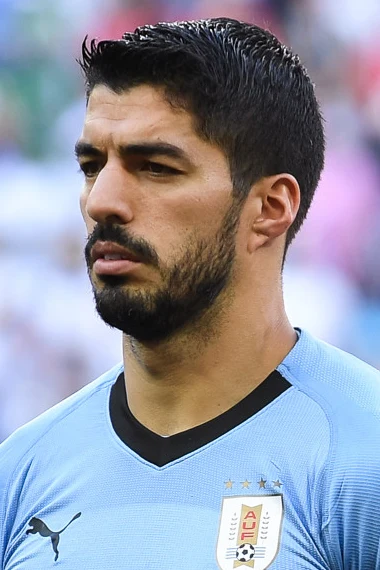 Photo: Какая то женщина / soccer.ru. Source and license in Image credits.
Nacional · FC Groningen ·
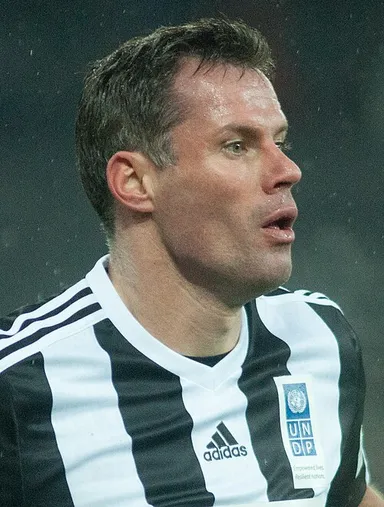 Photo: Ludovic Péron. Source and license in Image credits.
Liverpool
1997—2013
Manchester United · Preston North End · Waterford
1956—1976 Photo: Bryan Berlin / WikiPortraits. Source and license in Image credits.
Birmingham City · Borussia Dortmund · Real Madrid
2019—Present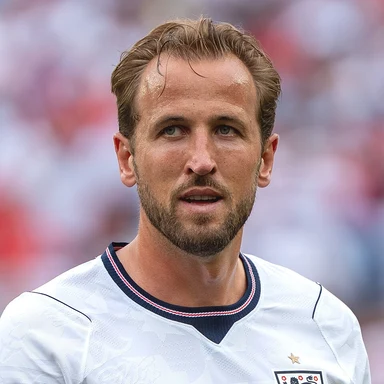 Photo: Bryan Berlin / WikiPortraits. Source and license in Image credits.
Tottenham Hotspur · Leyton Orient · Millwall
2011—Present Photo: Barcex. Source and license in Image credits.
Haarlem · Feyenoord · PSV
1979—1998Photo: Bryan Berlin / WikiPortraits. Source and license in Image credits.Birmingham City · Borussia Dortmund · Real Madrid
2019—Present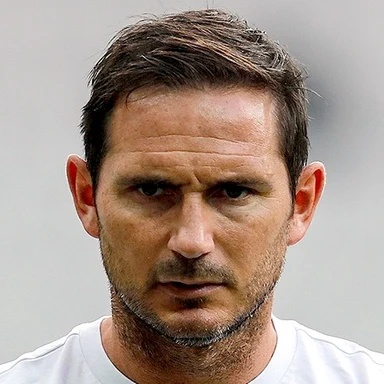 Photo: Mehdi Bolourian / Fars Media Corporation. Source and license in Image credits.
West Ham United · Swansea City · Chelsea
1995—2017Statistics are displayed only within the scope supported by each cited source.
Liverpool FCSteven Gerrard: Liverpool’s completed playing recordLFChistory.netSteven Gerrard: Liverpool season and competition ledgerPremier LeagueSteven Gerrard: Premier League Hall of Fame recordUEFALiverpool’s 2005 final: the participants rememberThe FAThe FA: Liverpool and West Ham’s 2006 finalUEFAGerrard on Torres and Liverpool’s midfield balanceUEFALiverpool overwhelm Real Madrid at Anfield, 2009Liverpool FCGerrard discusses learning the holding role, January 2014LA GalaxyLA Galaxy: Gerrard’s final season and regular-season totalsLA GalaxyLA Galaxy: Gerrard’s 2015 season and individual honoursEngland FootballSteven Gerrard: England’s official legend profileRSSSFSteven Gerrard: complete England match registerNational Football TeamsSteven Gerrard: league seasons and international appearancesLFChistory.netGerrard’s Community Shield appearancesEngland FootballSteven Gerrard — England legend profileLiverpool F.C.Steven Gerrard — past players