
The football behind Robbie Fowler’s ratings
- Penalty-area anticipation
- Generational
- Quick shooting release
- Generational
- Two-footed finishing
- Elite
- Striker combinations
- Very Good
- Timed attacking headers
- Excellent
- Defensive contribution
- Limited
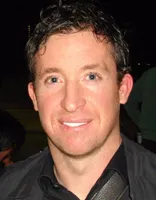 Photo: Jonesy702. Source and license in Image credits.
Robert Bernard Fowler
A Liverpool academy scorer whose penalty-area anticipation, quick shooting and two-footed finishing made him one of the defining forwards of the 1990s.
Senior club · all competitions
Completed club records only; not a complete career total.
Active club snapshots and records with another scope are excluded. Assist totals are not combined across incompatible definitions.
Stored archive snapshots, not live counters. Missing values are not zero; records with different scopes are never added together.
G/M = goals ÷ appearances. G+A = goals + assists. Per-90 metrics use documented minutes.
Senior international · all competitions
England · senior career, 1996–2002
Stored archive snapshots, not live counters. Missing values are not zero; records with different scopes are never added together.
G/M = goals ÷ appearances. G+A = goals + assists. Per-90 metrics use documented minutes.
In context
An early movement and a clean strike could turn a crowded penalty area into a clear chance.
Reading the game
Robbie Fowler turned small advantages inside the penalty area into shots before defenders could recover. The movement might be a short adjustment away from a marker, the finish a clean strike taken without an extra touch. Calling that instinct captures the speed of the result but can hide the technique and anticipation behind it. At Liverpool, his emergence gave supporters a local forward who could score in several different ways and carry the attack’s expectation while still remarkably young. The partnership with Stan Collymore widened the routes into goal; the later relationship with Michael Owen brought competition as well as another attacking option. Injury changed the balance of those responsibilities, and the scorer of the mid-1990s was not identical to the experienced player who returned in 2006. England and the spells beyond Anfield add further limits to a story that should never become only a fantasy of what might have happened. The substantial achievement is already there: a striker whose timing, adaptable finishing and connection with the crowd made the next chance feel possible, even when a match had become difficult.
Historical references support the chronology; tactical explanations are museum editorial analysis.
Historical references: Liverpool: Fowler’s two spells and major honours ↗ · Premier League: Fowler’s finishing and 1995/96 league peak ↗ · Fowler: league seasons and England match register ↗ · Liverpool: Collymore’s partnership with Fowler ↗
Career
| Period | Club | Apps | Goals | G/M |
|---|---|---|---|---|
| 1993—2001 | LiverpoolFirst Liverpool spell only: 330 appearances and 171 goals, derived from the club’s season register before his November 2001 move. Its league subset is 236 appearances and 120 goals. The later return is a separate spell. Senior club · all competitions Senior · #23 / 9 | 330 | 171 | 0.52 |
| 2001—2003 | Leeds UnitedTwo league season rows total 30 appearances and 14 goals. Cup and European matches are excluded from this selected aggregate. Senior club · league only | 30 | 14 | 0.47 |
| 2003—2006 | Manchester CityLeague-only total: 80 appearances and 21 goals. The 2004/05 row uses 11 goals, while NFT retains 10; the preferred series reconciles with the Premier League career total. City cup goals are outside this aggregate. Senior club · league only | 80 | 21 | 0.26 |
| 2006—2007 | LiverpoolSecond Liverpool spell only: 16 appearances and five goals in 2005/06, then 23 and seven in 2006/07. The league subset is 30/8. These figures are already included in the combined Liverpool total of 369/183. Senior club · all competitions Senior · #11 / 9 | 39 | 12 | 0.31 |
| 2007—2008 | Cardiff CityThirteen Championship appearances and four goals. This is a second-tier league record, not a Premier League contribution or an all-competition total. Senior club · league only | 13 | 4 | 0.31 |
| 2008—2008 | Blackburn RoversThree Premier League appearances in the 2008/09 season. His short Blackburn spell ended during 2008; cup matches are excluded. Senior club · league only | 3 | 0 | 0.00 |
| 2009—2010 | North Queensland FuryTwenty-six A-League appearances and nine goals in 2009/10. This Australian playing record is separate from later coaching work. Senior club · league only Captaincy · #9 | 26 | 9 | 0.35 |
| 2010—2011 | Perth GloryTwenty-eight A-League appearances and nine goals during his one season at Perth. The two Australian clubs remain separate career stops. Senior club · league only Senior · #9 | 28 | 9 | 0.32 |
| 2011—2012 | Muangthong UnitedThe 2011 Thai league register lists 13 appearances and two goals. His spell extended into 2012; coaching duties do not create extra player appearances. Senior club · league only | 13 | 2 | 0.15 |
Stored archive snapshots, not live counters. Missing values are not zero; records with different scopes are never added together.
G/M = goals ÷ appearances. G+A = goals + assists. Per-90 metrics use documented minutes.
Honours
Liverpool · domestic cup
Liverpool · domestic cup
Liverpool · continental
Liverpool · continental
Robbie Fowler · individual
Story
Career chapter
Fowler’s first senior appearance against Fulham in September 1993 brought a goal, and the return League Cup tie brought five more. The excitement quickly became a responsibility: Liverpool needed the teenager’s finishing to translate promise into results. In 1994/95 he played every league match and helped win the League Cup. His rapid hat-trick against Arsenal supplied the season’s most startling demonstration of how quickly he could finish a chance. The important point was the repetition across the campaign, not merely one afternoon. A first PFA Young Player award recognised a forward who was already doing more than making occasional appearances from the bench.
Historical references: Liverpool: Fowler’s two spells and major honours ↗ · Premier League: Fowler’s finishing and 1995/96 league peak ↗ · Fowler’s consecutive PFA Young Player awards ↗
Career chapter
Collymore’s arrival created a partnership with different routes towards goal. He could carry into space or move wide, while Fowler read the next delivery and adjusted his position near the defenders. The 1995/96 campaign produced 36 goals in all competitions, including 28 in the league, and a second consecutive PFA Young Player award. Two goals in the first famous Newcastle 4–3 belonged to that season; the late headed winner in another 4–3 came the following March. Those are separate matches. Liverpool’s attacking excitement did not deliver a league title, so the individual scoring peak must coexist with the team’s unfulfilled ambition.
Historical references: Premier League: Fowler’s finishing and 1995/96 league peak ↗ · Fowler’s three consecutive 30-goal seasons ↗ · Fowler’s consecutive PFA Young Player awards ↗ · Liverpool and Newcastle’s two 4–3 games ↗ · Liverpool: Collymore’s partnership with Fowler ↗
Career chapter
Injuries interrupted Fowler’s continuity as Owen emerged and Liverpool changed under Gerard Houllier. The answer was not a simple return to the earlier hierarchy. In 2000/01 he contributed within a rotation, scoring in the League Cup final and coming off the bench to put Liverpool ahead against Alaves in the UEFA Cup final. Both moments mattered without making him the only author of the treble. A transfer to Leeds followed in November 2001, then Manchester City in 2003. Those moves brought goals and further physical interruptions, showing how a famous finisher still had to earn space in a different team and changing circumstances.
Historical references: Liverpool: Fowler’s two spells and major honours ↗ · Fowler: league seasons and England match register ↗ · Liverpool and Alaves in the 2001 UEFA Cup final ↗ · Manchester City: Fowler’s changing role and return to Liverpool ↗
Career chapter
Rafael Benitez brought Fowler back in January 2006. The welcome carried the memory of his youth, but the football depended more on reading play, combining and choosing the right shooting opportunity. Twelve goals across the second Liverpool spell gave that return substance beyond sentiment. Cardiff and Blackburn followed before he moved to Australia, first with North Queensland Fury and then Perth Glory. His experience remained visible in a quickly taken free-kick for Fury and a well-timed header for Perth. Muangthong United provided the final playing chapter, alongside managerial responsibility. Later coaching and legends appearances belong to a different record from this senior playing career.
Historical references: Liverpool: Fowler’s two spells and major honours ↗ · Fowler: Liverpool appearances by season and competition ↗ · Fowler: league seasons and England match register ↗ · Perth Glory: Fowler’s Australian season and move to Thailand ↗ · Fowler’s quick free-kick for North Queensland Fury ↗ · Fowler heads in for Perth against his former club ↗
Profile
Poacher
Also plays · Complete Forward
Attacks the space around the centre-backs, prepares the finish before the delivery arrives and uses either foot to avoid unnecessary touches. Short combinations support the striker beside him; later roles rely more on reading and selective movement.
Penalty-area anticipation
Quick shooting release
Two-footed finishing
Striker combinations
Illustrative role zones · not tracking data
Our tactical reading starts with the distance between Fowler and his marker. A small movement away could encourage a defender to relax contact; the next movement then attacked the space closer to goal. He did not need to lead every long sprint to become the first player onto a delivery. The advantage often came from reading the passer’s body and adjusting early. That makes the visible finish only the final part of the action: the opportunity was being prepared while somebody else still had the ball.
Fowler’s finishing could be quick without being a blind swing. His balance allowed him to shape the strike while the ball was still arriving, keeping the preparation short enough that a defender had less time to close. The stronger left foot offered power and placement, while confidence on the right reduced the need for an extra adjustment. This interpretation values the range of solutions rather than assuming every attempt was perfect. A clean connection and a suitable shooting angle still depended on the quality of the preceding touch.
The poacher label describes his priority but not every contribution. Fowler could return a short pass, hold a defender’s attention or allow a ball to run to a teammate. In a partnership, those actions created room for the next runner and could bring the return pass back to him. Collymore’s wider movement and McManaman’s carries offered different kinds of service. Fowler’s job was to recognise which action the combination needed, rather than demand that every attack finish with the first available shot of his own.
His best use placed him close enough to goal to exploit anticipation and technique. Moving him repeatedly into long recovery runs or asking him to serve as a dominant aerial outlet would spend energy on different tasks. He could work for a partner and contest a cross, but he was not a specialist defensive forward or a towering target man. Later injuries made that distinction more important: intelligent positioning could preserve attacking usefulness, while teammates still had to supply progression and coverage around him.
Historical references: Liverpool: Fowler’s two spells and major honours ↗ · Fowler: Liverpool appearances by season and competition ↗ · Premier League: Fowler’s finishing and 1995/96 league peak ↗ · Liverpool and Newcastle’s two 4–3 games ↗ · Liverpool: Collymore’s partnership with Fowler ↗ · Manchester City: Fowler’s changing role and return to Liverpool ↗
Reading the game
| Era / team | Primary Role | Tactical Character |
|---|---|---|
| 1993–1995Liverpool | Learn alongside the established scorer | Turn finishing promise into regular responsibility beside Ian Rush. |
| 1995–1997Liverpool | Lead the finishing in a mobile partnership | Use Collymore’s movement and midfield service to attack the box. |
| 1997–2006Liverpool / Leeds / Manchester City | Adapt to injury, rotation and new clubs | Choose useful attacking positions as continuity becomes less certain. |
| 2006–2012Liverpool / Cardiff / Blackburn / Australia / Thailand | Preserve the finish through experience | Combine more selectively and read the chance before committing the run. |
Historical references: Liverpool: Fowler’s two spells and major honours ↗ · Liverpool: Collymore’s partnership with Fowler ↗ · Manchester City: Fowler’s changing role and return to Liverpool ↗ · Perth Glory: Fowler’s Australian season and move to Thailand ↗
Reading the game
His preferred left foot did not make the right merely an emergency option. A chance arriving on the other side could still be finished before the goalkeeper reset. That flexibility changed the defender’s problem: showing him away from one foot did not automatically remove the shot. The skill was choosing the available finish quickly enough to retain the original advantage.
A striker’s work continues when a shot is blocked or a cross changes direction. Fowler could prepare for that uncertainty by staying alert near the goal rather than admiring the first action. This is an editorial interpretation of anticipation: the useful position is one that keeps a rebound reachable without committing so early that another route disappears.
Fowler did not need a target man’s height to threaten in the air. Separating from a marker and meeting the delivery at the right moment could matter more than an extended wrestling contest. His late Newcastle winner in 1997 and the later Perth header illustrate that possibility in different phases of the career, without making aerial domination his defining role.
Being a local player helped make Fowler’s success feel shared with the city. The bond also had particular moments, including his attempt to reverse the penalty decision against Arsenal in 1997. That incident should be described accurately: the referee kept the award, Seaman saved the kick and McAteer scored the rebound. The appeal and the match outcome were different parts of the story.
Historical references: Liverpool: Fowler’s two spells and major honours ↗ · Premier League: Fowler’s finishing and 1995/96 league peak ↗ · Liverpool and Newcastle’s two 4–3 games ↗ · Fowler contests the 1997 penalty decision at Arsenal ↗ · Fowler heads in for Perth against his former club ↗
Reading the game
Young first-team scorer beside Rush
The 1994/95 version captures a teenager becoming a reliable senior scorer. Fowler appeared in all 42 league games, scored 25 league goals and won his first League Cup and PFA Young Player award. The Arsenal hat-trick is an anchor for the story, but this selection emphasises the sustained availability and finishing that made the moment more than an isolated burst.
Penalty-area scorer in a mobile strike partnership
Both assessments use 1995/96: 28 league goals and 36 in all competitions. The Collymore partnership gave Fowler several ways to receive near goal, and his touch, movement and fast release turned that service into repeated chances. This is an individual peak within a side that finished third in the league and lost the FA Cup final; it is not a championship season.
Experienced scorer in Houllier’s rotation
The 2000/01 version values a changed responsibility. Fowler was one of several forwards, yet his League Cup final strike and UEFA Cup final goal demonstrate the quality he could still introduce at decisive moments. Seventeen goals across the season make this a distinct contribution, with injury history and reduced centrality kept visible rather than borrowing the availability of his teenage years.
Historical references: Liverpool: Fowler’s two spells and major honours ↗ · Fowler: Liverpool appearances by season and competition ↗ · Premier League: Fowler’s finishing and 1995/96 league peak ↗ · Fowler’s three consecutive 30-goal seasons ↗ · Fowler’s consecutive PFA Young Player awards ↗ · Liverpool: Collymore’s partnership with Fowler ↗ · Liverpool and Alaves in the 2001 UEFA Cup final ↗
Statistics
| Season | Club | Apps | Goals | G/M |
|---|---|---|---|---|
| 2011 | Muangthong United Senior club · league only | 13 | 2 | 0.15 |
| 2010/11 | Perth Glory Senior club · league only | 28 | 9 | 0.32 |
| 2009/10 | North Queensland Fury Senior club · league only | 26 | 9 | 0.35 |
| 2008/09 | Blackburn Rovers Senior club · league only | 3 | 0 | 0.00 |
| 2007/08 | Cardiff City Senior club · league only | 13 | 4 | 0.31 |
| 2006/07 | Liverpool Senior club · league only | 16 | 3 | 0.19 |
| 2005/06 | Liverpool Senior club · league only | 14 | 5 | 0.36 |
| 2005/06 | Manchester City Senior club · league only | 4 | 1 | 0.25 |
| 2004/05 | Manchester City Senior club · league only | 32 | 11 | 0.34 |
| 2003/04 | Manchester City Senior club · league only | 31 | 7 | 0.23 |
Stored archive snapshots, not live counters. Missing values are not zero; records with different scopes are never added together.
G/M = goals ÷ appearances. G+A = goals + assists. Per-90 metrics use documented minutes.
Twenty-two club-season league rows cover nine spells at eight clubs, including split seasons in 2001/02, 2002/03 and 2005/06. The preferred 2004/05 City record is 32 appearances and 11 goals, rather than NFT’s 10 goals. English top-flight rows reconcile to 379 appearances and 163 goals; all selected league rows total 459/187. Season assists remain null. Club all-competition totals overlap these rows and must not be added to them. The Thai row uses the competition’s 2011 season label, while the spell ends in 2012.
Club competitions
| Competition | Apps | Goals | G/M |
|---|---|---|---|
Premier LeaguePremier League · Liverpool, Leeds, City and BlackburnLeague career across four clubs: Liverpool 266/128, Leeds 30/14, City 80/21 and Blackburn 3/0. Assists follow the Premier League’s attribution; Cardiff and overseas leagues are excluded. Performance record
| 379 | 163 | 0.43 |
UEFA Cup Winners’ CupCup Winners’ Cup · Liverpool, 1996/97Seven appearances and seven goals in Liverpool’s 1996/97 European campaign. This is one Cup Winners’ Cup edition, not a Champions League or whole-European-career total. | 7 | 7 | 1.00 |
Stored archive snapshots, not live counters. Missing values are not zero; records with different scopes are never added together.
G/M = goals ÷ appearances. G+A = goals + assists. Per-90 metrics use documented minutes.
International
International career
Fowler made 26 senior England appearances and scored seven goals. Two substitute appearances at EURO 1996 were followed by one at the 2002 World Cup, against Denmark. The Denmark match was his last senior international. Major club scoring seasons did not translate into an uninterrupted England starting role.
Senior international · tournament splits
| Competition | Apps | Goals | G/M |
|---|---|---|---|
UEFA European ChampionshipEURO finals · 1996Two substitute appearances in 1996; no appearance is assigned to the unused EURO 2000 squad place. Qualifiers are excluded. | 2 | 0 | 0.00 |
FIFA World CupWorld Cup finals · 2002One substitute appearance against Denmark in the round of 16. England’s five tournament matches are not Fowler’s individual appearance count. | 1 | 0 | 0.00 |
Stored archive snapshots, not live counters. Missing values are not zero; records with different scopes are never added together.
G/M = goals ÷ appearances. G+A = goals + assists. Per-90 metrics use documented minutes.
Reading the game
Fowler’s legacy is best understood as a particular kind of attacking intelligence made visible through goals. He could anticipate where a chance would appear, organise his body and strike before the opportunity had fully closed. The apparent ease of the result encouraged the language of natural talent, but that description should leave room for the control and decisions that made it repeatable. His early Liverpool seasons set a demanding standard without the league titles that might have made the story simpler. The cup contributions of 2001 and the later return show different kinds of usefulness, while England and the journeys beyond Merseyside prevent the peak from standing in for an entire career. Supporters’ affection also belongs in the evaluation, rooted in local identity and renewed by the sight of a familiar player returning in a changed role. That affection does not require every absence to become a claim about trophies he would certainly have won. The goals he actually scored, the partners he helped and the defenders he repeatedly beat to a small piece of space already explain his significance. He remains a reference for finishing with anticipation and economy.
Historical references: Liverpool: Fowler’s two spells and major honours ↗ · Premier League: Fowler’s finishing and 1995/96 league peak ↗ · Fowler: league seasons and England match register ↗ · Liverpool: Collymore’s partnership with Fowler ↗ · Fowler contests the 1997 penalty decision at Arsenal ↗
Archive
Poacher · editorial peak 1995—1996
Graeme Souness · Roy Evans · Gérard Houllier · David O’Leary · Kevin Keegan · Rafael Benítez · Terry Venables · Sven-Göran Eriksson
Steven Gerrard— Overlapping Liverpool era · John Barnes— Overlapping Liverpool era · Jamie Carragher— Overlapping Liverpool era · Ian Rush— Overlapping Liverpool era
Three cups in one season — Liverpool · Benítez and the European return — Liverpool

Liverpool · LA Galaxy
1998—2016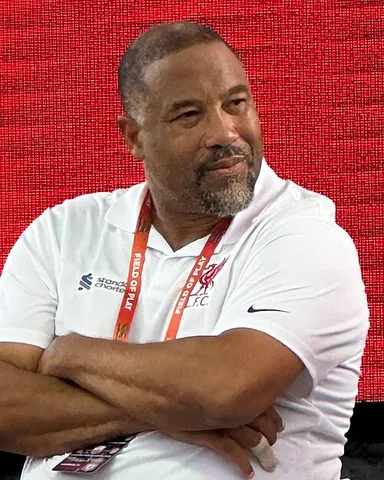 Photo: Pangalau. Source and license in Image credits.
Watford · Liverpool ·
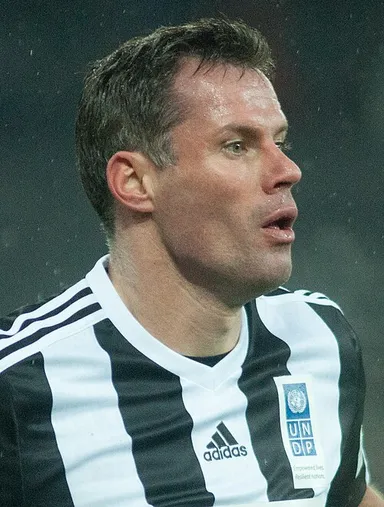 Photo: Ludovic Péron. Source and license in Image credits.
Liverpool
1997—2013Liverpool · LA Galaxy
1998—2016
Manchester United · Preston North End · Waterford
1956—1976 Photo: Bryan Berlin / WikiPortraits. Source and license in Image credits.
Birmingham City · Borussia Dortmund · Real Madrid
2019—Present Photo: Bryan Berlin. Source and license in Image credits.
Bryne · Molde · Red Bull Salzburg
2016—Present
Palmeiras · Real Madrid · Olympique Lyonnais
2022—Present Photo: Save the Dream from Doha, Qatar. Source and license in Image credits.
Platense · AS Monaco · Juventus
1994—2015Statistics are displayed only within the scope supported by each cited source.
Liverpool FCLiverpool: Fowler’s two spells and major honoursLFCHistoryFowler: Liverpool appearances by season and competitionPremier LeagueRobbie Fowler: Premier League career statisticsPremier LeaguePremier League: Fowler’s finishing and 1995/96 league peakNational Football TeamsFowler: league seasons and England match registerLiverpool FCFowler’s three consecutive 30-goal seasonsLiverpool FCFowler’s consecutive PFA Young Player awardsLiverpool FCLiverpool and Newcastle’s two 4–3 gamesLiverpool FCLiverpool: Collymore’s partnership with FowlerLiverpool FCFowler contests the 1997 penalty decision at ArsenalUEFALiverpool and Alaves in the 2001 UEFA Cup finalManchester CityManchester City: Fowler’s changing role and return to LiverpoolPerth GloryPerth Glory: Fowler’s Australian season and move to ThailandPerth GloryFowler’s quick free-kick for North Queensland FuryPerth GloryFowler heads in for Perth against his former clubSporting HeroesFowler’s 2004/05 league total: 32 matches, 11 goals