
English First Division
Liverpool · league
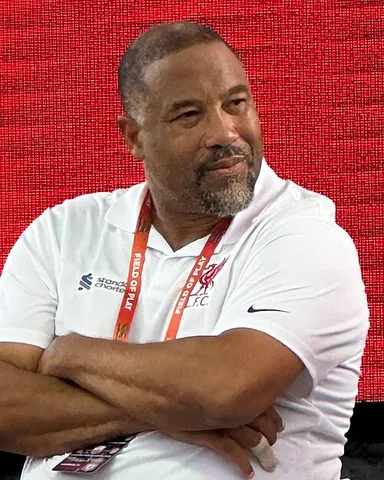 Photo: Pangalau. Source and license in Image credits.
John Charles Bryan Barnes
John Barnes combined a winger’s acceleration with close control and a midfielder’s passing vision. At Liverpool he became a defining figure in the 1988 and 1990 league champions, then adapted to a central role after injury. His 407 competitive appearances and 108 goals describe a decade of invention, rather than just a collection of spectacular dribbles.
Senior club · all competitions
Completed club records only; not a complete career total.
Active club snapshots and records with another scope are excluded. Assist totals are not combined across incompatible definitions.
Stored archive snapshots, not live counters. Missing values are not zero; records with different scopes are never added together.
G/M = goals ÷ appearances. G+A = goals + assists. Per-90 metrics use documented minutes.
Senior international · all competitions
Stored archive snapshots, not live counters. Missing values are not zero; records with different scopes are never added together.
G/M = goals ÷ appearances. G+A = goals + assists. Per-90 metrics use documented minutes.
In context
Barnes’s legacy connects two versions of Liverpool: the expansive left-sided attack of Dalglish’s champions and the central combinations of Evans’s teams. He also challenged racist hostility while becoming one of the English game’s outstanding players. His later coaching work is separate from the playing career that ended at Charlton in 1999.
Reading the game
John Barnes combined a winger’s acceleration with close control and a midfielder’s passing vision. At Liverpool he became a defining figure in the 1988 and 1990 league champions, then adapted to a central role after injury. His 407 competitive appearances and 108 goals describe a decade of invention, rather than just a collection of spectacular dribbles.
Historical references support the chronology; tactical explanations are museum editorial analysis.
Historical references: Liverpool: Barnes’s decade at Anfield and competitive record ↗ · National Football Museum: Barnes’s roles, honours and 79 caps with 11 goals ↗
Career
| Period | Club |
|---|---|
| 1981—1987 | WatfordThe senior breakthrough under Graham Taylor, before his 1987 move to Liverpool. |
| 1987—1997 | LiverpoolTen seasons, two league titles and a transition from the left wing into central midfield. Senior club · all competitions Performance record
|
| 1997—1999 | |
| 1999—1999 | Charlton AthleticThe final senior playing spell before retirement in 1999. |
Stored archive snapshots, not live counters. Missing values are not zero; records with different scopes are never added together.
G/M = goals ÷ appearances. G+A = goals + assists. Per-90 metrics use documented minutes.
Honours
Liverpool · league
Liverpool · domestic cup
Liverpool · domestic cup
England · individual
England · individual
Story
Career chapter
Born in Kingston, Barnes established himself at Watford under Graham Taylor before Liverpool signed him in 1987. His England debut came in May 1983. The solo goal against Brazil at the Maracanã in June 1984 made his balance and close control visible on an international stage.
Club chapter
Barnes won the FWA Footballer of the Year award in 1988 and 1990. In Liverpool’s 1989/90 title season he scored 28 goals in all competitions, including 22 in the league. His understanding with the forwards let him alternate between stretching the flank, carrying inside and delivering the next pass.
Explore club contextCareer chapter
A calf injury kept Barnes out of the 1992 FA Cup final, despite his contribution to the winning campaign. He ruptured an Achilles tendon with England that June and missed Euro 1992. Evans later used him as a central playmaker. After leaving Liverpool in 1997 he played for Newcastle and Charlton, retiring in 1999.
Profile
Traditional Winger
Also plays · Regista
John Barnes combined a winger’s acceleration with close control and a midfielder’s passing vision. At Liverpool he became a defining figure in the 1988 and 1990 league champions, then adapted to a central role after injury. His 407 competitive appearances and 108 goals describe a decade of invention, rather than just a collection of spectacular dribbles.
Carrying through contact and changing the angle
Keeping the attack connected from midfield
Ball control
Illustrative role zones · not tracking data
Barnes’s threat came from keeping the ball close while his body protected the next touch. A defender had to respect the outside route, yet an inward change of direction could open a pass or shot. This editorial reading treats him as a winger with several exits from the same starting position, not as a dribbler who always needed the touchline.
The later central role drew on skills already present in Barnes’s wide game: secure first touches, awareness of nearby support and the ability to delay or accelerate a move. Under Evans, passing became a more sustained responsibility. Calling this a deep playmaking role describes where he helped organise possession; it does not turn every phase of his career into the same tactical job.
Historical references: Liverpool: Barnes’s decade at Anfield and competitive record ↗ · National Football Museum: Barnes’s roles, honours and 79 caps with 11 goals ↗ · FWA: Barnes’s 1988 and 1990 Footballer of the Year awards ↗ · Liverpool: Barnes’s injuries and central-midfield reinvention ↗
Editorial assessment
Historical role analysis
Seven qualitative bands · not measured scores
Editorial assessment of this period, not an official rating.
These bands are not percentiles or an overall ranking. The chart’s geometry represents ordered bands, not equal differences in ability.
Qualitative judgments describe football actions in context. They do not measure personality or medical fitness. Category assessments are editorial summaries, not averages. A lower defensive band describes the player’s role and contribution, not their value to the team.
National Football Museum: Barnes’s roles, honours and 79 caps with 11 goals ↗Reading the game
| Era / team | Primary Role | Tactical Character |
|---|---|---|
| 1987–1992Liverpool | Traditional Winger | Barnes’s threat came from keeping the ball close while his body protected the next touch. A defender had to respect the outside route, yet an inward change of direction could open a pass or shot. This editorial reading treats him as a winger with several exits from the same starting position, not as a dribbler who always needed the touchline. |
| 1994–1997Liverpool | Regista | The later central role drew on skills already present in Barnes’s wide game: secure first touches, awareness of nearby support and the ability to delay or accelerate a move. Under Evans, passing became a more sustained responsibility. Calling this a deep playmaking role describes where he helped organise possession; it does not turn every phase of his career into the same tactical job. |
Historical references: Liverpool: Barnes’s decade at Anfield and competitive record ↗ · National Football Museum: Barnes’s roles, honours and 79 caps with 11 goals ↗ · FWA: Barnes’s 1988 and 1990 Footballer of the Year awards ↗ · Liverpool: Barnes’s injuries and central-midfield reinvention ↗
Reading the game
Barnes’s threat came from keeping the ball close while his body protected the next touch. A defender had to respect the outside route, yet an inward change of direction could open a pass or shot. This editorial reading treats him as a winger with several exits from the same starting position, not as a dribbler who always needed the touchline.
The later central role drew on skills already present in Barnes’s wide game: secure first touches, awareness of nearby support and the ability to delay or accelerate a move. Under Evans, passing became a more sustained responsibility. Calling this a deep playmaking role describes where he helped organise possession; it does not turn every phase of his career into the same tactical job.
Historical references: Liverpool: Barnes’s decade at Anfield and competitive record ↗ · National Football Museum: Barnes’s roles, honours and 79 caps with 11 goals ↗ · FWA: Barnes’s 1988 and 1990 Footballer of the Year awards ↗ · Liverpool: Barnes’s injuries and central-midfield reinvention ↗
Reading the game
Barnes won the FWA Footballer of the Year award in 1988 and 1990. In Liverpool’s 1989/90 title season he scored 28 goals in all competitions, including 22 in the league. His understanding with the forwards let him alternate between stretching the flank, carrying inside and delivering the next pass.
Historical references: LFCHistory.net: Barnes’s club totals and league-season records ↗ · FWA: Barnes’s 1988 and 1990 Footballer of the Year awards ↗ · Liverpool: Barnes’s injuries and central-midfield reinvention ↗
Statistics
Stored archive snapshots, not live counters. Missing values are not zero; records with different scopes are never added together.
G/M = goals ÷ appearances. G+A = goals + assists. Per-90 metrics use documented minutes.
Liverpool’s complete competitive record is 407 appearances and 108 goals. Its league subset is 314 appearances and 84 goals: 152/62 in the First Division and 162/22 in the Premier League. The season table shows selected league records. Other club totals and historical assists remain unverified here; the Liverpool aggregate is not a complete career total.
Club competitions
| Competition | Apps | Goals | G/M |
|---|---|---|---|
English First Division1987/88–1991/92Liverpool First Division matches only, from 1987/88 to 1991/92: 152 appearances and 62 goals. Premier League and cup games are excluded. | 152 | 62 | 0.41 |
Premier League1992/93–1996/97Liverpool Premier League matches only: 162 appearances and 22 goals from 1992/93 to 1996/97. The league’s career-wide 201 appearances and 28 goals also include Newcastle and Charlton. | 162 | 22 | 0.14 |
Stored archive snapshots, not live counters. Missing values are not zero; records with different scopes are never added together.
G/M = goals ÷ appearances. G+A = goals + assists. Per-90 metrics use documented minutes.
International
International career
Barnes played for England from 1983 to 1995, earning 79 caps. This dossier follows the National Football Museum’s 11-goal record; National Football Teams lists ten, which is retained as a separate record. He appeared at the 1986 and 1990 World Cups and Euro 1988. Injury prevented participation at Euro 1992.
National Football Teams: 79 appearances / 10 goals · National Football Teams records 79 FIFA matches and ten goals. This differing goal attribution is not merged with the museum’s preferred 11-goal record.
Reading the game
Barnes’s legacy connects two versions of Liverpool: the expansive left-sided attack of Dalglish’s champions and the central combinations of Evans’s teams. He also challenged racist hostility while becoming one of the English game’s outstanding players. His later coaching work is separate from the playing career that ended at Charlton in 1999.
Historical references: Liverpool: Barnes’s decade at Anfield and competitive record ↗ · National Football Museum: Barnes’s roles, honours and 79 caps with 11 goals ↗ · Liverpool: Barnes’s injuries and central-midfield reinvention ↗
Archive
Traditional Winger · editorial peak 1987—1990
Graham Taylor · Kenny Dalglish · Graeme Souness · Roy Evans · Alan Curbishley
Robbie Fowler— Overlapping Liverpool era · Kenny Dalglish— Overlapping Liverpool era · Alan Shearer— Overlapping Newcastle United era · Ian Rush— Overlapping Liverpool era
Dalglish renews the attack — Liverpool · The Entertainers —
 Photo: Jonesy702. Source and license in Image credits.
Liverpool · Leeds United · Manchester City
1993—2012 Photo: AceKindred. Source and license in Image credits.
Chester City · Liverpool · Juventus
1978—1999 Photo: Saw from Singapore. Source and license in Image credits.
Celtic · Liverpool
1968—1990
Liverpool · LA Galaxy
1998—2016
Manchester United · Preston North End · Waterford
1956—1976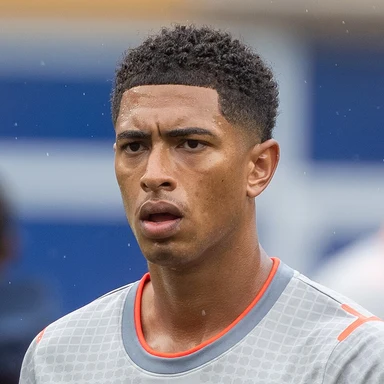 Photo: Bryan Berlin / WikiPortraits. Source and license in Image credits.
Birmingham City · Borussia Dortmund · Real Madrid
2019—Present Photo: Žan Kolman. Source and license in Image credits.
Sporting CP · Barcelona · Real Madrid
1989—2009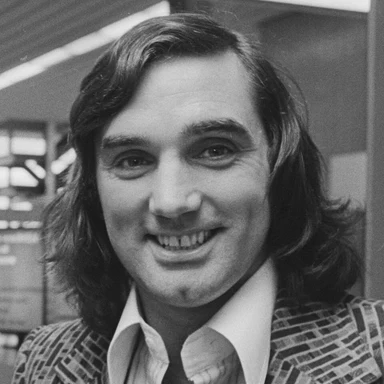 Photo: Bert Verhoeff for Anefo , NL-HaNA, ANEFO / neg. stroken, 1945-1989. Source and license in Image credits.
Manchester United · Jewish Guild · Dunstable Town
1963—1984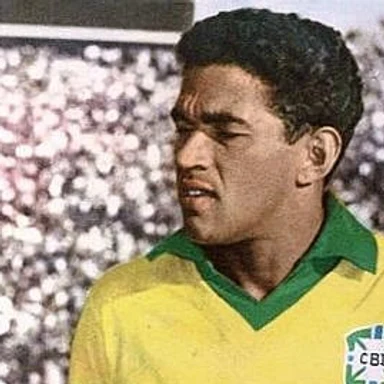 Photo: El Gráfico, n° 2233. Source and license in Image credits.
Botafogo · Corinthians · Atlético Junior
1953—1972Statistics are displayed only within the scope supported by each cited source.
Liverpool FCLiverpool: Barnes’s decade at Anfield and competitive recordLFCHistory.netLFCHistory.net: Barnes’s club totals and league-season recordsNational Football TeamsNational Football Teams: Barnes’s identity, career and alternative England recordNational Football MuseumNational Football Museum: Barnes’s roles, honours and 79 caps with 11 goalsFootball Writers’ AssociationFWA: Barnes’s 1988 and 1990 Footballer of the Year awardsLiverpool FCLiverpool: Barnes’s injuries and central-midfield reinventionLiverpool FCLiverpool: Barnes’s contribution to the 1992 FA Cup semi-finalPremier LeaguePremier League: Barnes’s career-wide 201 appearances and 28 goals