English First Division
Liverpool · league
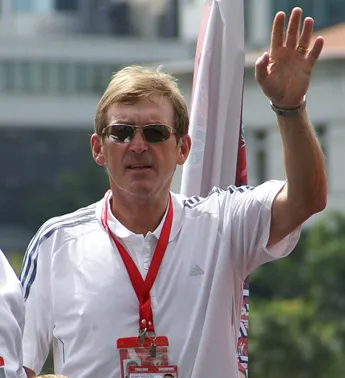 Photo: Saw from Singapore. Source and license in Image credits.
Kenneth Mathieson Dalglish
Kenny Dalglish combined a scorer’s composure with a supporting forward’s ability to connect attacks. After establishing himself at Celtic, he became central to Liverpool’s European champions, offering both the decisive finish and the pass that released a teammate.
Senior club · all competitions
Completed club records only; not a complete career total.
Active club snapshots and records with another scope are excluded. Assist totals are not combined across incompatible definitions.
Stored archive snapshots, not live counters. Missing values are not zero; records with different scopes are never added together.
G/M = goals ÷ appearances. G+A = goals + assists. Per-90 metrics use documented minutes.
Senior international · all competitions
Stored archive snapshots, not live counters. Missing values are not zero; records with different scopes are never added together.
G/M = goals ÷ appearances. G+A = goals + assists. Per-90 metrics use documented minutes.
In context
Dalglish offered Liverpool continuity through change: a new European Cup-winning attack after Keegan, a creative partnership with Rush and then the demanding dual role of player-manager. His legacy includes the ability to help others score as well as the goals he scored himself.
Reading the game
Kenny Dalglish combined a scorer’s composure with a supporting forward’s ability to connect attacks. After establishing himself at Celtic, he became central to Liverpool’s European champions, offering both the decisive finish and the pass that released a teammate.
Celtic’s own ledger gives 320 competitive appearances and 167 goals, including 204 league appearances and 112 league goals. A Scottish FA retrospective gives 322 appearances without explaining the difference. This dossier follows Celtic’s itemised club record and does not silently reconcile the two totals.
Assists and unverified career totals remain unfilled. Honours are a sourced selection, not a claim to list every medal. Tactical assessments are editorial judgements, not measured performance ratings.
Historical references support the chronology; tactical explanations are museum editorial analysis.
Historical references: Liverpool: Dalglish’s player record and honours ↗ · Celtic: Dalglish’s itemised playing record ↗ · Scottish FA: Dalglish retrospective and international chronology ↗
Career
| Period | Club | Apps | Goals | G/M |
|---|---|---|---|---|
| 1968—1977 | CelticCeltic’s own ledger gives 320 competitive appearances and 167 goals, including 204 league appearances and 112 league goals. A Scottish FA retrospective gives 322 appearances without explaining the difference. This dossier follows Celtic’s itemised club record and does not silently reconcile the two totals. Senior club · all competitions Senior · #7 | 320 | 167 | 0.52 |
| 1977—1990 | LiverpoolLiverpool’s player archive records 515 competitive appearances and 172 goals from 1977 to 1990. These figures exclude Celtic, Scotland and his managerial matches. The six league titles listed here follow the club’s player honours list, not its separate managerial record. Senior club · all competitions Senior · #7 | 515 | 172 | 0.33 |
Stored archive snapshots, not live counters. Missing values are not zero; records with different scopes are never added together.
G/M = goals ÷ appearances. G+A = goals + assists. Per-90 metrics use documented minutes.
Honours
Liverpool · league
Liverpool · continental
Liverpool · domestic cup
Liverpool · domestic cup
Liverpool · continental
Celtic · league
Celtic · domestic cup
Celtic · domestic cup
Story
Career chapter
Dalglish made his senior Celtic debut in 1968 and became a leading attacker under Jock Stein. By 1977 he had captained the side to a league-and-cup double. His move to Liverpool brought an established international to a team replacing Kevin Keegan.
Club chapter
In the 1978 European Cup final, Dalglish received Graeme Souness’s pass and lifted his finish over the advancing goalkeeper. Liverpool beat Club Brugge 1–0. The moment illustrates a supporting forward’s transition from combination play to a composed finish.
Explore club contextClub chapter
Appointed player-manager in 1985, Dalglish still contributed on the pitch, scoring the title-clinching goal at Chelsea in 1986. Later managerial titles belong to his coaching record; the player dossier keeps that distinction even where both roles overlapped.
Explore club contextProfile
Complete Forward
Kenny Dalglish combined a scorer’s composure with a supporting forward’s ability to connect attacks. After establishing himself at Celtic, he became central to Liverpool’s European champions, offering both the decisive finish and the pass that released a teammate.
Release the runner from a supporting position
A composed finish at Wembley
Illustrative role zones · not tracking data
Editorial assessment
Historical role analysis
Seven qualitative bands · not measured scores
Editorial assessment of this period, not an official rating.
These bands are not percentiles or an overall ranking. The chart’s geometry represents ordered bands, not equal differences in ability.
Qualitative judgments describe football actions in context. They do not measure personality or medical fitness. Category assessments are editorial summaries, not averages. A lower defensive band describes the player’s role and contribution, not their value to the team.
Liverpool: the Dalglish–Rush passing partnership ↗Reading the game
His partnership with Ian Rush gave Liverpool two complementary attacking threats. This editorial analysis focuses on the timing of the supporting pass: draw a defender, keep the ball accessible and release the runner when the route opens. Creation and scoring belong to the same attacking sequence.
In the 1978 European Cup final, Dalglish received Graeme Souness’s pass and lifted his finish over the advancing goalkeeper. Liverpool beat Club Brugge 1–0. The moment illustrates a supporting forward’s transition from combination play to a composed finish.
Historical references: UEFA: Dalglish’s winner in the 1978 European final ↗ · Liverpool: the Dalglish–Rush passing partnership ↗
Reading the game
In the 1978 European Cup final, Dalglish received Graeme Souness’s pass and lifted his finish over the advancing goalkeeper. Liverpool beat Club Brugge 1–0. The moment illustrates a supporting forward’s transition from combination play to a composed finish.
Appointed player-manager in 1985, Dalglish still contributed on the pitch, scoring the title-clinching goal at Chelsea in 1986. Later managerial titles belong to his coaching record; the player dossier keeps that distinction even where both roles overlapped.
Historical references: Liverpool: Dalglish’s player record and honours ↗ · UEFA: Dalglish’s winner in the 1978 European final ↗ · Liverpool: Dalglish’s separate managerial record ↗
Statistics
Club competitions
| Competition | Apps | Goals | G/M |
|---|---|---|---|
Scottish top-flight championship1968–1977Celtic’s own ledger gives 320 competitive appearances and 167 goals, including 204 league appearances and 112 league goals. A Scottish FA retrospective gives 322 appearances without explaining the difference. This dossier follows Celtic’s itemised club record and does not silently reconcile the two totals. | 204 | 112 | 0.55 |
Stored archive snapshots, not live counters. Missing values are not zero; records with different scopes are never added together.
G/M = goals ÷ appearances. G+A = goals + assists. Per-90 metrics use documented minutes.
International
International career
Dalglish represented Scotland from 1971 to 1986, recording 102 senior caps and 30 goals. He played at the 1974, 1978 and 1982 World Cups. These international figures remain separate from both club ledgers and from his later work as a manager.
Reading the game
Dalglish offered Liverpool continuity through change: a new European Cup-winning attack after Keegan, a creative partnership with Rush and then the demanding dual role of player-manager. His legacy includes the ability to help others score as well as the goals he scored himself.
Historical references: Liverpool: Dalglish’s player record and honours ↗ · Liverpool: the Dalglish–Rush passing partnership ↗
Archive
Complete Forward · editorial peak 1977—1984
Jock Stein · Bob Paisley · Joe Fagan
Ian Callaghan— Overlapping Liverpool era · Ray Clemence— Overlapping Liverpool era · John Barnes— Overlapping Liverpool era · Ian Rush— Overlapping Liverpool era
The Boot Room reaches Europe — Liverpool · Dalglish renews the attack — Liverpool
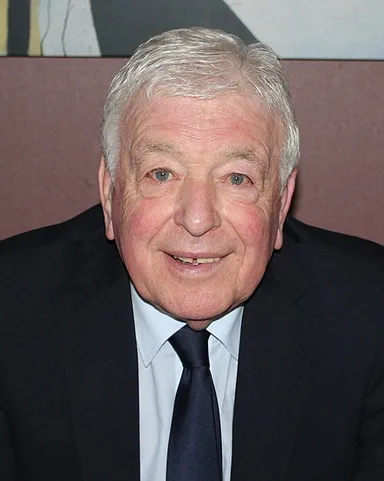 Photo: Rebecca Boardman. Source and license in Image credits.
Liverpool · Fort Lauderdale Strikers · Swansea City
1960—1982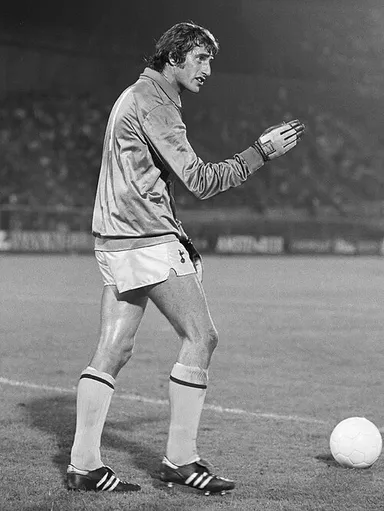 Photo: Marcel Antonisse / Anefo. Source and license in Image credits.
Scunthorpe United · Liverpool · St George
1966—1988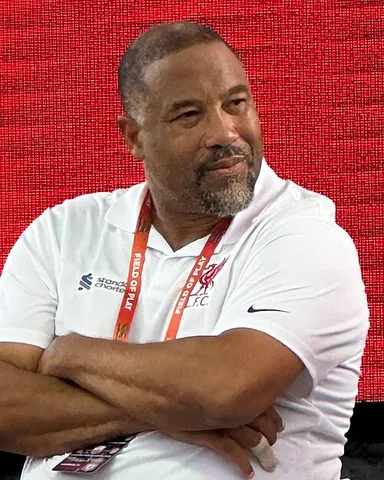 Photo: Pangalau. Source and license in Image credits.
Watford · Liverpool ·
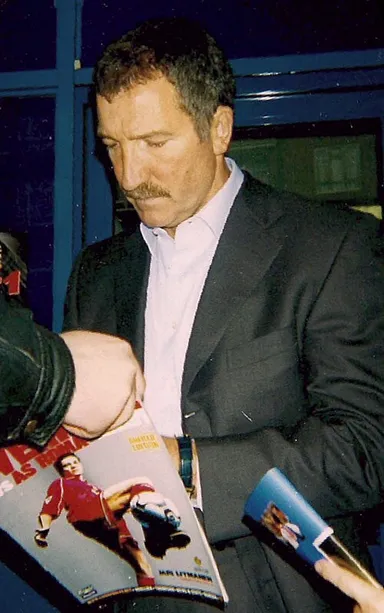 Photo: RoverTheBendInSussex
Derivative work MagentaGreen. Source and license in Image credits.
Tottenham Hotspur · Montreal Olympique · Middlesbrough
1971—1990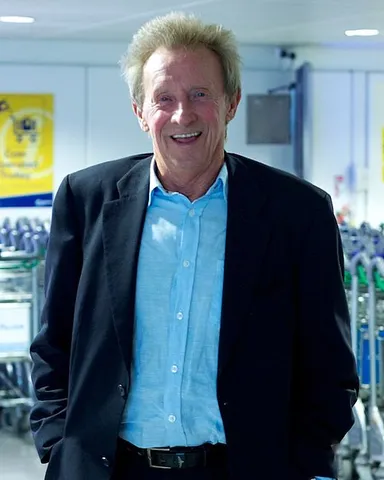 Photo: Danny Molyneux. Source and license in Image credits.
Huddersfield Town · Manchester City · Torino
1956—1974
AS Monaco · Juventus · Arsenal
1994—2014
Cruzeiro · PSV · Barcelona
1993—2011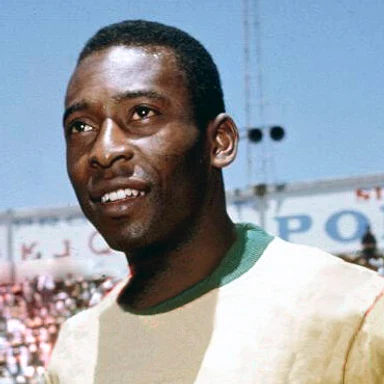 Photo: Unknown author. Source and license in Image credits.
Santos · New York Cosmos
1956—1977Statistics are displayed only within the scope supported by each cited source.
Liverpool FCLiverpool: Dalglish’s player record and honoursCeltic FCCeltic: Dalglish’s itemised playing recordScottish FAScottish FA: Dalglish’s senior international careerScottish FAScottish FA: Dalglish retrospective and international chronologyUEFAUEFA: Dalglish’s winner in the 1978 European finalLiverpool FCLiverpool: the Dalglish–Rush passing partnershipLiverpool FCLiverpool: Dalglish’s separate managerial record