Bill Shankly
Manager and Boot Room colleague
Editorial interpretation
Shankly’s collective working environment supplied continuity; Paisley’s achievement was to develop it under his own responsibility.
Quiet systems manager
A low-profile leader whose knowledge of players, continuity and precise decision-making sustained Liverpool’s rise into a European dynasty.
English First Division · 1978/79
Liverpool · one completed league season, not career totals. Two points for a win applied; no modern three-point PPG is calculated.
Stored archive snapshots, not live counters. Missing values are not zero; records with different scopes are never added together.
Win rate = wins ÷ matches. Points per game requires an explicit scoring convention; cup records are not silently treated as league points.
Career origins
Paisley’s route was a long apprenticeship inside Liverpool, rather than a rapid rise through several managerial jobs.
Manager and Boot Room colleague
Shankly’s collective working environment supplied continuity; Paisley’s achievement was to develop it under his own responsibility.
He joined Liverpool in 1939, made his official debut in 1946 and became a league champion as a player in 1947.
Reserve-team training, physiotherapy and work alongside Shankly preceded the first-team managerial appointment.
After Shankly retired, Paisley took charge in 1974. His first league championship as manager followed in 1976.
European Cups in 1977, 1978 and 1981 established a distinct managerial legacy before his retirement in 1983.
European Cup
The Rome final turned a successful domestic succession into a European breakthrough.
His apprenticeship suggests that football expertise can grow through several staff roles, not only through head-coaching appointments.
Shared knowledge helps explain why continuity and renewal could coexist.
Tactics
Coaching identity
Paisley’s distinction was renewal inside an established institution: familiar football, changing personnel and a quieter form of authority.
A compact platform supported territorial control.
Collective pressure grew from Liverpool’s established system.
Teams combined patient circulation with decisive acceleration.
Width served a compact, balanced collective structure.
Attacks accelerated once the central structure opened space.
Tactical analysis
The Boot Room distributed knowledge across staff. Our interpretation is that continuity depended on shared working habits, not simply on one inspirational speaker.
Dalglish’s arrival after Keegan illustrates renewal without abandoning Liverpool’s established demands. Recruitment changed the available solutions, not the expectation of collective play.
The 1978/79 league record pairs 85 goals scored with 16 conceded. It supports a picture of balance, but does not establish a possession percentage or pressing metric.
Movement after a pass keeps the next option available; simplicity requires coordinated off-ball work.
Thompson describes centre-backs helping construct attacks and a goalkeeper covering behind them. In this reading, advancing the defensive line reduced the gap to midfield; the supporting positions mattered as much as the player carrying the ball.
Dalglish’s integration is a useful example of adapting attacking relationships rather than replacing a departed star like for like.
Alan Kennedy’s 1981 final winner shows why an attacking contribution need not come from the forwards.
A strong domestic season is not proof of uninterrupted knockout superiority. Each competition requires its own evidence.
Kennedy’s switch used his ability to receive deeper and arrive from midfield. The lesson is not that every striker can become a midfielder, but that a player’s starting position can change how his existing qualities serve the team.
Illustrative sequence, not a measured event model.
Interpretive lens: look for the supporting pass before forcing a long clearance.
The 1978 final provides a case study in persistence rather than an assumed high-volume chance count.
The 1981 winner highlights a contribution from outside the expected scoring roles.
Read attacking output alongside defensive concessions, not in isolation.
Interpretation is editorial, not an official rating or a direct quotation. Match results, team statistics and formations retain their documented sources.
Tactical analysis
Signature systems, tactical evolution and defining teams are read together. A starting formation does not describe every phase of play.
Paisley kept the collective passing game but changed individual jobs. Moving Ray Kennedy from centre-forward to the left of midfield helped unlock a signing who had struggled in his original role; the 1975/76 league and UEFA Cup double followed.
From trusted staff member to the person responsible for selection.
League and UEFA Cup winners in 1976.
The 1977 European title was followed by Dalglish’s arrival and another European Cup in 1978.
New combinations inside a recognisable team identity.
Thirty wins and four defeats across 42 league fixtures provide a closed, documented season sample.
A domestic benchmark, not a full-career aggregate.
English First Division champions, 1978/79.
Liverpool · 1978/79 First Division · 42 matches
A third European Cup in 1981 preceded two more league titles and Paisley’s retirement in 1983.
Continuity survived changes in the playing group and eventually the manager.
Liverpool3–1Borussia Mönchengladbach
Final
Liverpool won 3–1. The significance is institutional as well as tactical: Paisley’s side took an established domestic project onto Europe’s highest stage.
Liverpool1–0Club Brugge
Final
Dalglish scored the only goal against Club Brugge. A new attacking reference helped retain the title after Keegan’s departure.
Liverpool1–0Real Madrid
Final
Alan Kennedy scored in the 1–0 win over Real Madrid. This was Paisley’s third European Cup, not a claim that every final followed the same tactical script.
Interpretation is editorial, not an official rating or a direct quotation. Match results, team statistics and formations retain their documented sources.
Profile
Thompson recalls a quiet manager supported by the more forceful voices of Fagan and Moran. Staff shared the job of making expectations understood: Paisley did not need to imitate Shankly’s public personality to maintain demanding daily standards.
Dalglish recalled that Liverpool’s existing principles helped make his move attractive. Culture can lower the friction of joining a successful team.
Thompson’s account distinguishes quiet public presentation from demanding internal standards. Understatement should not be confused with passivity.
Tactical analysis
The three European Cups give Paisley’s tenure an identity of its own. Inheritance and original achievement are not mutually exclusive.
His Liverpool association included playing, training, physiotherapy and management. That breadth matters when interpreting his knowledge of players.
Six league championships in nine managerial seasons make consistency a central part of his record.
A qualitative comparison of renewal, not a numerical ranking across eras.
| Dimension | Bob Paisley | Sir Alex Ferguson ↗ |
|---|---|---|
| Squad renewal | Continuity inside the Boot Room tradition | Successive team cycles across a longer tenure |
| Authority | Understated public presence | More visible managerial leadership |
Interpretation is editorial, not an official rating or a direct quotation. Match results, team statistics and formations retain their documented sources.
Career
| Period | Organisation | Role | Matches | W | Win % | Trophies |
|---|---|---|---|---|---|---|
| 1974—1983 | LiverpoolThirteen major honours in nine seasons. Liverpool first team · club centenary dataset: 535 matches, 308 wins and 955 goals. The separate manager profile lists 534 matches; this record consistently uses the centenary figures. Draws, losses and PPG are not inferred. Performance record
| Manager | 535 | 308 | 57.6% | 20 |
Stored archive snapshots, not live counters. Missing values are not zero; records with different scopes are never added together.
Win rate = wins ÷ matches. Points per game requires an explicit scoring convention; cup records are not silently treated as league points.
| Competition | Period | Matches | W | Win % |
|---|---|---|---|---|
English First Division Liverpool · one completed league season, not career totals. Two points for a win applied; no modern three-point PPG is calculated. | 1978/79Performance record
| 42 | 30 | 71.4% |
Liverpool · all competitions Liverpool first team · club centenary dataset: 535 matches, 308 wins and 955 goals. The separate manager profile lists 534 matches; this record consistently uses the centenary figures. Draws, losses and PPG are not inferred. | 1974–1983Performance record
| 535 | 308 | 57.6% |
Stored archive snapshots, not live counters. Missing values are not zero; records with different scopes are never added together.
Win rate = wins ÷ matches. Points per game requires an explicit scoring convention; cup records are not silently treated as league points.
Honours
Liverpool first-team coaching honours: 20 including six Charity Shields (1977 shared) and the 1977 European Super Cup. The club’s narrower 13-major-trophy selection excludes these seven. Player, assistant-coach and individual honours are excluded.
Liverpool
Liverpool
Liverpool
Liverpool
Liverpool
Liverpool
Liverpool first-team coaching honours: 20 including six Charity Shields (1977 shared) and the 1977 European Super Cup. The club’s narrower 13-major-trophy selection excludes these seven. Player, assistant-coach and individual honours are excluded.
Stored archive snapshots, not live counters. Missing values are not zero; records with different scopes are never added together.
G/M = goals ÷ appearances. G+A = goals + assists. Per-90 metrics use documented minutes.
Archive
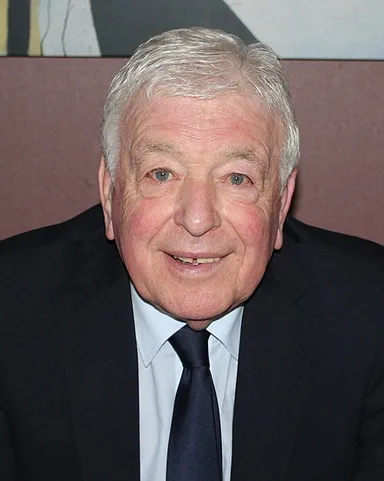 Photo: Rebecca Boardman. Source and license in Image credits.
Liverpool · Fort Lauderdale Strikers · Swansea City
1960—1982The midfielder who helped Paisley’s Liverpool win the 1977 European Cup, before remaining an unused substitute in the 1978 final.
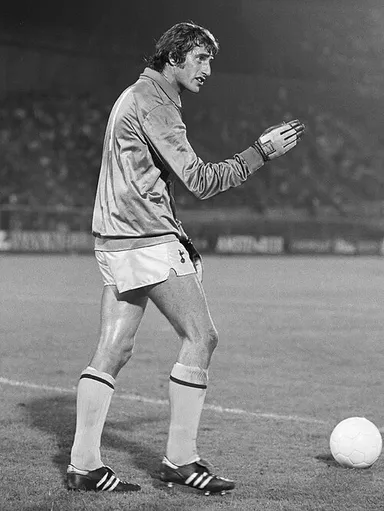 Photo: Marcel Antonisse / Anefo. Source and license in Image credits.
Scunthorpe United · Liverpool · St George
1966—1988The goalkeeper in Paisley’s first three European Cup victories with Liverpool, in 1977, 1978 and 1981.
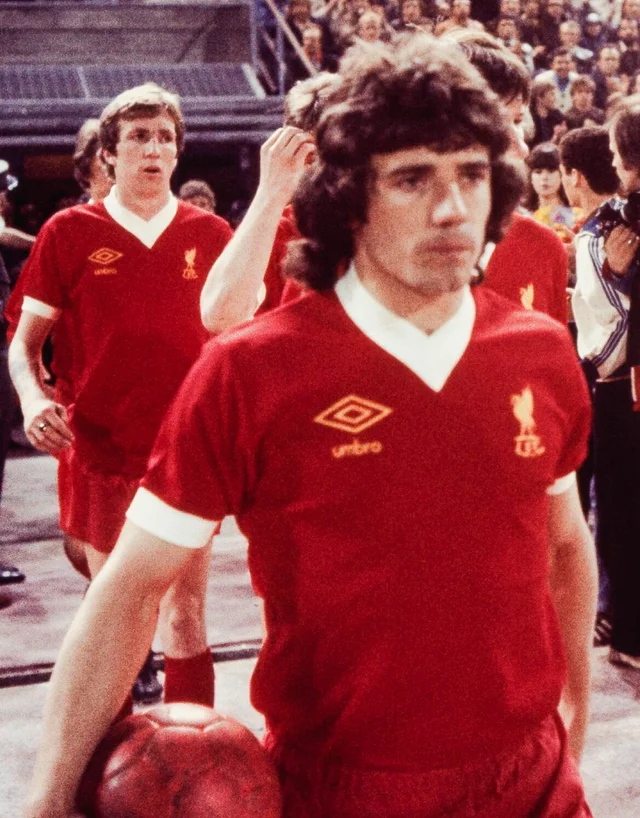 Photo: ETH-Bibliothek Zürich, Bildarchiv / Comet Photo AG (Zürich) / Com_LC1432-000-012. Source and license in Image credits.
Scunthorpe United · Liverpool · Hamburger SV
1968—1985The forward in Paisley’s first European Cup winners in 1977, before his move to Hamburg that summer.
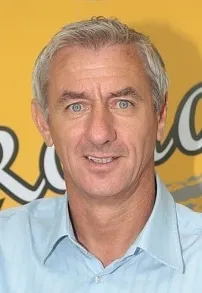 Photo: AceKindred. Source and license in Image credits.
Chester City · Liverpool · Juventus
1978—1999The centre-forward whose finishing and defensive running became central to Paisley’s early-1980s Liverpool attack.
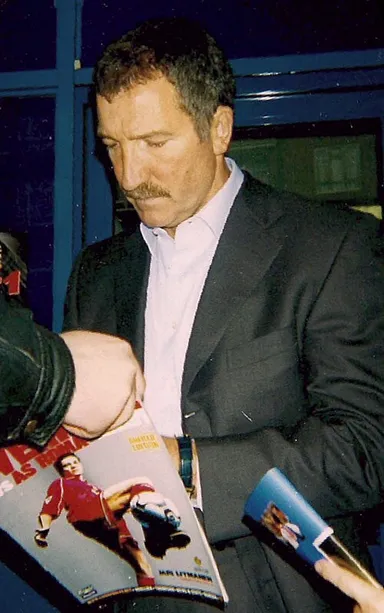 Photo: RoverTheBendInSussex
Derivative work MagentaGreen. Source and license in Image credits.
Tottenham Hotspur · Montreal Olympique · Middlesbrough
1971—1990The midfielder Paisley signed in January 1978, then appointed captain in January 1982.
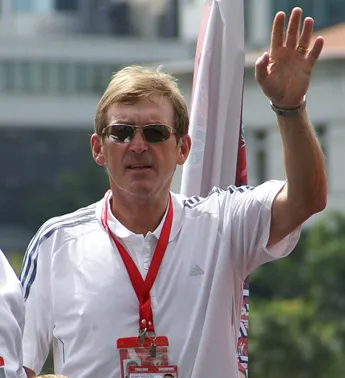 Photo: Saw from Singapore. Source and license in Image credits.
Celtic · Liverpool
1968—1990The creative forward in Paisley’s Liverpool, scoring the winner in the 1978 European Cup final.
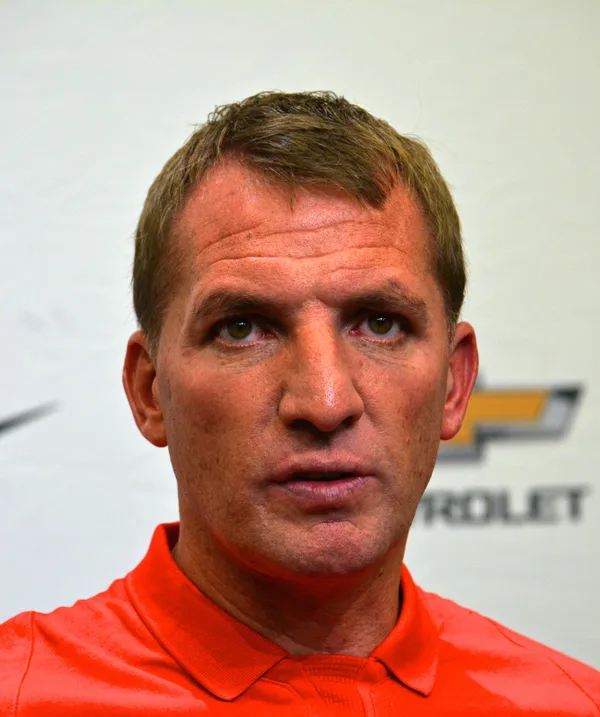 Photo: Geoffrey Hammersley. Source and license in Image credits.
Possession, development and Celtic’s unbeaten treble
1995—Present · Celtic · Liverpool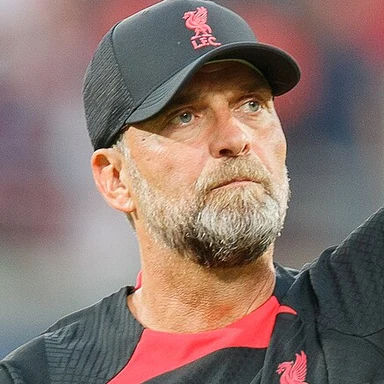 Photo: Steffen Prößdorf; crop by EndzoneEnthusiast. Source and license in Image credits.
Collective pressing and rapid attacks
2001—Present · Borussia Dortmund · Liverpool
Era-building leader
1974—2013 · Manchester United
Developmental moderniser
1984—2018 · ArsenalCareer and honour facts cite their underlying sources, including clubs and governing bodies. Tactical readings are identified as editorial analysis.
Liverpool F.C.Bob Paisley — past managersAccessed 2026-09-01Liverpool FCRay Kennedy’s change of role under PaisleyAccessed 2026-09-14Liverpool FCLiverpool’s Charity Shield editionsAccessed 2026-09-14UEFALiverpool’s 1977 European Super CupAccessed 2026-09-14Liverpool FCBob Paisley — Liverpool managerial archiveAccessed 2026-09-14Liverpool FCBob Paisley — centenary statisticsAccessed 2026-09-14Liverpool FCLiverpool’s league-winning seasonsAccessed 2026-09-14Liverpool FCPhil Thompson on Paisley’s methodsAccessed 2026-09-14Liverpool FCPaisley’s playing apprenticeshipAccessed 2026-09-14Liverpool FCBill Shankly and the Boot RoomAccessed 2026-09-14Liverpool FCKenny Dalglish recalls joining LiverpoolAccessed 2026-09-14UEFALiverpool 1–0 Club Brugge — 1978 finalAccessed 2026-09-14UEFALiverpool 1–0 Real Madrid — 1981 finalAccessed 2026-09-14