English First Division
Liverpool · league
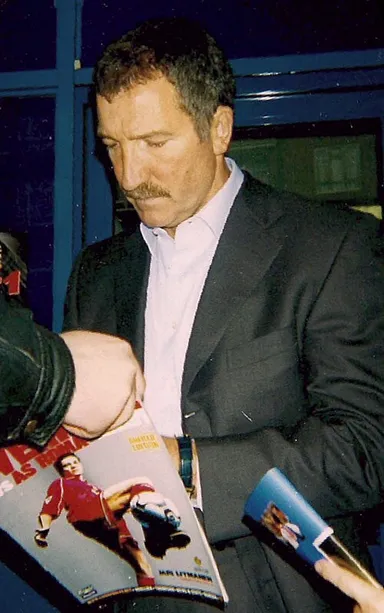 Photo: RoverTheBendInSussex
Derivative work MagentaGreen. Source and license in Image credits.
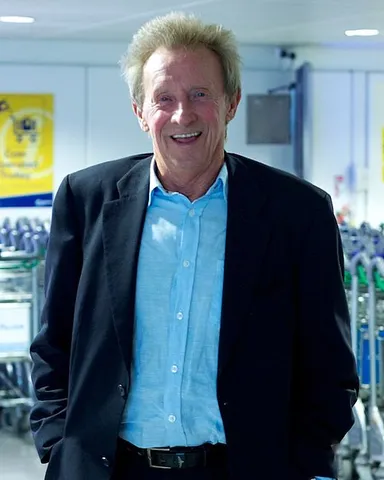
Graeme James Souness
Graeme Souness gave Liverpool’s midfield both force and precision. He could contest possession, steady the next pass and release an attacker without reducing his game to physical intimidation. In 359 competitive appearances for the club he scored 55 goals, won five league titles and three European Cups, and captained the side that completed the 1983/84 treble. His through ball for Dalglish in the 1978 European final captures the creative side of that authority.
Senior club · all competitions
Completed club records only; not a complete career total.
Active club snapshots and records with another scope are excluded. Assist totals are not combined across incompatible definitions.
Stored archive snapshots, not live counters. Missing values are not zero; records with different scopes are never added together.
G/M = goals ÷ appearances. G+A = goals + assists. Per-90 metrics use documented minutes.
Senior international · all competitions
Stored archive snapshots, not live counters. Missing values are not zero; records with different scopes are never added together.
G/M = goals ÷ appearances. G+A = goals + assists. Per-90 metrics use documented minutes.
In context
Souness belongs to Liverpool’s history as a midfield organiser as well as a competitive leader. The pass that decided the 1978 European final, the 1984 League Cup replay winner and his captaincy in Rome show different sides of the same player. His later career as a manager is a separate chapter: the 1992 FA Cup won as Liverpool’s coach is not a playing honour in this dossier.
Reading the game
Graeme Souness gave Liverpool’s midfield both force and precision. He could contest possession, steady the next pass and release an attacker without reducing his game to physical intimidation. In 359 competitive appearances for the club he scored 55 goals, won five league titles and three European Cups, and captained the side that completed the 1983/84 treble. His through ball for Dalglish in the 1978 European final captures the creative side of that authority.
Historical references support the chronology; tactical explanations are museum editorial analysis.
Historical references: Liverpool: Souness’s playing honours, passing and captaincy ↗ · LFCHistory.net: Souness’s 359 competitive appearances and First Division subset ↗
Career
| Period | Club |
|---|---|
| 1971—1972 | Tottenham HotspurFirst-team opportunities were limited before his move to Middlesbrough. |
| 1972—1972 | Montreal OlympiqueA 1972 loan gave him senior playing experience in the North American Soccer League.Loan |
| 1973—1978 | MiddlesbroughHe established himself at Middlesbrough before Paisley signed him for Liverpool in January 1978. |
| 1977—1977 | West Adelaide HellasA 1977 loan spell took him to Australian club football before his Liverpool move.Loan |
| 1978—1984 | LiverpoolThe complete Anfield playing spell brought five league titles, three European Cups and four League Cups. Senior club · all competitions CaptaincyPerformance record
|
| 1984—1986 | SampdoriaHe scored in the first leg of the final as Sampdoria won the 1984/85 Coppa Italia. |
| 1986—1990 | RangersHe combined playing and management after arriving in 1986; competitive appearances ended in 1990, before his managerial departure in 1991. |
Stored archive snapshots, not live counters. Missing values are not zero; records with different scopes are never added together.
G/M = goals ÷ appearances. G+A = goals + assists. Per-90 metrics use documented minutes.
Honours
Liverpool · league
Liverpool · domestic cup
Liverpool · continental
Sampdoria · domestic cup
Story
Career chapter
After limited first-team opportunities at Tottenham and a loan to Montreal Olympique, Souness established himself at Middlesbrough. A loan spell at West Adelaide Hellas also belongs to this playing chronology. Paisley signed him for Liverpool in January 1978, and within months he supplied the pass from which Dalglish scored the only goal of the European Cup final against Club Brugge.
Club chapter
Paisley made Souness captain in January 1982. He led Liverpool to three consecutive league titles and, in 1983/84, scored the only goal in the League Cup final replay against Everton. In Rome he captained the European Cup winners and converted his shoot-out penalty against Roma. It was his final Liverpool appearance, closing a spell in which disciplined passing and forceful midfield play served the same collective structure.
Explore club contextCareer chapter
Souness moved to Sampdoria in 1984. He scored the winner in the first leg of the 1984/85 Coppa Italia final against Milan, helping the club claim its first major trophy. In April 1986 he joined Rangers as player-manager. His last competitive appearance came in April 1990, while his managerial spell continued into 1991. This dossier separates those playing dates from later coaching achievements, including his return to Liverpool as manager.
Profile
Box-to-Box Midfielder
Also plays · Holding Midfielder
Graeme Souness gave Liverpool’s midfield both force and precision. He could contest possession, steady the next pass and release an attacker without reducing his game to physical intimidation. In 359 competitive appearances for the club he scored 55 goals, won five league titles and three European Cups, and captained the side that completed the 1983/84 treble. His through ball for Dalglish in the 1978 European final captures the creative side of that authority.
Midfield authority through the next pass
Winning the duel, preserving the structure
Passing range
Illustrative role zones · not tracking data
Souness could secure the ball under contact, keep a short combination moving and then play through a line when a forward offered the right run. The 1978 final pass to Dalglish is a concrete example of that range. His passing authority came from recognising when Liverpool needed another supporting touch and when a direct delivery could change the attack, rather than from operating as a detached playmaker.
His physical presence mattered most when it supported Liverpool’s control of central space. Souness could meet an opponent, recover possession and offer a reliable outlet as teammates moved ahead. That competitive edge existed alongside a refined touch and a willingness to join the attack. The role described here is a historical tactical interpretation; no tackling, interception or pressure totals are reconstructed from modern data models.
Historical references: Liverpool: Souness’s playing honours, passing and captaincy ↗ · LFCHistory.net: Souness’s 359 competitive appearances and First Division subset ↗
Editorial assessment
Historical role analysis
Seven qualitative bands · not measured scores
Editorial assessment of this period, not an official rating.
These bands are not percentiles or an overall ranking. The chart’s geometry represents ordered bands, not equal differences in ability.
Qualitative judgments describe football actions in context. They do not measure personality or medical fitness. Category assessments are editorial summaries, not averages. A lower defensive band describes the player’s role and contribution, not their value to the team.
Liverpool: Souness’s playing honours, passing and captaincy ↗Reading the game
| Era / team | Primary Role | Tactical Character |
|---|---|---|
| 1978–1984 | Box-to-Box Midfielder | At Liverpool, Souness combined central protection with passing progression and support for the attack. The box-to-box label describes that broad midfield responsibility; it does not imply a measured running profile or a sudden role change when he became captain. |
Historical references: Liverpool: Souness’s playing honours, passing and captaincy ↗ · LFCHistory.net: Souness’s 359 competitive appearances and First Division subset ↗
Reading the game
Souness could secure the ball under contact, keep a short combination moving and then play through a line when a forward offered the right run. The 1978 final pass to Dalglish is a concrete example of that range. His passing authority came from recognising when Liverpool needed another supporting touch and when a direct delivery could change the attack, rather than from operating as a detached playmaker.
His physical presence mattered most when it supported Liverpool’s control of central space. Souness could meet an opponent, recover possession and offer a reliable outlet as teammates moved ahead. That competitive edge existed alongside a refined touch and a willingness to join the attack. The role described here is a historical tactical interpretation; no tackling, interception or pressure totals are reconstructed from modern data models.
Historical references: Liverpool: Souness’s playing honours, passing and captaincy ↗ · LFCHistory.net: Souness’s 359 competitive appearances and First Division subset ↗
Reading the game
Paisley made Souness captain in January 1982. He led Liverpool to three consecutive league titles and, in 1983/84, scored the only goal in the League Cup final replay against Everton. In Rome he captained the European Cup winners and converted his shoot-out penalty against Roma. It was his final Liverpool appearance, closing a spell in which disciplined passing and forceful midfield play served the same collective structure.
Historical references: Liverpool: Souness’s playing honours, passing and captaincy ↗ · LFCHistory.net: Souness’s 359 competitive appearances and First Division subset ↗ · UEFA: the 1984 final shoot-out, with Souness and Rush scoring penalties ↗
Statistics
Stored archive snapshots, not live counters. Missing values are not zero; records with different scopes are never added together.
G/M = goals ÷ appearances. G+A = goals + assists. Per-90 metrics use documented minutes.
Liverpool’s complete competitive record is 359 appearances and 55 goals; its First Division subset is 247 appearances and 38 goals. The season table contains selected league records only. Historical assists are left unverified, and incomplete records for other clubs are not presented as a complete career total. The honours shown distinguish verified playing achievements from later managerial trophies.
Club competitions
| Competition | Apps | Goals | G/M |
|---|---|---|---|
English First Division1977/78–1983/84First Division matches for Liverpool only: 247 appearances and 38 goals from his January 1978 arrival to the end of 1983/84. Cup matches are excluded from this league subset. | 247 | 38 | 0.15 |
Stored archive snapshots, not live counters. Missing values are not zero; records with different scopes are never added together.
G/M = goals ÷ appearances. G+A = goals + assists. Per-90 metrics use documented minutes.
International
International career
Souness made 54 senior Scotland appearances and scored four goals from 1974 to 1986. He played at the 1978, 1982 and 1986 World Cups, with Scotland leaving at the group stage on each occasion. His debut came after the 1974 World Cup, so that tournament is not part of his playing record.
Reading the game
Souness belongs to Liverpool’s history as a midfield organiser as well as a competitive leader. The pass that decided the 1978 European final, the 1984 League Cup replay winner and his captaincy in Rome show different sides of the same player. His later career as a manager is a separate chapter: the 1992 FA Cup won as Liverpool’s coach is not a playing honour in this dossier.
Historical references: Liverpool: Souness’s playing honours, passing and captaincy ↗ · Liverpool: Souness’s later managerial spell and the 1992 FA Cup ↗
Archive
Box-to-Box Midfielder · editorial peak 1981—1984
Jack Charlton · Bob Paisley · Joe Fagan
Kenny Dalglish— Overlapping Liverpool era · Ray Clemence— Overlapping Liverpool era · Ian Rush— Overlapping Liverpool era
The double and the first European trophies — Tottenham Hotspur · The Boot Room reaches Europe — Liverpool
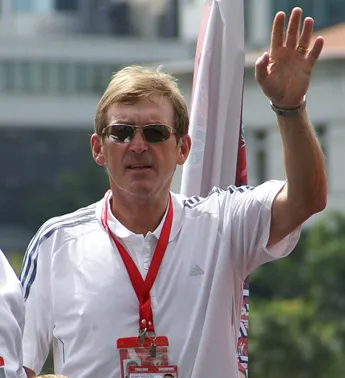 Photo: Saw from Singapore. Source and license in Image credits.
Celtic · Liverpool
1968—1990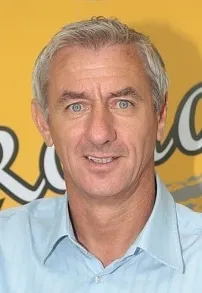 Photo: AceKindred. Source and license in Image credits.
Chester City · Liverpool · Juventus
1978—1999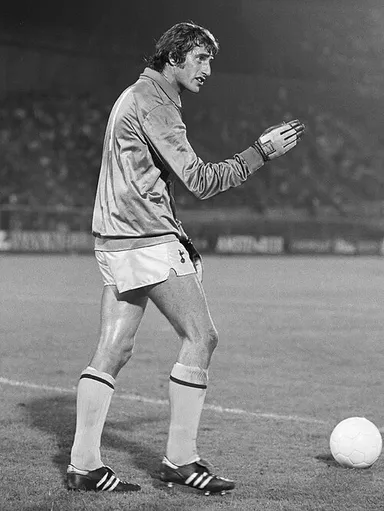 Photo: Marcel Antonisse / Anefo. Source and license in Image credits.
Scunthorpe United · Liverpool · St George
1966—1988
Liverpool · LA Galaxy
1998—2016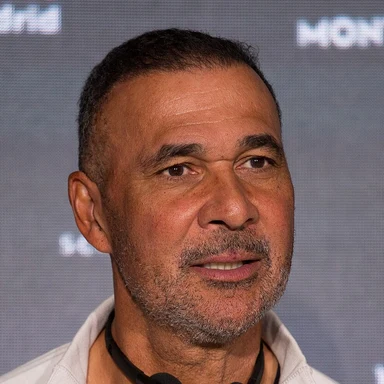 Photo: Barcex. Source and license in Image credits.
Haarlem · Feyenoord · PSV
1979—1998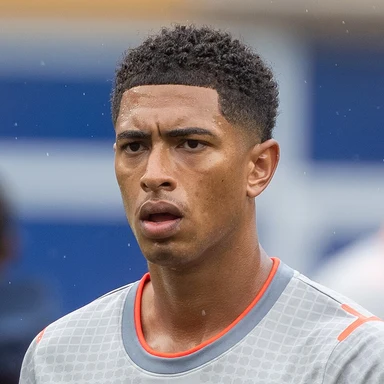 Photo: Bryan Berlin / WikiPortraits. Source and license in Image credits.
Birmingham City · Borussia Dortmund · Real Madrid
2019—PresentStatistics are displayed only within the scope supported by each cited source.
Liverpool FCLiverpool: Souness’s playing honours, passing and captaincyLFCHistory.netLFCHistory.net: Souness’s 359 competitive appearances and First Division subsetNational Football TeamsNational Football Teams: Souness’s identity, club spells and Scotland matchesScottish Football AssociationScottish FA: Souness’s 54 caps, four goals and three World CupsSampdoriaSampdoria: Souness’s goal in the first leg of the 1985 Coppa Italia finalRangersRangers: Souness’s appointment as player-manager in April 1986The Rangers ArchivesThe Rangers Archives: Souness’s last competitive match and playing retirementLiverpool FCLiverpool: Souness’s later managerial spell and the 1992 FA CupUEFAUEFA: the 1984 final shoot-out, with Souness and Rush scoring penalties