

English First Division
Liverpool · league
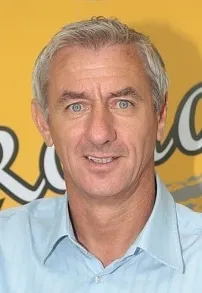 Photo: AceKindred. Source and license in Image credits.
Ian James Rush
Ian Rush combined penalty-area finishing with relentless work without the ball. His partnership with Kenny Dalglish gave Liverpool both a creator and a scorer, while his willingness to chase defenders made him the attack’s first line of defence. Across two spells at Anfield he scored 346 goals in 660 competitive appearances, winning five league titles and leaving a scoring record that became a benchmark for later Liverpool forwards.
Senior club · all competitions
Completed club records only; not a complete career total.
Active club snapshots and records with another scope are excluded. Assist totals are not combined across incompatible definitions.
Stored archive snapshots, not live counters. Missing values are not zero; records with different scopes are never added together.
G/M = goals ÷ appearances. G+A = goals + assists. Per-90 metrics use documented minutes.
Senior international · all competitions
Stored archive snapshots, not live counters. Missing values are not zero; records with different scopes are never added together.
G/M = goals ÷ appearances. G+A = goals + assists. Per-90 metrics use documented minutes.
In context
Rush’s legacy lies in the connection between scoring and collective work. The record total, his understanding with Dalglish and five goals across Liverpool’s winning FA Cup finals of 1986, 1989 and 1992 make him more than a prolific name in a table. He also carried the Welsh scoring record beyond his club career, before Gareth Bale surpassed it in 2018.
Reading the game
Ian Rush combined penalty-area finishing with relentless work without the ball. His partnership with Kenny Dalglish gave Liverpool both a creator and a scorer, while his willingness to chase defenders made him the attack’s first line of defence. Across two spells at Anfield he scored 346 goals in 660 competitive appearances, winning five league titles and leaving a scoring record that became a benchmark for later Liverpool forwards.
Historical references support the chronology; tactical explanations are museum editorial analysis.
Historical references: Liverpool: Rush’s two spells, scoring record and playing honours ↗ · LFCHistory.net: Rush’s split-spell totals and league-season records ↗
Career
| Period | Club |
|---|---|
| 1978—1980 | Chester CityHis first senior club, before the transfer to Liverpool in 1980. |
| 1980—1987 | LiverpoolThe first Anfield spell established his partnership with Dalglish and contributed 207 competitive goals. Senior club · all competitions Performance record
|
| 1987—1988 | JuventusThe Juventus figure shown here is the 1987/88 Serie A record: 29 appearances and seven goals. Official retrospective articles disagree on his all-competition goal total, so no complete Juventus aggregate is asserted. This league-only record is kept separate from Liverpool’s complete competitive figures. Senior club · league only Performance record
|
| 1988—1996 | LiverpoolHis return from Juventus brought two more FA Cups, a fifth league title and a final Liverpool total of 346 goals. Senior club · all competitions Performance record
|
| 1996—1997 | Leeds UnitedA season at Leeds followed the end of his second Liverpool spell. |
| 1997—1998 | |
| 1998—1998 | Sheffield UnitedA short loan spell during his final season as a Newcastle player.Loan |
| 1998—1999 | WrexhamA return to Welsh club football preceded his brief Australian spell. |
| 1999—1999 | Sydney OlympicHis final club spell came in Australia during the 1999/00 National Soccer League season. |
Stored archive snapshots, not live counters. Missing values are not zero; records with different scopes are never added together.
G/M = goals ÷ appearances. G+A = goals + assists. Per-90 metrics use documented minutes.
Honours
Liverpool · league
Liverpool · domestic cup
Liverpool · domestic cup
Liverpool · continental
Ian Rush · individual
Story
Club chapter
Rush broke into senior football at Chester before Bob Paisley brought him to Liverpool in 1980. His first Anfield season produced nine competitive appearances and no goals; the breakthrough came in 1981/82, with 30 goals in all competitions. Liverpool’s archive includes the 1981 European Cup among his honours, but he did not play in that final: his established partnership with Dalglish developed afterwards.
Explore club contextClub chapter
In 1983/84 Rush scored 47 goals across all competitions, including 32 in the First Division, as Liverpool won the league, League Cup and European Cup. He converted in the shoot-out against Roma, rather than scoring during the match. Two goals against Everton in the 1986 FA Cup final then helped secure Liverpool’s first league-and-FA-Cup double. His penalty-area work relied on anticipating the next pass and arriving before the defender could turn.
Explore club contextCareer chapter
Rush played for Juventus in 1987/88 and returned to Liverpool the following summer. He came off the bench to score twice in extra time in the 1989 FA Cup final, an emotionally charged occasion after Hillsborough. A fifth league title followed in 1990, then further cup wins in 1992 and 1995. His second Liverpool spell ended in 1996; later stops included Leeds, Newcastle, a Sheffield United loan, Wrexham and Sydney Olympic in the 1999/00 season.
Profile
Poacher
Also plays · Complete Forward
Ian Rush combined penalty-area finishing with relentless work without the ball. His partnership with Kenny Dalglish gave Liverpool both a creator and a scorer, while his willingness to chase defenders made him the attack’s first line of defence. Across two spells at Anfield he scored 346 goals in 660 competitive appearances, winning five league titles and leaving a scoring record that became a benchmark for later Liverpool forwards.
Arriving before the defender can turn
Defending from the front line
Finishing
Illustrative role zones · not tracking data
Rush often found space through a short change of direction rather than a long dribble. By reading Dalglish’s position and the likely next pass, he could separate from a marker, attack a gap between defenders or meet a low delivery with a quick finish. The timing of the run mattered as much as the strike. This is an editorial interpretation of the documented partnership, not a reconstructed expected-goals model.
Rush’s work did not stop when Liverpool lost possession. He pursued defenders, hurried their decisions and gave teammates time to close the next passing option. That effort fitted a side built around passing and moving together: the centre-forward could finish an attack and immediately help recover the ball. Liverpool’s own profile stresses this defensive contribution; no historical pressing count is assigned to it here.
Historical references: Liverpool: Rush’s two spells, scoring record and playing honours ↗ · LFCHistory.net: Rush’s split-spell totals and league-season records ↗
Editorial assessment
Historical role analysis
Seven qualitative bands · not measured scores
Editorial assessment of this period, not an official rating.
These bands are not percentiles or an overall ranking. The chart’s geometry represents ordered bands, not equal differences in ability.
Qualitative judgments describe football actions in context. They do not measure personality or medical fitness. Category assessments are editorial summaries, not averages. A lower defensive band describes the player’s role and contribution, not their value to the team.
Liverpool: Rush’s two spells, scoring record and playing honours ↗Reading the game
| Era / team | Primary Role | Tactical Character |
|---|---|---|
| 1981–1987 | Poacher | Rush often found space through a short change of direction rather than a long dribble. By reading Dalglish’s position and the likely next pass, he could separate from a marker, attack a gap between defenders or meet a low delivery with a quick finish. The timing of the run mattered as much as the strike. This is an editorial interpretation of the documented partnership, not a reconstructed expected-goals model. |
| 1988–1996 | Complete Forward | Rush’s work did not stop when Liverpool lost possession. He pursued defenders, hurried their decisions and gave teammates time to close the next passing option. That effort fitted a side built around passing and moving together: the centre-forward could finish an attack and immediately help recover the ball. Liverpool’s own profile stresses this defensive contribution; no historical pressing count is assigned to it here. |
Historical references: Liverpool: Rush’s two spells, scoring record and playing honours ↗ · LFCHistory.net: Rush’s split-spell totals and league-season records ↗
Reading the game
Rush often found space through a short change of direction rather than a long dribble. By reading Dalglish’s position and the likely next pass, he could separate from a marker, attack a gap between defenders or meet a low delivery with a quick finish. The timing of the run mattered as much as the strike. This is an editorial interpretation of the documented partnership, not a reconstructed expected-goals model.
Rush’s work did not stop when Liverpool lost possession. He pursued defenders, hurried their decisions and gave teammates time to close the next passing option. That effort fitted a side built around passing and moving together: the centre-forward could finish an attack and immediately help recover the ball. Liverpool’s own profile stresses this defensive contribution; no historical pressing count is assigned to it here.
Historical references: Liverpool: Rush’s two spells, scoring record and playing honours ↗ · LFCHistory.net: Rush’s split-spell totals and league-season records ↗
Reading the game
In 1983/84 Rush scored 47 goals across all competitions, including 32 in the First Division, as Liverpool won the league, League Cup and European Cup. He converted in the shoot-out against Roma, rather than scoring during the match. Two goals against Everton in the 1986 FA Cup final then helped secure Liverpool’s first league-and-FA-Cup double. His penalty-area work relied on anticipating the next pass and arriving before the defender could turn.
Historical references: Liverpool: Rush’s two spells, scoring record and playing honours ↗ · LFCHistory.net: Rush’s split-spell totals and league-season records ↗ · UEFA: the 1984 final shoot-out, with Souness and Rush scoring penalties ↗
Statistics
Stored archive snapshots, not live counters. Missing values are not zero; records with different scopes are never added together.
G/M = goals ÷ appearances. G+A = goals + assists. Per-90 metrics use documented minutes.
The Liverpool aggregate covers both spells: 331 competitive appearances and 207 goals in 1980–1987, plus 329 appearances and 139 goals in 1988–1996. The combined league subset is 469 appearances and 229 goals. The season table contains selected league records only. Other clubs’ incomplete totals and unverified historical assists are not added to a supposed complete career total.
Club competitions
| Competition | Apps | Goals | G/M |
|---|---|---|---|
English First Division1980/81–1991/92First Division matches for Liverpool only: 339 appearances and 184 goals across both Anfield spells. Premier League matches are listed separately. | 339 | 184 | 0.54 |
Premier League1992/93–1995/96Premier League matches for Liverpool only: 130 appearances and 45 goals from 1992/93 to 1995/96. His later Leeds and Newcastle records are not included in this club-specific figure. | 130 | 45 | 0.35 |
Serie A1987/88The Juventus figure shown here is the 1987/88 Serie A record: 29 appearances and seven goals. Official retrospective articles disagree on his all-competition goal total, so no complete Juventus aggregate is asserted. This league-only record is kept separate from Liverpool’s complete competitive figures. | 29 | 7 | 0.24 |
Stored archive snapshots, not live counters. Missing values are not zero; records with different scopes are never added together.
G/M = goals ÷ appearances. G+A = goals + assists. Per-90 metrics use documented minutes.
International
International career
Rush scored 28 goals in 73 senior Wales appearances between 1980 and 1996. His record was later surpassed by Gareth Bale in 2018. He never played at a World Cup or European Championship finals tournament; successful club campaigns must not be converted into international honours.
Reading the game
Rush’s legacy lies in the connection between scoring and collective work. The record total, his understanding with Dalglish and five goals across Liverpool’s winning FA Cup finals of 1986, 1989 and 1992 make him more than a prolific name in a table. He also carried the Welsh scoring record beyond his club career, before Gareth Bale surpassed it in 2018.
Historical references: Liverpool: Rush’s two spells, scoring record and playing honours ↗ · FAW: Rush’s 73 caps, 28 goals and the Welsh scoring record ↗
Archive
Poacher · editorial peak 1983—1986
Bob Paisley · Joe Fagan · Kenny Dalglish · Graeme Souness · Roy Evans
Robbie Fowler— Overlapping Liverpool era · Kenny Dalglish— Overlapping Liverpool era · Alan Shearer— Overlapping Newcastle United era · Ray Clemence— Overlapping Liverpool era
The Boot Room reaches Europe — Liverpool · Dalglish renews the attack — Liverpool · The Entertainers —
 Photo: Jonesy702. Source and license in Image credits.
Liverpool · Leeds United · Manchester City
1993—2012 Photo: Saw from Singapore. Source and license in Image credits.
Celtic · Liverpool
1968—1990 Photo: RoverTheBendInSussex
Derivative work MagentaGreen. Source and license in Image credits.
Tottenham Hotspur · Montreal Olympique · Middlesbrough
1971—1990 Photo: Bryan Berlin. Source and license in Image credits.
Bryne · Molde · Red Bull Salzburg
2016—Present
Palmeiras · Real Madrid · Olympique Lyonnais
2022—Present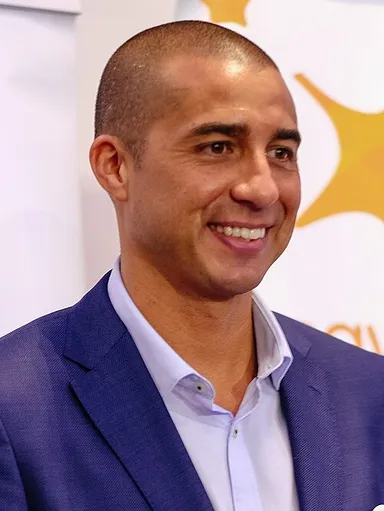 Photo: Save the Dream from Doha, Qatar. Source and license in Image credits.
Platense · AS Monaco · Juventus
1994—2015Statistics are displayed only within the scope supported by each cited source.
Liverpool FCLiverpool: Rush’s two spells, scoring record and playing honoursLFCHistory.netLFCHistory.net: Rush’s split-spell totals and league-season recordsNational Football TeamsNational Football Teams: Rush’s identity, club chronology and Wales matchesFootball Association of WalesFAW: Rush’s 73 caps, 28 goals and the Welsh scoring recordJuventusJuventus: English retrospective on Rush’s 1987/88 seasonJuventusJuventus: Italian retrospective with a conflicting all-competition goal totalLiverpool FCLiverpool: Rush’s two extra-time goals as a substitute in the 1989 FA Cup finalLiverpool FCLiverpool Museum: Rush’s European Golden Boot and the 1983/84 seasonUEFAUEFA: the 1984 final shoot-out, with Souness and Rush scoring penaltiesUEFAUEFA: Liverpool’s 1981 European Cup final against Real Madrid