Wolfgang Frank
Mainz coach and formative influence
Documented history
Frank’s rehearsed collective movements showed how organisation could help Mainz compete with more talented opponents.
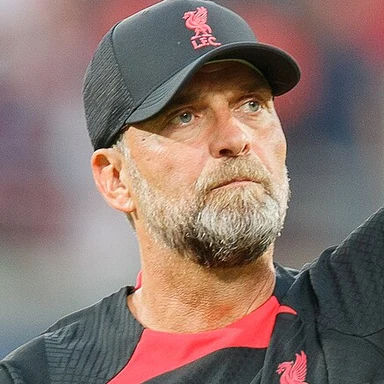 Photo: Steffen Prößdorf; crop by EndzoneEnthusiast. Source and license in Image credits.
Collective pressing and rapid attacks
A Mainz player turned coach whose organised pressure and direct attacking developed through Dortmund and Liverpool.
Liverpool · all competitions · 2015–2024
Liverpool’s completed senior tenure only. Results are not reconstructed from incompatible penalty-shoot-out conventions.
Stored archive snapshots, not live counters. Missing values are not zero; records with different scopes are never added together.
Win rate = wins ÷ matches. Points per game requires an explicit scoring convention; cup records are not silently treated as league points.
Career origins
Klopp became Mainz’s coach in February 2001 while the club faced relegation. His route began inside a team he already knew.
Mainz coach and formative influence
Frank’s rehearsed collective movements showed how organisation could help Mainz compete with more talented opponents.
Mainz 05
Playing under Wolfgang Frank exposed Klopp to a coordinated back four and zonal defending rather than a libero-led system.
Mainz 05
Appointed from the playing squad, he developed the collective approach and took Mainz into the Bundesliga for the first time in 2004.
After a rebuilding period, consecutive league titles and a domestic double established Dortmund as a serious challenger.
The move to Liverpool preceded a gradual rise to the 2019 European Cup and the 2020 league title.
Mainz 05
First top-flight promotionPromotion made a local coaching apprenticeship a top-flight project; Dortmund’s later titles would extend that progression.
The Mainz years explain why Klopp’s football puts shared behaviour before individual heroics.
Pressure became more effective when coordinated movement, player development and attacking support grew together.
Tactics
Coaching identity
Klopp’s teams attack the next ball together. The method depends on support distances, not simply on running harder.
Tactical analysis
Mainz’s ball-oriented defending gave coordinated movement a purpose: constrain the opponent’s next action.
Recovering possession while opponents spread out can expose spaces that a settled defence would protect.
Alexander-Arnold’s central role in 2023 changed the supporting positions around him; it was not just a new label for one player.
The nearest player engages; nearby teammates protect the next pass rather than follow the ball blindly.
Midfield support makes an immediate regain possible without leaving every recovery duel isolated.
Firmino’s dropping movements linked midfield regains with Salah and Mané’s runs beyond the defence.
Alexander-Arnold and Robertson supplied width and delivery, allowing forwards to threaten inside.
An advanced or inverted full-back changes the cover required from centre-backs and midfielders.
Crosses, second balls and set plays can decide a match when the initial central attack is blocked.
Illustrative sequence, not a measured event model.
Press locally with support; the covering players must protect the central route.
Use width and changes of passing angle rather than forcing every attack through the centre.
Manage territory and the next duel; intensity need not mean sending everyone forward.
Interpretation is editorial, not an official rating or a direct quotation. Match results, team statistics and formations retain their documented sources.
Tactical analysis
Signature systems, tactical evolution and defining teams are read together. A starting formation does not describe every phase of play.
The club traces Klopp’s approach to ball-oriented defending and pressure on possession. Promotion in 2004 established that method beyond the second tier.
From player familiarity to responsibility for the whole team.
First Bundesliga promotion, 2004
A young core connected aggressive defending with quick forward attacks. The 2012 double showed how player development and shared movements could reinforce one another.
Domestic reconstruction became a European challenge, culminating in the 2013 final.
Back-to-back Bundesliga titles and the 2012 double
The 4-3-3 combined inside runs from the forwards with service from wide defenders. Its success required midfield work behind the attacking movements.
Transition threat gained a broader supply of chances against organised opponents.
European champions in 2019; English champions in 2020
In April 2023 Klopp explained Alexander-Arnold’s movement into a double pivot in possession while retaining right-back duties when defending.
The important adjustment was collective cover around the new passing position.
Borussia Dortmund5–2Bayern Munich
Final
Lewandowski’s hat-trick helped Dortmund complete the double. The result illustrates the attacking ceiling of a team often remembered primarily for pressing.
Liverpool4–0FC Barcelona
Semi-final · second leg · Liverpool won 4–3 on aggregate.
Origi and substitute Wijnaldum scored twice each. The comeback involved crossing, midfield arrivals and an alert restart, not pressing alone.
Tottenham Hotspur0–2Liverpool
Final
Salah’s early penalty and Origi’s late finish settled the final. Unlike the semi-final comeback, this was a match won by protecting an advantage and taking decisive chances.
Interpretation is editorial, not an official rating or a direct quotation. Match results, team statistics and formations retain their documented sources.
Profile
Dortmund’s rise gave young players meaningful responsibility. Individual improvement mattered because it made the collective approach more effective.
Klopp explained his Liverpool departure in terms of depleted energy. That admission belongs beside the intensity associated with his management, not outside the story.
Liverpool’s club account emphasises Klopp’s connection with players, staff and supporters. In this reading, emotional commitment supports repeated collective work rather than replacing it.
Tactical analysis
Klopp’s history begins with collective defending learned and developed at Mainz, not with the Liverpool touchline image.
Dortmund’s titles and Liverpool’s major trophies show the approach working in different institutional settings. They should not be treated as identical teams.
The 2023 positional adjustment is a useful corrective to the idea that Klopp’s football was permanently fixed around transitions.
Qualitative comparison of documented club approaches, not a ranking or a prediction of national-team football.
| Dimension | Jürgen Klopp | Pep Guardiola ↗ |
|---|---|---|
| Starting emphasis | Pressure and the next regain | Positional control with the ball |
| Creative width | Full-back service and inside-running forwards | Wingers and coordinated positional rotations |
| Shared requirement | Close support around possession | Close support around possession |
Interpretation is editorial, not an official rating or a direct quotation. Match results, team statistics and formations retain their documented sources.
Career
| Period | Organisation | Role |
|---|---|---|
| 2001—2008 | Mainz 05 | Head coach |
| 2008—2015 | Head coach | |
| 2015—2024 | Liverpool Liverpool’s completed senior tenure only. Results are not reconstructed from incompatible penalty-shoot-out conventions. Performance record
| Head coach |
| 2026—Now | Germany | National-team coach |
Stored archive snapshots, not live counters. Missing values are not zero; records with different scopes are never added together.
Win rate = wins ÷ matches. Points per game requires an explicit scoring convention; cup records are not silently treated as league points.
| Competition | Period | Matches |
|---|---|---|
Liverpool · all competitions Liverpool’s completed senior tenure only. Results are not reconstructed from incompatible penalty-shoot-out conventions. | 2015–2024 | 491 |
Premier League Liverpool · 2018/19 league only · three points for a win. | 2018/19 | 38 |
Stored archive snapshots, not live counters. Missing values are not zero; records with different scopes are never added together.
Win rate = wins ÷ matches. Points per game requires an explicit scoring convention; cup records are not silently treated as league points.
Honours
Selected senior coaching honours: Dortmund’s two league titles and German Cup, plus Liverpool’s seven major trophies. German Super Cups and the Community Shield are outside this selection.
Borussia Dortmund
Borussia Dortmund
Liverpool
Liverpool
Liverpool
Liverpool
Liverpool
Liverpool
Selected senior coaching honours: Dortmund’s two league titles and German Cup, plus Liverpool’s seven major trophies. German Super Cups and the Community Shield are outside this selection.
Stored archive snapshots, not live counters. Missing values are not zero; records with different scopes are never added together.
G/M = goals ÷ appearances. G+A = goals + assists. Per-90 metrics use documented minutes.
Archive
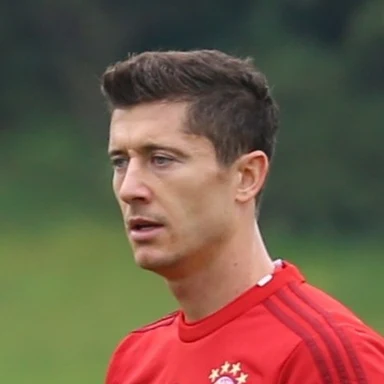 Photo: Rufus46. Source and license in Image credits.
Delta Warsaw · Legia Warsaw II · Znicz Pruszków
2005—PresentDortmund striker who scored a hat-trick in Klopp’s 2012 German Cup final.
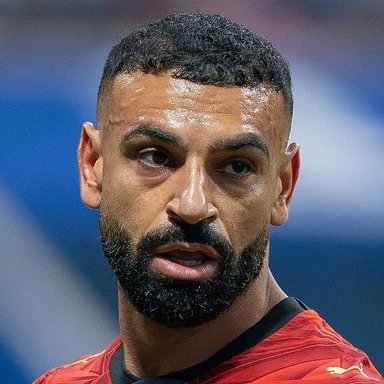 Photo: Bryan Berlin / WikiPortraits. Source and license in Image credits.
Al-Mokawloon · Basel · Chelsea
2010—PresentInside-running forward in Klopp’s Liverpool attack alongside Firmino and Mané.
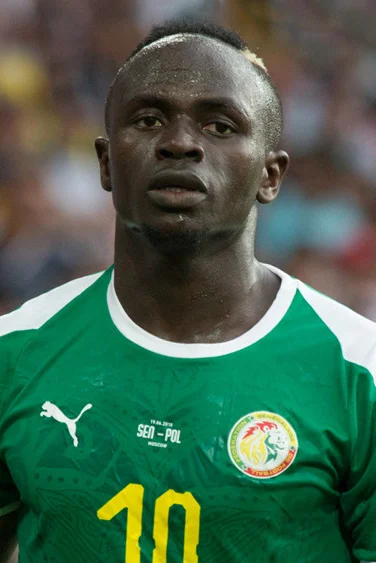 Photo: Екатерина Лаут / soccer.ru. Source and license in Image credits.
Metz · Red Bull Salzburg · Southampton
2012—PresentThe left-sided scorer and coordinated presser in Klopp’s European and English champions.
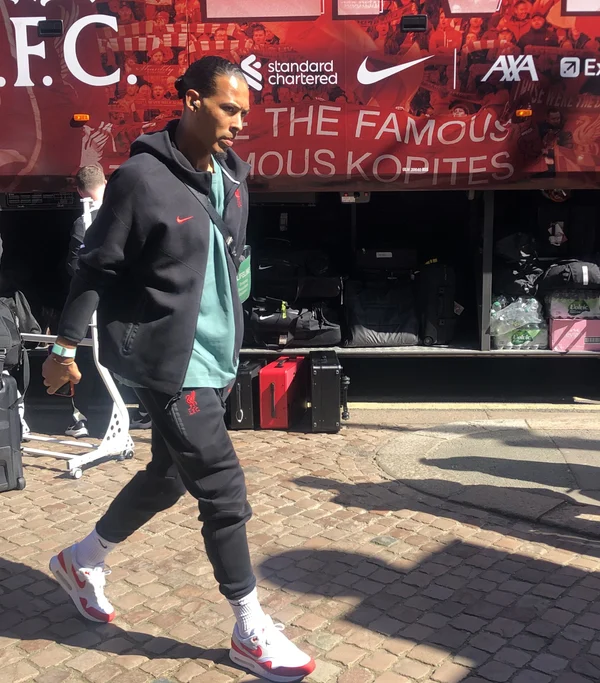 Photo: Timmy96. Source and license in Image credits.
Groningen · Celtic · Southampton
2011—PresentThe central defensive reference in Klopp’s 2019 European champions and 2019/20 English champions.
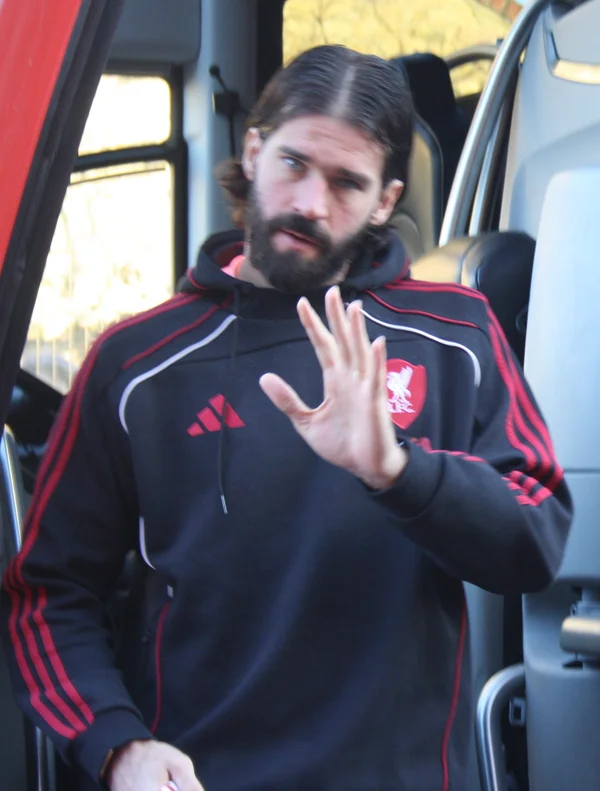 Photo: Timmy96. Source and license in Image credits.
Internacional · AS Roma · Liverpool
2013—PresentA goalkeeper whose one-on-one decisions and distribution helped sustain Klopp’s 2019 European champions and 2019/20 league champions.
Quiet systems manager
1974—1983 · Liverpool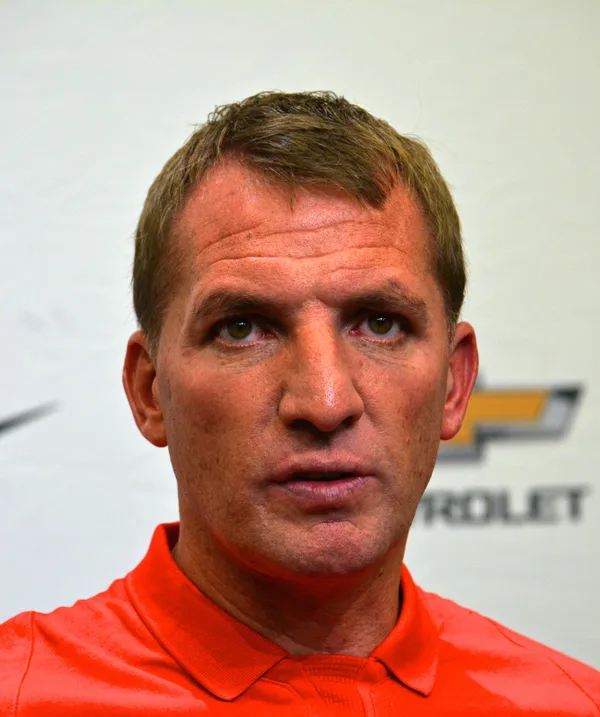 Photo: Geoffrey Hammersley. Source and license in Image credits.
Possession, development and Celtic’s unbeaten treble
1995—Present · Celtic · Liverpool
Adaptive structure, opponent-specific solutions
2000—Present · Chelsea · Paris Saint-Germain
Balanced high-tempo organiser
1979—2018 · Bayern Munich · Real MadridCareer and honour facts cite their underlying sources, including clubs and governing bodies. Tactical readings are identified as editorial analysis.
Wikipedia (cited career reference)Jürgen Klopp — coaching chronologyAccessed 2026-09-14Mainz 05Mainz’s football identity and Klopp’s promotion to coachAccessed 2026-09-14Mainz 05Wolfgang Frank’s zonal-defending revolutionAccessed 2026-09-14Liverpool FCKlopp’s route from Mainz to LiverpoolAccessed 2026-09-14BundesligaKlopp’s seven Dortmund seasonsAccessed 2026-09-14BundesligaDortmund’s 2011/12 double-winning teamAccessed 2026-09-14Liverpool FCLiverpool’s Klopp managerial archiveAccessed 2026-09-14Liverpool FCKlopp’s completed Liverpool tenure in numbersAccessed 2026-09-14Coaches’ VoiceThe evolution of Klopp’s Liverpool tacticsAccessed 2026-09-14UEFAUEFA analysis: Liverpool’s creative full-backsAccessed 2026-09-14Liverpool FCKlopp explains Alexander-Arnold’s double-six roleAccessed 2026-09-14UEFALiverpool–Barcelona: the 2019 comebackAccessed 2026-09-14Liverpool FCLiverpool’s 2019 European Cup finalAccessed 2026-09-14DFBDFB confirms Klopp’s Germany appointmentAccessed 2026-09-14DFBKlopp appointed Germany head coachAccessed 2026-09-14