Udo Lattek
Head coach during his Gladbach apprenticeship
Documented history
Heynckes worked as Lattek’s assistant before succeeding him at Gladbach in 1979.

Balanced high-tempo organiser
A widely travelled coach whose later Bayern teams combined aggressive pressing, wide attacking and strong defensive balance.
Bundesliga · 2012/13
Bayern Munich · 2012/13 Bundesliga only · complete 34-match league season. Excludes cups and every other appointment.
PPG uses three points for a win and one for a draw in league matches.
Stored archive snapshots, not live counters. Missing values are not zero; records with different scopes are never added together.
Win rate = wins ÷ matches. Points per game requires an explicit scoring convention; cup records are not silently treated as league points.
Career origins
After a distinguished playing career, Heynckes assisted Udo Lattek at Mönchengladbach before becoming head coach in 1979. His later work took him through Germany, Spain and Portugal.
Head coach during his Gladbach apprenticeship
Heynckes worked as Lattek’s assistant before succeeding him at Gladbach in 1979.
Borussia Mönchengladbach
Assistant coach
Retired as a player in 1978 and worked under Lattek before taking over the team.
Borussia Mönchengladbach
Head coach
Eight seasons at Gladbach developed his experience of recruitment and rebuilding before Bayern hired him.
Head coach
Won the Bundesliga in 1989 and 1990 during his first Bayern appointment.
Head coach
Won the 1997 Spanish Super Cup before ending Madrid’s European wait with the 1998 Champions League. A 1–0 final win over Juventus was the high point of an appointment that still ended after one season.
Bayern followed the Wembley victory with the German Cup, completing the treble after the disappointments of 2012.
His late-career peak shows the value of adapting an established method through changing players and responsibilities.
The 2013 team linked individual attacking quality to defensive duties shared throughout the squad.
Tactics
Coaching identity
Heynckes’ mature Bayern combined winger-led attacks with coordinated pressure. The front players’ work without the ball helped make attacking ambition sustainable.
Later teams defended assertively with compact support.
Pressure supported fast regains and sustained attacks.
Balanced circulation with purposeful vertical play.
Wide combinations were central to attacking rhythm.
Teams attacked quickly without losing their rest defence.
Tactical analysis
Martínez, Dante and Mandžukić helped Bayern change how they pressed. Tactical evolution involved personnel as well as instructions.
Robben and Ribéry remained attacking reference points while accepting defensive responsibilities. Their freedom worked within a collective agreement.
The three runner-up finishes of 2012 preceded the 2013 treble. Recruitment, preparation and renewed commitment belong in that explanation alongside motivation.
Mandžukić’s work helped connect the attack to the first defensive action.
Schweinsteiger and Martínez gave the 2013 team passing support and protection around the centre.
Wingers and full-backs offered different routes forward rather than relying on one central creator.
Midfield positioning determines whether an unsuccessful attack becomes immediate exposure or another chance to recover.
UEFA’s contemporary analysis highlighted defenders’ recovery qualities rather than an offside trap as Bayern’s safeguard.
Circulation can establish control before a forward run or combination changes the pace.
Illustrative sequence, not a measured event model.
Find a supported outlet and allow the front players to attack the space beyond pressure.
Use wide partnerships and midfield support to sustain attacks without emptying the centre.
Retain forward threats so that defending does not become a continuous siege.
Re-establish midfield connections; the 2013 final required Bayern to work through Dortmund’s early pressure.
Interpretation is editorial, not an official rating or a direct quotation. Match results, team statistics and formations retain their documented sources.
Tactical analysis
Signature systems, tactical evolution and defining teams are read together. A starting formation does not describe every phase of play.
In Amsterdam, Hierro and Sanchís protected the defence while Redondo connected midfield. The final cannot be reduced to a single scorer.
A European title did not secure long-term continuity: his Madrid tenure ended after one season.
1997/98 UEFA Champions League winners
A 2010/11 Bundesliga runner-up finish preceded his third Bayern appointment. This was an important working chapter between his earlier setbacks and the treble.
His career developed through recovery and learning, not an uninterrupted sequence of major trophies.
2010/11 Bundesliga runners-up
The 4-2-3-1 connected a balanced midfield to wide threats and an active centre-forward. The league record documents the outcome, not a numerical rating of the tactics.
After 2012, new personnel strengthened the pressing structure and shared defensive work.
2012/13 Bundesliga, DFB Cup and Champions League treble
Bundesliga · 2012/13 · complete league season
Robben and Ribéry recall how his October return restored clear responsibilities to a side trailing Dortmund. Bayern secured the title on Matchday 29, but later lost the cup final and fell in Europe’s semi-finals: stabilisation did not mean another treble.
The league title is credited to this appointment; the whole season’s match totals are not assigned to him because he arrived in October.
2017/18 Bundesliga champions
Juventus0–1Real Madrid
Final
Mijatović supplied the only goal against Juventus. Madrid’s defensive and midfield work kept the contest within reach of that decisive moment.
Bayern Munich4–0Barcelona
Semi-final · first leg · Bayern advanced 7–0 on aggregate after winning the return leg 3–0.
Bayern won 4–0 at home and later completed a 7–0 aggregate victory. The two-leg result is separate from the score of this individual match.
Borussia Dortmund1–2Bayern Munich
Final
Mandžukić put Bayern ahead before Gündogan equalised from the penalty spot. Robben’s 89th-minute winner made the difference. Heynckes’ final side paired Martínez with Schweinsteiger and used Müller behind Mandžukić, with Robben and Ribéry on the flanks.
Interpretation is editorial, not an official rating or a direct quotation. Match results, team statistics and formations retain their documented sources.
Profile
Robben and Ribéry describe a coach who listened to personal concerns while insisting on discipline and mutual respect. Their recollection explains how attacking freedom could coexist with defensive work: trust did not exempt the stars from the team’s obligations.
After Wembley, Bayern still had the German Cup final to win. Restoring competitive focus turned a European celebration into a treble.
Heynckes’ later authority combined clear expectations with personal trust. His calmer public manner did not remove the daily demands made on established stars.
Tactical analysis
The 1998 Madrid and 2013 Bayern victories show success in different settings, fifteen years apart.
Guardiola inherited a treble-winning side in 2013 and developed his own approach. Continuity of players should not collapse their methods into one style.
The league titles of 1989, 1990, 2013 and 2018 came in three of his four Bayern appointments. The brief 2009 spell was a separate interim assignment and brought no championship; four titles should not be mistaken for four title-winning tenures.
A qualitative comparison of their Bayern approaches; formations are reference shapes and not fixed positions in every phase.
| Dimension | Jupp Heynckes | Pep Guardiola ↗ |
|---|---|---|
| Core philosophy | Balanced pressure and winger-led attacks | Positional occupation and controlled circulation |
| Width | Winger and full-back partnerships | Width coordinated with occupation of inside lanes |
| Transitions | Attack the opening with central support | Use the existing structure to recover quickly |
Interpretation is editorial, not an official rating or a direct quotation. Match results, team statistics and formations retain their documented sources.
Career
| Period | Organisation | Role |
|---|---|---|
| 1979—1987 | Borussia Mönchengladbach | Head coach |
| 1987—1991 | Head coach | |
| 1992—1994 | Head coach | |
| 1994—1995 | Eintracht Frankfurt | Head coach |
| 1995—1997 | Tenerife | Head coach |
| 1997—1998 | Real Madrid Real Madrid · 1997/98 appointment honours: Champions League and 1997 Spanish Super Cup. No match totals inferred. Performance record
| Head coach |
| 1999—2000 | Head coach | |
| 2001—2003 | Head coach | |
| 2003—2004 | Schalke 04 | Head coach |
| 2006—2007 | Borussia Mönchengladbach | Head coach |
| 2009—2009 | Interim head coach | |
| 2009—2011 | Bayer Leverkusen | Head coach |
| 2011—2013 | Bayern MunichWon the 2012/13 treble. | Head coach |
| 2017—2018 | Head coach |
Stored archive snapshots, not live counters. Missing values are not zero; records with different scopes are never added together.
Win rate = wins ÷ matches. Points per game requires an explicit scoring convention; cup records are not silently treated as league points.
| Competition | Period | Matches | W | D | L | Win % |
|---|---|---|---|---|---|---|
Bundesliga Bayern Munich · 2012/13 Bundesliga only · complete 34-match league season. Excludes cups and every other appointment. | 2012/13Performance record
| 34 | 29 | 4 | 1 | 85.3% |
UEFA Champions League Bayern Munich · complete 2012/13 Champions League campaign, group stage through final. Counts are reconciled from the club’s 13 published match results; no league points are assigned to knockout matches. | 2012/13Performance record
| 13 | 10 | 1 | 2 | 76.9% |
Stored archive snapshots, not live counters. Missing values are not zero; records with different scopes are never added together.
Win rate = wins ÷ matches. Points per game requires an explicit scoring convention; cup records are not silently treated as league points.
Honours
Selected Bayern and Real Madrid coaching honours, including the 1987, 1990 and 2012 German Supercups and the 1997 Spanish Super Cup. Intertoto titles, player honours and individual awards are excluded. The 2013 UEFA Super Cup and Club World Cup belong to Guardiola’s tenure, not Heynckes’.
Bayern Munich
Real Madrid
Bayern Munich
Managerial record
Bayern Munich
Selected Bayern and Real Madrid coaching honours, including the 1987, 1990 and 2012 German Supercups and the 1997 Spanish Super Cup. Intertoto titles, player honours and individual awards are excluded. The 2013 UEFA Super Cup and Club World Cup belong to Guardiola’s tenure, not Heynckes’.
Stored archive snapshots, not live counters. Missing values are not zero; records with different scopes are never added together.
G/M = goals ÷ appearances. G+A = goals + assists. Per-90 metrics use documented minutes.
Archive
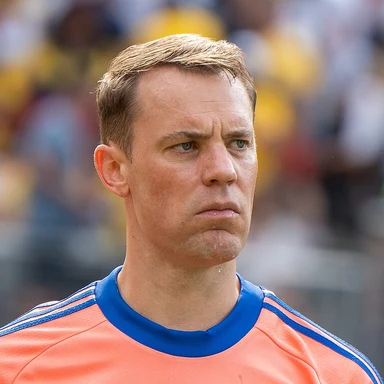 Photo: Bryan Berlin / WikiPortraits. Source and license in Image credits.
Schalke 04 · Bayern Munich
2006—PresentBayern’s goalkeeper in the 2013 Champions League final.
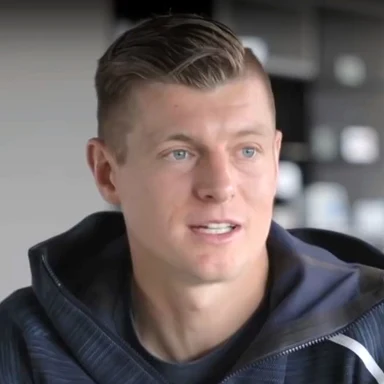 Photo: Real Madrid (YouTube channel). Source and license in Image credits.
Bayern Munich · Bayer Leverkusen · Real Madrid
2007—2024Developed under Heynckes at Leverkusen before working with him again at Bayern.
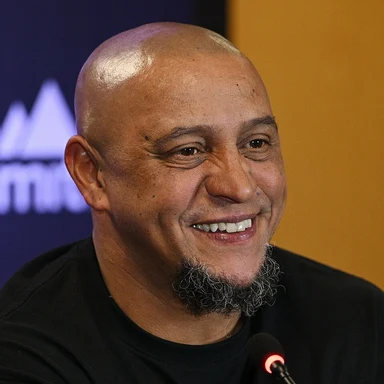 Photo: Web Summit. Source and license in Image credits.
União São João · Palmeiras · Inter Milan
1991—2016Started in Madrid’s 1998 Champions League final under Heynckes.
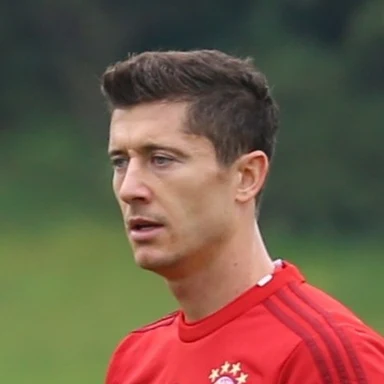 Photo: Rufus46. Source and license in Image credits.
Delta Warsaw · Legia Warsaw II · Znicz Pruszków
2005—PresentWorked together as player and head coach; see the overlapping club or national-team career entries.
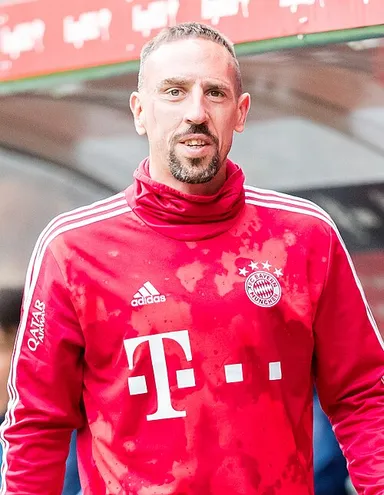 Photo: Sven Mandel. Source and license in Image credits.
US Boulogne · Olympique Alès · Stade Brestois
2000—2022The left-wing creator in Heynckes’s 2013 treble, setting up Robben’s Wembley winner.
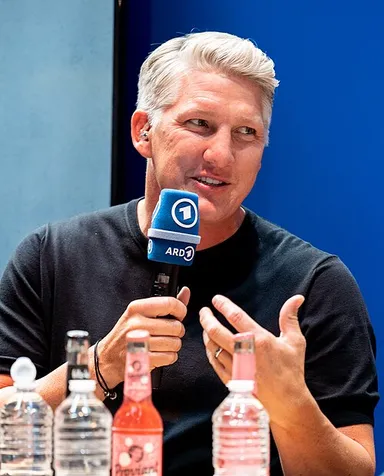 Photo: Anne Barth / re:publica. Source and license in Image credits.
Bayern Munich · Manchester United · Chicago Fire
2002—2019The central organiser alongside Javi Martínez in Heynckes’s 2013 Bayern treble.
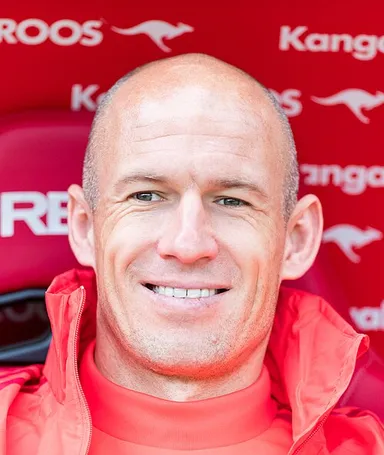 Photo: Sven Mandel. Source and license in Image credits.
FC Groningen · PSV Eindhoven · Chelsea
2000—2021The scorer of the 2013 European final winner in Heynckes’s Bayern treble.
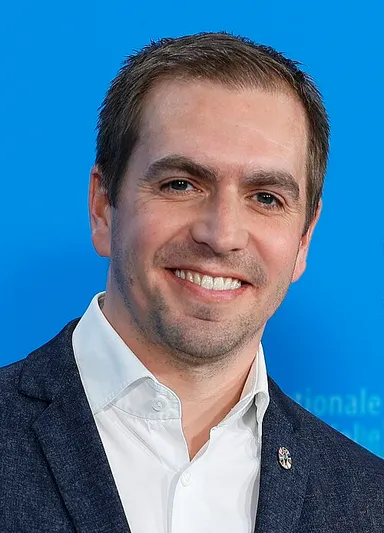 Photo: Elena Ternovaja. Source and license in Image credits.
Bayern Munich · VfB Stuttgart
2002—2017The captain at right-back in Heynckes’s 2012/13 Bayern treble.

Positional football architect
2007—2026 · Barcelona · Bayern Munich
Adaptive tournament manager
1992—Present · AC Milan · Real Madrid
Elite knockout strategist
2000—Present · Real Madrid · Inter Milan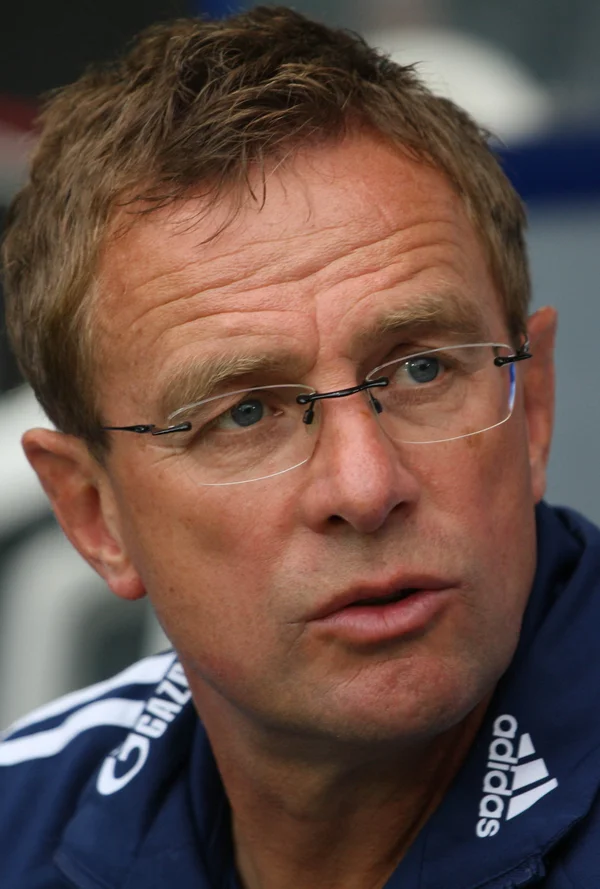 Photo: Thomas Rodenbücher / xtranews.de. Source and license in Image credits.
A pioneer of organised pressing
1983—Present ·Career and honour facts cite their underlying sources, including clubs and governing bodies. Tactical readings are identified as editorial analysis.
FC Bayern MünchenFC Bayern coach historyAccessed 2026-09-01FC BayernRobben and Ribéry on Heynckes’ leadershipAccessed 2026-09-14BundesligaGerman Supercup match and coaching archiveAccessed 2026-09-14Real MadridReal Madrid’s 1997 Spanish Super CupAccessed 2026-09-14DFBEintracht Frankfurt coaching record, 1994/95Accessed 2026-09-14Fortuna DüsseldorfHeynckes coaching chronology — match programme interviewAccessed 2026-09-14BundesligaHeynckes: playing apprenticeship and coaching careerAccessed 2026-09-14UEFAHeynckes on pressing and shared defensive workAccessed 2026-09-14UEFA2012/13 Champions League technical reportAccessed 2026-09-14Real MadridReal Madrid’s seventh European CupAccessed 2026-09-14FC BayernThe historic treble, 2010–2013Accessed 2026-09-14BundesligaBundesliga final table, 2012/13Accessed 2026-09-14FC BayernBayern’s 2013 Champions League campaignAccessed 2026-09-14FC BayernBayern’s 2017/18 title and Heynckes’ final returnAccessed 2026-09-14FC BayernBayern’s 1989 and 1990 championshipsAccessed 2026-09-14FC BayernBayern head-coach appointment datesAccessed 2026-09-14