

Bundesliga
Bayern Munich · league
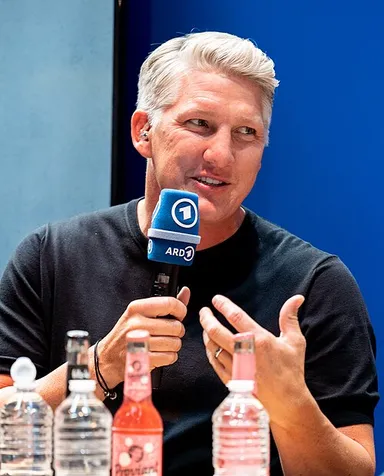 Photo: Anne Barth / re:publica. Source and license in Image credits.
Bastian Schweinsteiger
Bastian Schweinsteiger grew from an adventurous wide midfielder into a central organiser who could dictate the tempo without abandoning the contest for the ball. His best football joined composed passing to physical commitment: Bayern’s 2013 treble and Germany’s 2014 World Cup illustrated two sides of the same midfielder, able to make a team fluent and keep it competitive when the game became uncomfortable.
Senior club · all competitions
Completed club records only; not a complete career total.
Active club snapshots and records with another scope are excluded. Assist totals are not combined across incompatible definitions.
Stored archive snapshots, not live counters. Missing values are not zero; records with different scopes are never added together.
G/M = goals ÷ appearances. G+A = goals + assists. Per-90 metrics use documented minutes.
Senior international · all competitions
Stored archive snapshots, not live counters. Missing values are not zero; records with different scopes are never added together.
G/M = goals ÷ appearances. G+A = goals + assists. Per-90 metrics use documented minutes.
In context
Schweinsteiger’s legacy is the development of a complete central midfielder, rather than a single gesture of defiance. His Bayern record contains eight Bundesliga titles and seven German Cups, alongside the 2013 European and world club crowns. The winger’s willingness to run survived inside the organiser’s game. That continuity helps explain why his career can be read through both the control of a treble-winning club side and the resistance of a World Cup-winning national team.
Reading the game
Bastian Schweinsteiger grew from an adventurous wide midfielder into a central organiser who could dictate the tempo without abandoning the contest for the ball. His best football joined composed passing to physical commitment: Bayern’s 2013 treble and Germany’s 2014 World Cup illustrated two sides of the same midfielder, able to make a team fluent and keep it competitive when the game became uncomfortable.
The tactical descriptions are original qualitative editorial analysis. Sources establish the career events and statistical scope; the assessments are not tracking-data measurements.
Historical references support the chronology; tactical explanations are museum editorial analysis.
Historical references: Bayern: Schweinsteiger’s first-team record and move into midfield ↗ · DFB: Schweinsteiger’s World Cup final and international farewell ↗
Career
| Period | Club | Apps | Goals | G/M |
|---|---|---|---|---|
| 2002—2015 | Bayern MunichSchweinsteiger entered Bayern’s academy in 1998 and made his senior debut in November 2002. His first-team career therefore begins in 2002, rather than with his youth registration. Initially used out wide, he supplied running, dribbling and deliveries before Louis van Gaal moved him into central midfield in 2009. The change made his reading of space and range of passing more influential in Bayern’s build-up. Senior club · all competitions Senior · #31 | 500 | 68 | 0.14 |
| 2015—2017 | Manchester UnitedAfter 500 competitive appearances and 68 goals for Bayern, Schweinsteiger joined Manchester United in 2015. He made 35 appearances and scored twice across all competitions before moving to Chicago Fire in March 2017. His later work in Chicago included a deeper defensive role, using anticipation and long distribution as his running range diminished. He retired in October 2019; his United chapter belongs to his career, but should not be mistaken for his Bayern peak. Senior club · all competitions Senior · #31 | 35 | 2 | 0.06 |
| 2017—2019 | Chicago FireAfter 500 competitive appearances and 68 goals for Bayern, Schweinsteiger joined Manchester United in 2015. He made 35 appearances and scored twice across all competitions before moving to Chicago Fire in March 2017. His later work in Chicago included a deeper defensive role, using anticipation and long distribution as his running range diminished. He retired in October 2019; his United chapter belongs to his career, but should not be mistaken for his Bayern peak. Senior club · league only Senior · #31 | 85 | 8 | 0.09 |
Stored archive snapshots, not live counters. Missing values are not zero; records with different scopes are never added together.
G/M = goals ÷ appearances. G+A = goals + assists. Per-90 metrics use documented minutes.
Honours
Bayern Munich · league
Bayern Munich · domestic cup
Bayern Munich · continental
Bayern Munich · world
Bayern Munich · continental
Manchester United · continental
Manchester United · domestic cup
Manchester United · domestic cup
Germany · world
Story
Club chapter
Schweinsteiger entered Bayern’s academy in 1998 and made his senior debut in November 2002. His first-team career therefore begins in 2002, rather than with his youth registration. Initially used out wide, he supplied running, dribbling and deliveries before Louis van Gaal moved him into central midfield in 2009. The change made his reading of space and range of passing more influential in Bayern’s build-up.
Explore club contextClub chapter
The missed shoot-out penalty against Chelsea in the 2012 Champions League final became a painful reference point, rather than the end of his European story. Under Jupp Heynckes, Bayern returned in 2013 and won the Bundesliga, German Cup and Champions League. Alongside Javi Martínez, Schweinsteiger helped give that side a midfield balance from which its forwards could attack without leaving every turnover exposed.
Explore club contextCareer chapter
Germany’s 2014 World Cup final against Argentina tested more than Schweinsteiger’s passing. Through repeated challenges and extra time, he remained a central reference for a team that won 1–0 through Mario Götze. The image of his bloodied face became memorable, but the performance also depended on positional discipline: staying available to receive, contesting second balls and helping Germany avoid a purely end-to-end final.
Career chapter
After 500 competitive appearances and 68 goals for Bayern, Schweinsteiger joined Manchester United in 2015. He made 35 appearances and scored twice across all competitions before moving to Chicago Fire in March 2017. His later work in Chicago included a deeper defensive role, using anticipation and long distribution as his running range diminished. He retired in October 2019; his United chapter belongs to his career, but should not be mistaken for his Bayern peak.
FIFA also lists the 2016/17 Europa League among his honours. Schweinsteiger contributed to that campaign before his March departure for Chicago; he did not play in United’s victorious final in May. This distinction preserves the recognised honour without assigning him a performance in a match he had already left the club before.
Historical references: FIFA: Schweinsteiger’s retirement and classified honours ↗ · FIFA: Schweinsteiger’s Manchester United record and Chicago move ↗ · Chicago Fire: Schweinsteiger’s late-career defensive role ↗
Profile
Regista
Also plays · Box-to-box midfielder
Bastian Schweinsteiger grew from an adventurous wide midfielder into a central organiser who could dictate the tempo without abandoning the contest for the ball. His best football joined composed passing to physical commitment: Bayern’s 2013 treble and Germany’s 2014 World Cup illustrated two sides of the same midfielder, able to make a team fluent and keep it competitive when the game became uncomfortable.
Set the tempo, then switch the play
Protect the centre as the attack advances
Illustrative role zones · not tracking data
Editorial assessment
Historical role analysis
Seven qualitative bands · not measured scores
Editorial assessment of this period, not an official rating.
These bands are not percentiles or an overall ranking. The chart’s geometry represents ordered bands, not equal differences in ability.
Qualitative judgments describe football actions in context. They do not measure personality or medical fitness. Category assessments are editorial summaries, not averages. A lower defensive band describes the player’s role and contribution, not their value to the team.
Bayern: Schweinsteiger’s first-team record and move into midfield ↗Reading the game
| Era / team | Primary Role | Tactical Character |
|---|---|---|
| 2002–2009 | From the wing to the central axis | Schweinsteiger entered Bayern’s academy in 1998 and made his senior debut in November 2002. His first-team career therefore begins in 2002, rather than with his youth registration. Initially used out wide, he supplied running, dribbling and deliveries before Louis van Gaal moved him into central midfield in 2009. The change made his reading of space and range of passing more influential in Bayern’s build-up. |
| 2009–2015 | The midfield balance of the 2013 treble | The 2012/13 season offers the clearest club reference for his mature central role. Heynckes’s team could combine wide attacking threat with a midfield capable of passing through pressure and recovering its shape. Schweinsteiger recorded 28 Bundesliga appearances and seven league goals that season. Those are league figures, rather than a season total including the cup and European games that completed Bayern’s treble. |
| 2017–2019 | Manchester, Chicago and the final farewell | After 500 competitive appearances and 68 goals for Bayern, Schweinsteiger joined Manchester United in 2015. He made 35 appearances and scored twice across all competitions before moving to Chicago Fire in March 2017. His later work in Chicago included a deeper defensive role, using anticipation and long distribution as his running range diminished. He retired in October 2019; his United chapter belongs to his career, but should not be mistaken for his Bayern peak. |
Historical references: Bayern: Schweinsteiger’s first-team record and move into midfield ↗ · DFB: Schweinsteiger’s league record, national caps and honour seasons ↗ · FIFA: Schweinsteiger’s retirement and classified honours ↗ · Chicago Fire: Schweinsteiger’s late-career defensive role ↗
Reading the game
His central value lay in choosing the next tempo. Receiving on a half-turn could open a forward pass; facing a crowded lane, he could recycle possession and move the opposing block before switching play. The important detail was the relationship between those decisions. Schweinsteiger did not have to make every pass ambitious: a simple exchange could improve the angle for the more damaging ball that followed.
Schweinsteiger’s defensive contribution was not simply the number of challenges he attempted. Holding a useful distance from his midfield partner helped keep the centre connected after the ball was lost. He could step towards a loose ball without treating every situation as a chase. That judgement mattered in possession too: an advance had more value when somebody still protected the space from which the next counterattack might begin.
Historical references: Bayern: Schweinsteiger’s first-team record and move into midfield ↗
Reading the game
The 2012/13 season offers the clearest club reference for his mature central role. Heynckes’s team could combine wide attacking threat with a midfield capable of passing through pressure and recovering its shape. Schweinsteiger recorded 28 Bundesliga appearances and seven league goals that season. Those are league figures, rather than a season total including the cup and European games that completed Bayern’s treble.
Germany’s 2014 World Cup final against Argentina tested more than Schweinsteiger’s passing. Through repeated challenges and extra time, he remained a central reference for a team that won 1–0 through Mario Götze. The image of his bloodied face became memorable, but the performance also depended on positional discipline: staying available to receive, contesting second balls and helping Germany avoid a purely end-to-end final.
Historical references: Bayern: Schweinsteiger’s first-team record and move into midfield ↗ · DFB: Schweinsteiger’s league record, national caps and honour seasons ↗ · DFB: Schweinsteiger’s World Cup final and international farewell ↗ · FIFA: Schweinsteiger’s retirement and classified honours ↗ · National Football Teams: Schweinsteiger’s club league seasons ↗
Statistics
| Season | Club | Apps | Goals | G/M |
|---|---|---|---|---|
| 2014/15 | Bayern Munich Senior club · league only | 20 | 5 | 0.25 |
| 2013/14 | Bayern Munich Senior club · league only | 23 | 4 | 0.17 |
| 2012/13 | Bayern Munich Senior club · league only | 28 | 7 | 0.25 |
| 2011/12 | Bayern Munich Senior club · league only | 22 | 3 | 0.14 |
| 2010/11 | Bayern Munich Senior club · league only | 32 | 4 | 0.13 |
| 2009/10 | Bayern Munich Senior club · league only | 33 | 2 | 0.06 |
| 2008/09 | Bayern Munich Senior club · league only | 31 | 5 | 0.16 |
| 2007/08 | Bayern Munich Senior club · league only | 30 | 1 | 0.03 |
| 2006/07 | Bayern Munich Senior club · league only | 27 | 4 | 0.15 |
| 2005/06 | Bayern Munich Senior club · league only | 30 | 3 | 0.10 |
Stored archive snapshots, not live counters. Missing values are not zero; records with different scopes are never added together.
G/M = goals ÷ appearances. G+A = goals + assists. Per-90 metrics use documented minutes.
The season table covers Bayern’s Bundesliga matches only: 342 appearances and 45 goals. Bayern’s official first-team total is 500 competitive appearances and 68 goals. Academy, reserve-team and friendly matches are excluded. Assists are not asserted as a complete career total. Chicago’s 85 appearances and eight goals cover the MLS regular season, excluding play-offs and cups.
Club competitions
| Competition | Apps | Goals | G/M |
|---|---|---|---|
Bundesliga2002/03–2014/15The season table covers Bayern’s Bundesliga matches only: 342 appearances and 45 goals. Bayern’s official first-team total is 500 competitive appearances and 68 goals. Academy, reserve-team and friendly matches are excluded. Assists are not asserted as a complete career total. Chicago’s 85 appearances and eight goals cover the MLS regular season, excluding play-offs and cups. | 342 | 45 | 0.13 |
Stored archive snapshots, not live counters. Missing values are not zero; records with different scopes are never added together.
G/M = goals ÷ appearances. G+A = goals + assists. Per-90 metrics use documented minutes.
International
International career
The German Football Association recognises 121 senior appearances and 24 goals between 2004 and 2016. Schweinsteiger finished third at the 2006 and 2010 World Cups, was a EURO 2008 runner-up and became a world champion in 2014. He later succeeded Philipp Lahm as captain. His farewell match against Finland in August 2016 is included in the federation’s record; alternative database classifications should not silently reduce the official cap total.
Reading the game
Schweinsteiger’s legacy is the development of a complete central midfielder, rather than a single gesture of defiance. His Bayern record contains eight Bundesliga titles and seven German Cups, alongside the 2013 European and world club crowns. The winger’s willingness to run survived inside the organiser’s game. That continuity helps explain why his career can be read through both the control of a treble-winning club side and the resistance of a World Cup-winning national team.
Historical references: Bayern: Schweinsteiger’s first-team record and move into midfield ↗ · DFB: Schweinsteiger’s league record, national caps and honour seasons ↗ · FIFA: Schweinsteiger’s retirement and classified honours ↗
Archive
Regista · editorial peak 2012—2014
Louis van Gaal · Jupp Heynckes · Pep Guardiola
Robert Lewandowski— Overlapping Bayern Munich era · Toni Kroos— Overlapping Bayern Munich era · Manuel Neuer— Overlapping Bayern Munich era · Wayne Rooney— Overlapping Manchester United era
The first treble — Bayern Munich · Guardiola’s positional variations — Bayern Munich · A different European route — Manchester United

Positional football architect
2007—2026 · Barcelona · Bayern Munich
Balanced high-tempo organiser
1979—2018 · Bayern Munich · Real Madrid Photo: Real Madrid (YouTube channel). Source and license in Image credits.
Bayern Munich · Bayer Leverkusen · Real Madrid
2007—2024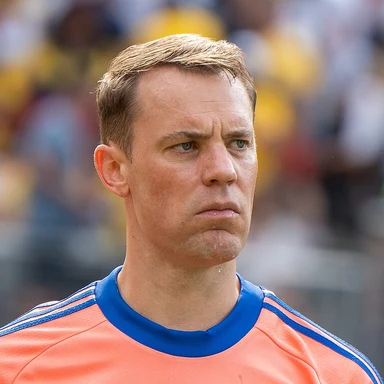 Photo: Bryan Berlin / WikiPortraits. Source and license in Image credits.
Schalke 04 · Bayern Munich
2006—Present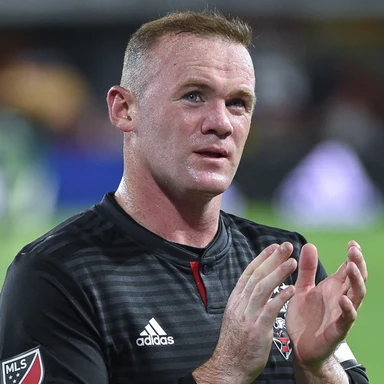 Photo: All-Pro Reels from District of Columbia, USA. Source and license in Image credits.
Everton · Manchester United · D.C. United
2002—2021
Bayern Munich · New York Cosmos · Hamburger SV
1964—1983Photo: Real Madrid (YouTube channel). Source and license in Image credits.Bayern Munich · Bayer Leverkusen · Real Madrid
2007—2024Photo: Bryan Berlin / WikiPortraits. Source and license in Image credits.Schalke 04 · Bayern Munich
2006—Present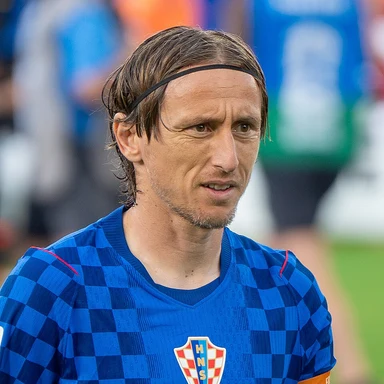 Photo: Bryan Berlin / WikiPortraits. Source and license in Image credits.
Dinamo Zagreb · Zrinjski Mostar · Inter Zaprešić
2003—Present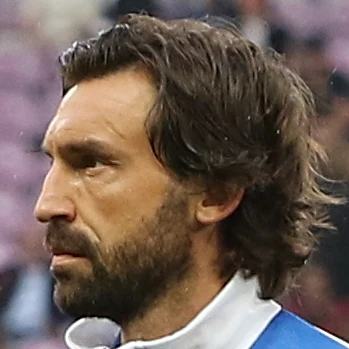 Photo: Clément Bucco-Lechat. Source and license in Image credits.
Brescia · Inter · Reggina
1995—2017
FC Porto B · FC Porto · Wolverhampton Wanderers
2019—PresentStatistics are displayed only within the scope supported by each cited source.
FC Bayern MünchenBayern: Schweinsteiger’s first-team record and move into midfieldGerman Football AssociationDFB: Schweinsteiger’s league record, national caps and honour seasonsGerman Football AssociationDFB: Schweinsteiger’s World Cup final and international farewellFIFAFIFA: Schweinsteiger’s retirement and classified honoursFIFAFIFA: Schweinsteiger’s Manchester United record and Chicago moveChicago Fire FCChicago Fire: Schweinsteiger’s late-career defensive roleNational Football TeamsNational Football Teams: Schweinsteiger’s club league seasons