
The midfielder who keeps the next route open
- Receiving under pressure
- Generational
- Passing angles
- Generational
- Tempo control
- Generational
- Midfield reconnection
- Elite
- Defensive reading
- Very Good
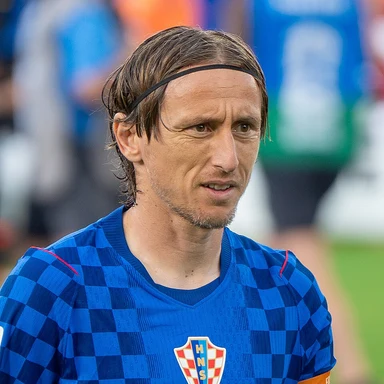 Photo: Bryan Berlin / WikiPortraits. Source and license in Image credits.
Luka Modrić
A central midfielder who changes the route of possession through receiving angles, short carries and passes that help the next player face forward.
Senior club · all competitions
Completed club records only; not a complete career total.
Active club snapshots and records with another scope are excluded. Assist totals are not combined across incompatible definitions.
Stored archive snapshots, not live counters. Missing values are not zero; records with different scopes are never added together.
G/M = goals ÷ appearances. G+A = goals + assists. Per-90 metrics use documented minutes.
Senior international · all competitions
HNS snapshot · 23 June 2026
Stored archive snapshots, not live counters. Missing values are not zero; records with different scopes are never added together.
G/M = goals ÷ appearances. G+A = goals + assists. Per-90 metrics use documented minutes.
In context
Modrić connects invention with midfield responsibility: the Madrid partnerships, Croatia’s tournament runs and his later adaptations reveal how technique can keep a team’s next action available.
Reading the game
Modrić makes a midfield pass valuable before it becomes an assist. He can receive with an opponent approaching, change the direction of the move and deliver the ball to a teammate who is already able to face forward. The advantage may be only a few metres or a fraction of a second, but it changes what the next player can attempt. His turns, short carries and varied passing surfaces belong to one process: keeping progression available when the obvious route has been closed.
Madrid and Croatia asked him to apply that process in different structures. Alongside Kroos and Casemiro, he could leave a starting position to connect the right side, carry beyond a challenge or join an attack, supported by complementary midfield responsibilities. With Croatia, the need to remain available as a creative reference extended across long tournament matches. His career therefore rewards attention to the actions between highlights: where he offers a passing angle, how he helps a receiver continue and when he moves back into a useful defensive position. The famous outside-foot pass is one expression of that intelligence, rather than its entire explanation.
Historical references support the chronology; tactical explanations are museum editorial analysis.
Historical references: Real Madrid: Modrić’s final club record and honours ↗ · UEFA: Modrić’s receiving and passing against Italy in 2024 ↗ · FIFA: Modrić’s 2018 World Cup tournament statistics ↗
Career
| Period | Club | Apps | Goals | G/M |
|---|---|---|---|---|
| 2003—2008 | Dinamo ZagrebMilan’s official career account records 128 appearances and 32 goals for Dinamo. The Zrinjski and Inter Zaprešić loans are separate; their totals are not added to this row. Assists remain unverified. Senior club · all competitions | 128 | 32 | 0.25 |
| 2003—2004 | Zrinjski MostarLoan at Zrinjski Mostar, 2003–2004, recorded separately from Dinamo. Complete competitive totals remain unverified.Loan | — | — | — |
| 2004—2005 | Inter ZaprešićLoan at Inter Zaprešić, 2004–2005, recorded separately from Dinamo. Complete competitive totals remain unverified.Loan | — | — | — |
| 2008—2012 | Tottenham HotspurComplete Tottenham spell, 2008–2012: 160 appearances and 17 goals across competitions, confirmed by the club and UEFA. Assists remain unverified. Senior club · all competitions | 160 | 17 | 0.11 |
| 2012—2025 | Real MadridFinal Madrid record, 2012–2025: 597 official appearances and 43 goals. This completed club total replaces earlier farewell snapshots; assists remain unverified. Senior club · all competitions | 597 | 43 | 0.07 |
| 2025—Now | AC MilanJoined Milan in 2025; a July 2026 announcement extended the contract to 30 June 2027. Ongoing club statistics are not presented as complete career totals. | — | — | — |
Stored archive snapshots, not live counters. Missing values are not zero; records with different scopes are never added together.
G/M = goals ÷ appearances. G+A = goals + assists. Per-90 metrics use documented minutes.
Honours
Real Madrid · continental
France Football · individual
Real Madrid · league
Real Madrid · domestic cup
Real Madrid · continental
Real Madrid · domestic cup
Croatia · individual
Croatia · individual
FIFA · individual
UEFA · individual
Story
Career chapter
The loans at Zrinjski Mostar and Inter Zaprešić preceded a central role at Dinamo Zagreb and the move to Tottenham in 2008. These stages should remain distinct, rather than being compressed into one uninterrupted Dinamo playing record. In England, Modrić increasingly showed how a small midfielder could operate through positioning and the timing of his touches. Receiving at an angle could avoid the need to win a collision; moving after a pass could create a second opportunity to face forward. Tottenham supplied the bridge to Madrid, where those habits would become part of a different midfield structure.
Historical references: Tottenham: Modrić’s 160 appearances and 17 goals ↗ · UEFA: Modrić’s move from Tottenham to Madrid ↗ · Milan: Modrić’s arrival and early career ↗ · Luka Modrić — biographical and career reference ↗
Club chapter
Arriving in 2012 did not instantly place Modrić inside the later Kroos–Casemiro triangle. Madrid’s midfield changed before that partnership became established, and his value grew through linking possession with movement ahead. In the celebrated trio, Kroos offered a different passing rhythm and Casemiro a stronger defensive reference, allowing Modrić to connect, carry and appear beyond his starting position. Their European success depended on those relationships as much as on three separate reputations. His task was to recognise when the ball needed another safe connection and when a turn or acceleration could turn an apparently settled midfield into an attack.
Historical references: Real Madrid: Modrić’s final club record and honours ↗ · UEFA: Modrić’s 2017/18 midfield contribution ↗ · Luka Modrić — biographical and career reference ↗
Explore club contextCareer chapter
Croatia’s 2018 World Cup required creative responsibility to survive repeated physical and tactical demands. Modrić played seven matches and received the Golden Ball after the run to the final, but the useful football story is how he remained part of both circulation and progression. Rakitić and Brozović supplied different forms of support, while his own movement helped connect the team when an initial passing lane disappeared. The 2022 third-place finish extended the international story without reproducing the exact same midfield. These tournaments show why leadership can be expressed through continued availability for the ball as well as through a captain’s armband.
Historical references: Real Madrid: Modrić’s final club record and honours ↗ · FIFA: Modrić wins the 2018 World Cup Golden Ball ↗ · FIFA: Modrić’s 2018 World Cup tournament statistics ↗ · Luka Modrić — biographical and career reference ↗
Career chapter
The later Madrid years brought changing partners and more varied starting responsibilities. Against Chelsea in 2022, the outside-foot pass to Rodrygo turned a difficult position into a finishable chance, but Madrid still needed extra time to secure the tie. His EURO 2024 performance against Italy showed that receiving angles and disguised distribution remained central to his game. Madrid’s final club record closes in 2025; the move to Milan opens a separate chapter, with an extension announced through June 2027. That continuity is evidence of an ongoing career, not a reason to apply the physical ratings of his earlier peak to every later season.
Historical references: Real Madrid: Modrić’s final club record and honours ↗ · Milan: Modrić’s contract extended to June 2027 ↗ · UEFA: Modrić’s receiving and passing against Italy in 2024 ↗ · Madrid: Modrić’s assist and the 2022 Chelsea tie ↗
Profile
Central Playmaker
Also plays · Deep-Lying Playmaker
Modrić receives at an angle, turns away from pressure and uses short carries or varied passing surfaces to find the next route. His freedom to connect different areas works through support from the midfield around him.
Press resistance
Passing angles
Ball carrying
Tempo control
Illustrative role zones · not tracking data
Modrić’s first touch works best when his body is already prepared for the next direction. A small adjustment can place an approaching opponent on the wrong side of the ball. The point is not to turn on every reception: sometimes the useful action is a return pass followed by another movement, keeping the team connected until a better forward option appears.
He does not need a long run to change a midfield situation. Carrying across an opponent’s path can draw another defender forward and open a pass that was unavailable from the original position. The release then matters as much as the escape. Holding the ball beyond that moment can remove the very advantage the carry created, especially when teammates have already begun their next runs.
Using the outside of his right foot lets Modrić send the ball away from the direction suggested by his body. The Rodrygo assist against Chelsea demonstrates the ambitious version; shorter deliveries can perform the same task in midfield. Its value depends on the receiver’s movement and the weight of the ball. The technique serves a route and a timing problem, rather than requiring every pass to look unusual.
Madrid’s midfield could recycle possession without committing to endless circulation. Modrić could receive after Kroos had moved the opposition, then carry or combine on the other side; Casemiro’s positioning helped sustain a defensive reference. Those functions overlapped, rather than forming a rigid division of labour. The useful change of tempo came when a teammate was ready to exploit it, not simply when Modrić decided to move faster.
His contribution continues after releasing the ball. Moving into a supporting lane can make a return pass possible; recovering towards midfield can reduce the distance a teammate must defend after a turnover. This work is different from acting as a specialist defensive anchor. His reading and effort matter, but aerial duels, central screening and covering large spaces still depend on the balance of the whole side.
Historical references: Real Madrid: Modrić’s final club record and honours ↗ · UEFA: Modrić’s 2017/18 midfield contribution ↗ · UEFA: Modrić’s receiving and passing against Italy in 2024 ↗ · UEFA: Madrid’s midfield adjustment at Manchester City in 2022 ↗ · UEFA: Madrid’s 2022 comeback against Paris ↗ · Madrid: Modrić’s assist and the 2022 Chelsea tie ↗
Reading the game
| Era / team | Primary Role | Tactical Character |
|---|---|---|
| 2003–2008Zrinjski / Inter Zaprešić / Dinamo | Development across loans and Dinamo | Develops receiving and creative responsibility across distinct playing spells. |
| 2008–2012Tottenham Hotspur | Connecting Tottenham’s midfield | Uses angles, short movement and passing to link possession with the attacking players. |
| 2012–2018Real Madrid | A mobile creator within Madrid’s midfield | Moves between deeper receiving and right-sided support; the Kroos–Casemiro partnership emerges within this period. |
| 2018–2022Croatia | A central reference across two World Cups | Shares circulation and progression with different midfield partners across the tournaments. |
| 2018–2025Real Madrid | Different heights in the later Madrid years | Can connect from deep or move higher to change midfield matchups, as against City in 2022. |
| 2025–PresentAC Milan | A new midfield setting in Milan | Carries his receiving and passing craft into a new club; later responsibilities are assessed separately from the earlier peak. |
Historical references: Real Madrid: Modrić’s final club record and honours ↗ · Tottenham: Modrić’s 160 appearances and 17 goals ↗ · UEFA: Modrić’s move from Tottenham to Madrid ↗ · Milan: Modrić’s arrival and early career ↗ · Milan: Modrić’s contract extended to June 2027 ↗ · UEFA: Modrić’s 2017/18 midfield contribution ↗ · UEFA: Madrid’s midfield adjustment at Manchester City in 2022 ↗ · Madrid: Modrić’s assist and the 2022 Chelsea tie ↗ · FIFA: Modrić wins the 2018 World Cup Golden Ball ↗
Reading the game
A completed pass is only the starting measure of its quality. Modrić can choose a foot, angle and pace that let the receiver continue without resetting his body. That small advantage is easy to miss because the next player appears to perform the progressive action. It is one reason his influence can exceed the number of final passes credited to him.
A defender cannot assume that closing the obvious forward pass has ended the problem. Modrić may turn across the pressure, use a short exchange or carry until another lane opens. The alternatives reinforce one another: the possibility of a pass discourages an immediate challenge, while the possibility of a turn prevents an opponent from simply guarding one lane.
His outside-foot technique can preserve the direction of his body while changing the destination of the ball. That can shorten the preparation needed for a difficult delivery and reduce the warning available to defenders. The Chelsea assist is a clear illustration, but the principle is practical: keep a forward option alive before the receiving run or the passing corridor disappears.
Modrić often remains part of the move after another player has taken possession. He can offer a new angle, support the next exchange or move towards the space that needs protection. This repeated reconnection helps explain his suitability for different midfield partners. The team receives more than a single piece of technique each time it finds him.
Historical references: UEFA: Modrić’s 2017/18 midfield contribution ↗ · UEFA: Modrić’s receiving and passing against Italy in 2024 ↗ · UEFA: Madrid’s midfield adjustment at Manchester City in 2022 ↗ · UEFA: Madrid’s 2022 comeback against Paris ↗ · Madrid: Modrić’s assist and the 2022 Chelsea tie ↗
Reading the game
Mobile central playmaker
The 2016–2018 version combined press resistance with enough mobility to link different heights of the pitch. Alongside Kroos and Casemiro, he could become the receiving outlet, the carrier or the next supporting player within the same attack. This is the peak used for the ratings: an assessment of a broad midfield contribution, rather than a reward automatically assigned for the trophies won.
Croatia’s midfield reference
Russia 2018 placed his craft under the demands of seven tournament matches and Croatia’s route to the final. He had to help maintain circulation while still looking for the action that moved the team forward. The Golden Ball recognised the tournament contribution; the football distinction is a creative captain operating through midfield relationships, rather than a lone attacker expected to solve every possession.
Adaptive midfield creator
The 2021/22 European run showed an older Modrić still able to alter difficult situations through passing and movement. The Chelsea assist and Madrid’s adjustment at Manchester City illustrate different tools: an exceptional final delivery and a change of position within the midfield structure. This version is about selecting the intervention that the moment requires, while recognising the supporting work of younger teammates.
Historical references: Real Madrid: Modrić’s final club record and honours ↗ · UEFA: Modrić’s 2017/18 midfield contribution ↗ · UEFA: Madrid’s midfield adjustment at Manchester City in 2022 ↗ · Madrid: Modrić’s assist and the 2022 Chelsea tie ↗ · FIFA: Modrić wins the 2018 World Cup Golden Ball ↗ · FIFA: Modrić’s 2018 World Cup tournament statistics ↗
Statistics
Club competitions
| Competition | Apps | Goals | Assists | G/M | G+A/M |
|---|---|---|---|---|---|
UEFA Champions League2017–18Real Madrid only · 2017/18 Champions League, not the full club season. Performance record
| 11 | 1 | 1 | 0.09 | 0.18 |
Stored archive snapshots, not live counters. Missing values are not zero; records with different scopes are never added together.
G/M = goals ÷ appearances. G+A = goals + assists. Per-90 metrics use documented minutes.
International
International career
Croatia senior career from 2006. HNS records his 200th appearance against Panama on 23 June 2026; the snapshot is dated and does not claim to be a live total. Goals at that cutoff remain unverified here. Croatia finished second in 2018 and third in 2022; the Golden Ball is an individual award, not a World Cup title.
Senior international · tournament splits
| Competition | Apps | Goals | Assists | G/M | G+A/M |
|---|---|---|---|---|---|
FIFA World Cup2018Croatia only · 2018 World Cup, separate from the senior career total. Performance record
| 7 | 2 | 1 | 0.29 | 0.43 |
Stored archive snapshots, not live counters. Missing values are not zero; records with different scopes are never added together.
G/M = goals ÷ appearances. G+A = goals + assists. Per-90 metrics use documented minutes.
Reading the game
Modrić’s importance is that he joins technical invention to the ordinary work of keeping a midfield connected. A turn away from pressure, a pass to the correct foot and a recovery run can all serve the same purpose: giving the team a playable next situation. The outside-foot delivery is memorable because it makes that purpose visible in an unusual form. More often, his contribution is distributed across a sequence of touches that helps another player become the apparent protagonist. That makes goals and assists an incomplete description of his influence, even when an individual pass directly decides a tie.
The trophies and international runs belong beside that football explanation. Madrid’s six European titles were collective achievements across changing teams; Croatia’s 2018 final and 2022 third place demonstrated how his craft travelled into a different competitive setting. Neither the Ballon d’Or nor longevity means that every match was controlled or every defensive problem solved. He needed suitable distances, movement ahead and partners able to protect the spaces he left. His Milan chapter keeps the story open. The enduring model is a midfielder who can alter the route of an attack without losing the obligation to reconnect with the team afterwards.
Historical references: Real Madrid: Modrić’s final club record and honours ↗ · Milan: Modrić’s contract extended to June 2027 ↗ · Madrid: Modrić’s assist and the 2022 Chelsea tie ↗ · FIFA: Modrić wins the 2018 World Cup Golden Ball ↗
Archive
Regista · editorial peak 2014—2018
Cristiano Ronaldo— Overlapping Real Madrid era · Kaká— Overlapping Real Madrid era · Kylian Mbappé— Overlapping Real Madrid era · Vinícius Júnior— Overlapping Real Madrid era
Returning to Europe — Tottenham Hotspur · Mourinho’s record league — Real Madrid · Four European Cups in five years — Real Madrid · Ancelotti’s second cycle — Real Madrid

Sporting CP · Manchester United · Real Madrid
2002—Present Photo: Real Madrid YouTube channel. Source and license in Image credits.
Olympique Lyonnais · Real Madrid · Al-Ittihad
2005—Present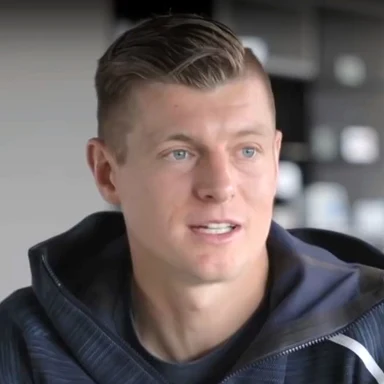 Photo: Real Madrid (YouTube channel). Source and license in Image credits.
Bayern Munich · Bayer Leverkusen · Real Madrid
2007—2024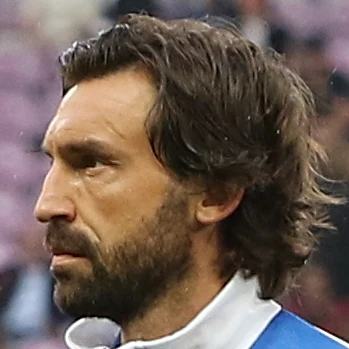 Photo: Clément Bucco-Lechat. Source and license in Image credits.
Brescia · Inter · Reggina
1995—2017
FC Porto B · FC Porto · Wolverhampton Wanderers
2019—Present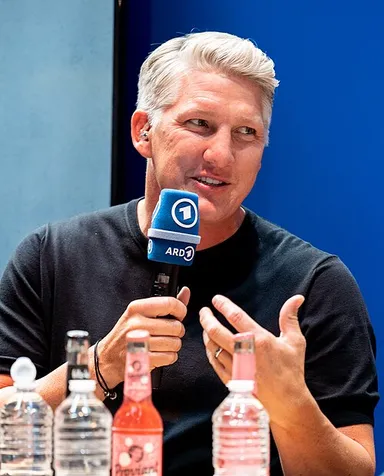 Photo: Anne Barth / re:publica. Source and license in Image credits.
Bayern Munich · Manchester United · Chicago Fire
2002—2019Statistics are displayed only within the scope supported by each cited source.
Real MadridReal Madrid: Modrić’s final club record and honoursTottenham HotspurTottenham: Modrić’s 160 appearances and 17 goalsUEFAUEFA: Modrić’s move from Tottenham to MadridAC MilanMilan: Modrić’s arrival and early careerAC MilanMilan: Modrić’s contract extended to June 2027UEFAUEFA: Modrić’s 2017/18 midfield contributionUEFAUEFA: Modrić’s receiving and passing against Italy in 2024UEFAUEFA: Madrid’s midfield adjustment at Manchester City in 2022UEFAUEFA: Madrid’s 2022 comeback against ParisReal MadridMadrid: Modrić’s assist and the 2022 Chelsea tieFIFAFIFA: Modrić wins the 2018 World Cup Golden BallFIFAFIFA: Modrić’s 2018 World Cup tournament statisticsCroatian Football FederationHNS: Modrić’s 200th senior appearance on 23 June 2026Wikipedia (cited biographical reference)Luka Modrić — biographical and career reference