
The football behind Kaká’s ratings
- Acceleration with the ball
- Elite
- Forward carrying
- Elite
- Final passing
- Elite
- Scoring from midfield
- Elite
- Supporting combinations
- Excellent
- Defensive specialisation
- Limited
 Photo: Евгений Асмолов. Source and license in Image credits.
Ricardo Izecson dos Santos Leite
Milan’s accelerating playmaker, joining midfield to the penalty area through direct carries, early passes and scoring runs.
Senior club · all competitions
Completed club records only; not a complete career total.
Active club snapshots and records with another scope are excluded. Assist totals are not combined across incompatible definitions.
Stored archive snapshots, not live counters. Missing values are not zero; records with different scopes are never added together.
G/M = goals ÷ appearances. G+A = goals + assists. Per-90 metrics use documented minutes.
Senior international · all competitions
Brazil · FIFA-recognised senior matches, 2002–2016
Stored archive snapshots, not live counters. Missing values are not zero; records with different scopes are never added together.
G/M = goals ÷ appearances. G+A = goals + assists. Per-90 metrics use documented minutes.
In context
A distinctive attacking midfielder whose 2007 European peak joined a scorer’s threat to the final pass.
Reading the game
Kaká showed how an attacking midfielder could make speed a form of playmaking. He did not need to remain beside the striker to threaten the goal, or remain over the ball to direct an attack. A reception between the lines could become a long forward carry; the same movement could then end with a shot or a pass released just as a defender committed. The distinction matters because his acceleration changed the choices available to everyone around him. At Milan, Pirlo’s passing, Seedorf’s combinations and the midfield’s protection gave that directness a productive setting. Kaká supplied a route through opponents who had organised themselves to defend passes. The 2006/07 Champions League offers the strongest reference: he led the scoring with ten goals, but in the final his decisive attacking contribution included the pass for Inzaghi’s second. That balance between carrying, scoring and serving another forward explains his importance more precisely than the image of a fast number ten. His game made the space between midfield and the penalty area feel smaller, while forcing defenders to make decisions sooner.
Historical references support the chronology; tactical explanations are museum editorial analysis.
Historical references: UEFA: Kaká wins the 2007 Ballon d’Or ↗ · UEFA: Inzaghi and Kaká in the 2007 final ↗ · UEFA Champions League technical report 2006/07 ↗
Career
| Period | Club | Apps | Goals | G/M |
|---|---|---|---|---|
| 2001—2003 | São PauloThe database’s national-league rows for 2001–2003 sum to 56 appearances and 22 goals. São Paulo’s broader first-spell tribute reports 131 matches and 48 goals without separating every match category; those broader figures are not substituted for this league subset. Senior club · league only | 56 | 22 | 0.39 |
| 2003—2009 | AC MilanFirst Milan spell: six Serie A seasons total 193 appearances and 70 goals. The all-competition club aggregate combines both Milan spells and is shown once below. Senior club · league only Senior · #22 | 193 | 70 | 0.36 |
| 2009—2013 | Real MadridReal Madrid’s official archive explicitly records 120 competitive appearances and 29 goals. This is an all-competition total, not the 85-match league subset. Assists remain unverified. Senior club · all competitions Senior · #8 | 120 | 29 | 0.24 |
| 2013—2014 | AC MilanThe return season contains 30 Serie A appearances and seven goals. It is separate in the timeline and included in the combined Milan aggregate; do not add it to that aggregate again. Senior club · league only Senior · #22 | 30 | 7 | 0.23 |
| 2014—2014 | São PauloLoan after signing for Orlando and before its first MLS season: 19 national-league appearances and two goals. São Paulo’s broader second-spell record is 24 matches and three goals; it has a different scope. Senior club · league only Loan | 19 | 2 | 0.11 |
| 2015—2017 | Orlando CityMLS confirms 75 regular-season appearances, 24 goals and 22 assists. The contract began in 2014, but these playing seasons begin in 2015. Cup, All-Star and charity matches are excluded. Senior club · league only Senior · #10Performance record
| 75 | 24 | 0.32 |
Stored archive snapshots, not live counters. Missing values are not zero; records with different scopes are never added together.
G/M = goals ÷ appearances. G+A = goals + assists. Per-90 metrics use documented minutes.
Honours
São Paulo · domestic cup
AC Milan · league
AC Milan · domestic cup
AC Milan · continental
AC Milan · continental
AC Milan · world
Real Madrid · domestic cup
Real Madrid · league
Real Madrid · domestic cup
Brazil · world
Brazil · world
AC Milan · individual
AC Milan · individual
AC Milan · individual
Brazil · individual
Story
Career chapter
São Paulo provided the route from youth football to the senior game in 2001. Kaká was still at the club when he joined Brazil’s 2002 World Cup-winning squad, before moving to Milan in 2003. These facts describe rapid progress, but a squad medal should not be confused with the leading role he would hold later. The early chapter is better understood as the formation of an attacking midfielder who could receive, travel and finish within the same move. Italy would demand that he place those actions inside a more established network of passers, runners and defensive cover.
Historical references: São Paulo’s retirement tribute to Kaká ↗ · MLS: Kaká retires after three Orlando seasons ↗
Career chapter
Carlo Ancelotti’s midfield gave Kaká partners with different responsibilities. Pirlo could initiate play from deeper positions, while Seedorf connected attacks and the supporting midfielders protected the structure. Kaká’s forward movement added a more direct route. After the 2003/04 league title, his 2006/07 European campaign brought the clearest expression of that role. Against Manchester United he threatened the goal himself; against Liverpool in the final he supplied Inzaghi. The Ballon d’Or followed in December 2007. The important continuity is the decision created by his approach: a defence had to control both the carrier and the teammate he might release.
Historical references: UEFA: Kaká wins the 2007 Ballon d’Or ↗ · UEFA: Milan’s 2007 semi-final against Manchester United ↗ · UEFA: Inzaghi and Kaká in the 2007 final ↗ · UEFA Champions League technical report 2006/07 ↗
Career chapter
The 2009 move placed Kaká in a Madrid attack also welcoming Cristiano Ronaldo and Karim Benzema. The club records 120 competitive appearances and 29 goals across four seasons. Those totals contain meaningful contributions, but they do not describe a repeat of his Milan rhythm. UEFA reported the knee operation that ruled him out for several months in 2010. Availability and role therefore belong beside technical ability when interpreting this period. He could still combine, shoot and provide a final pass, while a changing team asked different questions of him. A fair account avoids both erasing the contribution and projecting his earlier acceleration onto every later appearance.
Historical references: Real Madrid: Kaká’s competitive record ↗ · UEFA: Kaká’s 2010 knee operation and absence ↗
Career chapter
Kaká returned to Milan for 2013/14 before joining Orlando City and spending the second half of 2014 on loan at São Paulo. Orlando’s inaugural MLS season began in 2015, giving him a role in establishing the club’s identity as well as its attack. His league record there finished at 75 appearances, 24 goals and 22 assists. These later years reward attention to passing choices and the timing of involvement rather than an expectation that every possession reproduce a 2007 sprint. Retirement followed in December 2017. The sequence completes a playing career whose different settings reveal both the reach and the physical demands of his attacking style.
Historical references: São Paulo’s retirement tribute to Kaká ↗ · MLS: Kaká retires after three Orlando seasons ↗ · Orlando City: Kaká’s inaugural MLS season ↗
Profile
Trequartista
Also plays · Inside Forward
Receives between the lines, carries into the next defensive decision and chooses between the shot, the through pass and a supporting combination. Midfield cover and a striker’s movement help make that freedom useful.
Forward carrying
Acceleration with the ball
Final passing
Scoring from midfield
Illustrative role zones · not tracking data
The first useful advantage is often body orientation. Receiving with room to turn lets Kaká see a runner and the defender responsible for stopping him. A closed reception changes the problem: he may need a short combination before accelerating. This editorial reading therefore begins before the spectacular run, with the angle of the pass and the position from which he can take his next touch.
His characteristic carry uses space in front of the body. A longer touch can invite the next stride and move the contest away from a stationary duel. Its success depends on the lane staying open long enough to collect the ball again. In crowded areas the same touch becomes a risk, so the useful skill is choosing when the longer stride is available.
A carry becomes creative when it changes another player’s decision. Kaká can approach the central defender while a forward threatens the space behind. Stepping out may open the pass; retreating may allow the shot. The tactical value lies in delaying his own choice until that response becomes visible, while releasing the ball before the opening disappears. This is interpretation, not a measured tracking statistic.
Starting behind the striker does not require staying behind him. Kaká can continue into the area after a pass, or attack a gap while the forward occupies a marker. His scoring threat adds a player whom the defence must locate during the move. Shooting from the edge and arriving closer to goal ask different questions; neither should be reduced to a single long-shot reputation.
Milan’s midfield structure made direct attacks easier to sustain. When Kaká moved forward, other players could offer a return pass or protect the space behind the ball. That support matters especially if a carry is stopped. His defensive contribution should be assessed as that of an attacking midfielder, with pressing and recovery duties, rather than assuming the marking range of a specialist holding player.
Historical references: UEFA: Kaká wins the 2007 Ballon d’Or ↗ · UEFA: Milan’s 2007 semi-final against Manchester United ↗ · UEFA: Inzaghi and Kaká in the 2007 final ↗ · UEFA Champions League technical report 2006/07 ↗
Reading the game
| Era / team | Primary Role | Tactical Character |
|---|---|---|
| 2001–2003São Paulo | An emerging attacking midfielder | Combine forward movement and scoring from a midfield starting point. |
| 2003–2009AC Milan | Milan’s vertical creator | Connect the deeper midfield to the striker through carries, passes and arrivals. |
| 2009–2013Real Madrid | A changing role in Madrid | Adapt combinations and attacking involvement around interrupted availability. |
| 2013–2017AC Milan / São Paulo / Orlando City | Returns and a later creative role | Use passing judgment and selective forward movement across Milan, São Paulo and Orlando. |
Historical references: Real Madrid: Kaká’s competitive record ↗ · São Paulo’s retirement tribute to Kaká ↗ · MLS: Kaká retires after three Orlando seasons ↗ · UEFA Champions League technical report 2006/07 ↗ · UEFA: Kaká’s 2010 knee operation and absence ↗
Reading the game
A forward run with the ball can move a defender before the pass is made. Kaká’s distinction is the way that movement can create the receiver’s opportunity. Watch the defender’s first step: the eventual through ball may become possible because the carrier has already persuaded someone to leave a position.
Acceleration does not have to close the decision. Kaká can retain a passing option while approaching shooting distance, forcing a defender to protect two outcomes. The challenge is technical as well as tactical: the next touch must leave the ball close enough to release without surrendering the momentum of the run.
His starting position can make him harder to assign to one centre-back. If a striker occupies the last line, Kaká may arrive from a space watched by midfield instead. The danger comes at the handover between defenders, when a runner is visible to everyone but clearly owned by no one.
The memorable action need not contain a complicated feint. A change of pace, a useful touch into space and an early decision can be enough. This economy is part of Kaká’s identity: technique serves the next stretch of ground or the next teammate, rather than delaying the move for its own sake.
The final in Athens is a reminder that a scorer can decide a match by serving somebody else. The later career extends that idea across different physical conditions and team contexts. Kaká’s profile needs passing, shooting and timing alongside speed, because those skills explain why his influence could take more than one form.
Historical references: MLS: Kaká retires after three Orlando seasons ↗ · UEFA: Milan’s 2007 semi-final against Manchester United ↗ · UEFA: Inzaghi and Kaká in the 2007 final ↗ · UEFA Champions League technical report 2006/07 ↗
Reading the game
Trequartista
His first Milan league season brought ten goals in 30 appearances and a title. This version highlights the fit between an established midfield and a newcomer offering forward movement. It is the beginning of the Italian role, not yet the same balance of scoring responsibility and European recognition that would define 2007.
Trequartista
The shared reference for both rating panels. Ten Champions League goals sit beside eight in Serie A, illustrating why competition scope matters. Carrying and forward decisions lead the assessment, with final passing and finishing completing the role. The final itself also shows how a closely watched scorer can contribute without adding another goal.
Trequartista
Sixteen goals in 31 league appearances provide a distinct later Milan reference before the Madrid move. The higher league tally should not be used to rewrite the 2006/07 European campaign. It instead invites a comparison of where his attacks finished and how the attacking midfielder shared the scoring burden in a different season.
Trequartista
Orlando’s first MLS season is selected as a later role reference, with 28 league appearances, nine goals and seven assists in the club profile. It is not a claim of equal physical peak. Here the emphasis shifts towards passing choices, set-play responsibility and helping a new team connect its attacking players.
Historical references: Kaká: league seasons and international match classifications ↗ · AC Milan: Kaká’s career record ↗ · Real Madrid: Kaká’s competitive record ↗ · Orlando City: Kaká’s inaugural MLS season ↗ · UEFA: Kaká wins the 2007 Ballon d’Or ↗ · UEFA: Inzaghi and Kaká in the 2007 final ↗
Statistics
| Season | Club | Apps | Goals | G/M |
|---|---|---|---|---|
| 2017 | Orlando City Senior club · league only | 23 | 6 | 0.26 |
| 2016 | Orlando City Senior club · league only | 24 | 9 | 0.38 |
| 2015 | Orlando City Senior club · league only Performance record
| 28 | 9 | 0.32 |
| 2014 | São Paulo Senior club · league only | 19 | 2 | 0.11 |
| 2013–14 | AC Milan Senior club · league only | 30 | 7 | 0.23 |
| 2012–13 | Real Madrid Senior club · league only | 19 | 3 | 0.16 |
| 2011–12 | Real Madrid Senior club · league only | 27 | 5 | 0.19 |
| 2010–11 | Real Madrid Senior club · league only | 14 | 7 | 0.50 |
| 2009–10 | Real Madrid Senior club · league only | 25 | 8 | 0.32 |
| 2008–09 | AC Milan Senior club · league only | 31 | 16 | 0.52 |
Stored archive snapshots, not live counters. Missing values are not zero; records with different scopes are never added together.
G/M = goals ÷ appearances. G+A = goals + assists. Per-90 metrics use documented minutes.
League-only rows: national league for São Paulo, Serie A, La Liga and MLS regular season. State, regional, cup and continental matches are excluded. The 2013–14 Milan and calendar-year 2014 São Paulo rows describe successive spells. Unknown assists are not zero, and season rows must not be added to overlapping club aggregates.
Club competitions
| Competition | Goals |
|---|---|
UEFA Champions League2006/07 · AC MilanTen goals in the Champions League campaign, separate from eight Serie A goals that season. Appearance and assist totals are not inferred from the final report. | 10 |
Stored archive snapshots, not live counters. Missing values are not zero; records with different scopes are never added together.
G/M = goals ÷ appearances. G+A = goals + assists. Per-90 metrics use documented minutes.
International
International career
The preferred record is 91 FIFA-recognised appearances and 28 goals. MLS’s retirement article reports 92 and 29; National Football Teams separately lists one non-FIFA appearance and one goal, explaining that broader total. His 2002 World Cup squad medal and two Confederations Cup titles are recorded separately from playing time and individual tournament impact.
Major League Soccer: 92 appearances / 29 goals · MLS’s retirement account uses 92 appearances and 29 goals. This matches the database’s combined FIFA and non-FIFA categories, not the preferred recognised-match subset.
Reading the game
Kaká’s legacy is a particular answer to the question of how a number ten can move a team forward. His passing mattered, but so did the possibility that he would carry the ball through the line which a pass was supposed to cross. This gave Milan a different kind of creative authority alongside its deeper organisers. A defender stepping towards him could expose a runner; a defender retreating could concede the ground for a shot. His best football made those two risks difficult to separate. The 2007 individual awards recognised an exceptional year, yet the career deserves more than a position between other famous award winners. It includes a Brazilian formation, a European peak, a Madrid period interrupted by injury and a public role in Orlando’s early MLS years. Those chapters place limits on any claim of uninterrupted dominance without diminishing what his peak demonstrated. He remains a useful reference for the difference between speed that merely travels and speed that creates a decision. The lasting image is a midfielder arriving at the defence with the ball still under control and more than one way to finish the move.
Historical references: Real Madrid: Kaká’s competitive record ↗ · MLS: Kaká retires after three Orlando seasons ↗ · UEFA: Kaká’s 2010 knee operation and absence ↗ · FIFA: the World Player award and its winners ↗
Archive
Trequartista · editorial peak 2006—2007
Carlo Ancelotti · Manuel Pellegrini · José Mourinho · Luiz Felipe Scolari · Carlos Alberto Parreira · Dunga
Cristiano Ronaldo— Overlapping Real Madrid era · Paolo Maldini— Overlapping AC Milan era · Ronaldo Nazário— Overlapping AC Milan era · Ronaldinho— Overlapping AC Milan era
Ancelotti’s orchestra — AC Milan · Mourinho’s record league — Real Madrid

Sporting CP · Manchester United · Real Madrid
2002—Present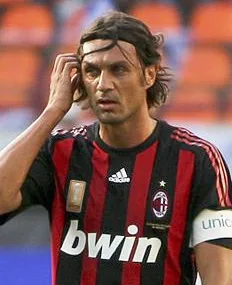
AC Milan
1985—2009
Cruzeiro · PSV · Barcelona
1993—2011Cruzeiro · PSV · Barcelona
1993—2011 Photo: Unknown author. Source and license in Image credits.
Santos · New York Cosmos
1956—1977 Photo: Marcos Corrêa/PR. Source and license in Image credits.
Grêmio · Paris Saint-Germain · FC Barcelona
1998—2018
Padova · Juventus · Sydney FC
1991—2014 Photo: Unknown author. Source and license in Image credits.
Argentinos Juniors · Boca Juniors · Barcelona
1976—1997 Photo: AbolfaZl0990. Source and license in Image credits.
Vicenza · Fiorentina · Juventus
1982—2004Statistics are displayed only within the scope supported by each cited source.
National Football TeamsKaká: league seasons and international match classificationsAC MilanAC Milan: Kaká’s career recordReal MadridReal Madrid: Kaká’s competitive recordSão Paulo FCSão Paulo’s retirement tribute to KakáMajor League SoccerMLS: Kaká retires after three Orlando seasonsOrlando CityOrlando City: Kaká’s inaugural MLS seasonUEFAUEFA: Kaká wins the 2007 Ballon d’OrUEFAUEFA: Milan’s 2007 semi-final against Manchester UnitedUEFAUEFA: Inzaghi and Kaká in the 2007 finalUEFAUEFA Champions League technical report 2006/07UEFAUEFA: Kaká’s 2010 knee operation and absenceFIFAFIFA: the World Player award and its winners