
The football behind Diego Maradona’s ratings
- Control through contact
- Generational
- Carrying into passing lanes
- Generational
- Vision and disguise
- Generational
- Left-foot scoring variety
- Elite
- Creative responsibility
- Elite
- Defensive coverage
- Limited
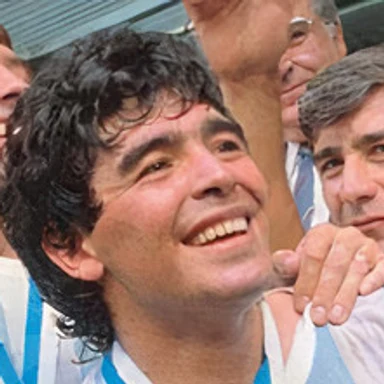 Photo: Unknown author. Source and license in Image credits.
Diego Armando Maradona
A left-footed creator who connected close control, carrying, passing and scoring, at the centre of Argentina’s 1986 World Cup and Napoli’s rise.
Senior club · all competitions
Completed club records only; not a complete career total.
Active club snapshots and records with another scope are excluded. Assist totals are not combined across incompatible definitions.
Stored archive snapshots, not live counters. Missing values are not zero; records with different scopes are never added together.
G/M = goals ÷ appearances. G+A = goals + assists. Per-90 metrics use documented minutes.
Senior international · all competitions
Argentina · federation record, 1977–1994
Stored archive snapshots, not live counters. Missing values are not zero; records with different scopes are never added together.
G/M = goals ÷ appearances. G+A = goals + assists. Per-90 metrics use documented minutes.
In context
Maradona showed how individual invention could expand a team’s possibilities, while his interrupted career left a complex sporting and cultural legacy.
Reading the game
Diego Maradona made carrying the ball a form of playmaking. When a defender moved towards him, the question was not simply whether he could escape. It was what that movement opened elsewhere. A short touch could invite pressure, a turn could remove the nearest opponent, and a pass could send a teammate through the gap created by both actions. His left foot connected those decisions with unusual continuity. This is why the spectacular solo runs reveal only part of his value. Behind the forwards, he could organise an attack while remaining its most dangerous individual attacker. Argentina in 1986 and Napoli across several seasons gave that combination different settings: one concentrated tournament and a longer challenge of becoming a championship team. Neither achievement was independent of teammates, defensive organisation or coaching. Maradona enlarged what those structures could attempt. His story also demands a distinction between footballing invention and conduct: the unpunished handball against England and later suspensions belong in the record. Understanding the player means examining the decisions that made his creativity useful, alongside the circumstances that limited its continuity.
Historical references support the chronology; tactical explanations are museum editorial analysis.
Historical references: UEFA: Maradona’s football and lasting place in Naples ↗ · FIFA: Maradona’s five goals and five assists at Mexico 1986 ↗ · FIFA: Maradona’s World Cup dribbling archive ↗ · UPI: the 1994 suspension ↗
Career
| Period | Club | Apps | Goals | G/M |
|---|---|---|---|---|
| 1976—1981 | Argentinos JuniorsThe club records 166 first-team appearances and 116 goals. This aggregate follows Argentinos’ own account; conflicting early season rows in secondary databases are not used to manufacture a complete annual breakdown. Senior club · all competitions Senior · #10 | 166 | 116 | 0.70 |
| 1981—1982 | Boca JuniorsForty league appearances and 28 goals in the 1981 Metropolitano and Nacional campaigns. The title was the Metropolitano; this first spell is separate from the 1995 return. Senior club · league only Senior · #10 | 40 | 28 | 0.70 |
| 1982—1984 | BarcelonaBarcelona’s official competitive record: 58 appearances and 38 goals, including 36 league appearances and 22 league goals. Domestic cups and the Cup Winners’ Cup account for the remaining matches and goals; friendlies are excluded. Senior club · all competitions Senior · #10 | 58 | 38 | 0.66 |
| 1984—1991 | NapoliAll-competition first-team total of 259 appearances and 115 goals. The 188 Serie A appearances and 81 league goals below are a subset, not an additional record. Historical assists are left unverified. Senior club · all competitions Captaincy · #10 | 259 | 115 | 0.44 |
| 1992—1993 | SevillaLa Liga only: 26 appearances and five goals, following StatMuse. National Football Teams’ smaller row is not used here. Cup matches and friendlies are outside this figure. Senior club · league only Senior · #10 | 26 | 5 | 0.19 |
| 1993—1994 | Newell’s Old BoysFive official Apertura appearances without a goal. The goal against Emelec came in a friendly and is not included. The brief stay extended into January 1994. Senior club · league only Senior · #10 | 5 | 0 | 0.00 |
| 1995—1997 | Boca JuniorsThirty-one league appearances and seven goals across the final three season records. The 1997/98 season label includes his appearances before retiring in October 1997. Senior club · league only Senior · #10 | 31 | 7 | 0.23 |
Stored archive snapshots, not live counters. Missing values are not zero; records with different scopes are never added together.
G/M = goals ÷ appearances. G+A = goals + assists. Per-90 metrics use documented minutes.
Honours
Boca Juniors · league
Barcelona · domestic cup
Barcelona · domestic cup
Barcelona · domestic cup
Napoli · league
Napoli · domestic cup
Napoli · continental
Napoli · domestic cup
Argentina · world
Argentina U20 · world
Argentina · individual
Story
Career chapter
Maradona entered first-team football with Argentinos Juniors in 1976, still fifteen. His scoring and invention soon made him a central figure, before the 1981 move to Boca brought a Metropolitano title. Barcelona in 1982 offered a different challenge: adapting that freedom to a European team with its own attacking relationships. Hepatitis and a serious ankle injury interrupted the two seasons, so the record cannot be reduced to either failure or uninterrupted brilliance. Domestic cup victories and moments of exceptional control coexisted with long absences. The move to Napoli in 1984 gave a developing creator another environment in which to build a more sustained influence.
Historical references: Argentinos Juniors: Maradona’s beginnings and club record ↗ · Boca Juniors: the 1981 Metropolitano title ↗ · Barcelona: the interrupted years of Maradona ↗
Career chapter
Napoli’s transformation required more than a famous signing. Under Ottavio Bianchi, midfield support and forward movement gave Maradona ways to connect invention with repeatable attacks. The 1986/87 league and cup double rewarded that development. Careca arrived afterwards, adding another runner and finisher rather than retroactively belonging to the first title team. The 1989 UEFA Cup campaign showed how their relationship could work against European opponents, with important contributions throughout the side. A second league title followed under Alberto Bigon in 1990. Across these versions, Maradona remained the creative reference, but the players around him and the routes towards goal continued to change.
Historical references: UEFA: Maradona’s football and lasting place in Naples ↗ · UEFA: Napoli’s path to the 1989 UEFA Cup ↗ · AS: the five trophies of Maradona’s Napoli years ↗
Career chapter
Bilardo’s Argentina gave Maradona freedom supported by disciplined teammates. In 1986 he scored five goals and supplied five assists, including the pass for Burruchaga’s winner in the final. The England quarter-final requires two distinct descriptions: the first goal was an illegal handball that went unpunished; the second was an extraordinary solo run. Neither should be used to disguise the other. Four years later, injury and form concerns made the journey less fluent. His pass for Caniggia against Brazil still changed a knockout match, but Argentina also depended on defensive resistance and penalty shoot-outs to reach another final. The two campaigns reveal different levels of physical freedom.
Historical references: FIFA: Maradona’s five goals and five assists at Mexico 1986 ↗ · FIFA: Maradona’s four World Cups and youth breakthrough ↗
Career chapter
A fifteen-month suspension after a positive cocaine test in 1991 ended Maradona’s playing chapter at Napoli. He returned with Sevilla in 1992, reuniting with Bilardo, before a brief spell at Newell’s Old Boys. The 1994 World Cup initially offered another international return, including a goal against Greece. After two appearances, a failed drug test brought withdrawal from the tournament and another fifteen-month ban. These were concrete interruptions, not simply a gradual tactical change. Boca’s 1995 return gave him a final club stage before retirement in 1997. The ability to imagine a pass survived longer than the conditions needed to repeat his earlier seasons.
Historical references: Boca Juniors: Maradona’s 1995 return ↗ · StatMuse: Maradona’s Sevilla league record ↗ · TyC Sports: Maradona’s five competitive Newell’s appearances ↗ · UPI: the 1994 suspension ↗ · UPI: the 1991 suspension in Italy ↗
Profile
Trequartista
Also plays · Advanced Playmaker
Receives behind the forwards, protects the ball through contact and carries until a defensive movement opens the next option. Through passes, combinations and left-foot finishing turn that pressure into chances; defensive cover is shared around his creative freedom.
Control through contact
Carrying into passing lanes
Disguised final passes
Left-foot scoring variety
Illustrative role zones · not tracking data
Maradona could keep the ball close enough to change direction after an opponent had committed. His low stance and use of the body protected the next touch, while small accelerations made a challenge arrive late. The important consequence was often outside the duel: another defender had to step across, leaving a different route open. This is an editorial reading of the match footage, rather than a claim that every dribble was efficient. Risk remained part of an approach that asked him to destabilise organised opponents.
The pass and the dribble were connected decisions. By advancing with the ball, Maradona could make a defender leave a teammate or narrow a lane elsewhere. Releasing at that moment turned individual pressure into a collective advantage. He also used short combinations to recover the ball facing forward, rather than trying to beat everyone alone. The receiver’s movement mattered as much as the apparent inspiration of the pass: a runner had to recognise the opening and remain available to exploit it.
Starting deeper did not remove Maradona from the finishing phase. A carry could become a shot once a defender retreated, and combinations could take him into the area after the initial pass. His left foot offered placement, disguise and the ability to lift the ball when the goalkeeper advanced. Free-kicks added a threat when open play stopped. This scoring dimension made it harder to defend him only as a supplier, even though his aerial contribution was much smaller than his work on the ground.
Maradona often left a nominal central position to find a useful receiving angle. That movement could connect midfield to the forwards or draw a marker away from the next attack. It needed balance around him: teammates had to offer depth, protect possession losses and avoid crowding the same space. His freedom was therefore a team decision with costs and benefits. Describing him as a conventional midfielder responsible for equal coverage everywhere would miss why coaches concentrated so much creative responsibility in his role.
Historical references: Barcelona: 58 official matches and 38 goals ↗ · UEFA: Maradona’s football and lasting place in Naples ↗ · UEFA: Napoli’s path to the 1989 UEFA Cup ↗ · FIFA: Maradona’s five goals and five assists at Mexico 1986 ↗ · FIFA: Maradona’s four World Cups and youth breakthrough ↗ · FIFA: Maradona’s World Cup dribbling archive ↗
Reading the game
| Era / team | Primary Role | Tactical Character |
|---|---|---|
| 1976–1984Argentinos Juniors / Boca Juniors / Barcelona | From youthful scorer to European creator | Scoring and carrying remain central while each club changes the supporting relationships. |
| 1984–1987Napoli / Argentina | Freedom behind a developing attack | Receives between lines, draws pressure and connects midfield with the forwards. |
| 1987–1991Napoli / Argentina | A creator for changing forward partnerships | Passing and carrying complement Careca’s depth, while national-team demands differ. |
| 1992–1997Sevilla / Newell’s Old Boys / Boca Juniors | Creative reading amid interrupted availability | Later returns retain passing imagination without reproducing the earlier continuity. |
Historical references: Argentinos Juniors: Maradona’s beginnings and club record ↗ · Boca Juniors: the 1981 Metropolitano title ↗ · Boca Juniors: Maradona’s 1995 return ↗ · Barcelona: the interrupted years of Maradona ↗ · UEFA: Maradona’s football and lasting place in Naples ↗ · UEFA: Napoli’s path to the 1989 UEFA Cup ↗ · FIFA: Maradona’s five goals and five assists at Mexico 1986 ↗ · FIFA: Maradona’s four World Cups and youth breakthrough ↗ · StatMuse: Maradona’s Sevilla league record ↗ · TyC Sports: Maradona’s five competitive Newell’s appearances ↗ · UPI: the 1994 suspension ↗
Reading the game
Balance allowed Maradona to remain involved after contact. Rather than treating strength only as the ability to push an opponent away, his game showed its value in protecting a small working space. Staying upright and keeping the ball close preserved a pass or a change of direction that seemed about to disappear.
A brief slowdown could make the defender set his feet before Maradona moved again. The subsequent burst did not need to last the length of the pitch; a few steps could be enough to create a new passing angle. His tempo changes were valuable because they changed the opponent’s timing as well as his own.
Defenders could not safely assume that Maradona’s movement would end in a shot or a pass. The ability to keep both options alive made his approach difficult to read. In editorial terms, the special quality was the connection between execution and perception: technique gave him time to recognise which ending had become available.
Maradona’s teams repeatedly looked for him when attacks became difficult. Accepting that responsibility meant receiving with close attention from opponents and trying another solution after a previous attempt had failed. It did not make every choice correct. It made his capacity to remain a usable creative outlet especially important to the players around him.
Historical references: UEFA: Maradona’s football and lasting place in Naples ↗ · FIFA: Maradona’s five goals and five assists at Mexico 1986 ↗ · FIFA: Maradona’s four World Cups and youth breakthrough ↗ · FIFA: Maradona’s World Cup dribbling archive ↗
Reading the game
Free attacking creator
At Mexico 1986, carrying, final passes and finishing reinforced one another across seven games. Five goals and five assists describe the output, while the decisive pass in the final shows influence without a goal. This version belongs to Bilardo’s Argentina and its supporting work, rather than an imaginary club season containing every famous Maradona action.
Trequartista behind the forwards
Napoli’s first league title and the Coppa Italia came from a season of sustained collective progress. Maradona’s ten league goals sit alongside the less easily counted work of connecting midfield and attack. This is the shared reference for the numerical and qualitative assessments. Careca had not yet joined: the first championship should retain its own attacking cast and context.
Advanced creator with a forward partner
The UEFA Cup winners offered a more developed set of attacking relationships. Careca’s movement and finishing gave Maradona’s passes destinations, while the team survived demanding ties against Juventus, Bayern and Stuttgart. The peak is useful for understanding how an exceptional individual could combine with a specialist forward. It was a European cup success, not another Serie A title that season.
Historical references: National Football Teams: Maradona’s league seasons ↗ · UEFA: Napoli’s path to the 1989 UEFA Cup ↗ · AS: the five trophies of Maradona’s Napoli years ↗ · FIFA: Maradona’s five goals and five assists at Mexico 1986 ↗
Statistics
| Season | Club | Apps | Goals | G/M |
|---|---|---|---|---|
| 1997/98 | Boca Juniors Senior club · league only | 6 | 2 | 0.33 |
| 1996/97 | Boca Juniors Senior club · league only | 1 | 0 | 0.00 |
| 1995/96 | Boca Juniors Senior club · league only | 24 | 5 | 0.21 |
| 1993/94 | Newell’s Old Boys Senior club · league only | 5 | 0 | 0.00 |
| 1992/93 | Sevilla Senior club · league only | 26 | 5 | 0.19 |
| 1990/91 | Napoli Senior club · league only | 18 | 6 | 0.33 |
| 1989/90 | Napoli Senior club · league only | 28 | 16 | 0.57 |
| 1988/89 | Napoli Senior club · league only | 26 | 9 | 0.35 |
| 1987/88 | Napoli Senior club · league only | 28 | 15 | 0.54 |
| 1986/87 | Napoli Senior club · league only | 29 | 10 | 0.34 |
Stored archive snapshots, not live counters. Missing values are not zero; records with different scopes are never added together.
G/M = goals ÷ appearances. G+A = goals + assists. Per-90 metrics use documented minutes.
Selected league seasons only, covering Boca, Barcelona, Napoli, Sevilla and Newell’s. Early Argentinos seasons are omitted where annual database figures disagree with the club total. Sevilla follows StatMuse’s 26 appearances and five goals; Newell’s follows the five official matches reported by TyC Sports. Assists remain unverified. These rows are already included in the relevant club aggregates.
Club competitions
| Competition | Apps | Goals | G/M |
|---|---|---|---|
Serie ANapoli · Serie A, 1984–1991Seven league seasons, included within the 259-match Napoli competitive aggregate. Domestic and European cups are excluded. | 188 | 81 | 0.43 |
La LigaBarcelona and Sevilla · La LigaBarcelona contributes 36 appearances and 22 goals; Sevilla adds 26 and five. Cup games are excluded. | 62 | 27 | 0.44 |
Stored archive snapshots, not live counters. Missing values are not zero; records with different scopes are never added together.
G/M = goals ÷ appearances. G+A = goals + assists. Per-90 metrics use documented minutes.
International
International career
World champion and Golden Ball winner in 1986, runner-up in 1990, with four World Cup appearances as a tournament participant. His final senior match was against Nigeria in June 1994. The 1979 youth world title belongs to a separate age-group team.
Senior international · tournament splits
| Competition | Apps | Goals | Assists | G/M | G+A/M |
|---|---|---|---|---|---|
FIFA World CupWorld Cup finals · 1982–1994FIFA’s retrospective credits eight assists across four finals tournaments: zero, five, two and one. Qualifiers, youth tournaments and penalty shoot-outs are outside these totals. Performance record
| 21 | 8 | 8 | 0.38 | 0.76 |
Stored archive snapshots, not live counters. Missing values are not zero; records with different scopes are never added together.
G/M = goals ÷ appearances. G+A = goals + assists. Per-90 metrics use documented minutes.
Reading the game
Maradona’s influence lies in the relationship between individual freedom and collective possibility. He offered a model of the number ten who could receive under pressure, change the geometry of an attack and still finish it himself. The lesson is more specific than a celebration of natural talent: control was valuable because it preserved another choice, and dribbling mattered because it could alter what a teammate was able to do. His achievements also acquired meanings beyond the field. Napoli’s rise challenged the established hierarchy of Italian football, and the attachment visible in the city after his death showed how deeply a player could enter local memory. Argentina’s 1986 victory gave his invention a lasting international stage. Neither history benefits from erasing the people around him or presenting every subsequent season as the same peak. The illegal handball against England and the interruptions caused by doping suspensions complicate the sporting record without making its exceptional football disappear. An honest account can hold those facts together. Maradona remains a compelling subject because technique, responsibility, public identification and vulnerability were all present in a career that resisted a simple explanation.
Historical references: UEFA: Maradona’s football and lasting place in Naples ↗ · FIFA: Maradona’s four World Cups and youth breakthrough ↗ · FIFA: Maradona’s World Cup dribbling archive ↗ · UPI: the 1994 suspension ↗ · UPI: the 1991 suspension in Italy ↗
Archive
Trequartista · editorial peak 1986—1987
César Luis Menotti · Silvio Marzolini · Udo Lattek · Rino Marchesi · Ottavio Bianchi · Alberto Bigon · Carlos Bilardo · Alfio Basile · Héctor Veira
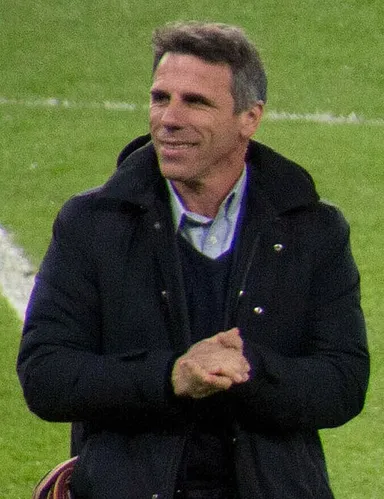
Gianfranco Zola— Overlapping Napoli era · Gabriel Batistuta— Overlapping Argentina era · Mario Kempes— Overlapping Argentina era
Maradona in blue and gold — Boca Juniors · European cups and changing generations — Barcelona · Maradona’s championship generation — Napoli

FC Barcelona · Paris Saint-Germain · Inter Miami CF
2004—Present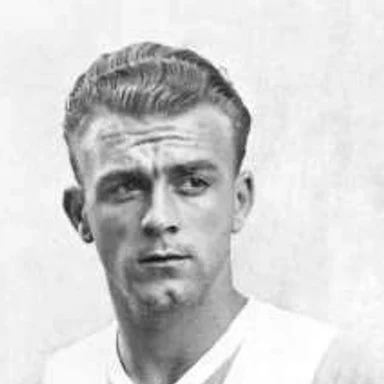 Photo: Unknown author. Source and license in Image credits.
River Plate · Huracán · Millonarios
1945—1966
Racing Club · Inter Milan
2015—Present
Padova · Juventus · Sydney FC
1991—2014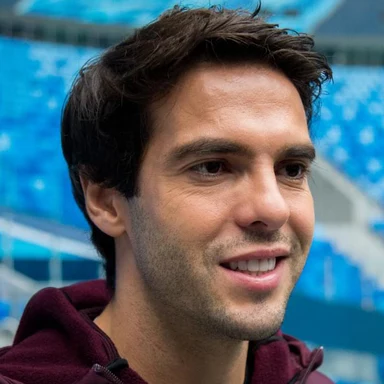 Photo: Евгений Асмолов. Source and license in Image credits.
São Paulo · AC Milan · Real Madrid
2001—2017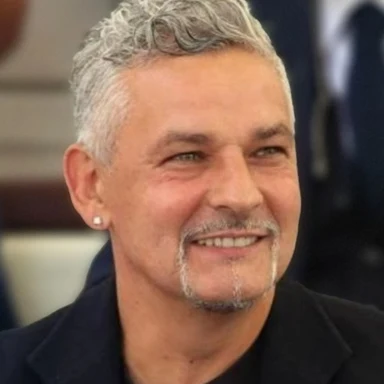 Photo: AbolfaZl0990. Source and license in Image credits.
Vicenza · Fiorentina · Juventus
1982—2004Statistics are displayed only within the scope supported by each cited source.
National Football TeamsNational Football Teams: Maradona’s league seasonsArgentinos JuniorsArgentinos Juniors: Maradona’s beginnings and club recordBoca JuniorsBoca Juniors: the 1981 Metropolitano titleBoca JuniorsBoca Juniors: Maradona’s 1995 returnFC BarcelonaBarcelona: the interrupted years of MaradonaFC BarcelonaBarcelona: 58 official matches and 38 goalsUEFAUEFA: Maradona’s football and lasting place in NaplesUEFAUEFA: Napoli’s path to the 1989 UEFA CupTransfermarktTransfermarkt: Napoli’s competitive appearance and scoring recordsASAS: the five trophies of Maradona’s Napoli yearsFIFAFIFA: Maradona’s five goals and five assists at Mexico 1986FIFAFIFA: Maradona’s four World Cups and youth breakthroughFIFAFIFA: Maradona’s World Cup dribbling archiveAFAAFA: Maradona’s 91 appearances and 34 goalsRSSSFRSSSF: Maradona’s international match recordStatMuseStatMuse: Maradona’s Sevilla league recordTyC SportsTyC Sports: Maradona’s five competitive Newell’s appearancesUPIUPI: the 1994 suspensionUPIUPI: the 1991 suspension in ItalyWikipedia (cited biographical reference)Diego Maradona — biographical and career reference