
Argentine Primera División
First · 1919
Latest · 2022
Club Atlético Boca Juniors
Blue and gold from La Boca: six Libertadores crowns, three Intercontinental Cups and a stadium that makes every match feel close.
Overview
Historical assessment
Overall Historical Index
94/100Football Legends DB editorial assessment
Football Legends DB editorial / historical index. This is not an official FIFA or UEFA ranking, a live form table or a player rating.
Version 1.0: editors assess eight dimensions from 0–100 using the cited historical record. The overall score is their equally weighted arithmetic mean, rounded to the nearest whole number. Trophy totals are evidence, not points automatically added to a formula.
Assessment guide: 0–39 limited documented impact; 40–59 established national contribution; 60–79 sustained national or continental influence; 80–94 major international influence; 95–100 a historical benchmark across generations. These are editorial judgements, not measured percentiles. Missing evidence means no published index.
World titles and sustained success across eras inform the historical and international assessments. Scores may be revised when the evidence or editorial assessment changes.
Assessment notes · An editorial assessment of six Libertadores titles, world-level victories and a durable Argentine presence. Academy development and the influence of its great playmakers complement the club’s competitive record.
Current chapter
Season
2026Verified
Arruabarrena’s return brought a familiar figure back to the bench. September reports describe a team balancing its domestic fixtures with the Sudamericana, where Merentiel scored against São Paulo. This is a dated campaign snapshot.
Honours
First · 1919
Latest · 2022First · 1977
Latest · 2007First · 1977
Latest · 2003First · 1969
Latest · 2019–20First · 2018
Latest · 2022First · 2020
Latest · 2020First · 2022
Latest · 2022First · 1919
Latest · 1944First · 1925
Latest · 1925First · 1926
Latest · 1926First · 1946
Latest · 1946First · 2004
Latest · 2005First · 1990
Latest · 2008First · 1989
Latest · 1989First · 1992
Latest · 1992First · 1993
Latest · 1993First · 1945
Latest · 1946First · 1920
Latest · 1920First · 1919
Latest · 1919History
Founded in La Boca, the club won its first league in 1919. The celebrated 1925 European tour carried its name overseas.
Tactical identity · A local community finds its colours
The association awarded an honorary championship after Boca’s European tour. It is one of the club’s official stars, but not a league or knockout tournament won on the pitch.
Boca won the inaugural professional league in 1931. Varallo’s goals and later titles helped establish a durable national power.
Tactical identity · Forward quality and a winning foundation
The new stadium opened on 25 May with a friendly victory over San Lorenzo.
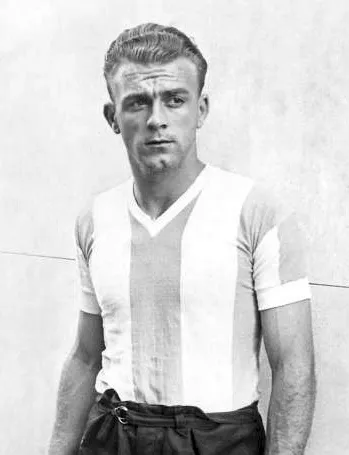
Rattín and Marzolini embodied a team that won repeatedly at home and reached the 1963 Libertadores final. Di Stéfano’s 1969 double capped a rich decade.
Tactical identity · Authority, technical assurance and balance
Two Libertadores and the first Intercontinental Cup elevated Boca’s international standing. Gatti and Mouzo were central figures in an intensely organised side.
Tactical identity · Compact lines and knockout concentration
Explore the defining match ↗The arrival of Argentina’s young star culminated in the 1981 Metropolitano title under Marzolini. His influence would last far longer than that short first spell.
Tactical identity · A creator given responsibility
The 1989 Supercopa and 1990 Recopa preceded the 1992 Apertura, Boca’s first league title since 1981.
Tactical identity · Rebuilding competitive confidence
Riquelme, Palermo and Schelotto gave different attacking solutions to a disciplined team. Bianchi’s first two spells produced nine trophies, including victories over Real Madrid and Milan.
Tactical identity · Collective security frees individual invention
Explore the defining match ↗Basile added domestic and South American cups. Russo then guided Riquelme’s loan return to the 2007 Libertadores title.
Tactical identity · Midfield control with decisive final-third quality
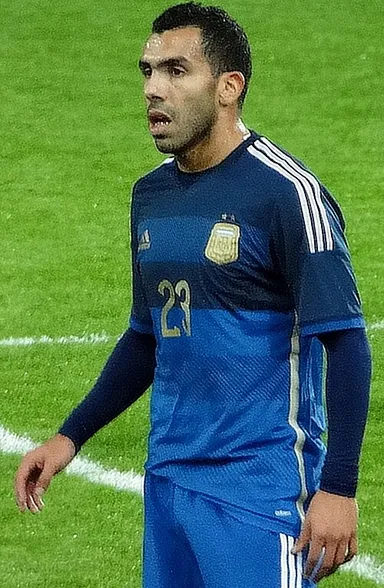
Explore the defining match ↗An unbeaten 2011 Apertura began another sequence of league successes. Tevez returned, Schelotto coached two championships, and the 2018 Libertadores final ended in defeat to River.
Tactical identity · Renewed squads under persistent expectations
Explore the defining match ↗The 2019–20 Copa Argentina and 2020 Maradona Cup were decided in 2021. The 2018 and 2022 Supercopas were played in 2019 and 2023; the honours wall uses edition years.
The 2019–20 and 2022 leagues continued the domestic record. Cup successes and subsequent coaching changes form the background to Arruabarrena’s 2026 return.
Tactical identity · Restoring consistency across competitions
Defining games
Copa Libertadores
Boca Juniors 0–0 Cruzeiro
Third-match playoff · won 5–4 on penalties
Estadio Centenario, Montevideo
A third-match playoff remained goalless. Gatti stopped Vanderley’s penalty to complete Boca’s first continental triumph.
Intercontinental Cup
Two early Palermo goals established the lead against Real Madrid. Riquelme’s control helped Boca manage the pressure and secure the world title.
Intercontinental Cup
Boca Juniors 1–1 AC Milan
After extra time · won 3–1 on penalties
International Stadium Yokohama
Donnet equalised against Milan. The match reached penalties, where Boca prevailed to complete Bianchi’s second Intercontinental triumph with the club.
Copa Libertadores
Boca Juniors 2–0 Grêmio
Second leg · won 5–0 on aggregate
Estádio Olímpico Monumental, Porto Alegre
Riquelme scored twice away to Grêmio after Boca had won the first leg 3–0. A sixth Libertadores completed his decisive loan return.
Copa Libertadores
Boca Juniors 1–3 River Plate
After extra time · lost 3–5 on aggregate
Santiago Bernabéu
Boca led through Benedetto, but River equalised and won in extra time. The relocated second leg became a painful chapter in the Superclásico’s history.
Legends
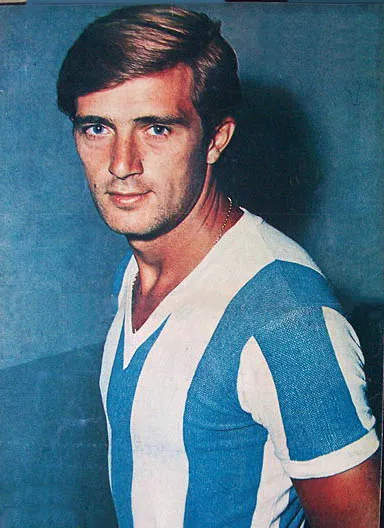
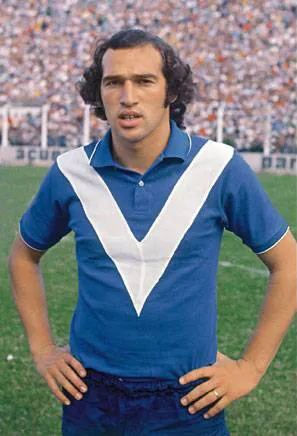
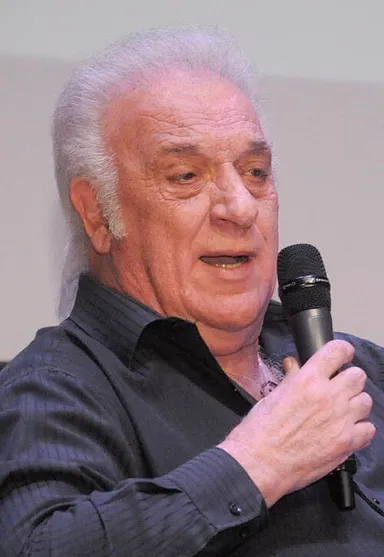
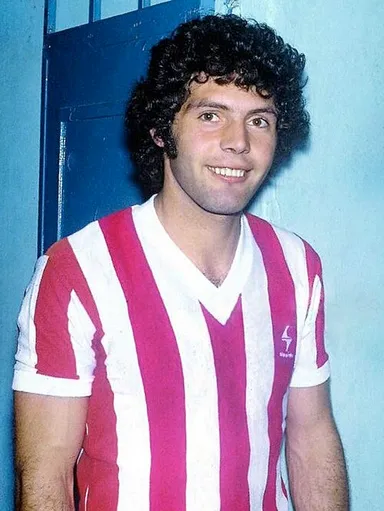
Photo: Unknown authorUnknown author. Source and license in Image credits.Forward
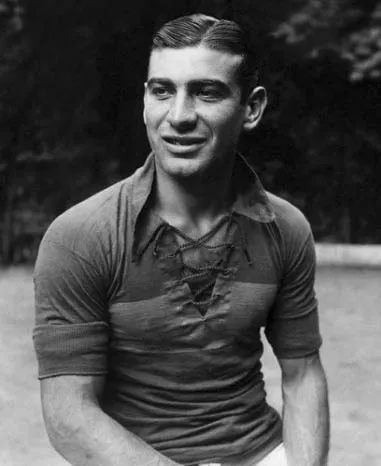
A prolific forward whose goals marked the first great professional championship generation.
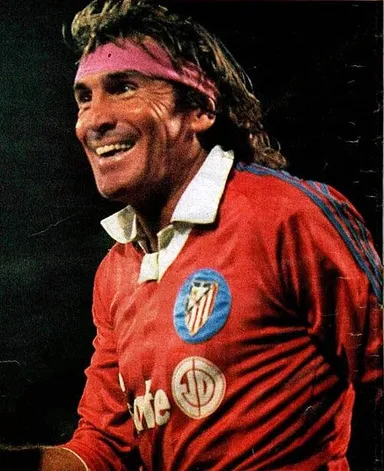
Photo: Unknown authorUnknown author. Source and license in Image credits.Midfielder
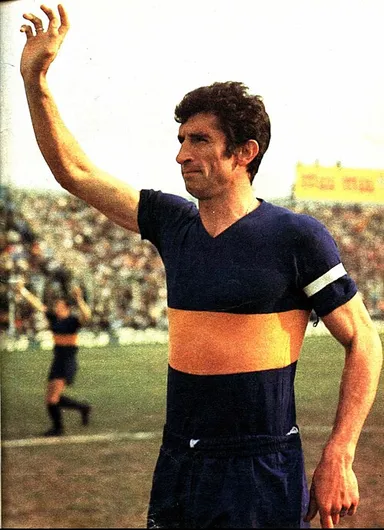
A one-club midfielder remembered for leadership, ball-winning and a commanding presence.
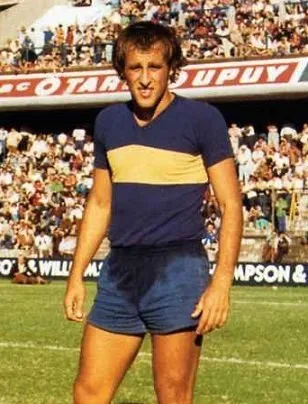
Photo: Unknown authorUnknown author. Source and license in Image credits.Defender
The elegant left-back linked secure defending with composed support in possession.
Photo: Unknown authorUnknown author. Source and license in Image credits.Goalkeeper
An adventurous goalkeeper and the penalty-saving hero of the first Libertadores triumph.
Photo: Unknown authorUnknown author. Source and license in Image credits.Defender
A long-serving central defender who became the club’s record appearance maker.
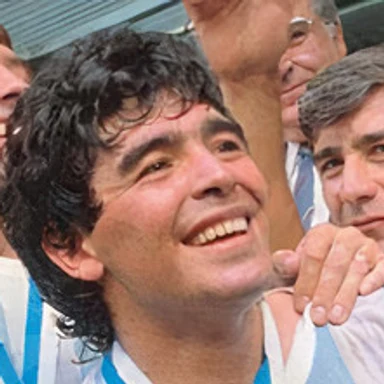
Photo: Unknown author. Source and license in Image credits.Midfielder
His first spell delivered the 1981 Metropolitano. The emotional connection endured through a later return near the end of his career.
Photo: Todo Noticias. Source and license in Image credits.Midfielder
A playmaker who controlled tempo through touch and positioning, central to three Libertadores-winning teams.
Photo: Carlos Figueroa. Source and license in Image credits.Forward
The record scorer combined aerial strength with extraordinary penalty-area instincts and a gift for decisive goals.
Photo: Víctor Santa María. Source and license in Image credits.Winger
A sharp, competitive wide forward whose combinations with Palermo became a defining partnership.
Photo: User:Padasama27. Source and license in Image credits.Goalkeeper
The Colombian goalkeeper supplied authority behind Bianchi’s defence in the 2000 and 2001 continental victories.
Photo: Víctor Santa María. Source and license in Image credits.Midfielder
An academy graduate whose positioning and discipline balanced several championship midfields.
Photo: Egghead06. Source and license in Image credits.Forward
An academy forward whose power and improvisation carried through three spells, from the 2003 champions to later domestic successes.
A prolific forward whose goals marked the first great professional championship generation.
A one-club midfielder remembered for leadership, ball-winning and a commanding presence.
The elegant left-back linked secure defending with composed support in possession.
An adventurous goalkeeper and the penalty-saving hero of the first Libertadores triumph.
A long-serving central defender who became the club’s record appearance maker.
His first spell delivered the 1981 Metropolitano. The emotional connection endured through a later return near the end of his career.
A playmaker who controlled tempo through touch and positioning, central to three Libertadores-winning teams.
The record scorer combined aerial strength with extraordinary penalty-area instincts and a gift for decisive goals.
A sharp, competitive wide forward whose combinations with Palermo became a defining partnership.
The Colombian goalkeeper supplied authority behind Bianchi’s defence in the 2000 and 2001 continental victories.
An academy graduate whose positioning and discipline balanced several championship midfields.
An academy forward whose power and improvisation carried through three spells, from the 2003 champions to later domestic successes.
Coaching legacy
Club tenure only. League titles count national top-flight championships; domestic cups and lower divisions are separate. Libertadores titles exclude other continental cups, the Recopa and world competitions.
Photo: Unknown authorUnknown author. Source and license in Image credits.1930–1936 · 1946 · 1956
Led the 1930 amateur champions and the professional title teams of 1931, 1934 and 1935.
Photo: Unknown authorUnknown author. Source and license in Image credits.1969 · 1985
The 1969 Nacional and Copa Argentina double joined attacking quality with a decisive championship finish.
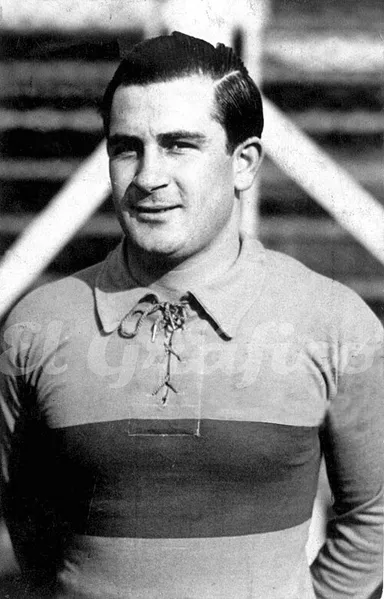
Photo: El Gráfico. Source and license in Image credits.1976–1979 · 1987
Built the compact side behind two 1976 leagues, consecutive Libertadores and Boca’s first Intercontinental Cup.
Photo: Unknown authorUnknown author. Source and license in Image credits.1998–2001 · 2003–2004 · 2013–2014
A calm, collective framework let the creators and finishers flourish. His nine trophies include three Libertadores and two Intercontinental Cups.
Photo: Víctor Santa María. Source and license in Image credits.2005–2006 · 2009–2010
Won consecutive short league tournaments and the 2005 Sudamericana. His other South American cups are separate from Libertadores titles.
Photo: Unknown authorUnknown author. Source and license in Image credits.2007 · 2020–2021 · 2025
Guided the 2007 Libertadores winners and returned for the 2019–20 league title. The later Maradona Cup is classified separately.
Photo: Víctor Santa María. Source and license in Image credits.2016–2018
The former winger coached successive league champions in 2016–17 and 2017–18; the 2018 Libertadores run ended as runners-up.
Club identity
La Boca’s immigrant history lives in the Xeneize name, rooted in the Genoese community. The neighbourhood remains central to the club’s identity.
Club tradition links the colours to a Swedish ship in the port. The blue shirt and broad gold band now carry that story around the world.
The steep stands keep supporters close to the pitch. Sound, colour and collective anticipation give the stadium its distinctive intensity.
Boca’s great teams found room for individual invention within demanding structures. Riquelme’s tempo and Bianchi’s organisation offer one influential example.
Academy graduates often carry an emotional connection through later returns. Paredes and Tevez link youth development to supporters’ memories.
The River rivalry joins shared neighbourhood origins with different institutional journeys. Its decisive matches have become part of Argentine football’s wider memory.
Identity
Stadium
Current home / Buenos Aires
Opened on 25 May 1940 with a 2–0 win over San Lorenzo, La Bombonera is formally named Estadio Alberto J. Armando. Its steep stands and distinctive enclosed shape keep the relationship between players and supporters unusually immediate.
Rivalries
River Plate and Boca Juniors share roots in La Boca and contest Argentina’s defining club rivalry. League meetings and continental eliminations have carried that rivalry far beyond the city.
The 2018 Libertadores final brought the rivalry to Madrid. The second leg was moved after the attack on Boca’s team bus, and River won the tie after extra time.
Development
Develop players who can combine technical courage with the demands of a competitive first team. Schooling and personal development accompany the football programme.
Historical role
Tevez, Gago, Paredes and Battaglia represent different academy generations. Boca Predio opened in Ezeiza in 2017, long after the youth system began. Maradona arrived from Argentinos Juniors as an established professional; Riquelme developed there before joining Boca as a teenager.
Famous graduates
Collection
Kits
Home kit / 2025–26
Away kit / 2025–26
Third kit / 2025–26
Commercial
TECHNICAL SUPPLIER
Kit studies are abstract colour and pattern references, not reproductions of official shirts.
Records
Official first-team goals across both Boca spells; totals from other clubs are excluded.
As of 2026-09-15All official competitions for Boca, including 396 league appearances.
As of 2026-09-15National top-flight championships, including amateur titles and short tournaments. The Maradona Cup and League Cup are separate competitions.
As of 2026-09-15The official total includes the 1925 honorary championship awarded after the European tour. This archive lists 73 competitive honours and records that honorary award separately in the timeline.
As of 2026-09-151977, 1978, 2000, 2001, 2003 and 2007; other South American cups are separate.
As of 2026-09-15The 1977 edition was played in 1978. The 2000 and 2003 victories were single-match finals in Japan.
As of 2026-09-15Four leagues, three Libertadores and two Intercontinental Cups across his first two spells. His later return added no titles.
As of 2026-09-15