
Argentine Primera División
First · 1920
Latest · 2023
Club Atlético River Plate
The red sash of Buenos Aires: a school of attacking football, four Libertadores triumphs and a century of Argentine championship history.
Overview
Historical assessment
Overall Historical Index
93/100Football Legends DB editorial assessment
Football Legends DB editorial / historical index. This is not an official FIFA or UEFA ranking, a live form table or a player rating.
Version 1.0: editors assess eight dimensions from 0–100 using the cited historical record. The overall score is their equally weighted arithmetic mean, rounded to the nearest whole number. Trophy totals are evidence, not points automatically added to a formula.
Assessment guide: 0–39 limited documented impact; 40–59 established national contribution; 60–79 sustained national or continental influence; 80–94 major international influence; 95–100 a historical benchmark across generations. These are editorial judgements, not measured percentiles. Missing evidence means no published index.
World titles and sustained success across eras inform the historical and international assessments. Scores may be revised when the evidence or editorial assessment changes.
Assessment notes · An editorial reading of River’s Argentine titles, South American record, influential attacking school and academy. The 2011 relegation and uneven recent campaigns remain part of the assessment.
Current chapter
Season
2026Verified
Leonardo Ponzio took interim charge after Eduardo Coudet’s August departure. Gallardo’s second spell had ended earlier in 2026. The immediate task is to restore stability while River continues its domestic campaign.
Honours
First · 1920
Latest · 2023First · 1986
Latest · 2018First · 1986
Latest · 1986First · 2015–16
Latest · 2018–19First · 2017
Latest · 2023First · 2021
Latest · 2023First · 2014
Latest · 2014First · 2015
Latest · 2019First · 1997
Latest · 1997First · 1986
Latest · 1986First · 2015
Latest · 2015First · 1936
Latest · 1947First · 1914
Latest · 1914First · 1914
Latest · 1914First · 1932
Latest · 1932First · 1937
Latest · 1952First · 1941
Latest · 1941First · 2014
Latest · 2014First · 2011–12
Latest · 2011–12History
Founded in La Boca through the merger of Santa Rosa and La Rosales, River developed before professionalism and won the 1920 amateur league.
Tactical identity · An institution takes root
High-profile recruitment helped define the nickname. Professional championships and the opening of the Monumental gave the club a larger stage.
Tactical identity · Individual talent within an ambitious team
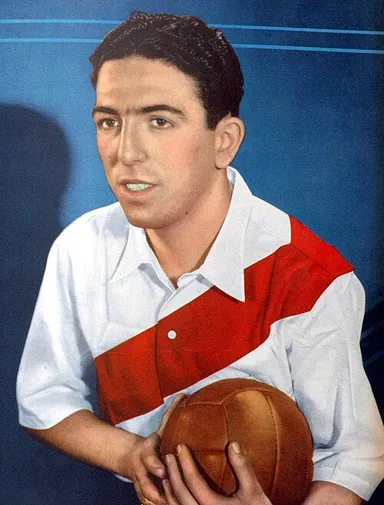
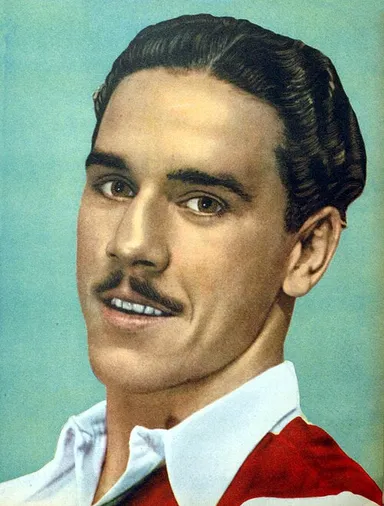
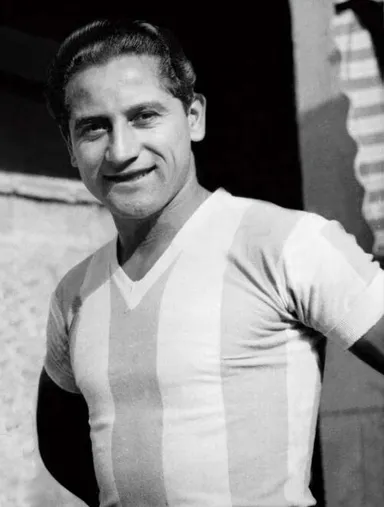
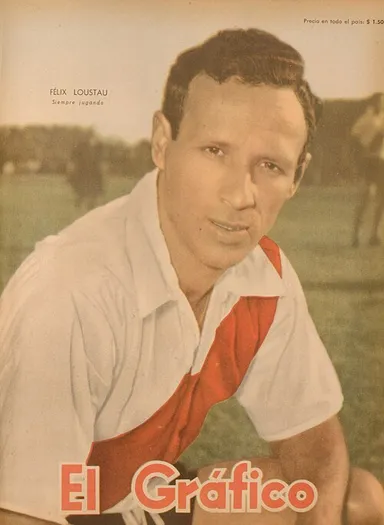
Pedernera, Moreno, Labruna, Loustau and Muñoz became shorthand for coordinated movement. Their legacy is a way of thinking about attacking football, not merely a formation.
Tactical identity · Interchange, support and collective invention
Five league titles in six seasons included the 1955–1957 three-peat. The club carried its attacking tradition into a new generation.
Tactical identity · Technical continuity and championship rhythm
After the 1957 title, River endured a prolonged league drought. Its first Libertadores final in 1966 ended in defeat to Peñarol.
Tactical identity · Talent under the weight of expectation
The 1975 Metropolitano ended the drought, with young stand-ins completing the decisive win during a professional players’ strike. Six league titles followed across Labruna’s winning spell.
Tactical identity · Creative midfield play with a strong defensive base
Veira’s team added the first Libertadores to the 1985–86 league, then Alzamendi’s goal beat Steaua in Tokyo. The continental breakthrough finally matched the club’s domestic reputation.
Tactical identity · Balance behind the creative players
Explore the defining match ↗Francescoli’s return brought experience alongside Ortega, Crespo and Gallardo. The 1996 Libertadores and three consecutive short league tournaments defined the peak.
Tactical identity · Creative combinations around a clinical striker
Explore the defining match ↗Relegation in 2011 was a rupture in River’s history. Almeyda’s promotion team restored top-flight status in 2012; Ramón Díaz then led the 2014 league champions.
Tactical identity · Rebuild confidence through collective responsibility
Explore the defining match ↗The 2014 Sudamericana opened a run of fourteen trophies. River won the Libertadores in 2015 and 2018, adapting personnel and tactics while preserving a demanding collective game.
Tactical identity · Pressing, tactical variation and knockout resilience
Explore the defining match ↗The 2023 league under Demichelis extended River’s domestic record. Gallardo’s return and Coudet’s short tenure were followed by Ponzio’s interim appointment in 2026.
Tactical identity · Re-establishing an effective collective
Defining games
Copa Libertadores
River Plate 1–0 América de Cali
Second leg · won 3–1 on aggregate
Estadio Monumental
Juan Funes scored the only goal as River completed the final against América de Cali and lifted the continental trophy at home.
Copa Libertadores
River Plate 2–0 América de Cali
Second leg · won 2–1 on aggregate
Estadio Monumental
Two Hernán Crespo goals overturned a first-leg defeat. Francescoli captained Ramón Díaz’s side to River’s second Libertadores.
Primera B Nacional
River Plate 2–0 Almirante Brown
Second-tier champions · promotion
Estadio Monumental
David Trezeguet scored twice on the final day to secure the second-tier title and immediate promotion under Matías Almeyda.
Copa Libertadores
River Plate 3–0 Tigres UANL
Second leg · won 3–0 on aggregate
Estadio Monumental
Alario, Sánchez and Funes Mori scored after a goalless first leg. River ended a nineteen-year wait for another Libertadores.
Copa Libertadores
River Plate 3–1 Boca Juniors
After extra time · won 5–3 on aggregate
Santiago Bernabéu
Pratto equalised before Quintero and Martínez scored in extra time. The relocated second leg gave River its fourth Libertadores against its oldest rival.
Legends
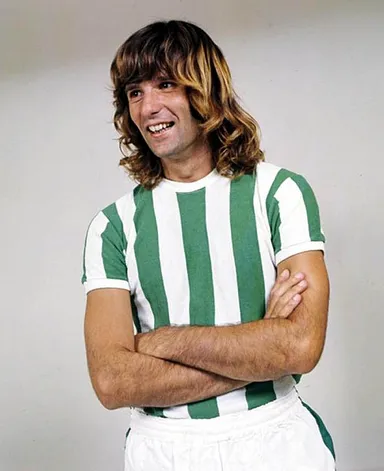
Photo: Unknown authorUnknown author. Source and license in Image credits.Forward
The club’s record scorer and an enduring link between La Máquina and the championship teams he later coached.
Photo: Unknown authorUnknown author. Source and license in Image credits.Forward
A mobile, inventive inside-forward whose combinations gave La Máquina much of its attacking freedom.
Photo: Unknown authorUnknown author. Source and license in Image credits.Forward
The roaming centre-forward at the heart of La Máquina: a creator who made space and connected the attack.
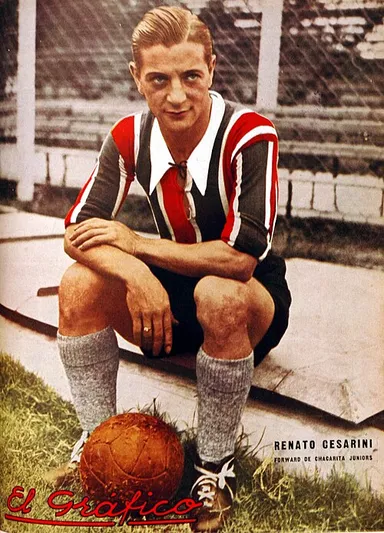
Photo: El Gráfico. Source and license in Image credits.Winger
The left-wing reference whose pace and willingness to work supported the famous five-man attack and later title-winning sides.
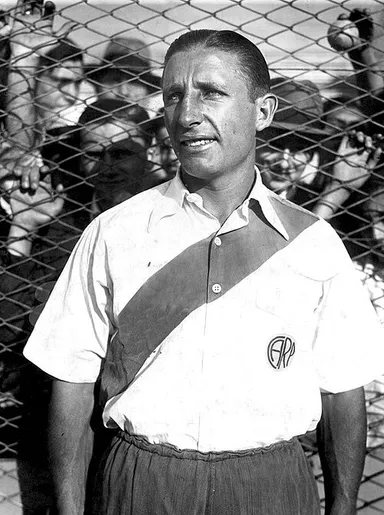
Photo: Unknown authorUnknown author. Source and license in Image credits.Goalkeeper
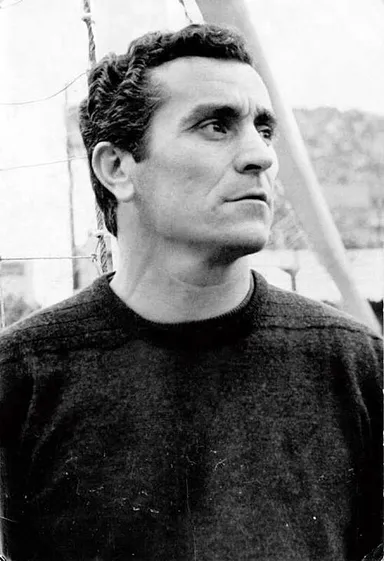
A pioneering goalkeeper whose long River career spanned the great 1950s sides and the first Libertadores final.
Photo: Unknown authorUnknown author. Source and license in Image credits.Goalkeeper
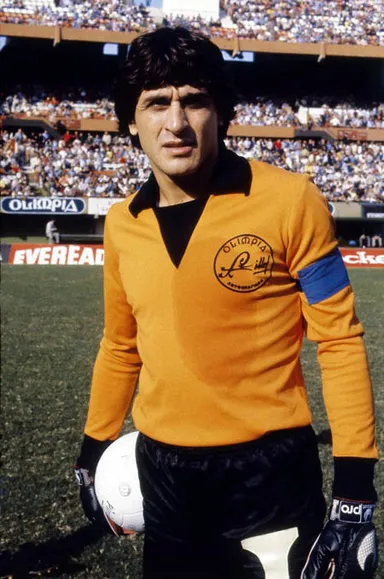
The goalkeeper behind the return to domestic success, remembered for exceptional reactions and authority in his area.
Photo: Unknown authorUnknown author. Source and license in Image credits.Defender
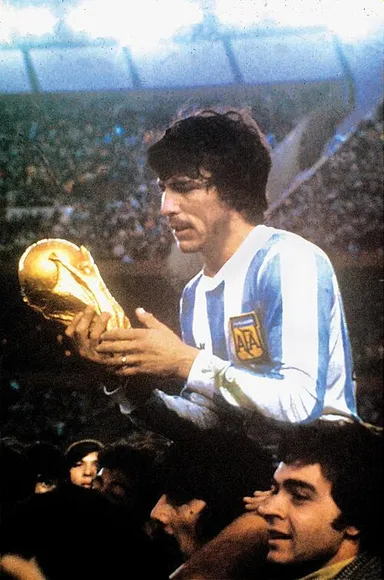
A commanding, goalscoring defender who linked defensive organisation with aggressive attacking contributions.
Photo: Unknown authorUnknown author. Source and license in Image credits.Midfielder
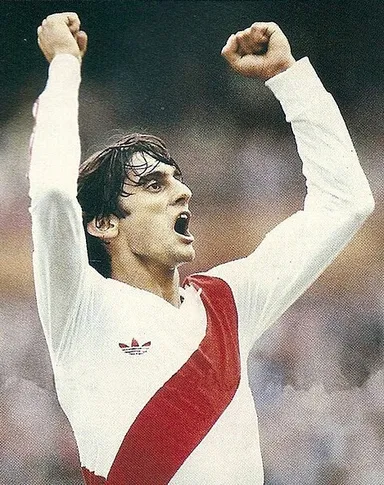
The creative number ten whose three spells culminated in the 1986 continental and world triumphs.
Photo: Unknown authorUnknown author. Source and license in Image credits.Forward
The elegant Uruguayan returned to captain the 1996 Libertadores winners and inspire the next generation of creators.
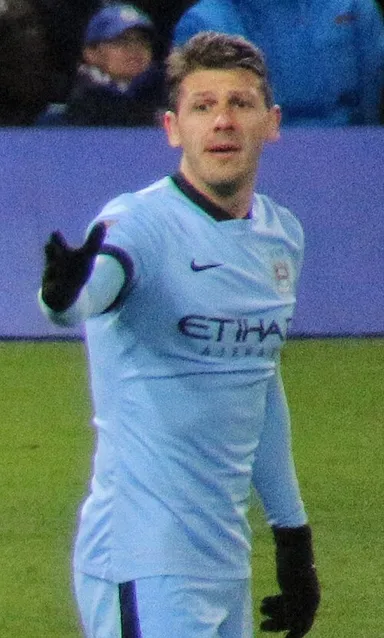
Photo: Gobierno de la Ciudad de Buenos Aires from Ciudad Autónoma de Buenos Aires, Argentina. Source and license in Image credits.Midfielder
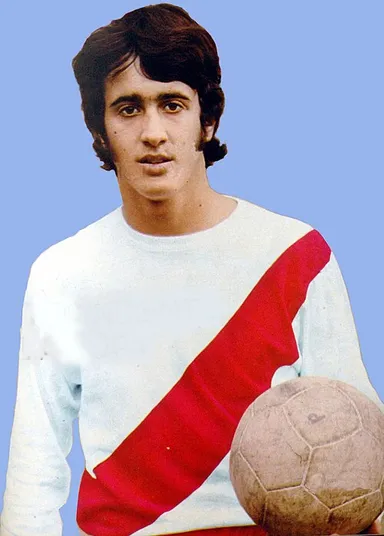
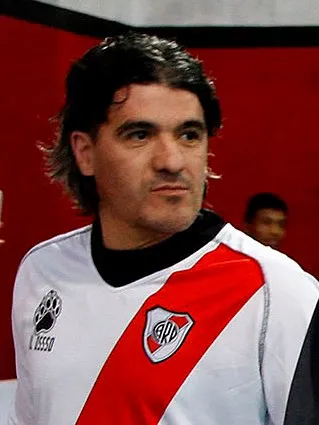
An academy product whose dribbling and improvisation became a defining part of River’s attacking imagination.
Photo: @cfcunofficial (Chelsea Debs) London from London, UK. Source and license in Image credits.Forward
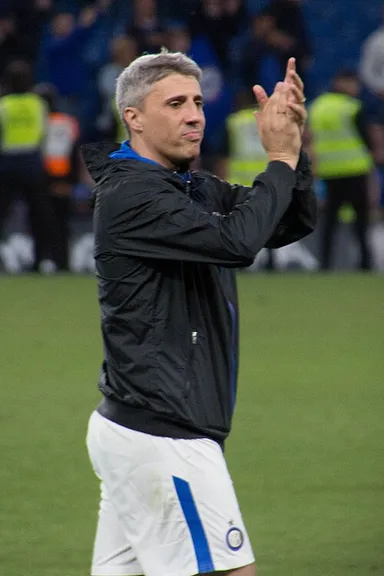
The young centre-forward whose two goals settled the 1996 Libertadores final before his move to Italy.
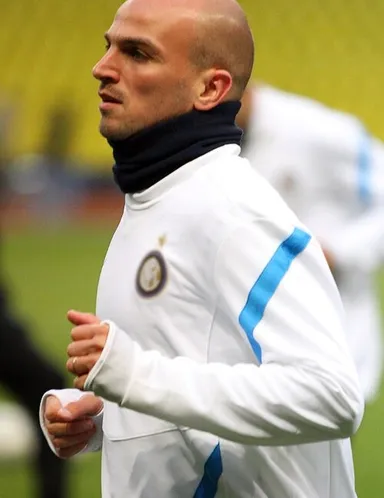
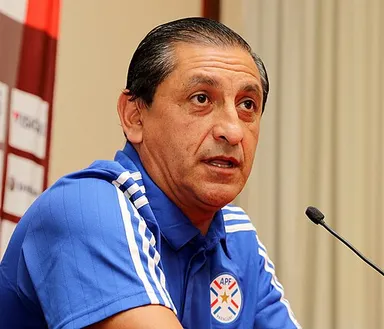
Photo: Carlos Figueroa Rojas. Source and license in Image credits.Midfielder
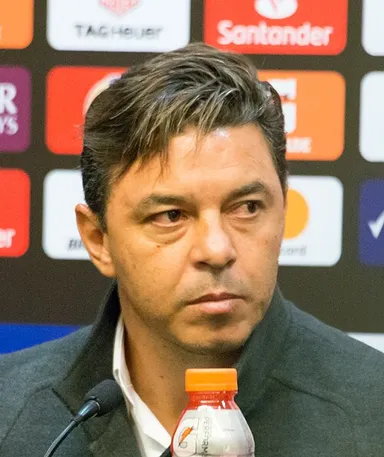
A technically gifted playmaker and 1996 continental champion before becoming the defining coach of River’s modern revival.
The club’s record scorer and an enduring link between La Máquina and the championship teams he later coached.
A mobile, inventive inside-forward whose combinations gave La Máquina much of its attacking freedom.
The roaming centre-forward at the heart of La Máquina: a creator who made space and connected the attack.
The left-wing reference whose pace and willingness to work supported the famous five-man attack and later title-winning sides.
A pioneering goalkeeper whose long River career spanned the great 1950s sides and the first Libertadores final.
The goalkeeper behind the return to domestic success, remembered for exceptional reactions and authority in his area.
A commanding, goalscoring defender who linked defensive organisation with aggressive attacking contributions.
The creative number ten whose three spells culminated in the 1986 continental and world triumphs.
The elegant Uruguayan returned to captain the 1996 Libertadores winners and inspire the next generation of creators.
An academy product whose dribbling and improvisation became a defining part of River’s attacking imagination.
The young centre-forward whose two goals settled the 1996 Libertadores final before his move to Italy.
A technically gifted playmaker and 1996 continental champion before becoming the defining coach of River’s modern revival.
His craft shows how a forward can shape an attack through the movement before the pass and the quality of the first contact.
Cambiasso made collective organisation tangible: a passing angle, a protected lane and the judgment to join the attack at the right moment.
His greatest performances came from moving between the midfield and the penalty area, rather than waiting permanently beside the centre-backs. Valencia and Argentina both benefited from that freedom to attack space.
Coaching legacy
Club tenure only. League titles count national top-flight championships; domestic cups and lower divisions are separate. Libertadores titles exclude other continental cups, the Recopa and world competitions.
Photo: El Gráfico. Source and license in Image credits.1940–1944
Helped build La Máquina around positional exchanges and Pedernera’s intelligence.
Selected 1940–1944 spell; the two league titles are 1941 and 1942.
Photo: Unknown authorUnknown author. Source and license in Image credits.1947–1959
Sustained the attacking tradition through six league championships, including the 1955–1957 three-peat.
Main 1947–1959 spell; a later return in 1963 brought no league title.
Photo: Unknown authorUnknown author. Source and license in Image credits.1975–1981
The record scorer returned as coach to end the long title drought and establish another sustained winning side.
Title-winning 1975–1981 spell; all six championships were domestic leagues.
Photo: Unknown authorUnknown author. Source and license in Image credits.1984–1987
United league strength with River’s first Libertadores and the 1986 Intercontinental Cup.
Photo: Agencia de Noticias ANDES. Source and license in Image credits.1995–2000 · 2001–2002 · 2012–2014
Led the 1996 continental champions and six league-winning teams across three spells.
Six league titles; the 1997 Supercopa and 2014 Copa Campeonato are separate cups.
Photo: Carlos Figueroa Rojas. Source and license in Image credits.2014–2022 · 2024–2026
Built an adaptable knockout team, winning fourteen trophies in his first spell, including two Libertadores.
The 2021 league and two Libertadores are counted here; other cups are not league titles.
Photo: CFCUnofficial (Chelsea Debs). Source and license in Image credits.2022–2024
Won the 2023 league and two national super-cup trophies before Gallardo’s return.
Club identity
The pleasure of combining is central to River’s self-image. La Máquina offers a historical reference for movement, anticipation and invention shared between players.
The academy repeatedly supplied players able to interpret space and change a match with technique. Their journeys connect the club to the wider Argentine game.
River’s origins lie in La Boca, while its later home grew around the Monumental. The move is part of the club’s history, not a reason to erase its beginnings.
The Monumental gathers generations around a shared set of players, songs and memories. Labruna’s legacy joins the goalscorer, coach and supporter in one figure.
River’s strongest teams have found different ways to express ambition: the combinations of the 1940s, the balance of 1986 and Gallardo’s tactical flexibility.
A white shirt crossed by a red sash remains River’s most immediate visual signature. New designs revisit that language while the crest and stadium preserve institutional continuity.
Identity
Stadium
Current home / Buenos Aires
Opened on 26 May 1938, the stadium is formally associated with Antonio Vespucio Liberti and now uses the Mâs Monumental name. The club lists a current capacity of 85,018 following its recent expansion; future construction plans are not counted as existing seats.
Rivalries
River Plate and Boca Juniors share roots in La Boca and contest Argentina’s defining club rivalry. League meetings and continental eliminations have carried that rivalry far beyond the city.
The 2018 Libertadores final brought the rivalry to Madrid. The second leg was moved after the attack on Boca’s team bus, and River won the tie after extra time.
Development
Develop technically secure players who can receive under pressure, combine in tight spaces and take responsibility in possession.
Historical role
Ortega, Aimar, Saviola and Julián Álvarez illustrate successive generations of the academy. River Camp in Ezeiza supports the modern training structure; the academy tradition is much older than that facility. Francescoli arrived from Montevideo Wanderers and belongs to the recruitment story.
Famous graduates
Collection
Kits
Home kit / 2025–26
Away kit / 2025–26
Third kit / 2025
Commercial
TECHNICAL SUPPLIER
Kit studies are abstract colour and pattern references, not reproductions of official shirts.
Records
304 goals in AFA competitions and 13 in international competitions in the cited historical count.
As of 2026-09-15Six goals against Alianza Lima in an 8–1 group-stage win; a single-match record, not a season total.
As of 2026-09-15Includes the 1920 amateur championship and both 1936 titles recognised by AFA. The 2014 Copa Campeonato is a national cup, and the 2011–12 promotion title belongs to the second tier.
As of 2026-09-15Apertura 1996, Clausura 1997 and Apertura 1997; three tournaments across two calendar years.
As of 2026-09-151986, 1996, 2015 and 2018. Other South American and intercontinental cups are listed separately.
As of 2026-09-15All competitions in the first coaching spell: one league, two Libertadores and eleven other cups.
As of 2026-09-151947, 1952, 1953, 1955, 1956 and 1957; his other cups are excluded.
As of 2026-09-15