
Copa del Rey
Valencia · domestic cup
 Photo: Unknown photographer / El Gráfico. Source and license in Image credits.
Mario Alberto Kempes Chiodi
Kempes led Argentina’s scoring at the 1978 World Cup and gave Valencia a powerful, mobile attacking reference. El Matador could finish in the box, carry through midfield and arrive from behind the front line.
Senior club · all competitions
Completed club records only; not a complete career total.
Active club snapshots and records with another scope are excluded. Assist totals are not combined across incompatible definitions.
Stored archive snapshots, not live counters. Missing values are not zero; records with different scopes are never added together.
G/M = goals ÷ appearances. G+A = goals + assists. Per-90 metrics use documented minutes.
Senior international · all competitions
Stored archive snapshots, not live counters. Missing values are not zero; records with different scopes are never added together.
G/M = goals ÷ appearances. G+A = goals + assists. Per-90 metrics use documented minutes.
In context
His greatest performances came from moving between the midfield and the penalty area, rather than waiting permanently beside the centre-backs. Valencia and Argentina both benefited from that freedom to attack space.
Reading the game
His greatest performances came from moving between the midfield and the penalty area, rather than waiting permanently beside the centre-backs. Valencia and Argentina both benefited from that freedom to attack space.
Historical references support the chronology; tactical explanations are museum editorial analysis.
Historical references: Valencia: Kempes’s two spells and official club totals ↗
Career
| Period | Club |
|---|---|
| 1972—1973 | InstitutoInstituto gave him his first senior platform, and Rosario Central established his scoring reputation. Valencia signed him in 1976 after that Argentine development, not straight from youth football. Senior club · all competitions |
| 1974—1976 | Rosario CentralInstituto gave him his first senior platform, and Rosario Central established his scoring reputation. Valencia signed him in 1976 after that Argentine development, not straight from youth football. Senior club · all competitions |
| 1976—1981 | ValenciaHis first Valencia spell brought the 1977 and 1978 league scoring awards, the 1979 Spanish Cup and the 1980 Cup Winners’ Cup and UEFA Super Cup. He scored both goals in the 1979 final against Real Madrid. Senior club · all competitions |
| 1981—1982 | River PlateA River Plate interlude brought the 1981 Nacional title before his return to Valencia in 1982. The two Mestalla spells are kept separate; the combined club record is not assigned to either spell. Senior club · all competitions |
| 1982—1984 | ValenciaValencia’s August 2026 anniversary account records 246 official appearances and 149 goals across his two spells. These club-authority figures exclude his other clubs and all Argentina matches. Senior club · all competitions |
| 1984—1986 | HérculesAfter his second Valencia spell, he played for Hércules, Austrian clubs and teams in Chile and Indonesia. These later stages are documented as career context without invented complete statistical totals. Senior club · all competitions |
| 1986—1987 | First ViennaAfter his second Valencia spell, he played for Hércules, Austrian clubs and teams in Chile and Indonesia. These later stages are documented as career context without invented complete statistical totals. Senior club · all competitions |
| 1987—1990 | St. PöltenAfter his second Valencia spell, he played for Hércules, Austrian clubs and teams in Chile and Indonesia. These later stages are documented as career context without invented complete statistical totals. Senior club · all competitions |
| 1990—1992 | Kremser SCAfter his second Valencia spell, he played for Hércules, Austrian clubs and teams in Chile and Indonesia. These later stages are documented as career context without invented complete statistical totals. Senior club · all competitions |
| 1995—1995 | Fernández VialAfter his second Valencia spell, he played for Hércules, Austrian clubs and teams in Chile and Indonesia. These later stages are documented as career context without invented complete statistical totals. Senior club · all competitions |
| 1996—1996 | Pelita JayaAfter his second Valencia spell, he played for Hércules, Austrian clubs and teams in Chile and Indonesia. These later stages are documented as career context without invented complete statistical totals. Senior club · all competitions |
Stored archive snapshots, not live counters. Missing values are not zero; records with different scopes are never added together.
G/M = goals ÷ appearances. G+A = goals + assists. Per-90 metrics use documented minutes.
Honours
Valencia · domestic cup
Valencia · continental
Valencia · continental
River Plate · league
La Liga · individual
Argentina · world
FIFA · individual
FIFA · individual
Story
Career chapter
Instituto gave him his first senior platform, and Rosario Central established his scoring reputation. Valencia signed him in 1976 after that Argentine development, not straight from youth football.
Club chapter
His first Valencia spell brought the 1977 and 1978 league scoring awards, the 1979 Spanish Cup and the 1980 Cup Winners’ Cup and UEFA Super Cup. He scored both goals in the 1979 final against Real Madrid.
Explore club contextClub chapter
A River Plate interlude brought the 1981 Nacional title before his return to Valencia in 1982. The two Mestalla spells are kept separate; the combined club record is not assigned to either spell.
Explore club contextCareer chapter
After his second Valencia spell, he played for Hércules, Austrian clubs and teams in Chile and Indonesia. These later stages are documented as career context without invented complete statistical totals.
Profile
Forward
Also plays · Attacking midfielder
A left-footed forward combining central finishing with carries and late arrivals from midfield. His freedom between lines mattered more than confinement to a single centre-forward or attacking-midfield label.
Carry through the gap
The second-line arrival
Illustrative role zones · not tracking data
Editorial assessment
Historical role analysis
Seven qualitative bands · not measured scores
Editorial assessment of this period, not an official rating.
These bands are not percentiles or an overall ranking. The chart’s geometry represents ordered bands, not equal differences in ability.
Qualitative judgments describe football actions in context. They do not measure personality or medical fitness. Category assessments are editorial summaries, not averages. A lower defensive band describes the player’s role and contribution, not their value to the team.
FIFA: Kempes and Argentina’s 1978 World Cup ↗Reading the game
A forward arriving from midfield meets a different defensive problem from a striker already marked in the box. Kempes could use a powerful carry to force a defender out, then keep going towards goal.
Movement behind an initial striker delayed the defender’s choice of whom to follow. His 1978 influence is best understood through those arrivals and his finishing, not by assuming a fixed modern positional label.
Historical references: Valencia: Kempes’s two spells and official club totals ↗ · FIFA: Kempes and Argentina’s 1978 World Cup ↗
Reading the game
His first Valencia spell brought the 1977 and 1978 league scoring awards, the 1979 Spanish Cup and the 1980 Cup Winners’ Cup and UEFA Super Cup. He scored both goals in the 1979 final against Real Madrid.
He scored six times in seven matches at the 1978 World Cup, including twice in the final against the Netherlands. FIFA recognises him as the tournament’s leading scorer and best player.
Historical references: Valencia: Kempes’s two spells and official club totals ↗ · FIFA: Kempes and Argentina’s 1978 World Cup ↗
Statistics
Stored archive snapshots, not live counters. Missing values are not zero; records with different scopes are never added together.
G/M = goals ÷ appearances. G+A = goals + assists. Per-90 metrics use documented minutes.
Selected documented honours, not an exhaustive career trophy total. Unknown assists and incomplete season records remain unfilled; club totals exclude national-team matches.
International
International career
He scored six times in seven matches at the 1978 World Cup, including twice in the final against the Netherlands. FIFA recognises him as the tournament’s leading scorer and best player.
Reading the game
Kempes led Argentina’s scoring at the 1978 World Cup and gave Valencia a powerful, mobile attacking reference. El Matador could finish in the box, carry through midfield and arrive from behind the front line.
Historical references: Valencia: Kempes’s two spells and official club totals ↗
Archive
Complete Forward · editorial peak 1976—1978
Alfredo Di Stéfano · César Luis Menotti
Diego Maradona— Overlapping Argentina era
Kempes and the Cup Winners’ Cup — Valencia

FC Barcelona · Paris Saint-Germain · Inter Miami CF
2004—Present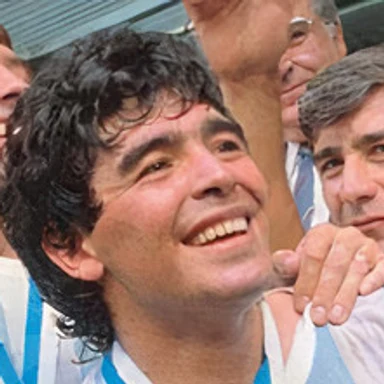 Photo: Unknown author. Source and license in Image credits.
Argentinos Juniors · Boca Juniors · Barcelona
1976—1997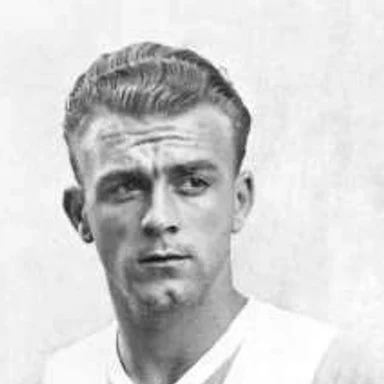 Photo: Unknown author. Source and license in Image credits.
River Plate · Huracán · Millonarios
1945—1966
AS Monaco · Juventus · Arsenal
1994—2014
Cruzeiro · PSV · Barcelona
1993—2011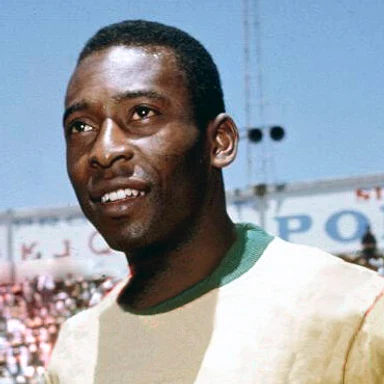 Photo: Unknown author. Source and license in Image credits.
Santos · New York Cosmos
1956—1977Statistics are displayed only within the scope supported by each cited source.
Instituto Atlético Central CórdobaInstituto: Kempes’s documented 1972–1973 senior seasonsValencia CFValencia: Kempes’s two spells and official club totalsAFAAFA: Kempes’s career and Argentina recordFIFAFIFA: Kempes and Argentina’s 1978 World CupNational Football TeamsNational Football Teams: Kempes’s later career chronology