The football behind Alfredo Di Stéfano’s ratings
- Attacking movement
- Generational
- Scoring anticipation
- Generational
- Passing connections
- Elite
- Repeated involvement
- Elite
- Ball control
- Elite
- Specialist defending
- Moderate
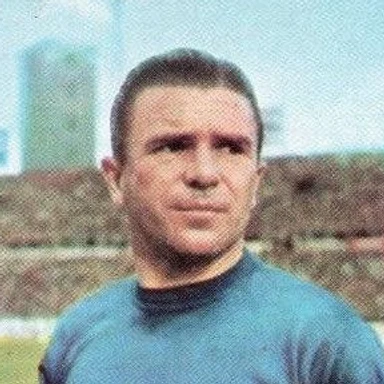
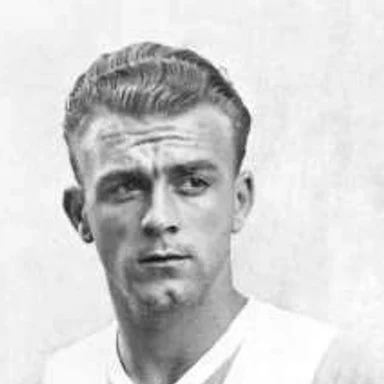 Photo: Unknown author. Source and license in Image credits.
Alfredo Stéfano Di Stéfano Laulhé
A roaming centre-forward who connected the construction of an attack with its finish, shaped in South America before Madrid’s first European dynasty.
Senior club · all competitions
Completed club records only; not a complete career total.
Active club snapshots and records with another scope are excluded. Assist totals are not combined across incompatible definitions.
Stored archive snapshots, not live counters. Missing values are not zero; records with different scopes are never added together.
G/M = goals ÷ appearances. G+A = goals + assists. Per-90 metrics use documented minutes.
Senior international · all competitions
Argentina · completed senior record, 1947
Stored archive snapshots, not live counters. Missing values are not zero; records with different scopes are never added together.
G/M = goals ÷ appearances. G+A = goals + assists. Per-90 metrics use documented minutes.
In context
Di Stéfano made scoring and responsibility for the whole move mutually reinforcing, while his separate national careers resist a simple trophy narrative.
Reading the game
Alfredo Di Stéfano makes the centre-forward position difficult to reduce to a place on a formation diagram. He could move towards the ball to help construct an attack, accelerate its next phase with a pass, and still arrive where the move needed a scorer. The important connection was between those actions: leaving the front line only helped if someone threatened the space ahead and he recognised when to return. Madrid gave that movement partners, from Gento’s width to Puskás’s presence near goal. His contribution therefore explains something that trophy lists cannot: a prolific scorer could also become the player through whom the team understood the game. The South American years belong in that explanation, because he arrived in Spain as an established footballer rather than a prospect waiting to be invented. This dossier uses 1959/60 as its common rating reference. The famous final supplies evidence of his attacking influence, while the wider season prevents one extraordinary evening from becoming a claim of limitless ability in every position.
Historical references support the chronology; tactical explanations are museum editorial analysis.
Historical references: Real Madrid: Di Stéfano’s official career and honours ↗ · AFA: the 1945 debut and 1947 Argentine breakthrough ↗ · Millonarios: the 1951 Ballet Azul and Di Stéfano’s 32 goals ↗ · UEFA: Madrid’s five European Cups and attacking relationships ↗ · RSSSF: Di Stéfano’s European Cup and Fairs Cup match log ↗
Career
| Period | Club | Apps | Goals | G/M |
|---|---|---|---|---|
| 1945—1945 | River PlateOne first-team league appearance preceded the Huracán loan. The 1945 league title belongs to this squad season; the return spell is listed separately. Senior club · league only | 1 | 0 | 0.00 |
| 1946—1946 | HuracánThe loan supplied regular senior football: 25 league appearances and ten goals. These figures exclude other competitions. Senior club · league only Loan | 25 | 10 | 0.40 |
| 1947—1949 | River PlateThe three return-season league rows total 65 appearances and 49 goals. Together with 1945, the two River spells total 66 league appearances and 49 goals. Senior club · league only | 65 | 49 | 0.75 |
| 1949—1953 | MillonariosPlayed the Colombian league campaigns of 1949–52 before the 1953 departure. DIMAYOR and the statistical database differ on individual season goals, so no reconciled aggregate is asserted. The season table follows DIMAYOR for goals and leaves appearances unconfirmed. Senior club · league only | — | — | — |
| 1953—1964 | Real MadridReal Madrid’s official legend profile records 396 official matches and 308 goals. The league series below uses the statistical database’s separate 282-match, 216-goal scope. Historical totals from different authorities are not added together. Senior club · all competitions Senior · #9 | 396 | 308 | 0.78 |
| 1964—1966 | EspanyolTwo final playing seasons total 47 league appearances and eleven goals. His six Fairs Cup appearances are recorded separately and are outside this league total. Senior club · league only | 47 | 11 | 0.23 |
Stored archive snapshots, not live counters. Missing values are not zero; records with different scopes are never added together.
G/M = goals ÷ appearances. G+A = goals + assists. Per-90 metrics use documented minutes.
Honours
River Plate · league
Millonarios · league
Real Madrid · league
Real Madrid · continental
Real Madrid · domestic cup
Real Madrid · continental
Real Madrid · world
Argentina · continental
France Football · individual
France Football · individual
Real Madrid · individual
River Plate · individual
Millonarios · individual
Story
Career chapter
The first River Plate appearance in 1945 did not immediately secure a place among established attackers. A loan at Huracán brought regular football before his return to River in 1947, when he became a league champion and leading scorer. The move to Millonarios extended that education in a different setting, alongside Adolfo Pedernera and other accomplished combinations of the Ballet Azul. The Colombian club records thirty-two league goals in 1951, showing that collective passing and individual scoring could develop together. When Madrid signed him in 1953, it was acquiring a player shaped by several senior teams, rather than beginning his football story.
Historical references: AFA: the 1945 debut and 1947 Argentine breakthrough ↗ · Millonarios: the 1951 Ballet Azul and Di Stéfano’s 32 goals ↗ · Millonarios: the 1953 departure for Europe ↗
Career chapter
Madrid’s 1953/54 league title gave the new partnership an immediate achievement, but the developing attacking relationships explain more than the medal. Di Stéfano could approach midfield without abandoning the intention to score. Gento’s runs offered width and a forward outlet, while the other attackers provided combinations around a moving centre. The first European final required a recovery against Reims rather than a comfortable procession. Further victories under different coaches show continuity in the players’ understanding, not a single unchanging tactical instruction. His 1957 Ballon d’Or recognised this emerging authority during the period in which Madrid established its continental identity.
Historical references: Real Madrid: Di Stéfano’s official career and honours ↗ · UEFA: Madrid’s five European Cups and attacking relationships ↗ · BDFutbol: Di Stéfano’s Spanish league record ↗
Career chapter
Puskás’s arrival in 1958 introduced another exceptional scorer, making the division of attacking work especially revealing. Di Stéfano could help carry the move forward while Puskás remained a devastating presence closer to goal; these were complementary tendencies, not fixed territories. At Hampden in 1960, Di Stéfano scored three and Puskás four in the victory over Eintracht Frankfurt. The whole European campaign, however, matters to the reference season: Di Stéfano played six matches and scored eight times. His contribution combined connecting actions with decisive arrivals, while Gento and the supporting players kept routes available around both scorers.
Historical references: UEFA: Madrid’s five European Cups and attacking relationships ↗ · RSSSF: Di Stéfano’s European Cup and Fairs Cup match log ↗
Career chapter
The European sequence ended after 1960, although Madrid continued to win domestic titles and reached further continental finals. The defeats to Benfica in 1962 and Inter in 1964 prevent the later years from becoming an uninterrupted victory montage. Spain provided another unfinished strand: he helped qualify for Chile but injury kept him from playing at the 1962 World Cup. After leaving Madrid in 1964, two Espanyol seasons brought the playing career to its conclusion in 1966. Those seasons belong in the record even though they sit outside the familiar white-shirted peak; his subsequent coaching achievements belong to a separate profession.
Historical references: UEFA: Di Stéfano’s footballing influence and later career ↗ · FIFA: Di Stéfano’s career and the missed 1962 World Cup ↗ · BDFutbol: Di Stéfano’s Spanish league record ↗ · RSSSF: Di Stéfano’s European Cup and Fairs Cup match log ↗
Profile
Complete Forward
Also plays · Advanced Playmaker / Box-to-Box Midfielder
Comes towards possession, combines or carries forward, then returns towards goal as teammates occupy the defenders. Repeated availability and anticipation connect creation with scoring; broad involvement does not imply specialist defensive technique.
Continuous attacking involvement
Scoring anticipation
Passing connections
Repeated movement
Illustrative role zones · not tracking data
Coming short gave a teammate an available receiver and invited an opponent to make a decision. If the marker followed, space could open farther forward; if the marker held position, Di Stéfano could turn or combine. The useful part was the next action. He did not need to remain beside the passer after releasing the ball, and moving again could connect the build-up with a later arrival near goal. This reading describes a recurring football problem, rather than imposing a modern formation on his era.
His carrying mattered when it changed the angle or speed of the attack. A controlled first touch could let him face forward, and a short acceleration could draw a defender before the pass. The aim was not always to defeat several opponents alone. Recognising when a teammate had the better route made technique useful to the whole move. A player who repeatedly became available also needed enough control to keep that availability from turning into a sequence of unnecessary losses.
The contrast between a deeper involvement and a scoring finish is central to his profile. Timing the return towards goal could be as important as the earlier pass, particularly when another forward occupied the defenders. He could attack deliveries, follow the developing play and strike without requiring every chance to begin from a fixed central position. The 1960 final illustrates the range of involvement, but the assessment considers the campaign around it rather than treating a hat-trick as a complete technical inventory.
His willingness to join earlier phases and recover position expanded a forward’s involvement in the team’s work. That does not make him a specialist defender, nor does it establish that Madrid used a modern coordinated high press. It suggests a player who recognised that influence could begin before possession reached the attack. The ratings therefore distinguish anticipation, stamina and teamwork from tackling technique and defensive positioning: broad responsibility is meaningful without turning every defensive attribute into an elite one.
Historical references: Real Madrid: Di Stéfano’s official career and honours ↗ · UEFA: Madrid’s five European Cups and attacking relationships ↗ · UEFA: Di Stéfano’s footballing influence and later career ↗ · RSSSF: Di Stéfano’s European Cup and Fairs Cup match log ↗
Reading the game
| Era / team | Primary Role | Tactical Character |
|---|---|---|
| 1945–1949River Plate · Huracán · Argentina | From first-team opportunity to scoring responsibility | Regular games and combinations establish his attacking foundation. |
| 1949–1953Millonarios | Combination play in the Ballet Azul | A prolific scorer develops within a technically accomplished attack. |
| 1953–1960Real Madrid · Spain | Connect the attack and return to finish | Roaming becomes valuable through the movements of the other forwards. |
| 1960–1966Real Madrid · Espanyol | Later responsibility and a final club chapter | Later Madrid and Espanyol complete the playing record beyond the five-title sequence. |
Historical references: Real Madrid: Di Stéfano’s official career and honours ↗ · AFA: the 1945 debut and 1947 Argentine breakthrough ↗ · Millonarios: the 1951 Ballet Azul and Di Stéfano’s 32 goals ↗ · UEFA: Madrid’s five European Cups and attacking relationships ↗ · UEFA: Di Stéfano’s footballing influence and later career ↗ · BDFutbol: Di Stéfano’s Spanish league record ↗
Reading the game
An initial movement towards possession mattered more when followed by another useful movement. Di Stéfano could help a teammate escape pressure and then become an option elsewhere. The distinctive quality was the continuity of involvement: his work did not necessarily end when the ball left his foot or begin only when it entered the box.
His scoring threat made the decision to follow him away from goal difficult, while his passing made ignoring him costly. Those strengths supported one another. The point is not that each action was equally spectacular, but that a defender could not safely assume the forward had stopped being dangerous after choosing to pass.
The relationship with Puskás offers an example of shared attacking authority. Di Stéfano could contribute to progression without making every move end with his own shot. Width and supporting passes from teammates also mattered. This was a partnership within a team, rather than evidence that two famous names automatically produce a coherent attack.
Scoring in each of the first five winning European finals gives his reputation a specific foundation. It reflects repeated contribution across different opponents and coaches, not a promise that he always decided every final. The later defeats remain part of the same career and help keep big-match recognition tied to evidence rather than mythology.
Historical references: Real Madrid: Di Stéfano’s official career and honours ↗ · UEFA: Madrid’s five European Cups and attacking relationships ↗ · RSSSF: Di Stéfano’s European Cup and Fairs Cup match log ↗
Reading the game
Scoring centre-forward
The first Spanish league title anchors the early Madrid version. Twenty-seven league goals accompany a forward already comfortable participating before the final pass.
Roaming centre-forward
A league and European Cup double, followed by the 1957 Ballon d’Or. Scoring authority and responsibility for connections grow together within the developing dynasty.
Complete forward and attacking connector
Both rating systems use this season. Six European Cup appearances and eight goals include the Hampden hat-trick; the analysis also considers his relationship with Puskás and the supporting team.
Historical references: Real Madrid: Di Stéfano’s official career and honours ↗ · UEFA: Madrid’s five European Cups and attacking relationships ↗ · BDFutbol: Di Stéfano’s Spanish league record ↗ · RSSSF: Di Stéfano’s European Cup and Fairs Cup match log ↗
Statistics
| Season | Club | Apps | Goals | G/M |
|---|---|---|---|---|
| 1965–66 | Espanyol Senior club · league only | 23 | 4 | 0.17 |
| 1964–65 | Espanyol Senior club · league only | 24 | 7 | 0.29 |
| 1963–64 | Real Madrid Senior club · league only | 24 | 11 | 0.46 |
| 1962–63 | Real Madrid Senior club · league only | 13 | 12 | 0.92 |
| 1961–62 | Real Madrid Senior club · league only | 23 | 11 | 0.48 |
| 1960–61 | Real Madrid Senior club · league only | 23 | 21 | 0.91 |
| 1959–60 | Real Madrid Senior club · league only | 23 | 12 | 0.52 |
| 1958–59 | Real Madrid Senior club · league only | 28 | 23 | 0.82 |
| 1957–58 | Real Madrid Senior club · league only | 30 | 19 | 0.63 |
| 1956–57 | Real Madrid Senior club · league only | 30 | 31 | 1.03 |
Stored archive snapshots, not live counters. Missing values are not zero; records with different scopes are never added together.
G/M = goals ÷ appearances. G+A = goals + assists. Per-90 metrics use documented minutes.
League-only rows. River’s two spells total 66 appearances and 49 goals; Madrid totals 282 and 216, and Espanyol 47 and 11. Colombian goals follow DIMAYOR: 16 in 1949 and 22 in 1950, rather than the database’s 15 and 23. Colombian appearances and the club aggregate remain unconfirmed pending reconciliation. Assists are unknown, not zero. Season rows overlap club records and must not be added to them.
Club competitions
| Competition | Apps | Goals | G/M |
|---|---|---|---|
La Liga1953–66 · Madrid and Espanyol league recordBDFutbol’s 329 appearances and 227 goals combine Madrid’s 282/216 and Espanyol’s 47/11. This is not the official Madrid all-competition total. | 329 | 227 | 0.69 |
European Cup1955–64 · European Cup onlyRSSSF’s match log records 58 European Cup appearances and 49 goals. The separate six Espanyol Fairs Cup games must not turn this into a 64-match European Cup record. | 58 | 49 | 0.84 |
Inter-Cities Fairs Cup1965/66 · Espanyol in the Fairs CupA distinct competition: six appearances and no goals. Combined with the European Cup, the selected European record is 64 appearances and 49 goals. | 6 | 0 | 0.00 |
Stored archive snapshots, not live counters. Missing values are not zero; records with different scopes are never added together.
G/M = goals ÷ appearances. G+A = goals + assists. Per-90 metrics use documented minutes.
International
International career
Argentina: six appearances and six goals, all in the victorious 1947 South American Championship. Spain: a separate 31 appearances and 23 goals from 1957 to 1961, displayed in its own row below. His 1962 World Cup squad place produced no playing appearance because of injury. Neither national record includes the unrecognised Colombia representative matches.
Senior international · tournament splits
| Competition | Apps | Goals |
|---|---|---|
South American Championship1947 · Argentina’s continental titleAll six Argentina senior appearances came in this tournament. Six goals made him joint leading scorer for Argentina, not the tournament’s outright leading scorer. Performance record
| 6 | 6 |
Spain senior internationals1957–61 · Spain, separately from ArgentinaSpain’s complete senior match record, including friendlies and qualifiers. It is a national-team aggregate, not a single tournament, and is not added to the Argentina headline. Performance record
| 31 | 23 |
FIFA World Cup1962 · Spain squad, no finals appearanceInjury prevented a playing appearance at Chile 1962. Qualification matches are excluded; inclusion in the squad does not count as a finals appearance. | 0 | 0 |
Stored archive snapshots, not live counters. Missing values are not zero; records with different scopes are never added together.
G/M = goals ÷ appearances. G+A = goals + assists. Per-90 metrics use documented minutes.
Reading the game
Di Stéfano’s lasting significance lies in making a demanding combination visible: a forward could take responsibility for how a team reached the penalty area as well as what happened inside it. Later football offers many players who join creation and scoring, but resemblance should not be mistaken for a direct line of invention. His movement belonged to the partners, formations and competitive conditions of his own period. Calling him a modern false nine can help a reader recognise one action, yet it misses the repeated running and changing responsibilities that made his overall game distinctive. Madrid’s first European dynasty amplified that example internationally, while River Plate and Millonarios remain essential parts of its formation. His international career also resists a simple triumphal narrative: an Argentine continental title and a separate Spanish career coexist with no World Cup finals appearance. The later coach, honorary president and recipient of the Super Ballon d’Or belong to the history of his reputation, not to additional playing seasons. Understanding the player means preserving those distinctions while recognising how scoring, distribution and responsibility could reinforce one another.
Historical references: Real Madrid: Di Stéfano’s official career and honours ↗ · AFA: the 1945 debut and 1947 Argentine breakthrough ↗ · Millonarios: the 1951 Ballet Azul and Di Stéfano’s 32 goals ↗ · FIFA: Di Stéfano’s career and the missed 1962 World Cup ↗ · RSSSF: Di Stéfano’s separate Argentina and Spain records ↗
Archive
Complete Forward · editorial peak 1959—1960
Carlos Peucelle · José María Minella · Adolfo Pedernera · Enrique Fernández · José Villalonga · Luis Carniglia · Miguel Muñoz · Guillermo Stábile · Helenio Herrera
Ferenc Puskás— Overlapping Real Madrid era · Paco Gento— Overlapping Real Madrid era
Five in a row — Real Madrid

FC Barcelona · Paris Saint-Germain · Inter Miami CF
2004—Present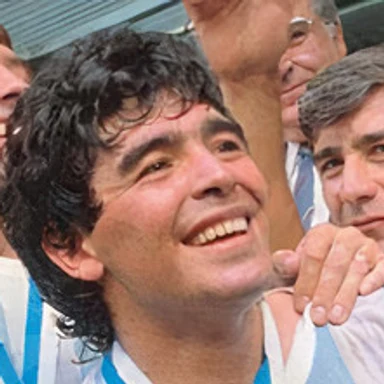 Photo: Unknown author. Source and license in Image credits.
Argentinos Juniors · Boca Juniors · Barcelona
1976—1997
Racing Club · Inter Milan
2015—Present
AS Monaco · Juventus · Arsenal
1994—2014
Cruzeiro · PSV · Barcelona
1993—2011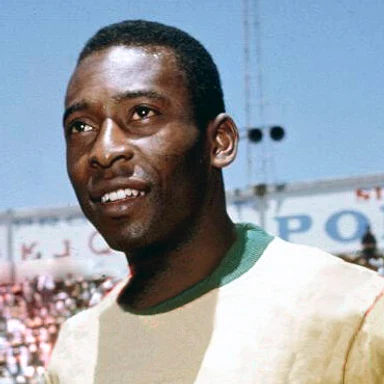 Photo: Unknown author. Source and license in Image credits.
Santos · New York Cosmos
1956—1977Statistics are displayed only within the scope supported by each cited source.
Real MadridReal Madrid: Di Stéfano’s official career and honoursReal MadridReal Madrid: Di Stéfano’s centenary and trophy recordAFAAFA: the 1945 debut and 1947 Argentine breakthroughMillonarios FCMillonarios: the 1951 Ballet Azul and Di Stéfano’s 32 goalsMillonarios FCMillonarios: the 1953 departure for EuropeUEFAUEFA: Madrid’s five European Cups and attacking relationshipsUEFAUEFA: Di Stéfano’s footballing influence and later careerFIFAFIFA: Di Stéfano’s career and the missed 1962 World CupNational Football TeamsNational Football Teams: Di Stéfano’s league seasonsBDFutbolBDFutbol: Di Stéfano’s Spanish league recordRSSSFRSSSF: Di Stéfano’s European Cup and Fairs Cup match logRSSSFRSSSF: Di Stéfano’s separate Argentina and Spain recordsDIMAYORDIMAYOR: Di Stéfano’s Colombian titles and season goalsWikipedia (cited biographical reference)Alfredo Di Stéfano — biographical and career reference