The football behind Ferenc Puskás’s ratings
- Left-foot striking
- Generational
- Finishing anticipation
- Generational
- Close-range control
- Elite
- Short combinations
- Elite
- Aerial reach
- Moderate
- Defensive coverage
- Limited
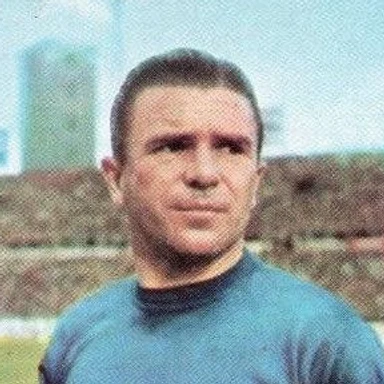 Photo: Panini. Source and license in Image credits.
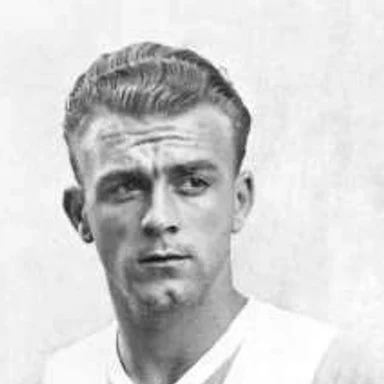
Ferenc Puskás Bíró
Hungary’s combining inside-left and Madrid’s later scoring reference, using close control and anticipation to give his exceptional left foot room to work.
Senior club · all competitions
Completed club records only; not a complete career total.
Active club snapshots and records with another scope are excluded. Assist totals are not combined across incompatible definitions.
Stored archive snapshots, not live counters. Missing values are not zero; records with different scopes are never added together.
G/M = goals ÷ appearances. G+A = goals + assists. Per-90 metrics use documented minutes.
Senior international · all competitions
Hungary · federation-recognised record, 1945–56
Stored archive snapshots, not live counters. Missing values are not zero; records with different scopes are never added together.
G/M = goals ÷ appearances. G+A = goals + assists. Per-90 metrics use documented minutes.
In context
Puskás connected technical precision with shared attacking understanding, then rebuilt his career around those strengths after leaving Hungary.
Reading the game
Ferenc Puskás shows why understanding a scorer requires looking at the moment before the shot. His left foot could generate exceptional force, but close control, a short exchange and the decision to wait or strike created the opportunity to use it. Hungary’s inside-left was part of a network: Hidegkuti’s deeper movement, Kocsis’s threat and Bozsik’s passing changed the spaces he could attack. Treating him as a stationary finisher misses those relationships. His second career makes the point differently. After leaving Hungary and a prolonged interruption, he joined Madrid at thirty-one and became a complementary scorer alongside Di Stéfano. The value of his positioning and contact with the ball survived a major change in team and circumstances. This dossier uses 1959/60 for both evaluations, while keeping the Hungarian version visible in its own historical setting. Four goals at Hampden illustrate the Madrid peak; they do not explain it alone. Puskás matters because his career connects collective attacking intelligence, distinctive finishing technique and an unusually successful reinvention.
Historical references support the chronology; tactical explanations are museum editorial analysis.
Historical references: Real Madrid: Puskás’s official career totals ↗ · UEFA: the roles inside Hungary’s Golden Team ↗ · UEFA: Hungary at Wembley and Puskás’s drag-back ↗ · UEFA: Puskás and Di Stéfano in Madrid’s European dynasty ↗
Career
| Period | Club | Apps | Goals | G/M |
|---|---|---|---|---|
| 1943—1956 | Kispest / Budapest HonvédMLSZ’s historical record gives 349 Hungarian league appearances and 358 goals across the club’s Kispest and Honvéd identities. They are one continuous spell, not two totals to add. The season database below has incomplete wartime coverage and does not independently reconcile to this federation aggregate. Senior club · league only | 349 | 358 | 1.03 |
| 1958—1966 | Real MadridReal Madrid confirms 262 official appearances, 242 goals and ten club trophies. The playing-season table ends in 1965/66; later administrative dates shown in some biographies do not add an extra playing season or a 1966/67 league title here. His 1959 and 1966 European titles do not imply appearances in those finals. Senior club · all competitions Senior · #10 | 262 | 242 | 0.92 |
Stored archive snapshots, not live counters. Missing values are not zero; records with different scopes are never added together.
G/M = goals ÷ appearances. G+A = goals + assists. Per-90 metrics use documented minutes.
Honours
Kispest / Budapest Honvéd · league
Real Madrid · league
Real Madrid · continental
Real Madrid · domestic cup
Real Madrid · world
Hungary · world
Hungary · continental
Kispest / Budapest Honvéd · individual
Real Madrid · individual
Real Madrid · individual
Story
Career chapter
A teenage top-flight debut in Kispest began a scoring career whose early setting matters as much as its later fame. Familiarity with teammates, especially József Bozsik, gave repeated passing exchanges a shared understanding beyond the mechanics of a single touch. Puskás’s prolific Hungarian league seasons show the scoring ability before Madrid, while the inside-left role kept him close enough to other forwards to combine. The club’s later transformation into Budapest Honvéd did not create a second independent playing spell. It changed the institutional setting around a continuing football education, with the national team drawing increasingly on established club relationships.
Historical references: MLSZ: Puskás’s Hungarian career and historical recognition ↗ · UEFA: the roles inside Hungary’s Golden Team ↗ · National Football Teams: Puskás’s league and national-team records ↗
Career chapter
Gusztáv Sebes’s Hungary made the relationships between positions difficult for opponents to follow. Hidegkuti could withdraw from the central-forward line while Puskás and Kocsis remained threats beyond him; Bozsik helped supply the movement. The Olympic title in 1952 and the Wembley victory in 1953 gave that understanding an international stage. Puskás’s drag-back against Billy Wright captures the close control beneath the powerful shooting. The 1954 World Cup adds a necessary complication: injury interrupted his tournament, and his return for the final did not bring victory. The team’s importance survives that defeat, but the defeat must remain visible within its story.
Historical references: UEFA: the roles inside Hungary’s Golden Team ↗ · UEFA: Hungary at Wembley and Puskás’s drag-back ↗ · UEFA: Puskás’s injury and the 1954 World Cup final ↗
Career chapter
The upheaval of 1956 broke the continuity of his Hungarian career. A period away from regular competitive football followed before Madrid signed him in 1958. Joining at thirty-one required preparation and adaptation, not simply resuming the same role in another shirt. Di Stéfano’s roaming involvement and Gento’s width offered a setting in which Puskás could combine and reach shooting positions. The 1959/60 European campaign produced twelve goals in seven appearances, four in the final against Eintracht Frankfurt. That final belongs to a functioning attack: Di Stéfano also scored three, and the supporting players kept supplying routes to the two scorers.
Historical references: Real Madrid: Puskás’s official career totals ↗ · UEFA: Puskás and Di Stéfano in Madrid’s European dynasty ↗ · UEFA: Puskás’s displacement, Madrid return and later career ↗ · RSSSF: Puskás’s European Cup match log ↗
Career chapter
Madrid’s domestic sequence in the early sixties gave his scoring another sustained setting. European finals were less predictable: his three goals against Benfica in 1962 could not prevent a 5–3 defeat, and the 1964 final also ended in disappointment. Spain’s 1962 World Cup campaign forms a separate national chapter, rather than an extension of Hungary’s earlier success. His playing contribution narrowed towards the end, but he still scored five goals in the 1965/66 European campaign. He did not play in that season’s final. The distinction matters: participation in a winning campaign and participation in its decisive match are different historical claims.
Historical references: Real Madrid: Puskás’s ten club trophies ↗ · RSSSF: Puskás’s European Cup match log ↗ · RSSSF: Puskás’s Hungary and Spain records, including scope notes ↗
Profile
Inside Forward
Also plays · Complete Forward / Advanced Playmaker
Combines near a strike partner, changes the angle with short touches and arrives ready to shoot with his left foot. The Madrid version relies on timing and contact quality more than sustained running across large spaces.
Left-foot ball striking
Close-range control
Finishing anticipation
Short combinations
Illustrative role zones · not tracking data
Power was one part of the threat; preparation made it available. Puskás could organise the ball with a short touch, set his body and strike before a defender completed the next adjustment. The same left foot could deliver a pass, so facing him did not always reveal whether the next action would be a shot. The rating emphasises control of contact and shooting technique, while treating weaker-foot use separately. A dominant foot can be exceptional without both feet being equally developed.
The Wembley drag-back is useful because it shows how a small movement could defeat a much larger defensive commitment. Waiting until the opponent moved, then pulling the ball out of the challenge, created the shooting angle. That action should not turn every dribble into a highlight imitation. Its broader lesson is control of timing and distance: a forward can gain the necessary fraction of space without a long sprint or a catalogue of elaborate tricks. Balance helps the next strike follow the change.
In Hungary, Hidegkuti’s withdrawal and Kocsis’s presence gave Puskás different options around the front line. At Madrid, Di Stéfano could join earlier phases while Gento stretched the left side. These were distinct arrangements, but both rewarded recognising what a teammate’s movement made possible. A short pass could release pressure or invite a return ball; remaining near goal could also protect the attack’s final threat. Combination play and finishing were complementary responsibilities, not competing descriptions of the player.
An effective run did not have to be the longest or fastest one. Finding an angle beside a defender, reading the next delivery and arriving with the ball accessible to his left foot could make a shorter movement decisive. This interpretation explains the Madrid reference better than projecting youthful running capacity onto every later season. Aerial reach, sustained defensive coverage and recovery speed remain more limited parts of the assessment. His team still needed width, progression and protection from the players around him.
Historical references: Real Madrid: Puskás’s official career totals ↗ · UEFA: the roles inside Hungary’s Golden Team ↗ · UEFA: Hungary at Wembley and Puskás’s drag-back ↗ · UEFA: Puskás and Di Stéfano in Madrid’s European dynasty ↗ · RSSSF: Puskás’s European Cup match log ↗
Reading the game
| Era / team | Primary Role | Tactical Character |
|---|---|---|
| 1943–1949Kispest · Hungary | Early inside-left combinations | Kispest provides regular opportunities to connect and finish. |
| 1949–1956Budapest Honvéd · Hungary | Movement around a withdrawn centre-forward | Hidegkuti’s deeper position creates choices for the forwards beyond him. |
| 1958–1960Real Madrid | A complementary scorer beside Di Stéfano | Short exchanges and arrivals turn shared space into shooting opportunities. |
| 1960–1966Real Madrid · Spain | Experience close to the finish | The later role preserves striking quality as playing involvement narrows. |
Historical references: Real Madrid: Puskás’s official career totals ↗ · MLSZ: Puskás’s Hungarian career and historical recognition ↗ · UEFA: the roles inside Hungary’s Golden Team ↗ · UEFA: Puskás and Di Stéfano in Madrid’s European dynasty ↗ · RSSSF: Puskás’s European Cup match log ↗ · RSSSF: Puskás’s Hungary and Spain records, including scope notes ↗
Reading the game
The shot attracted attention, but the threat depended on being able to control, pass or strike from related body positions. A defender who committed too early risked opening another option. This is why technique and decision-making support the finishing assessment, instead of treating shooting power as an isolated explanation for the goals.
The famous change of direction at Wembley was economical rather than expansive. Puskás waited for a challenge and moved the ball into the space it left. The transferable quality is composure at short range: understanding the opponent’s momentum can create a chance that an immediate, hurried strike would surrender.
The Madrid years show how positioning and technical quality could remain productive after a major interruption. The surrounding attack gave those qualities useful partners, and preparation made the return possible. Reinvention here means adapting a proven skill set to new relationships, rather than assuming the player had recovered every feature of his earlier physical peak.
Four goals in the winning 1960 final and three in the losing 1962 final provide an unusually clear comparison. Finishing could be outstanding while the team outcome changed. The distinction keeps his big-match reputation grounded in actual contributions and leaves room for the opposition, teammates and the balance of the whole match.
Historical references: Real Madrid: Puskás’s official career totals ↗ · UEFA: Hungary at Wembley and Puskás’s drag-back ↗ · UEFA: Puskás’s displacement, Madrid return and later career ↗ · RSSSF: Puskás’s European Cup match log ↗
Reading the game
Inside-left in a fluid forward line
Olympic gold and Wembley reveal combinations around Hidegkuti, Kocsis and Bozsik. The injury-affected World Cup belongs within this period, rather than being edited out of the peak.
Combining inside-forward
The shared reference for both ratings: twelve European Cup goals in seven games, including four at Hampden. Left-foot execution, short combinations and timely arrivals define the interpretation.
Experienced scoring forward
The league and Spanish Cup double sits beside a European final lost despite his three goals. This later version demonstrates sustained finishing quality while preserving the limits of individual influence.
Historical references: Real Madrid: Puskás’s ten club trophies ↗ · UEFA: the roles inside Hungary’s Golden Team ↗ · UEFA: Hungary at Wembley and Puskás’s drag-back ↗ · UEFA: Puskás’s injury and the 1954 World Cup final ↗ · UEFA: Puskás and Di Stéfano in Madrid’s European dynasty ↗ · RSSSF: Puskás’s European Cup match log ↗
Statistics
| Season | Club | Apps | Goals | G/M |
|---|---|---|---|---|
| 1965–66 | Real Madrid Senior club · league only | 8 | 4 | 0.50 |
| 1964–65 | Real Madrid Senior club · league only | 18 | 12 | 0.67 |
| 1963–64 | Real Madrid Senior club · league only | 25 | 20 | 0.80 |
| 1962–63 | Real Madrid Senior club · league only | 30 | 26 | 0.87 |
| 1961–62 | Real Madrid Senior club · league only | 23 | 20 | 0.87 |
| 1960–61 | Real Madrid Senior club · league only | 28 | 27 | 0.96 |
| 1959–60 | Real Madrid Senior club · league only | 24 | 26 | 1.08 |
| 1958–59 | Real Madrid Senior club · league only | 24 | 21 | 0.88 |
| 1956 | Budapest Honvéd Senior club · league only | 13 | 5 | 0.38 |
| 1955 | Budapest Honvéd Senior club · league only | 26 | 18 | 0.69 |
Stored archive snapshots, not live counters. Missing values are not zero; records with different scopes are never added together.
G/M = goals ÷ appearances. G+A = goals + assists. Per-90 metrics use documented minutes.
League-only records. Hungarian rows retain the statistical database’s season scope, including a separate 1950 short season and unknown wartime figures; they are not a complete reconciliation of MLSZ’s 349/358 aggregate. The 1956 row is not treated as an additional championship. Madrid’s eight rows total 180 appearances and 156 goals in the database scope, including 26 goals in 1959/60. Historical publications use different goal attributions; the Pichichi award is recorded without importing another scoring total. Assists remain unverified, and league rows are already included within the club records.
Club competitions
| Competition | Apps | Goals | G/M |
|---|---|---|---|
La Liga1958–66 · Real Madrid league recordThe statistical database’s completed league series. This is a subset of Madrid’s 262 official matches and 242 goals, not an additional record to add. | 180 | 156 | 0.87 |
European Cup1956–66 · Honvéd and MadridRSSSF records Honvéd at two appearances and one goal, plus Madrid at 39 appearances and 35 goals. The Madrid subtotal is not the whole European Cup career. In 1959/60 he played seven matches and scored twelve goals. | 41 | 36 | 0.88 |
Stored archive snapshots, not live counters. Missing values are not zero; records with different scopes are never added together.
G/M = goals ÷ appearances. G+A = goals + assists. Per-90 metrics use documented minutes.
International
International career
Hungary’s record is 85 appearances and 84 goals under MLSZ recognition. Olympic champion in 1952 and World Cup runner-up in 1954, he played three matches and scored four goals at the latter tournament after injury interrupted his campaign. Spain’s separate four appearances, with no goals, include three matches at the 1962 World Cup and are listed below.
National Football Teams: 81 appearances / 82 goals · The database currently labels 81 matches and 82 goals as FIFA matches. This differs from MLSZ’s recognised historical record; it is retained as a separate source classification and is neither averaged nor added to the preferred total.
Senior international · tournament splits
| Competition | Apps | Goals | G/M |
|---|---|---|---|
Olympic football1952 · Hungary, Olympic tournamentFive actual appearances and four goals, including the opening goal in the final. These games are included in the federation-recognised Hungary total; the historical Olympic event is not described as a modern under-23 tournament. | 5 | 4 | 0.80 |
FIFA World Cup1954 · Hungary, World Cup finalsTwo group games and the final. Injury kept him out of the quarter-final and semi-final, so Hungary’s five tournament matches are not all assigned to him. | 3 | 4 | 1.33 |
Spain senior internationals1961–62 · Spain, separate senior recordOne World Cup qualifier in 1961 and three World Cup finals matches in 1962. This is Spain’s aggregate, not a single competition and not part of the Hungary headline. | 4 | 0 | 0.00 |
FIFA World Cup1962 · Spain, World Cup finalsAll three Spanish group matches, against Czechoslovakia, Mexico and Brazil. This row is already included in Spain’s four-match aggregate. | 3 | 0 | 0.00 |
Stored archive snapshots, not live counters. Missing values are not zero; records with different scopes are never added together.
G/M = goals ÷ appearances. G+A = goals + assists. Per-90 metrics use documented minutes.
Reading the game
Puskás leaves two connected lessons rather than one unbroken image of a young star. With Hungary, he was part of an attack that made rigid defensive assignments difficult through movement and shared understanding. At Madrid, he demonstrated how a forward’s strongest skills could find another productive arrangement after a severe interruption. Neither story is explained by physique alone, and neither licenses the idea that talent made preparation unnecessary. His sharp control and shooting had value because he repeatedly reached situations in which they could decide the next action. The international record also needs its full shape: Olympic gold and a World Cup final with Hungary, followed by a separate, brief Spanish career. The defeat in Bern remains part of that history, just as his hat-trick in the losing 1962 European final belongs beside the four-goal triumph of 1960. The award carrying his name commemorates the beauty of scoring; it is not a trophy he won. His later achievements as a coach are another chapter. The player’s enduring importance is the combination of technique, anticipation and relationships that made a familiar left-footed threat so difficult to prevent.
Historical references: Real Madrid: Puskás’s official career totals ↗ · Real Madrid: Puskás’s ten club trophies ↗ · UEFA: the roles inside Hungary’s Golden Team ↗ · UEFA: Puskás’s displacement, Madrid return and later career ↗ · RSSSF: Puskás’s European Cup match log ↗ · RSSSF: Puskás’s Hungary and Spain records, including scope notes ↗
Archive
Inside Forward · editorial peak 1959—1960
Gusztáv Sebes · Luis Carniglia · Miguel Muñoz · Helenio Herrera
Alfredo Di Stéfano— Overlapping Real Madrid era · Paco Gento— Overlapping Real Madrid era
Five in a row — Real Madrid
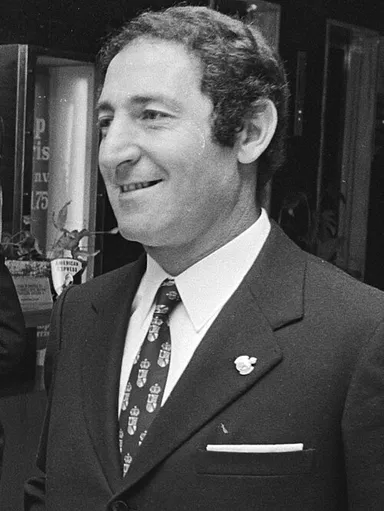
 Photo: Bryan Berlin / WikiPortraits. Source and license in Image credits.
Al-Mokawloon · Basel · Chelsea
2010—Present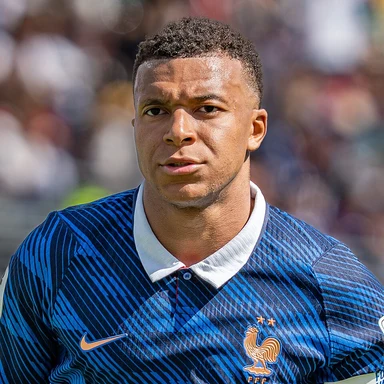 Photo: Bryan Berlin / WikiPortraits. Source and license in Image credits.
Monaco · Paris Saint-Germain · Real Madrid
2015—Present
Hamburger SV · Bayer Leverkusen · Tottenham Hotspur
2010—PresentStatistics are displayed only within the scope supported by each cited source.
Real MadridReal Madrid: Puskás’s official career totalsReal MadridReal Madrid: Puskás’s ten club trophiesMLSZMLSZ: Puskás’s Hungarian career and historical recognitionUEFAUEFA: the roles inside Hungary’s Golden TeamUEFAUEFA: Hungary at Wembley and Puskás’s drag-backUEFAUEFA: Puskás’s injury and the 1954 World Cup finalUEFAUEFA: Puskás and Di Stéfano in Madrid’s European dynastyUEFAUEFA: Puskás’s displacement, Madrid return and later careerNational Football TeamsNational Football Teams: Puskás’s league and national-team recordsBDFutbolBDFutbol: Puskás’s Spanish league statisticsRSSSFRSSSF: Puskás’s European Cup match logRSSSFRSSSF: Puskás’s Hungary and Spain records, including scope notesWikipedia (cited biographical reference)Ferenc Puskás — biographical and career reference