
Defining football actions
- Acceleration
- Generational
- Open-field carrying
- Elite
- Finishing
- Elite
- Defensive coverage
- Limited
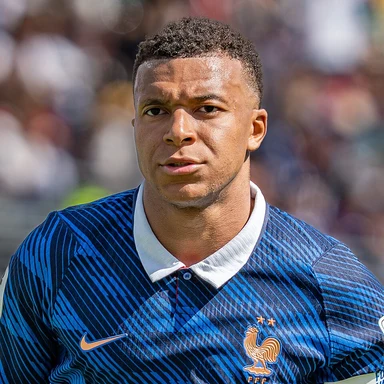 Photo: Bryan Berlin / WikiPortraits. Source and license in Image credits.
Kylian Mbappé Lottin
A forward whose acceleration behind the defensive line has been decisive for Monaco, PSG and France.
Senior club · all competitions
Completed club records only; not a complete career total.
Active club snapshots and records with another scope are excluded. Assist totals are not combined across incompatible definitions.
Stored archive snapshots, not live counters. Missing values are not zero; records with different scopes are never added together.
G/M = goals ÷ appearances. G+A = goals + assists. Per-90 metrics use documented minutes.
Senior international · all competitions
Through 18 July 2026
Stored archive snapshots, not live counters. Missing values are not zero; records with different scopes are never added together.
G/M = goals ÷ appearances. G+A = goals + assists. Per-90 metrics use documented minutes.
In context
Mbappé’s early World Cup success placed a direct runner at the centre of France’s attack. He can force a defence to retreat before receiving the ball, creating space for teammates underneath.
Reading the game
Kylian Mbappé matters because he can turn a defence's attempt to control space into a race it does not want to run. His threat begins before possession reaches him: a defender must decide whether to follow his movement, protect the space behind or step towards the ball. Once he receives, changes of speed and direction can reopen a route that appeared closed. He is therefore both a destination for an attack and a player who can carry it towards goal himself.
That combination has taken different forms. Monaco offered rapid combinations and runs alongside another striker; France could use him as an outlet from a compact team; Paris increasingly looked to him for the final action. Madrid added the problem of sharing attacking territory with other forwards who also wanted to arrive from the left. These contexts explain more than a single label such as winger or centre-forward. His career asks how a team can preserve an exceptional individual threat while keeping its attacking lanes and defensive responsibilities connected. The answer changes with the players around him, even when the acceleration remains recognisable.
Historical references support the chronology; tactical explanations are museum editorial analysis.
Historical references: Mbappé’s Monaco breakthrough and senior record ↗ · Paris v Leipzig, 2021: Mbappé’s attacking connections ↗ · Madrid v City, 2025: Mbappé’s movement ↗
Career
| Period | Club |
|---|---|
| 2015—2017 | MonacoFirst-team breakthrough and French league title. Senior club · all competitions Performance record
|
| 2017—2018 | Paris Saint-GermainInitial loan before the permanent transfer.Loan |
| 2018—2024 | Paris Saint-GermainBecame the club’s record scorer. |
| 2024—Now | Real MadridReal Madrid figures cover the completed 2024/25 season only, including the 2025 Club World Cup; they are not current club totals. Senior club · all competitions Performance record
|
Stored archive snapshots, not live counters. Missing values are not zero; records with different scopes are never added together.
G/M = goals ÷ appearances. G+A = goals + assists. Per-90 metrics use documented minutes.
Honours
France · world
Monaco · league
Paris Saint-Germain · league
France · continental
Paris Saint-Germain · domestic cup
Real Madrid · continental
Real Madrid · world
France · individual
Real Madrid · individual
Paris Saint-Germain · individual
Real Madrid · individual
Story
Career chapter
Monaco brought Mbappé into senior football in December 2015, but the following title campaign revealed the fuller attacking idea. Playing alongside Radamel Falcao gave him a reference point: one forward could occupy the centre-backs while the other attacked a channel. The midfield's early deliveries made his acceleration useful before opponents recovered their shape.
The 2016/17 league title and Champions League semi-final were collective achievements, not simply a young striker's audition. Mbappé's contribution showed how a runner could complement experienced teammates rather than wait for an attack to be built exclusively around him. The next step, Paris, would bring more possession, deeper opposing defences and a different distribution of responsibility among the forwards.
Historical references: Mbappé’s Monaco breakthrough and senior record ↗ · Mbappé joins Madrid: career and honours through 2024 ↗ · Kylian Mbappé — biographical and career reference ↗
Career chapter
France's 2018 team gave Mbappé a clear route into international importance without asking him to direct every phase. With Olivier Giroud occupying central defenders and Antoine Griezmann connecting the attack, he could begin from the right and threaten the space beyond. His carrying forced opponents to turn and run, changing the direction of a match in a few touches.
Scoring in the final against Croatia completed a tournament that demonstrated more than outright pace. His goal came from outside the box, a reminder that an opponent retreating to remove space can still concede a shooting opportunity. France's balance around him was essential: the freedom to attack early depended on teammates securing the ball and protecting the spaces he left.
Historical references: France’s 2018 World Cup final ↗ · Kylian Mbappé — biographical and career reference ↗
Career chapter
By the later Paris years, Mbappé carried much more of the scoring responsibility. He could start outside a full-back, combine with a creator and finish between the posts. The distinction between winger and striker became less useful than the sequence of his actions. A wide reception was often the beginning of a central attack, not a commitment to staying on the touchline.
The 2022 World Cup final offered a different form of pressure: France needed recovery rather than control. His hat-trick kept the match alive, although Argentina won the shoot-out. He subsequently left Paris as its record scorer in 2024. Madrid presented a fresh challenge: translate familiar scoring movements into an attack with established stars and overlapping preferred spaces.
Historical references: Mbappé’s 2022 final and Golden Boot ↗ · Paris v Leipzig, 2021: Mbappé’s attacking connections ↗ · Mbappé joins Madrid: career and honours through 2024 ↗ · Kylian Mbappé — biographical and career reference ↗
Club chapter
Madrid required Mbappé to connect his instinct to drift left with a more central starting responsibility. If he and Vinícius Júnior moved towards the same space, another player had to provide depth or an alternative passing lane. The issue was coordination: where the next run began mattered as much as which name occupied the centre-forward position on a team sheet.
The February 2025 hat-trick against Manchester City showed several solutions, from running beyond the line to changing direction inside the box. His first Spanish season ended with the European Golden Boot. That individual success did not settle every question of collective balance; it established a productive first chapter whose tactical relationships still had room to develop.
Historical references: Madrid v City, 2025: Mbappé’s movement ↗ · Mbappé’s Madrid record and completed debut season ↗
Explore club contextProfile
Inside forward
Also plays · Mobile scoring forward
Started from the left or centre, changed speed as the pass was released and finished quickly after separating from the defender.
Acceleration
Depth runs
Finishing
Open-field carrying
Illustrative role zones · not tracking data
Mbappé can slow the approach to a defender before pushing the ball into a longer stride. That pause matters because it encourages the opponent to plant a foot or narrow the distance. The acceleration then attacks a body position rather than an empty patch of grass. Against a second covering defender, releasing the ball can preserve the advantage better than attempting another individual duel.
His starting position can hide the intended route until the passer is ready. A curved run preserves the onside position and opens a path between full-back and centre-back. The ball need not follow a turnover: patient possession can also prepare the release. What matters is the connection between the passer's available angle and the moment Mbappé turns a stationary defender towards his own goal.
The last adjustment can be more important than the long sprint. Mbappé may take the ball across a defender, shorten his steps or shape for one corner before striking towards the other. His right foot gives him several finishes from the left channel, while his left can punish a defender who overprotects that route. Reduced space makes the quality of this final contact especially important.
A short return pass can draw a defender forward and make the next run more dangerous. Mbappé is most useful in these exchanges when he moves again after releasing the ball. He can also turn a direct run into a cut-back for a teammate. This creates an attacking partnership, although it does not make him the player best suited to managing every stage of midfield circulation.
Leaving him high preserves an outlet but asks teammates to defend more space. The alternative is not necessarily constant pressing: a compact front pair can screen central passes and choose when to step out. His work should be judged against that assignment. If distances between the lines grow too large, individual acceleration cannot repair every passing lane the opposition can use.
Historical references: Barcelona v Paris, 2021: three routes to goal ↗ · Paris v Leipzig, 2021: Mbappé’s attacking connections ↗ · Madrid v City, 2025: Mbappé’s movement ↗ · Madrid at City, 2025: a connected defensive block ↗
Reading the game
| Era / team | Primary Role | Tactical Character |
|---|---|---|
| 2015–2017Monaco | Runner beside a strike partner | Combines early forward runs with a partner occupying central defenders. |
| 2017–2024Paris Saint-Germain | Wide-to-central scoring forward | Receives outside, combines with creators and takes increasing responsibility for the finish. |
| 2018France | Right-sided transition outlet | Starts wide and attacks depth within a compact international side. |
| 2022France | Left-sided tournament focal point | Threatens from the left while contributing central finishes and penalties. |
| 2024–2025Real Madrid | Mobile central scorer | Coordinates runs with other forwards rather than treating the left channel as an exclusive zone. |
Historical references: Mbappé’s Monaco breakthrough and senior record ↗ · France’s 2018 World Cup final ↗ · Mbappé’s 2022 final and Golden Boot ↗ · Paris v Leipzig, 2021: Mbappé’s attacking connections ↗ · Mbappé joins Madrid: career and honours through 2024 ↗ · Madrid v City, 2025: Mbappé’s movement ↗ · Madrid at City, 2025: a connected defensive block ↗
Reading the game
A defender who backs away may remove the immediate race but give Mbappé room to carry towards shooting distance. Stepping forward can expose the space behind. His value lies in making both choices uncomfortable, especially when a teammate occupies the covering defender. That threat is strongest when he has a clear next action, not simply when he reaches a high speed.
He can begin wide, between defenders or close to a strike partner, yet still aim to finish in front of goal. This makes his role adaptable without making all positions identical. A wide start invites a facing duel; a central start demands awareness of pressure from behind. Reading those differences explains why his best movements change from one team to another.
A sudden reduction in speed can separate him from an opponent just as effectively as acceleration. When the defender's momentum continues, Mbappé can change the shooting line with a smaller touch. The mechanism depends on balance and the placement of the ball. It is particularly useful inside the box, where there may be no room left for a longer sprint.
The 2022 final is a reminder that an attacker can remain consequential after long periods of limited involvement. A penalty and an open-play finish required different skills but together changed the match. This does not prove an unlimited mental trait or guarantee future success. It shows why judging a forward only by sustained possession can miss decisive, technically demanding interventions.
Historical references: Mbappé’s Monaco breakthrough and senior record ↗ · Mbappé’s 2022 final and Golden Boot ↗ · Paris v Leipzig, 2021: Mbappé’s attacking connections ↗ · Madrid v City, 2025: Mbappé’s movement ↗
Reading the game
Right-sided transition forward
The 2018 version was valuable because France did not need long sequences of possession to activate him. Starting from the right, he could carry into open space or join Giroud and Griezmann nearer goal. His final goal against Croatia added a shooting threat from outside the area. This was a peak of role clarity: a young forward's directness fitted an experienced team's structure, rather than demanding that the structure disappear around him.
Left-sided scoring forward
The hat-trick at Barcelona in February 2021 showed more than a runner exploiting open grass. Mbappé finished a close combination, reacted to a ball inside the box and supplied the final shot of a late counterattack. Different routes led to the same responsibility. This version combined a wide starting point with repeated central arrivals, demonstrating that his threat could survive changes in the speed and shape of the attack.
Left-sided forward and penalty taker
Qatar presented a more established scorer, with eight goals and a final hat-trick. His left-sided threat could lead to a shot across goal, a combination or a run into the box, while penalties carried a separate responsibility. The final also showed the limits of judging the whole match through its ending: France struggled before recovering. The peak lies in the quality of his interventions, not in a claim of continuous control.
Mobile centre-forward
Madrid's home win over Manchester City in February 2025 provided a concentrated example of his central role. He could threaten behind the line and still change the angle after receiving inside the area. The European Golden Boot supplied a season-long scoring marker. The tactical distinction was sharing the front line: his freedom became more useful when teammates occupied complementary lanes and the team maintained a connected shape behind them.
Historical references: France’s 2018 World Cup final ↗ · Mbappé’s 2022 final and Golden Boot ↗ · Barcelona v Paris, 2021: three routes to goal ↗ · Madrid v City, 2025: Mbappé’s movement ↗ · Mbappé’s Madrid record and completed debut season ↗
Statistics
| Season | Club | Apps | Goals | G/M |
|---|---|---|---|---|
| 2024–25 | Real Madrid Senior club · all competitions | 59 | 44 | 0.75 |
| 2023–24 | Paris Saint-Germain Senior club · all competitions Performance record
| 48 | 44 | 0.92 |
Stored archive snapshots, not live counters. Missing values are not zero; records with different scopes are never added together.
G/M = goals ÷ appearances. G+A = goals + assists. Per-90 metrics use documented minutes.
Selected completed seasons, not a complete year-by-year career. Madrid 2024/25 includes the 2025 Club World Cup. PSG figures follow its archived 2023/24 squad statistics; unverified values remain blank.
International
International career
France senior record through 18 July 2026: 106 appearances and 66 goals. Youth internationals and shoot-out goals are excluded.
Reading the game
Mbappé's career is still in progress, so its historical assessment should remain open. What is already established is a distinctive model of the scoring forward: capable of receiving wide, carrying through a retreating defence and arriving centrally without needing every attack to begin at his feet. His 2018 World Cup title and the 2022 final hat-trick gave that model unusually visible international stages. The contrast between those finals also matters. Exceptional individual finishing can help win a tournament, but it cannot guarantee the collective result.
His record at Paris and subsequent move to Madrid also make him a useful case study in attacking coexistence. A forward's preferred starting zone is not private property; it must be negotiated through complementary runs, passing angles and the work done when possession is lost. Mbappé's most instructive performances show speed serving those relationships, rather than replacing them. His influence on how opponents defend should be considered alongside the chances he finishes and the support his own side provides. Later seasons will add evidence, but the enduring question is already clear: how can extraordinary acceleration become a repeatable advantage within an organised team?
Historical references: France’s 2018 World Cup final ↗ · Mbappé’s 2022 final and Golden Boot ↗ · Mbappé joins Madrid: career and honours through 2024 ↗ · Madrid at City, 2025: a connected defensive block ↗
Archive
Inside Forward · editorial peak 2018—2024
Gianluigi Buffon— Overlapping Paris Saint-Germain era · Lionel Messi— Overlapping Paris Saint-Germain era · Luka Modrić— Overlapping Real Madrid era · Neymar— Overlapping Paris Saint-Germain era
Global forwards and a first European final — Paris Saint-Germain · League champions and a changing attack — Paris Saint-Germain · Luis Enrique’s European champions — Paris Saint-Germain

Adaptive tournament manager
1992—Present · AC Milan · Real Madrid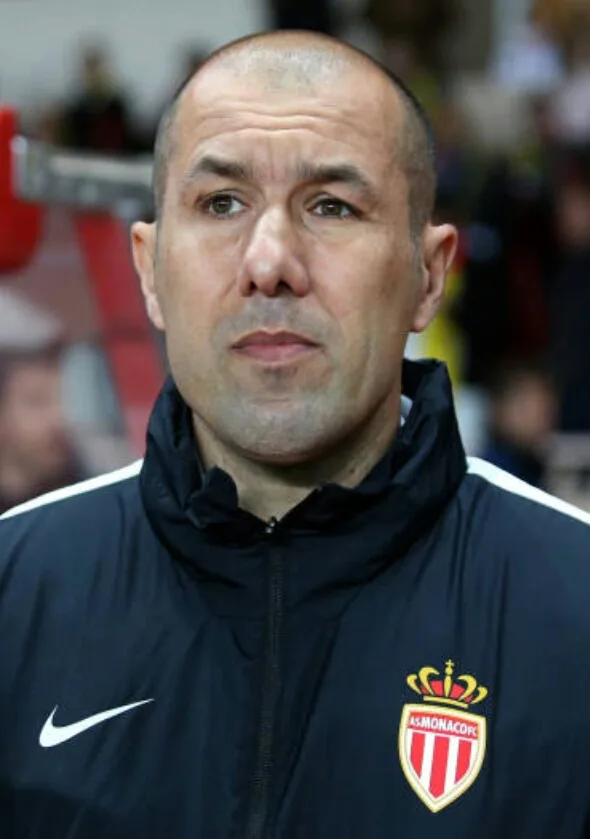 Photo: Louis Dessvignesse. Source and license in Image credits.
Monaco’s title architect and an Asian champion
2001—Present · AS Monaco · Al Hilal
Adaptive structure, opponent-specific solutions
2000—Present · Chelsea · Paris Saint-Germain
Detailed preparation, adaptable structures, European resilience
2004—Present · Sevilla · Villarreal
Collective pressing, player development and adaptable attacking structures
2009—Present · Tottenham Hotspur · Paris Saint-Germain
Positional connections, midfield control and adaptable defensive structures
2018—Present · Bayer Leverkusen · Real Madrid
FC Barcelona · Paris Saint-Germain · Inter Miami CF
2004—Present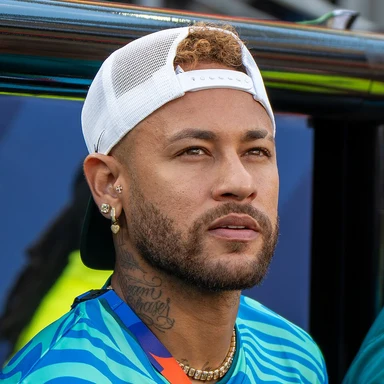 Photo: Bryan Berlin / WikiPortraits. Source and license in Image credits.
Santos · FC Barcelona · Paris Saint-Germain
2009—Present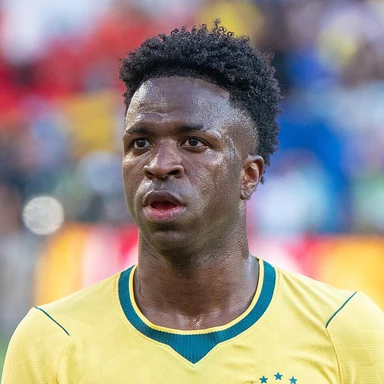 Photo: Bryan Berlin / WikiPortraits. Source and license in Image credits.
Flamengo · Real Madrid
2017—Present
AS Monaco · Juventus · Arsenal
1994—2014
AS Cannes · Bordeaux · Juventus
1989—2006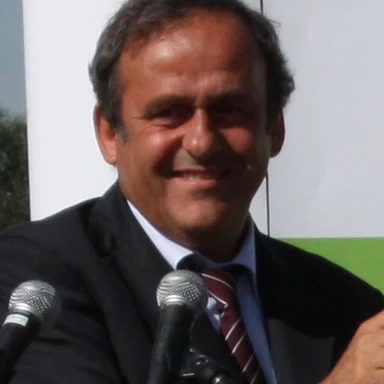 Photo: Klearchos Kapoutsis. Source and license in Image credits.
Nancy · Saint-Étienne · Juventus
1972—1987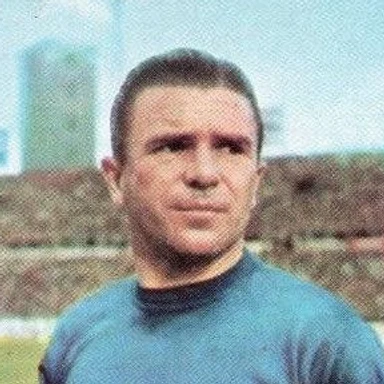 Photo: Panini. Source and license in Image credits.
Kispest / Budapest Honvéd · Real Madrid
1943—1966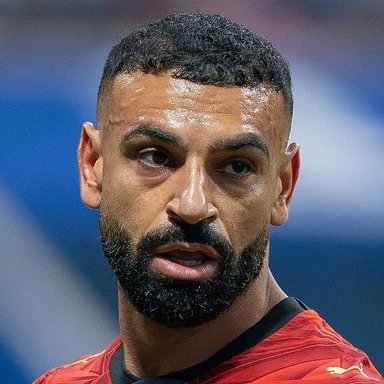 Photo: Bryan Berlin / WikiPortraits. Source and license in Image credits.
Al-Mokawloon · Basel · Chelsea
2010—Present
Hamburger SV · Bayer Leverkusen · Tottenham Hotspur
2010—PresentStatistics are displayed only within the scope supported by each cited source.
AS MonacoMbappé’s Monaco breakthrough and senior recordFIFAFrance’s 2018 World Cup finalFIFAMbappé’s 2022 final and Golden BootUEFABarcelona v Paris, 2021: three routes to goalUEFAParis v Leipzig, 2021: Mbappé’s attacking connectionsReal MadridMbappé joins Madrid: career and honours through 2024UEFAMadrid v City, 2025: Mbappé’s movementUEFAMadrid at City, 2025: a connected defensive blockReal MadridMbappé’s Madrid record and completed debut seasonFIFAFIFA: Mbappé’s completed Paris recordParis Saint-GermainParis squad statistics, 2023/24 archiveFrench Football FederationFFF: Mbappé’s senior international recordWikipedia (cited biographical reference)Kylian Mbappé — biographical and career reference