
The winger who can run the attack
- Changes of direction
- Generational
- Creative combinations
- Elite
- Passing after pressure
- Elite
- Runs beyond the ball
- Elite
- Defensive structure
- Limited
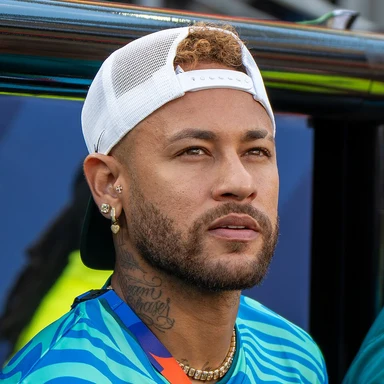 Photo: Bryan Berlin / WikiPortraits. Source and license in Image credits.
Neymar da Silva Santos Júnior
A left-sided dribbler and creator who can turn an isolated duel into a combination, a through pass or a run towards goal.
Senior club · all competitions
Completed club records only; not a complete career total.
Active club snapshots and records with another scope are excluded. Assist totals are not combined across incompatible definitions.
Stored archive snapshots, not live counters. Missing values are not zero; records with different scopes are never added together.
G/M = goals ÷ appearances. G+A = goals + assists. Per-90 metrics use documented minutes.
Senior international · all competitions
FIFA snapshot · 8 September 2023
Stored archive snapshots, not live counters. Missing values are not zero; records with different scopes are never added together.
G/M = goals ÷ appearances. G+A = goals + assists. Per-90 metrics use documented minutes.
In context
Neymar connects improvisation with collective attack: the Santos breakthrough, the complementary Barcelona forward and the Paris creator reveal different uses of the same technical imagination.
Reading the game
Neymar makes the boundary between dribbling and playmaking unusually difficult to draw. Starting on the left, he can force an opponent to turn, attract the covering defender and then decide whether the opening belongs to him or a teammate. The skill is more than escaping a challenge. His touches keep changing what the next defender must protect, so a carry can become a through ball, a combination or a shooting chance without a clear break between those actions.
His different teams reveal different uses of that same talent. Santos gave his improvisation room to begin attacks; Barcelona paired it with runs beyond Messi and combinations around Suárez; Paris asked him to help connect midfield possession with the forward line. Brazil added the responsibility of being both a scorer and a creative reference. Watching those versions separately explains more than a compilation of tricks. His best football joins risk to a useful next action, while the occasions when he holds the ball too long reveal the cost of making so many decisions through one player.
Historical references support the chronology; tactical explanations are museum editorial analysis.
Historical references: Santos: Neymar’s 2011 goal against Flamengo ↗ · UEFA: Barcelona’s front three against Bayern in 2015 ↗ · UEFA: Paris’s late recovery against Atalanta in 2020 ↗ · FIFA: ten moments from Neymar’s first decade with Brazil ↗
Career
| Period | Club |
|---|---|
| 2009—2013 | SantosThe first Santos spell included the 2011 Libertadores title. These totals remain unverified and are separate from the 2025 return. |
| 2013—2017 | FC BarcelonaComplete 2013–2017 Barcelona spell: 186 official appearances and 105 goals. The club archive separates unofficial matches, which are excluded here. Assists remain unverified. Senior club · all competitions Performance record
|
| 2017—2023 | Paris Saint-GermainComplete 2017–2023 Paris spell: 173 appearances and 118 goals, as recorded in the club’s departure statement. Assists remain unverified. Senior club · all competitions Performance record
|
| 2023—2025 | Al-HilalAn interrupted spell ended by mutual agreement in January 2025. Competitive totals remain unverified here. |
| 2025—Now | SantosReturned to Santos in 2025; the club confirmed a contract through the end of 2026. This ongoing spell is kept separate from 2009–2013. |
Stored archive snapshots, not live counters. Missing values are not zero; records with different scopes are never added together.
G/M = goals ÷ appearances. G+A = goals + assists. Per-90 metrics use documented minutes.
Honours
Santos · continental
FC Barcelona · continental
FC Barcelona · league
FC Barcelona · domestic cup
Paris Saint-Germain · league
Paris Saint-Germain · domestic cup
Brazil · world
FIFA · individual
Story
Career chapter
At Santos, Neymar emerged as a forward whose route to goal could begin near the touchline. His celebrated 2011 goal against Flamengo included a return pass from Borges, a reminder that the apparent soloist also used teammates to reopen the route through a defence. The Libertadores triumph that year placed those gifts inside a successful collective, with Neymar scoring in the second leg of the final against Peñarol. The important early pattern was the combination of invention and continuation: beating an opponent, releasing the ball when useful, and moving again before the defence could rebuild its positions.
Historical references: Santos: the 2011 Libertadores final ↗ · Santos: Neymar’s 2011 goal against Flamengo ↗ · Neymar — biographical and career reference ↗
Club chapter
Barcelona required Neymar to share the creation of attacks without becoming passive between receptions. From the left he could isolate a full-back, combine inside or attack the space opened when Messi drew attention towards the ball. Suárez occupied central defenders and also supplied the final pass, as in Neymar’s two goals at Bayern in the 2015 semi-final return. His 2017 contribution to the comeback against Paris showed another register: a free-kick, a penalty and the delivery for Sergi Roberto. The wider lesson is a forward able to change from runner to creator as the situation demanded, rather than remain attached to one starting position.
Historical references: Barcelona: Neymar’s official appearances, goals and seasons ↗ · UEFA: Barcelona’s front three against Bayern in 2015 ↗ · UEFA: Barcelona’s 2017 comeback against Paris ↗ · Neymar — biographical and career reference ↗
Explore club contextClub chapter
Paris expanded Neymar’s responsibility for bringing the ball into dangerous areas. He could leave the left wing to receive between lines, draw pressure and release runners such as Mbappé. The 2020 quarter-final against Atalanta illustrates both sides of that burden: missed opportunities did not prevent him from continuing to seek the decisive action, including the pass across goal for Marquinhos in the late recovery. Paris subsequently reached their first Champions League final. This chapter rewards separating creative influence from finishing on a particular night, while recognising that freedom to drift also required midfield cover and teammates willing to attack beyond him.
Historical references: Paris Saint-Germain: Neymar’s six seasons and club honours ↗ · UEFA: Paris’s late recovery against Atalanta in 2020 ↗ · Neymar — biographical and career reference ↗
Explore club contextCareer chapter
The Al-Hilal spell and the return to Santos should not be presented as another uninterrupted peak. The Saudi contract ended by mutual agreement in January 2025, and Santos later described a managed transition back towards sustained playing involvement. Returning to the club of his emergence created a different setting for an experienced creator: choosing when to accelerate, when to combine and where to receive became central questions. Santos confirmed a further contract through the end of 2026. That establishes an ongoing chapter, not evidence that every physical quality or tactical responsibility remained identical to the Barcelona years assessed in the ratings.
Historical references: Al-Hilal: Neymar’s departure by mutual agreement ↗ · Santos: Neymar’s return to sustained playing involvement ↗ · Santos: Neymar’s contract through the end of 2026 ↗
Profile
Inverted Winger
Also plays · Advanced Playmaker
From a left-sided starting point, Neymar draws pressure through changes of direction, combines with nearby teammates and moves inside to create or finish. His role depends on who supplies width and attacks beyond him.
Dribbling
Creative passing
Agility
Combination play
Illustrative role zones · not tracking data
Neymar’s changes of direction can make a defender protect the wrong route before the ball is released. The useful deception is often small: a pause, an open body shape or a touch that threatens the outside before he comes in. Once the covering player steps towards him, the pass becomes a way to use the space the dribble has created.
A short pass does not end his involvement. He can accelerate beyond the receiver, curve back towards the ball or move into the lane a defender has just vacated. The Borges exchange against Flamengo is a clear example. This ability makes combination play part of his dribbling threat: the opponent must defend a return pass as well as an individual change of direction.
At Barcelona, receiving to feet was only one option. When Messi moved towards possession, Neymar could stay away from the congestion and threaten the far side of the defensive line. Suárez’s central presence made those movements more difficult to track. His Bayern goals show why a technically dominant winger can also be valuable as the player who finishes a move constructed by others.
Moving inside increases the directions from which pressure can arrive. Neymar can protect the first touch, turn towards a runner or use a nearby teammate before receiving again. Paris gave this function greater weight. The gain is an extra creator between midfield and attack; the cost is that another player must supply width and the team must guard the space behind his freedom.
His finishing repertoire includes placement, changes of shooting angle and set pieces, but chance creation and conversion should be assessed separately. The 2017 Paris comeback displayed different ways to decide a match; Atalanta in 2020 showed that creative persistence could matter even when earlier finishes failed. Selecting the release is essential, because another touch can improve an opening or allow the defence to close it.
Historical references: Paris Saint-Germain: Neymar’s six seasons and club honours ↗ · Santos: Neymar’s 2011 goal against Flamengo ↗ · UEFA: Barcelona’s front three against Bayern in 2015 ↗ · UEFA: Barcelona’s 2017 comeback against Paris ↗ · UEFA: Paris’s late recovery against Atalanta in 2020 ↗
Reading the game
| Era / team | Primary Role | Tactical Character |
|---|---|---|
| 2009–2013Santos | Inventing from the left | Carries inward and uses short exchanges to continue towards goal. |
| 2013–2017Barcelona | Sharing creation in MSN | Alternates wide isolation with runs beyond Messi and combinations around Suárez. |
| 2013–2023Brazil | Brazil’s scorer and creative reference | Combines left-sided receiving with central creation; this is a selected historical phase, not a retirement date. |
| 2017–2023Paris Saint-Germain | Connecting the Paris attack | Receives inside and releases runners, with supporting players maintaining width and cover. |
| 2023–2025Al-Hilal | An interrupted Saudi chapter | Limited continuity prevents treating this spell as an extension of the Barcelona peak. |
| 2025–PresentSantos | Returning to the creative centre | The return puts receiving position and the timing of combinations back under examination. |
Historical references: Paris Saint-Germain: Neymar’s six seasons and club honours ↗ · Santos: the 2011 Libertadores final ↗ · Santos: Neymar’s 2011 goal against Flamengo ↗ · UEFA: Barcelona’s front three against Bayern in 2015 ↗ · UEFA: Barcelona’s 2017 comeback against Paris ↗ · UEFA: Paris’s late recovery against Atalanta in 2020 ↗ · FIFA: ten moments from Neymar’s first decade with Brazil ↗ · FIFA: Neymar reaches 79 senior Brazil goals in September 2023 ↗ · Al-Hilal: Neymar’s departure by mutual agreement ↗ · Santos: Neymar’s return to sustained playing involvement ↗ · Santos: Neymar’s contract through the end of 2026 ↗
Reading the game
The first opponent is only part of Neymar’s calculation. By carrying towards a covering player, he can create a decision about leaving a teammate free. The resulting pass may look simple because the difficult work happened before it. This is the connection between his individual threat and the opportunities received by the rest of the attack.
His best carries need not keep the ball attached to him throughout. A teammate can briefly become the wall that helps him pass through pressure before he takes over again. The Flamengo goal demonstrates the principle particularly clearly: cooperation and improvisation are part of the same route, even when the finish is remembered as an individual masterpiece.
Neymar can participate in preparing an attack and then move beyond the player who receives his pass. Barcelona made this duality especially productive because Messi and Suárez could recognise and reward the next movement. The value lies in changing responsibility within the move: he does not need to dominate every touch to remain central to its outcome.
The comeback against Paris offers a compact view of his range: a direct free-kick, a penalty and a late delivery into the area. Those actions solve different problems and require different decisions. They are more useful evidence than a single label such as flair, because they show how technical variety can become concrete match influence.
Historical references: Santos: Neymar’s 2011 goal against Flamengo ↗ · UEFA: Barcelona’s front three against Bayern in 2015 ↗ · UEFA: Barcelona’s 2017 comeback against Paris ↗ · UEFA: Paris’s late recovery against Atalanta in 2020 ↗
Reading the game
Free left-sided attacker
The Santos version attacked from wide starting points but could move through combinations into central finishing positions. The 2011 Libertadores and the Flamengo goal give different views of the same player: a collective tournament contribution alongside an unusually inventive individual sequence. This peak is best understood through the ability to escape pressure and immediately make the next action dangerous.
Inverted winger and scoring runner
In the Barcelona peak assessed here, Neymar combined isolation dribbling with runs that benefited from Messi’s distribution and Suárez’s occupation of the middle. He could receive as a winger and arrive as a scorer, without losing the ability to create for somebody else. The 2015 semi-final and the 2017 Paris comeback show different expressions of that attacking versatility.
Roaming attacking playmaker
The run to the 2020 European final highlighted a Neymar who helped move possession towards the forwards as well as threaten goal himself. Against Atalanta, the late assist mattered alongside the earlier chances he failed to convert. This version places greater emphasis on receiving inside and creating the next route forward; it does not turn the eventual final defeat into a title.
Historical references: Paris Saint-Germain: Neymar’s six seasons and club honours ↗ · Santos: the 2011 Libertadores final ↗ · Santos: Neymar’s 2011 goal against Flamengo ↗ · UEFA: Barcelona’s front three against Bayern in 2015 ↗ · UEFA: Barcelona’s 2017 comeback against Paris ↗ · UEFA: Paris’s late recovery against Atalanta in 2020 ↗
Statistics
| Season | Club | Apps | Goals | G/M |
|---|---|---|---|---|
| 2016–17 | FC Barcelona Senior club · all competitions | 45 | 20 | 0.44 |
| 2015–16 | FC Barcelona Senior club · all competitions | 49 | 31 | 0.63 |
| 2014–15 | FC Barcelona Senior club · all competitions | 51 | 39 | 0.76 |
| 2013–14 | FC Barcelona Senior club · all competitions | 41 | 15 | 0.37 |
Stored archive snapshots, not live counters. Missing values are not zero; records with different scopes are never added together.
G/M = goals ÷ appearances. G+A = goals + assists. Per-90 metrics use documented minutes.
Four complete Barcelona seasons across official competitions. They reconcile to 186 appearances and 105 goals; unofficial matches are excluded. These selected seasons are not a complete career total, and assists remain unverified.
International
International career
Senior Brazil career from 2010. The separate FIFA snapshot below records 79 senior goals after the Bolivia match on 8 September 2023; it is not a live career total and its appearance count is unverified here. The 2013 Confederations Cup is a senior honour. The 2016 Olympic title and Olympic statistics belong to a separate age-group team.
Reading the game
Neymar belongs in the history of creative forwards because he can supply both the disturbance and the solution. A defender drawn towards his dribble is also a defender moved away from somebody else. He has repeatedly turned that relationship into opportunities through combinations, disguised passes and changes of pace. His Barcelona years are especially instructive: playing beside Messi did not remove his creative identity, and accepting a wider starting position did not prevent him from becoming a decisive scorer. The partnership worked through complementary movements as well as extraordinary individual technique.
The record also needs distinctions that a highlight reel cannot provide. The Libertadores and Champions League titles came in different collective settings; the 2013 Confederations Cup belongs to the senior national team, while Olympic gold in 2016 belongs to a separate age-group competition. Paris reached the 2020 European final but did not win it. Repeated interruptions affected continuity without making every unsuccessful campaign an individual failure. His return to Santos leaves the career open, rather than supplying a finished verdict. The lasting football question is how a team can preserve his freedom to create while maintaining support around the ball, space for other attackers and a workable response when possession is lost.
Historical references: Barcelona: Neymar’s official appearances, goals and seasons ↗ · Paris Saint-Germain: Neymar’s six seasons and club honours ↗ · Santos: the 2011 Libertadores final ↗ · FIFA: ten moments from Neymar’s first decade with Brazil ↗ · Santos: Neymar’s contract through the end of 2026 ↗
Archive
Inverted Winger · editorial peak 2015—2017
Gianluigi Buffon— Overlapping Paris Saint-Germain era · Carles Puyol— Overlapping FC Barcelona era · Xavi— Overlapping FC Barcelona era · Lionel Messi— Overlapping FC Barcelona era
A second treble — FC Barcelona · Global forwards and a first European final — Paris Saint-Germain · League champions and a changing attack — Paris Saint-Germain

Collective intensity and attacking freedom
2008—Present · Barcelona · Paris Saint-Germain
Adaptive structure, opponent-specific solutions
2000—Present · Chelsea · Paris Saint-Germain
Detailed preparation, adaptable structures, European resilience
2004—Present · Sevilla · Villarreal
FC Barcelona · Paris Saint-Germain · Inter Miami CF
2004—Present Photo: Tam Tam. Source and license in Image credits.
FC Barcelona · Vissel Kobe · Emirates Club
2002—2024 Photo: Bryan Berlin / WikiPortraits. Source and license in Image credits.
Monaco · Paris Saint-Germain · Real Madrid
2015—Present
Cruzeiro · PSV · Barcelona
1993—2011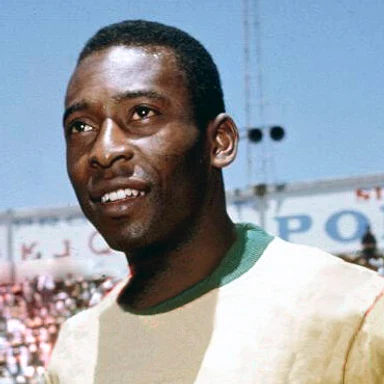 Photo: Unknown author. Source and license in Image credits.
Santos · New York Cosmos
1956—1977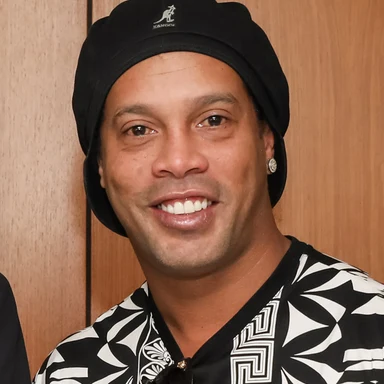 Photo: Marcos Corrêa/PR. Source and license in Image credits.
Grêmio · Paris Saint-Germain · FC Barcelona
1998—2018Photo: Marcos Corrêa/PR. Source and license in Image credits.Grêmio · Paris Saint-Germain · FC Barcelona
1998—2018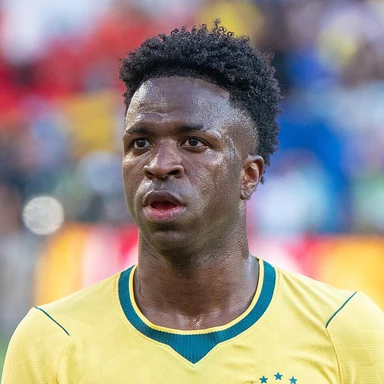 Photo: Bryan Berlin / WikiPortraits. Source and license in Image credits.
Flamengo · Real Madrid
2017—Present
FC Barcelona
2023—PresentStatistics are displayed only within the scope supported by each cited source.
FC BarcelonaBarcelona: Neymar’s official appearances, goals and seasonsParis Saint-GermainParis Saint-Germain: Neymar’s six seasons and club honoursSantos FCSantos: the 2011 Libertadores finalSantos FCSantos: Neymar’s 2011 goal against FlamengoUEFAUEFA: Barcelona’s front three against Bayern in 2015UEFAUEFA: Barcelona’s 2017 comeback against ParisUEFAUEFA: Paris’s late recovery against Atalanta in 2020FIFAFIFA: ten moments from Neymar’s first decade with BrazilFIFAFIFA: Neymar reaches 79 senior Brazil goals in September 2023Al-HilalAl-Hilal: Neymar’s departure by mutual agreementSantos FCSantos: Neymar’s return to sustained playing involvementSantos FCSantos: Neymar’s contract through the end of 2026Wikipedia (cited biographical reference)Neymar — biographical and career reference