
The treble in his first Barcelona season
2014/15 trebleUEFA Champions League
Documented history
Victory over Juventus in Berlin completed the treble. The coach’s account also acknowledged difficulties and the work needed to integrate Suárez.

Collective intensity and attacking freedom
A coach connecting technical combinations, mobile attacking roles and shared defensive work across Barcelona, Spain and Paris Saint-Germain.
Barcelona · completed appointment · 2014–2017
Barcelona first team · all official competitions, complete 2014–2017 appointment. Excludes Barcelona B, other clubs and Spain. No league points-per-game value is assigned to this mixed-competition record.
Stored archive snapshots, not live counters. Missing values are not zero; records with different scopes are never added together.
Win rate = wins ÷ matches. Points per game requires an explicit scoring convention; cup records are not silently treated as league points.
Career origins
His coaching career began with Barcelona B, followed by Roma and Celta Vigo before Barcelona’s first team. Spain and Paris later tested the same coach in very different environments.
Head coach
The reserve-team appointment preceded his senior-club jobs; its matches are excluded from the Barcelona first-team total.
Roma · Celta Vigo
Head coach
A season at Roma in 2011/12 was followed by Celta in 2013/14. These appointments belong in the record without inventing a seamless upward tactical progression.
Head coach
His first season ended in a league, cup and Champions League treble. Three seasons produced nine trophies in 181 official matches.
UEFA Champions League
Victory over Juventus in Berlin completed the treble. The coach’s account also acknowledged difficulties and the work needed to integrate Suárez.
The path suggests a coach whose attacking ideas still depend on learning the available players. Later Paris rotations should not be projected backwards onto every earlier team.
Tactics
Coaching identity
Luis Enrique links technical freedom to collective work. Barcelona’s elite front three could accelerate attacks; Paris’ rotating attackers also led the press. The continuity is shared responsibility, not an identical use of possession.
When Dembélé chased Inter’s goalkeeper, Paris advanced behind him. Closing the distance prevented the first pressing action from becoming an isolated sprint.
Hakimi could arrive centrally while attackers rotated around him. The editorial lesson is to redistribute lanes and arrival points, rather than assign all attacking depth to the centre-forward.
In the 2015 final, Barcelona could attack quickly when Juventus pushed forward. Technical control and direct acceleration were complementary options.
Tactical analysis
Keeping the ball is a means of moving opponents. In Paris, exchanging positions changes the next receiver and the defender’s reference; the purpose is access to dangerous spaces, not circulation for its own sake.
The striker, winger and full-back can exchange functions only if teammates preserve support and coverage. Fluidity is a coordinated solution, not permission for everyone to pursue the ball.
After the 2025 final, Luis Enrique highlighted Dembélé’s defending as leadership. His public emphasis rewarded effort without the ball as well as decisive attacking actions.
When Dembélé chased Inter’s goalkeeper, Paris advanced behind him. Closing the distance prevented the first pressing action from becoming an isolated sprint.
Hakimi could arrive centrally while attackers rotated around him. The editorial lesson is to redistribute lanes and arrival points, rather than assign all attacking depth to the centre-forward.
In the 2015 final, Barcelona could attack quickly when Juventus pushed forward. Technical control and direct acceleration were complementary options.
Against Italy in 2021, Olmo began ahead of Morata. Introducing Morata later restored a different penalty-area presence while retaining Olmo’s connecting role.
Paris’ final performance connected pressure on the ball with readiness for duels and second balls. Recovery work belonged to the whole team, not just the nearest defender.
Spain’s midfield influence did not decide the 2021 semi-final. Penalty-area execution and the shoot-out remained separate problems; possession alone did not settle them.
Illustrative sequence, not a measured event model.
Use rotations to open the next passing lane without disconnecting midfield support.
Keep a forward outlet and enough players connected to contest the next turnover.
Change the attacking reference or add depth; extra possession is not itself an extra chance.
Offer the ball carrier more than one exit; if the short route closes, recognise the space beyond the press.
Interpretation is editorial, not an official rating or a direct quotation. Match results, team statistics and formations retain their documented sources.
Tactical analysis
Signature systems, tactical evolution and defining teams are read together. A starting formation does not describe every phase of play.
Messi, Suárez and Neymar offered different receiving and finishing options. The 2015 final showed a team capable of possession but also of accelerating when Juventus exposed space.
Suárez’s integration changed the attacking relationships. The treble was followed by a domestic double, not another European title in each season.
2014/15 treble · nine trophies across the appointment
Barcelona first team · all official competitions, complete 2014–2017 appointment. Excludes Barcelona B, other clubs and Spain. No league points-per-game value is assigned to this mixed-competition record.
Olmo led the attack in the EURO semi-final before Morata came on and combined with him for the equaliser. A change in personnel altered how Spain occupied the centre without abandoning technical connections.
International camps offer less rehearsal time than daily club work. The same preference for combinations must operate within a different preparation rhythm.
EURO 2020 semi-finalists · 2021 Nations League finalists
In Munich, attackers exchanged positions and Hakimi arrived in the centre to open the scoring. Movement unsettled Inter’s marking references; coordinated pressure then restricted their routes out.
The front line’s defensive work was as important as its freedom on the ball. A nominal 4-3-3 does not capture the changing occupation of central and wide lanes.
2024/25 Champions League winners · Paris’ first European Cup
Juventus1–3Barcelona
Final
Juventus threatened after drawing level, but Barcelona regained the lead and won 3–1. Luis Enrique acknowledged a difficult spell rather than describing total control; the case illustrates the value of an attacking exit under pressure.
Italy1–1Spain
Semi-final · Italy won the shoot-out 4–2 after extra time.
Morata exchanged passes with Olmo to equalise after coming off the bench. Spain could not turn its influence into a winner and Italy advanced on penalties. The 1–1 match result is kept separate from the shoot-out.
Paris Saint-Germain5–0Inter Milan
Final
Paris beat Inter 5–0 in its first European Cup triumph. Hakimi’s central arrival for the opener illustrated the rotations; Dembélé’s pressing illustrated how the attack also established the team’s defensive standard.
Interpretation is editorial, not an official rating or a direct quotation. Match results, team statistics and formations retain their documented sources.
Profile
By praising his striker’s pressing after the Paris final, he made an off-ball task a public example. Leadership was attached to a repeatable football action, not a personality score.
In 2015 he admitted that adapting Suárez to Barcelona had not been automatic. His assessment linked the forward’s success to hunger and integration, a reminder that assembling famous attackers still requires building working relationships.
His post-match response to Spain’s EURO exit praised the team’s effort and congratulated Italy. The useful management reading is accountability without making a missed penalty the whole story of a player.
Tactical analysis
Nine trophies in three seasons included the 2015 treble. His Barcelona story is not simply a continuation of Guardiola: the attacking relationships and routes to goal deserve separate study.
Paris’ first Champions League in 2025 was followed by another in 2026. The club’s September 2026 account records thirteen trophies under him; this tally is explicitly dated, not a live counter.
Club and international work leave different amounts of preparation time. Comparing Barcelona, Spain and Paris is most useful when shared responsibilities are distinguished from the specific personnel and match plans.
Editorial comparison of recurring tendencies, not ratings. Both coaches adapt to personnel and opponents.
| Dimension | Luis Enrique | José Mourinho ↗ |
|---|---|---|
| Attacking structure | Rotations and technical connections | Opponent-specific routes and transition outlets |
| Pressing | Collective high pressure in the Paris reference | Selective triggers and compact defensive protection |
| Leadership | Shared work and clear role demands | Competitive identity and match preparation |
Interpretation is editorial, not an official rating or a direct quotation. Match results, team statistics and formations retain their documented sources.
Career
| Period | Organisation | Role |
|---|---|---|
| 2008—2011 | Head coach | |
| 2011—2012 | Head coach | |
| 2013—2014 | Celta Vigo | Head coach |
| 2014—2017 | Barcelona Barcelona first team · all official competitions, complete 2014–2017 appointment. Excludes Barcelona B, other clubs and Spain. No league points-per-game value is assigned to this mixed-competition record. Performance record
| Head coach |
| 2018—2019 | SpainJuly 2018–June 2019; separate from the second appointment. | National team head coach |
| 2019—2022 | SpainNovember 2019–December 2022; not credited with Spain’s later titles. | National team head coach |
| 2023—Now | Paris Saint-GermainContract extended to 2030; honours snapshot checked on 15 September 2026. Paris senior team · thirteen trophies documented by the club as of 15 September 2026. No complete appointment W-D-L total is supplied. Performance record
| Head coach |
Stored archive snapshots, not live counters. Missing values are not zero; records with different scopes are never added together.
Win rate = wins ÷ matches. Points per game requires an explicit scoring convention; cup records are not silently treated as league points.
| Competition | Period | W |
|---|---|---|
Barcelona · completed appointment Barcelona first team · all official competitions, complete 2014–2017 appointment. Excludes Barcelona B, other clubs and Spain. No league points-per-game value is assigned to this mixed-competition record. | 2014–2017 | 138 |
Paris · recorded win milestone Paris first team · 100th win, reached against Lille on 16 January 2026. Historical milestone only, not a current full appointment record; no denominator or win rate is inferred. | Through 16 January 2026 | 100 |
Stored archive snapshots, not live counters. Missing values are not zero; records with different scopes are never added together.
Win rate = wins ÷ matches. Points per game requires an explicit scoring convention; cup records are not silently treated as league points.
Honours
Documented senior-team honours: Barcelona 9 and Paris 13, checked on 15 September 2026. Includes domestic super cups; excludes playing awards, reserve-team achievements and runner-up finishes. Trophée des Champions uses edition years, not the later calendar date of the final.
Barcelona
Barcelona
Managerial record
Barcelona
Managerial record
Barcelona
Paris Saint-Germain
Paris Saint-Germain
Paris Saint-Germain
Paris Saint-Germain
Documented senior-team honours: Barcelona 9 and Paris 13, checked on 15 September 2026. Includes domestic super cups; excludes playing awards, reserve-team achievements and runner-up finishes. Trophée des Champions uses edition years, not the later calendar date of the final.
Stored archive snapshots, not live counters. Missing values are not zero; records with different scopes are never added together.
G/M = goals ÷ appearances. G+A = goals + assists. Per-90 metrics use documented minutes.
Archive
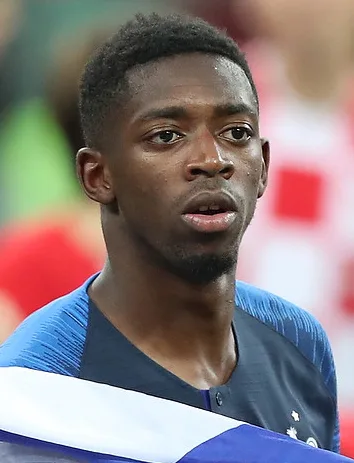
Stade Rennais FC · Borussia Dortmund · Barcelona
2015—PresentLed Paris’ pressing from the front in the 2025 European final; his off-ball work was publicly praised by Luis Enrique.

FC Barcelona · Paris Saint-Germain · Inter Miami CF
2004—PresentBarcelona attacking reference during the 2014–2017 appointment.
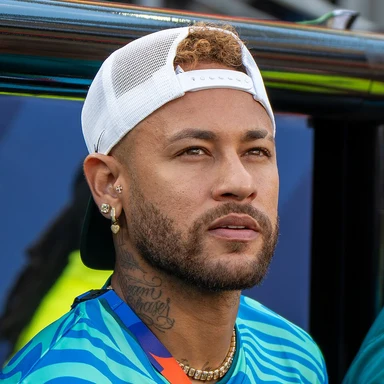 Photo: Bryan Berlin / WikiPortraits. Source and license in Image credits.
Santos · FC Barcelona · Paris Saint-Germain
2009—PresentPart of Barcelona’s 2015 treble-winning attack; the relationship refers to Barcelona, not Paris.
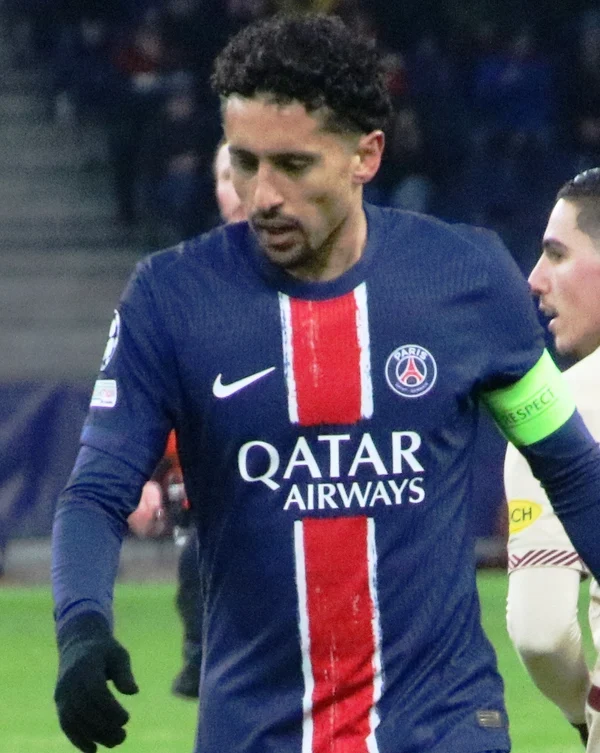 Photo: Werner100359 / Wikimedia Commons. Source and license in Image credits.
Corinthians · AS Roma · Paris Saint-Germain
2012—PresentThe captain and centre-back in Luis Enrique’s 2025 and 2026 European champions.

Positional football architect
2007—2026 · Barcelona · Bayern Munich
Adaptive tournament manager
1992—Present · AC Milan · Real Madrid
Elite knockout strategist
2000—Present · Real Madrid · Inter Milan
Positional control with competitive adaptability
2016—Present · ArsenalCareer and honour facts cite their underlying sources, including clubs and governing bodies. Tactical readings are identified as editorial analysis.
Paris Saint-GermainLuis Enrique — official coaching biographyAccessed 2026-09-15FC BarcelonaLuis Enrique: nine trophies and 181 Barcelona matchesAccessed 2026-09-15Paris Saint-GermainParis: Luis Enrique’s thirteen trophies and contract extensionAccessed 2026-09-15Paris Saint-GermainParis Saint-Germain — official trophy editionsAccessed 2026-09-15UEFALuis Enrique on the 2015 European finalAccessed 2026-09-15UEFAItaly 1–1 Spain — EURO 2020 semi-finalAccessed 2026-09-15UEFAParis: positional rotations in the 2025 finalAccessed 2026-09-15UEFAParis: coordinated pressing in the 2025 finalAccessed 2026-09-15Paris Saint-GermainLuis Enrique’s hundredth Paris victoryAccessed 2026-09-15