Threat with and without the ball
- Two-footed execution
- Elite
- Separation in a duel
- Elite
- Central movement
- Elite
- Choice of final action
- Excellent
- Pressing coordination
- Elite
- Aerial and stationary duels
- Limited
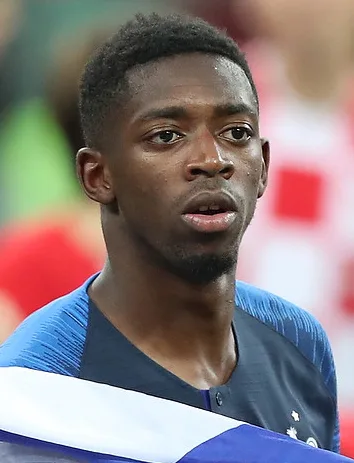
Masour Ousmane Dembélé
A French two-footed attacker whose change of direction and delivery evolved into a mobile central role for Paris Saint-Germain.
Senior club · all competitions
Completed club records only; not a complete career total.
Active club snapshots and records with another scope are excluded. Assist totals are not combined across incompatible definitions.
Stored archive snapshots, not live counters. Missing values are not zero; records with different scopes are never added together.
G/M = goals ÷ appearances. G+A = goals + assists. Per-90 metrics use documented minutes.
Senior international · all competitions
FIFA squad-list snapshot · 19 July 2026
Stored archive snapshots, not live counters. Missing values are not zero; records with different scopes are never added together.
G/M = goals ÷ appearances. G+A = goals + assists. Per-90 metrics use documented minutes.
In context
From Rennes and Dortmund to Barcelona and Paris, Dembélé’s active career connects unpredictable dribbling with a growing responsibility to create, finish and press for the team.
Reading the game
Ousmane Dembélé makes a defender answer an unusually difficult question: which route can safely be offered? From the right, he can accelerate outside and cross with his right foot, or carry inside and release the ball with his left. Those alternatives matter before he beats anyone. A defender who cannot commit has to retreat or wait, buying time for an overlapping teammate or a runner between the centre-backs. His dribbling is therefore a way to change the choices available to the whole attack.
His Paris career adds another lesson. Moving closer to the centre did not simply turn a winger into a shooter. It gave his changes of direction, short combinations and movement without the ball different targets. He could leave a centre-back without an opponent, help connect midfield and then return to finish the move. The 2024/25 scoring breakthrough belongs alongside the less spectacular work of initiating pressure and creating space for others. This profile treats those mechanisms as editorial analysis, while separating them from verified match records. The result is a career that asks how exceptional improvisation can become useful, repeatable team play.
Historical references support the chronology; tactical explanations are museum editorial analysis.
Historical references: PSG: Dembélé’s identity and career through 2026 ↗ · UEFA: Dembélé’s 2024/25 award, movement and pressing ↗ · UEFA: tactical analysis of the 2026 European final ↗
Career
| Period | Club | Apps | Goals | G/M |
|---|---|---|---|---|
| 2015—2016 | Stade Rennais FCRennes first team, 2015/16: 29 appearances, 12 goals and five assists in the club’s season review. Reserve-team matches are excluded. Senior club · all competitions Performance record
| 29 | 12 | 0.41 |
| 2016—2017 | Borussia DortmundDortmund completed spell: 50 official matches and ten goals in the DFB record. Includes the 2017 German Super Cup after the 2016/17 season; assists are unverified. Senior club · all competitions Senior · #7 | 50 | 10 | 0.20 |
| 2017—2023 | BarcelonaBarcelona Players records 186 official appearances and 40 goals, separately from 18 unofficial games and nine goals. PSG’s biography lists 185 appearances. This archive retains Barcelona’s broader official-match record; the one-match difference is not silently reconciled. Assists are unverified. Senior club · all competitions Senior · #11 / 7 | 186 | 40 | 0.22 |
| 2023—Now | Paris Saint-GermainPSG’s preview of the 2025/26 home league match against Brest records 60 competitive goals. This is a historical milestone, not a current career total. Appearances and assists are unverified in this snapshot; the 2024/25 season is listed separately. Senior club · all competitions Senior · #10 | — | 60 | — |
Stored archive snapshots, not live counters. Missing values are not zero; records with different scopes are never added together.
G/M = goals ÷ appearances. G+A = goals + assists. Per-90 metrics use documented minutes.
Honours
Borussia Dortmund · domestic cup
Barcelona · league
Barcelona · domestic cup
Barcelona · domestic cup
Barcelona · domestic cup
Paris Saint-Germain · league
Paris Saint-Germain · domestic cup
Paris Saint-Germain · domestic cup
Paris Saint-Germain · continental
Paris Saint-Germain · continental
Paris Saint-Germain · world
France · world
Paris Saint-Germain / France · individual
Paris Saint-Germain / France · individual
Paris Saint-Germain · individual
Paris Saint-Germain · individual
Stade Rennais FC · individual
Paris Saint-Germain · individual
Story
Career chapter
Rennes gave Dembélé an early stage on which acceleration and invention could carry responsibility. His first senior season led quickly to Dortmund, where Thomas Tuchel’s team offered a different lesson: beating a defender was only one part of keeping an attack moving. A winger could combine inside, move across the front or release a teammate before the second challenge arrived. The German Cup success provided a concrete achievement in a short stay. These beginnings are best understood as an expanding attacking vocabulary, not proof that the finished Paris forward already existed. His speed was visible immediately; choosing when and where to use it remained an evolving task.
Historical references: Rennes: official 2015/16 season statistics ↗ · Rennes: from the academy to the Ballon d’Or ↗ · DFB: Dembélé’s Dortmund appearances by competition ↗
Career chapter
Barcelona placed his ability to create separation inside a more demanding positional game. Holding the width could help the central creators; moving too early could remove the very space the team wanted to exploit. Dembélé offered an outside route and delivery from either foot, but injuries repeatedly interrupted the continuity needed to settle those decisions. His later work under Xavi showed a more productive connection between wide isolation and the final pass, with the 2021/22 league assist lead a useful marker. Neither the frustrating absences nor that improvement describes the whole spell. Six seasons contained useful contributions, major trophies and a role that never developed in a straight line.
Historical references: Barcelona: Dembélé’s profile and honours ↗ · Barcelona Players: official and unofficial matches separated ↗ · Barcelona: 150 appearances and the 2021/22 league assist lead ↗
Career chapter
The return to France in 2023 initially preserved much of the wide creator. Under Luis Enrique, the next change was more consequential: Dembélé increasingly became a mobile reference in the middle of the attack. The winger’s instinct to escape a marker now affected centre-backs, while short returns and renewed forward runs connected him to the midfield. PSG’s first European title in 2025 made this version visible to a much larger audience. The scoring increase mattered, but the team also benefited when he drew attention away from another runner. The 2025 individual awards recognised a season in which threat, finishing and responsibility without possession came together.
Historical references: PSG: the 2025 Ballon d’Or and 2024/25 season totals ↗ · UEFA: Dembélé’s 2024/25 award, movement and pressing ↗ · FIFA: Dembélé wins The Best Men’s Player 2025 ↗
Career chapter
A second European title in 2026 brought a different test from the emphatic win over Inter. Arsenal’s deep defence made space difficult to find, and Paris needed changes of position and patient connections to create an opening. Dembélé combined in the move that won the penalty and converted the equaliser; he had been substituted before the shoot-out. That distinction matters when crediting the decisive actions. France supplies a parallel career, beginning in 2016 and including the 2018 winning squad and the 2022 final. International roles and teammates differ from Paris, so club form should not automatically be projected onto every national-team performance. The story remains open.
Historical references: PSG: Dembélé’s identity and career through 2026 ↗ · UEFA: tactical analysis of the 2026 European final ↗ · FFF: Dembélé’s senior and youth international records ↗
Profile
False Nine
Also plays · Inverted Winger / Traditional Winger
Threatens either side of a defender, connects short from the centre and returns to attack the box. Paris’s 2024/25 version also helps initiate collective pressure; its freedom depends on teammates maintaining useful distances.
Two-footed dribbling
Acceleration
Chance creation
Front-line pressing
Illustrative role zones · not tracking data
Dembélé can keep an outside delivery and an inside carry available from the same starting position. The defender must delay choosing a side, and that hesitation can open the next action. The advantage is practical rather than decorative: either foot can solve the immediate angle. It does not mean identical accuracy on every pass or an absence of technical mistakes.
His best wide situations begin before the first feint. A quick transfer of play can leave a full-back without immediate support; holding his starting width preserves that opportunity. Once the defender sets a stance, a pause and sharp change of direction can force a recovery run. Against two defenders already set, an early return pass can be the more useful choice.
As a mobile central forward, he can step towards midfield to offer a short connection, then attack the space opened by another player’s movement. A centre-back must decide whether to follow or hold the line. The important detail is the return run: constantly dropping away would leave nobody to finish. This is a changing relationship with teammates, not a fixed position on a diagram.
The central role brings more opportunities to arrive facing goal, reducing the need to finish after a long diagonal carry. A short combination or a teammate’s cut-back can turn his quick feet into a compact shooting action. His 2024/25 output illustrates the value of better situations as well as better execution. Difficult angles, hurried attempts and variable delivery still belong in an honest assessment.
Pressing from the front can make an opponent’s next pass predictable. Dembélé’s acceleration helps close distance, but the angle of approach matters: a straight chase may leave an easy pass into midfield. His central assignment works when the other forwards and midfielders move with him. This contribution should be recognised separately from tackling, aerial defending or the responsibilities of a deeper defensive player.
Historical references: PSG: Dembélé’s identity and career through 2026 ↗ · Rennes: from the academy to the Ballon d’Or ↗ · Barcelona: 150 appearances and the 2021/22 league assist lead ↗ · PSG: the 2025 Ballon d’Or and 2024/25 season totals ↗ · UEFA: Dembélé’s 2024/25 award, movement and pressing ↗ · UEFA: tactical analysis of the 2026 European final ↗
Reading the game
| Era / team | Primary Role | Tactical Character |
|---|---|---|
| 2015–2017Rennes / Borussia Dortmund | Break the first defensive line | Carries into open ground and learns to connect the next runner. |
| 2017–2023Barcelona | Hold width, then deliver | Separates from the full-back to cross, combine or return possession. |
| 2023–2024Paris Saint-Germain | Create from the right | Links with the right side while moving inside to find the next pass. |
| 2024–PresentParis Saint-Germain | Connect, arrive and initiate pressure | Leaves the central line to combine, returns to attack the box and helps lead the press. |
Historical references: PSG: Dembélé’s identity and career through 2026 ↗ · Rennes: official 2015/16 season statistics ↗ · DFB: Dembélé’s Dortmund appearances by competition ↗ · Barcelona: 150 appearances and the 2021/22 league assist lead ↗ · UEFA: Dembélé’s 2024/25 award, movement and pressing ↗ · UEFA: tactical analysis of the 2026 European final ↗ · FFF: Dembélé’s senior and youth international records ↗
Reading the game
Many attackers need to adjust onto a preferred foot before delivering. Dembélé can preserve two options for longer, making the defender’s first decision less secure. That freedom is especially valuable when a teammate’s run creates a brief passing window. The defining trait is access to different solutions, not a guarantee that every solution will be chosen correctly.
A brief slowdown invites the defender to plant a foot or move closer. Dembélé can then change direction and rebuild speed before the opponent has reset. The effect depends on the space beyond the first challenge: a beaten full-back is less useful if a second defender already blocks the next route. His timing and the team’s spacing work together.
His central version retains the winger’s ability to turn and escape rather than imitating a traditional target man. He can change the angle of a combination, drift towards a channel or receive away from a centre-back’s preferred contact. The trade-off is clear: he offers movement and speed more naturally than sustained aerial duels or stationary back-to-goal play.
His movements become more dangerous when teammates understand which space to occupy next. A wide runner can replace him centrally; a midfielder can support the ball while he moves beyond it. Equally, a press needs coordinated support behind the first sprint. Individual unpredictability and a recognisable team structure can reinforce each other instead of cancelling each other out.
Historical references: PSG: Dembélé’s identity and career through 2026 ↗ · Rennes: from the academy to the Ballon d’Or ↗ · UEFA: Dembélé’s 2024/25 award, movement and pressing ↗ · UEFA: tactical analysis of the 2026 European final ↗
Reading the game
Wide creator
A young attacker who could carry into space and release runners before the defence recovered. This version is about progression and disruption in a fast attack, with the German Cup as its landmark; it should not inherit the mature Paris forward’s finishing or central responsibilities.
Traditional Winger
Width and delivery became particularly productive under Xavi. The league-leading 13 assists provide a specific marker, separate from all-competition totals. Watch how an isolated dribble ends in a pass across the defensive line rather than treating the take-on as the entire contribution.
False Nine
The selected rating season combines central movement, finishing and pressure from the front. PSG’s 53-match, 35-goal, 16-assist season record and UEFA’s competition-only statistics use different scopes. The editorial assessment concerns how he connects these jobs, not a claim that one outstanding season describes his entire career.
Mobile central forward
The retained European title tests the central version against a less open final. Combining with Kvaratskhelia helped create the penalty, and Dembélé converted it before later leaving the pitch. This version highlights patience and small positional changes; the deciding shoot-out belonged to the teammates still on the field.
Historical references: Rennes: from the academy to the Ballon d’Or ↗ · DFB: Dembélé’s Dortmund appearances by competition ↗ · Barcelona: 150 appearances and the 2021/22 league assist lead ↗ · PSG: the 2025 Ballon d’Or and 2024/25 season totals ↗ · UEFA: Dembélé’s 2024/25 award, movement and pressing ↗ · UEFA: tactical analysis of the 2026 European final ↗
Statistics
| Season | Club | Apps | Goals | G/M |
|---|---|---|---|---|
| 2024–25 | Paris Saint-Germain Senior club · all competitions Performance record
| 53 | 35 | 0.66 |
| 2019–20 | Barcelona Senior club · all competitions | 9 | 1 | 0.11 |
| 2018–19 | Barcelona Senior club · all competitions | 42 | 14 | 0.33 |
| 2017–18 | Barcelona Senior club · all competitions | 24 | 4 | 0.17 |
| 2017–18 | Borussia Dortmund Senior club · all competitions | 1 | 0 | 0.00 |
| 2016–17 | Borussia Dortmund Senior club · all competitions | 49 | 10 | 0.20 |
| 2015–16 | Stade Rennais FC Senior club · all competitions Performance record
| 29 | 12 | 0.41 |
Stored archive snapshots, not live counters. Missing values are not zero; records with different scopes are never added together.
G/M = goals ÷ appearances. G+A = goals + assists. Per-90 metrics use documented minutes.
Selected verified seasons, not a complete annual ledger. Dortmund’s 50-match spell is split into 49 in 2016/17 and the August 2017 Super Cup. Barcelona rows follow its official-match archive; unofficial games are excluded. PSG’s 2024/25 total follows the club’s September 2025 retrospective, including that summer’s Club World Cup. League and UEFA subsets appear separately and must not be added again. Missing values are unknown, not zero. Champions Trophy honours use edition years: 2023, 2024 and 2025 were played in January of the following year.
Club competitions
| Competition | Goals | Assists |
|---|---|---|
La Liga2021–22Barcelona only · league assists, not an all-competitions total. Appearances and goals are unverified in this row. | — | 13 |
Ligue 12023–24PSG only · Ligue 1 assists reported by FFF. This is a league subset, not the full season. | — | 8 |
Ligue 12024–25PSG only · Ligue 1 goals reported by FFF, separate from the 35-goal all-competitions season. | 21 | — |
UEFA Champions League2024–25PSG only · UEFA Champions League, 1,163 minutes. This competition subset is already contained in the club season record. Performance record
| 8 | 6 |
UEFA Champions League2025–26PSG only · eight Champions League goals through the 2026 final. Appearances and assists are unverified here; shoot-out kicks do not count as goals. | 8 | — |
Stored archive snapshots, not live counters. Missing values are not zero; records with different scopes are never added together.
G/M = goals ÷ appearances. G+A = goals + assists. Per-90 metrics use documented minutes.
International
International career
France senior career from September 2016. FIFA’s squad list dated 19 July 2026 records 67 senior caps and 13 goals; assists remain unverified. FFF’s all-age summary includes youth teams and is not used as the senior total. A 2018 world champion and 2022 finalist, his international role is assessed separately from his Paris club role.
Reading the game
Dembélé’s historical importance is still being written, but the outline is already distinctive. He carried an unusual degree of two-footed freedom through different football environments: an early breakthrough in Rennes, a fast attacking side in Dortmund, the demands of Barcelona’s possession game and a central role in Paris. The same player could stretch a back line from the touchline or unsettle it by leaving the centre. That range complicates any account that reduces his career to dribbling highlights or a late improvement in finishing.
The honours supply firm landmarks: a World Cup with France, domestic success in several countries, the 2025 Ballon d’Or and consecutive European titles with Paris. They do not erase the interruptions and uneven performances in earlier seasons, nor make every period equally influential. His most instructive contribution is the relationship between individual freedom and collective responsibility. A forward can change position frequently while still respecting where teammates need space and when the press needs to begin. Judging whether this peak becomes a long era requires more seasons; the museum can already explain why the transformation mattered without declaring an active career complete.
Historical references: PSG: Dembélé’s identity and career through 2026 ↗ · Barcelona: Dembélé’s profile and honours ↗ · PSG: the 2025 Ballon d’Or and 2024/25 season totals ↗ · UEFA: tactical analysis of the 2026 European final ↗
Archive
False Nine · editorial peak 2024—2025
Thomas Tuchel · Ernesto Valverde · Ronald Koeman · Xavi Hernández · Luis Enrique · Didier Deschamps
Lionel Messi— Overlapping Barcelona era · Andrés Iniesta— Overlapping Barcelona era · Robert Lewandowski— Overlapping Barcelona era · Kylian Mbappé— Overlapping Paris Saint-Germain era
Cup winners and another Wembley final — Borussia Dortmund · Rebuilding after Messi — Barcelona · Luis Enrique’s European champions — Paris Saint-Germain

FC Barcelona · Paris Saint-Germain · Inter Miami CF
2004—Present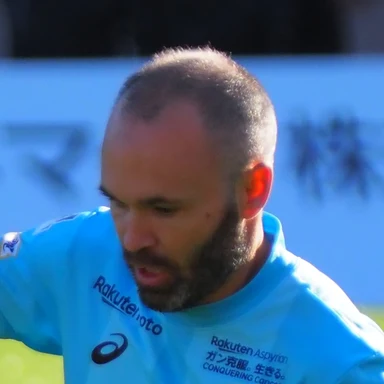 Photo: Tam Tam. Source and license in Image credits.
FC Barcelona · Vissel Kobe · Emirates Club
2002—2024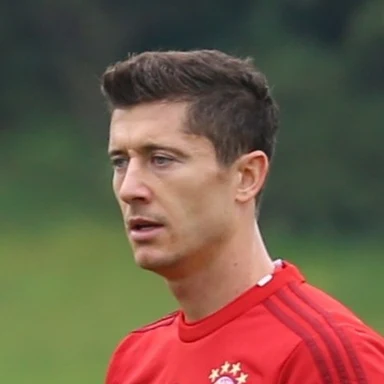 Photo: Rufus46. Source and license in Image credits.
Delta Warsaw · Legia Warsaw II · Znicz Pruszków
2005—Present
AS Monaco · Juventus · Arsenal
1994—2014
AS Cannes · Bordeaux · Juventus
1989—2006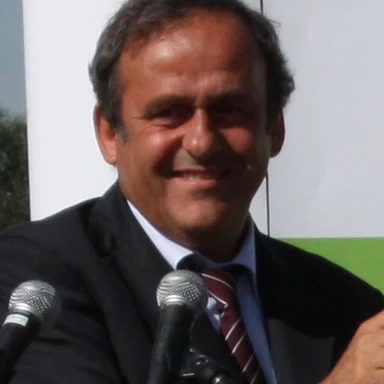 Photo: Klearchos Kapoutsis. Source and license in Image credits.
Nancy · Saint-Étienne · Juventus
1972—1987
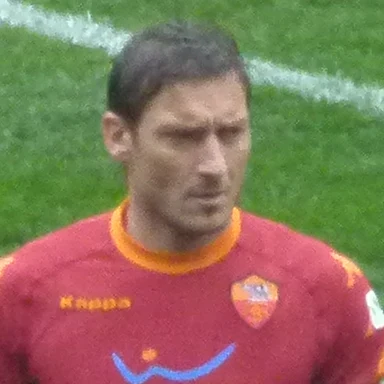 Photo: Totti_2011.jpg : Tontotti derivative work: TFCforever ( talk ). Source and license in Image credits.
AS Roma
1993—2017Statistics are displayed only within the scope supported by each cited source.
Paris Saint-GermainPSG: Dembélé’s identity and career through 2026Stade Rennais FCRennes: official 2015/16 season statisticsStade Rennais FCRennes: from the academy to the Ballon d’OrDFBDFB: Dembélé’s Dortmund appearances by competitionFC BarcelonaBarcelona: Dembélé’s profile and honoursFC Barcelona PlayersBarcelona Players: official and unofficial matches separatedFC BarcelonaBarcelona: 150 appearances and the 2021/22 league assist leadParis Saint-GermainPSG: the 2025 Ballon d’Or and 2024/25 season totalsUEFAUEFA: Dembélé’s 2024/25 award, movement and pressingUEFAUEFA: tactical analysis of the 2026 European finalFIFAFIFA: Dembélé wins The Best Men’s Player 2025French Football FederationFFF: Dembélé’s senior and youth international recordsFIFAFIFA: 2026 World Cup squad list, 19 July editionParis Saint-GermainPSG: 60 competitive goals before the 2025/26 Brest home matchParis Saint-GermainPSG: the 2025/26 French championship secured at LensParis Saint-GermainPSG: the 2025 Intercontinental Cup finalParis Saint-GermainPSG: the 2025 Champions Trophy played in January 2026UEFAUEFA: Dembélé and Paris win the 2025 Super CupParis Saint-GermainPSG: Dembélé’s second consecutive Ligue 1 player awardUEFAUEFA: Paris retain the Super Cup in August 2026