The football behind Francesco Totti’s ratings
- First-time combinations
- Generational
- Passing weight and disguise
- Generational
- Protecting the reception
- Elite
- Finishing variety
- Elite
- Movement between the lines
- Elite
- Repeated recovery running
- Limited
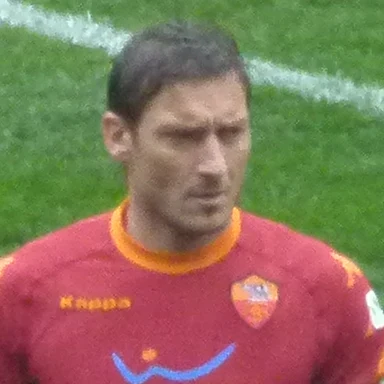 Photo: Totti_2011.jpg : Tontotti derivative work: TFCforever ( talk ). Source and license in Image credits.
Francesco Totti
Roma’s long-serving captain and creative reference evolved from a number ten into a false nine, combining early passes, protected receptions and varied finishing.
Senior club · all competitions
Completed club records only; not a complete career total.
Active club snapshots and records with another scope are excluded. Assist totals are not combined across incompatible definitions.
Stored archive snapshots, not live counters. Missing values are not zero; records with different scopes are never added together.
G/M = goals ÷ appearances. G+A = goals + assists. Per-90 metrics use documented minutes.
Senior international · all competitions
Italy · completed federation record, 1998–2006
Stored archive snapshots, not live counters. Missing values are not zero; records with different scopes are never added together.
G/M = goals ÷ appearances. G+A = goals + assists. Per-90 metrics use documented minutes.
In context
Totti connected local identity with tactical adaptation: his movement towards the ball could give somebody else the route towards goal.
Reading the game
Francesco Totti makes the boundary between a creator and a striker difficult to draw. He could receive with his back to goal, protect the ball and send a runner through before the defence had time to reorganise. Moving him closer to the centre-backs did not remove that imagination. It gave the same passing ability a different problem to solve: should a defender follow him towards midfield, or let him turn? Roma’s use of Totti as a false nine made that question central to its attack, with teammates moving beyond the space he left. Yet this was one chapter of a longer development. The captain of the 2001 champions usually worked behind other forwards; the later veteran increasingly depended on anticipation and the speed of his decisions. His career therefore offers more than an example of loyalty to one club. It shows how a player’s strongest skills can remain useful as his starting position and physical possibilities change. Goals, passes and pauses all belonged to the same task: helping the next attacking action arrive before the opponent was ready.
Historical references support the chronology; tactical explanations are museum editorial analysis.
Historical references: Roma: how Spalletti used Totti as a false nine ↗ · UEFA: Roma’s 2006/07 attacking structure and supporting runs ↗ · UEFA: Totti’s weighted passing in the 2007/08 technical report ↗ · UEFA: Totti releases Gervinho against Napoli in 2014 ↗
Career
| Period | Club | Apps | Goals | G/M |
|---|---|---|---|---|
| 1993—2017 | AS RomaRoma’s complete competitive first-team record: 786 appearances and 307 goals. The club separates 619 league matches with 250 goals, 64 domestic-cup matches with nineteen goals, and 103 European matches with 38 goals. Youth football and friendlies are excluded; assists are not established as a complete career record. Senior club · all competitions Captaincy · #20 / 17 / 10 | 786 | 307 | 0.39 |
Stored archive snapshots, not live counters. Missing values are not zero; records with different scopes are never added together.
G/M = goals ÷ appearances. G+A = goals + assists. Per-90 metrics use documented minutes.
Honours
AS Roma · league
AS Roma · domestic cup
AS Roma · domestic cup
Italy · world
Italy U21 · continental
European Sports Media · individual
AS Roma · individual
Story
Career chapter
Totti’s competitive debut came at Brescia in March 1993, when he was sixteen. The following years involved learning how to turn technical promise into a dependable role, rather than immediately inheriting a team built around him. He took the number ten in 1997 and the captaincy in 1998. Capello’s champions then placed his creativity behind forwards including Batistuta and Montella, with Delvecchio offering another kind of movement. Totti could supply those attacks and arrive to finish them. His opening goal against Parma on the final day of 2000/01 became the most visible moment of a season whose success depended on several complementary roles.
Historical references: Roma: Totti’s career, captaincy and competitive record ↗ · Roma: Totti explains his finishing and creative choices ↗
Career chapter
EURO 2000 displayed Totti’s creativity on an international stage, including the chipped shoot-out penalty against the Netherlands, before Italy lost the final to France. The following tournaments brought setbacks: elimination in 2002 and a three-match suspension for spitting at Christian Poulsen in 2004. A serious injury in February 2006 then threatened his World Cup participation. His recovery allowed Lippi to use him across all seven matches, although availability did not mean an uninterrupted return to peak condition. The late penalty against Australia kept Italy moving towards the title. The final against France was his last senior international, leaving a completed record of 58 appearances and nine goals.
Historical references: Roma: Totti explains his finishing and creative choices ↗ · FIGC: Totti’s honours and Italy record ↗ · RSSSF: Totti’s international appearances and goals ↗ · FIGC: Totti’s last Italy goal against Australia ↗ · UEFA: Italy’s EURO 2000 semi-final shoot-out ↗ · UEFA: Totti’s three-match EURO 2004 suspension ↗
Career chapter
Spalletti’s Roma made Totti the central attacking reference while allowing him to come towards the ball. Perrotta, Mancini and Taddei could then move beyond or around him, turning a withdrawal into forward momentum. UEFA’s technical report describes the supporting structure as clearly as the captain’s creative influence. The 2006/07 season produced 26 league goals and the European Golden Shoe, so dropping deeper did not mean abandoning the penalty area. Roma also won the Coppa Italia and reached the Champions League quarter-finals. A second cup followed in 2008, but injury kept Totti out of that final. The two victories should not imply identical personal involvement.
Historical references: Roma: Totti’s career, captaincy and competitive record ↗ · Roma: how Spalletti used Totti as a false nine ↗ · UEFA: Roma’s 2006/07 attacking structure and supporting runs ↗ · UEFA: Totti wins the 2006/07 European Golden Shoe ↗
Career chapter
The later career was a sequence of adaptations, not one long replay of the Golden Shoe season. Under Garcia, Totti’s distribution could release the speed of Gervinho and other runners while reducing the need for the captain to cover the same ground. The 2014 equaliser at Manchester City showed that anticipation still carried a scoring threat: he became the competition’s oldest scorer at that moment. Subsequent seasons increasingly brought shorter appearances and a different relationship with the starting eleven. His last match, against Genoa in May 2017, closed a record of 786 competitive Roma appearances. Remaining at one club had required repeated changes within it.
Historical references: UEFA: Totti releases Gervinho against Napoli in 2014 ↗ · UEFA: Totti’s 2014 equaliser against Manchester City ↗ · Roma: Totti’s final appearance in May 2017 ↗
Profile
False Nine
Also plays · Trequartista / Advanced Playmaker
Receives centrally with his back to goal, protects possession and releases runners with early passes. Dropping off the front line can draw a defender or create room to turn, while the same player retains a substantial shooting threat. The role depends on movement and cover around him.
First-time combinations
Passing weight and disguise
Protecting the reception
Finishing variety
Illustrative role zones · not tracking data
Totti could redirect an incoming ball before the defender had time to adjust to a new receiver. That speed depended on knowing where the next runner was likely to appear, not merely striking the ball quickly. A first-time lay-off could invite a return pass; a more ambitious touch could send a teammate beyond the defensive line. The useful distinction is between rushing and anticipating. His best combinations made an early decision look calm because the picture had already been read.
Receiving with his back to goal allowed Totti to offer a target even when the defence denied a clean forward pass. He could place his body between opponent and ball, wait for support and release without needing to turn every time. The strength was useful because it protected a decision. If the defender stayed too close, a lay-off could take him out of the next phase; if he backed away, Totti could turn and confront the line himself.
As a false nine, Totti’s withdrawal posed a choice for the centre-back. Following could expose the space behind; holding position could give the receiver time to pass. Roma’s answer depended on the supporting runs, particularly from midfield and the wide positions. A forward coming short without those movements would simply reduce the threat. This is why the role should be described through relationships rather than a formation number: his movement and a teammate’s advance were parts of the same action.
Powerful shooting was only one part of Totti’s finishing. He could place the ball, strike a volley or lift it over a goalkeeper who had committed. The chip was a practical option with a risk attached, not a guarantee of composure or success. His own explanation treats it as a way to execute the required action. This range mattered to a player who also threatened a final pass: defenders and goalkeepers had to respect several possible endings from a similar preparation.
Historical references: Roma: how Spalletti used Totti as a false nine ↗ · UEFA: Roma’s 2006/07 attacking structure and supporting runs ↗ · UEFA: Totti’s weighted passing in the 2007/08 technical report ↗ · Roma: Totti explains his finishing and creative choices ↗ · UEFA: Totti wins the 2006/07 European Golden Shoe ↗
Reading the game
| Era / team | Primary Role | Tactical Character |
|---|---|---|
| 1993–1999AS Roma | Learning where creativity can operate | Develops receiving and combination play before becoming the established captain. |
| 1999–2005AS Roma / Italy | Connect the midfield to other forwards | Creates from behind the attacking line while arriving to finish himself. |
| 2005–2009AS Roma | Bring the centre-forward towards the ball | Draws defenders or receives free while runners attack the space beyond. |
| 2009–2017AS Roma | Trade repeated sprints for earlier decisions | Adapts central creation to changing partners, availability and playing time. |
Historical references: Roma: Totti’s career, captaincy and competitive record ↗ · Roma: how Spalletti used Totti as a false nine ↗ · UEFA: Roma’s 2006/07 attacking structure and supporting runs ↗ · Roma: Totti explains his finishing and creative choices ↗ · UEFA: Totti releases Gervinho against Napoli in 2014 ↗ · UEFA: Totti’s 2014 equaliser against Manchester City ↗ · Roma: Totti’s final appearance in May 2017 ↗
Reading the game
An early pass requires an earlier picture. Totti’s combinations suggest a player already aware of the next teammate before the ball arrives. That awareness can shorten the time an opponent has to close a lane. It is an interpretation of his repeated actions, rather than a measurement of how often he scanned.
A through pass is useful only if the receiver can do something with it. Totti could adjust direction and weight to let a runner continue rather than stop to collect. The technical value lay in the next action it enabled: a first-time shot, another pass or an uninterrupted run towards goal.
The famous chipped penalties belong alongside Totti’s lifted passes and open-play finishes. Each uses height to cross a space that a flat ball might not reach safely. Choosing it requires judgment about the opponent’s position. The technique can be memorable without being the right answer to every situation or every goalkeeper.
Moving towards midfield did not end Totti’s involvement in the penalty area. He could release the ball and then find a new route towards goal, or shoot when defenders retreated. The 2007 scoring season makes the balance clear: creating space for runners and taking chances himself were complementary responsibilities within the same role.
Historical references: UEFA: Roma’s 2006/07 attacking structure and supporting runs ↗ · UEFA: Totti’s weighted passing in the 2007/08 technical report ↗ · Roma: Totti explains his finishing and creative choices ↗ · UEFA: Italy’s EURO 2000 semi-final shoot-out ↗ · UEFA: Totti wins the 2006/07 European Golden Shoe ↗ · UEFA: Totti releases Gervinho against Napoli in 2014 ↗
Reading the game
Trequartista behind the forwards
Capello’s champions gave Totti established targets ahead of him and room to connect the attack. Thirteen league goals complemented the supply to other forwards, rather than defining a lone-striker role. This version matters because it shows the creative foundation before the later positional change. The decisive Parma goal belongs to a team containing several different routes to scoring.
False nine and creative focal point
The shared reference season for both ratings panels combines dropping short with 26 league goals and the European Golden Shoe. Perrotta, Mancini and Taddei supplied movement around the captain, while the midfield protected and circulated the ball. The season demonstrates why false nine describes a way of organising attacks, not a promise that the forward will score less.
Veteran central playmaker
Garcia’s Roma could use Totti’s passing to release quicker teammates into depth. His service for Gervinho against Napoli offers a concrete example of the relationship. Eight league goals across 26 appearances describe a different workload from the Golden Shoe peak. This version is valuable for its selective movement and early decisions, with surrounding speed helping sustain the attack.
Historical references: Roma: Totti’s career, captaincy and competitive record ↗ · UEFA: Roma’s 2006/07 attacking structure and supporting runs ↗ · UEFA: Totti wins the 2006/07 European Golden Shoe ↗ · UEFA: Totti releases Gervinho against Napoli in 2014 ↗ · StatMuse: Totti’s league season breakdown ↗
Statistics
| Season | Club | Apps | Goals | G/M |
|---|---|---|---|---|
| 2016/17 | AS Roma Senior club · league only | 18 | 2 | 0.11 |
| 2015/16 | AS Roma Senior club · league only | 13 | 5 | 0.38 |
| 2014/15 | AS Roma Senior club · league only | 27 | 8 | 0.30 |
| 2013/14 | AS Roma Senior club · league only | 26 | 8 | 0.31 |
| 2012/13 | AS Roma Senior club · league only | 34 | 12 | 0.35 |
| 2011/12 | AS Roma Senior club · league only | 27 | 8 | 0.30 |
| 2010/11 | AS Roma Senior club · league only | 32 | 15 | 0.47 |
| 2009/10 | AS Roma Senior club · league only | 23 | 14 | 0.61 |
| 2008/09 | AS Roma Senior club · league only | 24 | 13 | 0.54 |
| 2007/08 | AS Roma Senior club · league only | 25 | 14 | 0.56 |
Stored archive snapshots, not live counters. Missing values are not zero; records with different scopes are never added together.
G/M = goals ÷ appearances. G+A = goals + assists. Per-90 metrics use documented minutes.
Twenty-five Serie A seasons, totalling 619 appearances and 250 goals. The 2008/09 row uses National Football Teams’ 24 appearances rather than StatMuse’s 23, reconciling the season sum with Roma’s official career total. Assists remain blank because the historical coverage is incomplete; a database’s partial assist tally is not treated as a career total. These league rows are already included in the club aggregate.
Club competitions
| Competition | Apps | Goals | G/M |
|---|---|---|---|
Serie ARoma · Serie A, 1993–2017Roma’s league-only tally. Domestic and European cup matches are excluded, and the 25 season rows are a breakdown of this same record. | 619 | 250 | 0.40 |
UEFA Champions LeagueChampions League proper · Roma careerUEFA’s Champions League proper record. The club’s broader European total also includes other competitions and qualifying; the two figures are not added together. | 57 | 17 | 0.30 |
Stored archive snapshots, not live counters. Missing values are not zero; records with different scopes are never added together.
G/M = goals ÷ appearances. G+A = goals + assists. Per-90 metrics use documented minutes.
International
International career
A EURO 2000 finalist and 2006 world champion. Totti appeared at two European Championships and two World Cups; the 2006 final was his last senior international. His late winner against Australia was his only World Cup finals goal. The 1996 Under-21 European title is a separate age-group honour.
Senior international · tournament splits
| Competition | Apps | Goals | G/M |
|---|---|---|---|
FIFA World CupWorld Cup finals · 2002 and 2006Four appearances in 2002 and seven in 2006. The Australia penalty was scored during the match, unlike a shoot-out kick, and counts towards his official goals. | 11 | 1 | 0.09 |
UEFA European ChampionshipEURO finals · 2000 and 2004Five appearances and two goals in 2000, then one scoreless appearance in 2004 before suspension. Qualifiers and shoot-out penalties are excluded. | 6 | 2 | 0.33 |
Stored archive snapshots, not live counters. Missing values are not zero; records with different scopes are never added together.
G/M = goals ÷ appearances. G+A = goals + assists. Per-90 metrics use documented minutes.
Reading the game
Totti’s place in football rests on two histories that should be read together. One is local: a Roman who spent his entire senior club career with Roma, becoming a familiar reference across changing teams and generations of supporters. The other is tactical: a gifted number ten whose work as a central forward helped demonstrate how leaving the front line could create attacking depth for somebody else. He did not invent the false nine, and the idea did not succeed through his movement alone. Runners, midfield cover and the quality of the next pass were essential parts of the relationship. His longevity also needs a precise reading. The young attacker, the prolific 2007 scorer and the veteran managing shorter appearances were different footballers built around recognisable skills. Celebrating the continuity should not erase injuries, disciplinary setbacks or declining availability. Nor does a modest collection of club trophies make the technical contribution less interesting. Totti’s enduring lesson is that speed can belong to a decision as well as a run. A first-time pass, a protected reception or a carefully delayed finish could change the game without requiring him to outrun it.
Historical references: Roma: how Spalletti used Totti as a false nine ↗ · UEFA: Totti’s weighted passing in the 2007/08 technical report ↗ · Roma: Totti explains his finishing and creative choices ↗ · Roma: Totti’s final appearance in May 2017 ↗
Archive
False Nine · editorial peak 2006—2007
Vujadin Boškov · Carlo Mazzone · Zdeněk Zeman · Fabio Capello · Luciano Spalletti · Claudio Ranieri · Luis Enrique · Rudi Garcia · Dino Zoff · Giovanni Trapattoni · Marcello Lippi
Mohamed Salah— Overlapping AS Roma era · Cafu— Overlapping AS Roma era · Gabriel Batistuta— Overlapping AS Roma era · Alisson Becker— Overlapping AS Roma era
Giannini and the next cup teams — AS Roma · Capello’s third champions — AS Roma · Totti at the centre and another title challenge — AS Roma · League challengers and the Barcelona comeback — AS Roma
 Photo: MichaelEmilio. Source and license in Image credits.
Collective movement and attacking relationships
1994—Present · Napoli · Roma Photo: MojNews. Source and license in Image credits.
Adaptable collective organisation
1982—2019 · Juventus · Inter Milan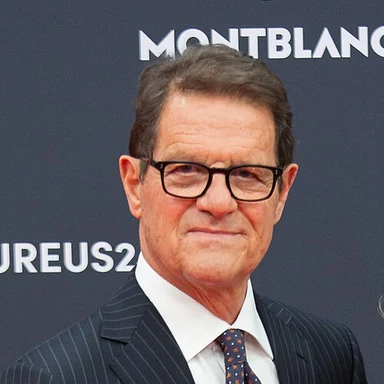 Photo: Barcex (Wikimedia Commons); crop by EndzoneEnthusiast. Source and license in Image credits.
Discipline and defensive balance
1982—2018 · AC Milan · Real Madrid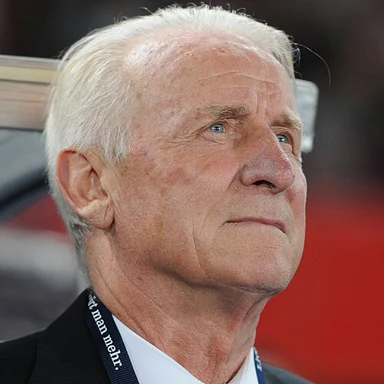 Photo: Michael Kranewitter, Wikimedia Commons, CC BY-SA 3.0 AT; crop by Heiko Gerber. Source and license in Image credits.
Pragmatic defensive organisation
1974—2013 · Juventus · Inter Milan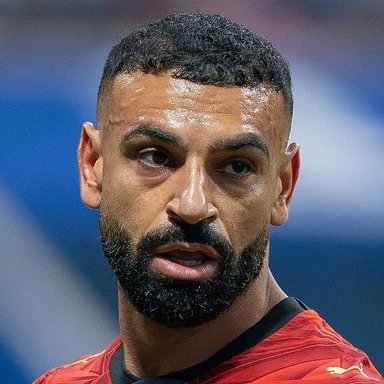 Photo: Bryan Berlin / WikiPortraits. Source and license in Image credits.
Al-Mokawloon · Basel · Chelsea
2010—Present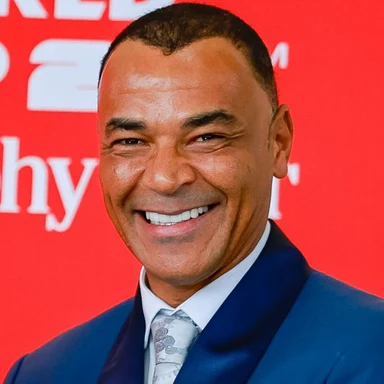 Photo: Lula Oficial. Source and license in Image credits.
São Paulo · Real Zaragoza · Juventude
1989—2008 Photo: Roberto Vicario / Wikimedia Commons. Source and license in Image credits.
Newell’s Old Boys · River Plate · Boca Juniors
1988—2005
AC Milan
1985—2009
Padova · Juventus · Sydney FC
1991—2014
Parma · Juventus · Paris Saint-Germain
1995—2023
FC Barcelona · Paris Saint-Germain · Inter Miami CF
2004—Present
Stade Rennais FC · Borussia Dortmund · Barcelona
2015—PresentStatistics are displayed only within the scope supported by each cited source.
AS RomaRoma: Totti’s career, captaincy and competitive recordAS RomaRoma: how Spalletti used Totti as a false nineUEFAUEFA: Roma’s 2006/07 attacking structure and supporting runsUEFAUEFA: Totti’s weighted passing in the 2007/08 technical reportAS RomaRoma: Totti explains his finishing and creative choicesFIGCFIGC: Totti’s honours and Italy recordRSSSFRSSSF: Totti’s international appearances and goalsFIGCFIGC: Totti’s last Italy goal against AustraliaUEFAUEFA: Italy’s EURO 2000 semi-final shoot-outUEFAUEFA: Totti’s three-match EURO 2004 suspensionUEFAUEFA: Totti wins the 2006/07 European Golden ShoeUEFAUEFA: Totti releases Gervinho against Napoli in 2014UEFAUEFA: Totti’s 2014 equaliser against Manchester CityAS RomaRoma: Totti’s final appearance in May 2017National Football TeamsNational Football Teams: Totti’s league seasonsStatMuseStatMuse: Totti’s league season breakdownUEFAUEFA: Roma’s Champions League appearance and scoring recordsWikipedia (cited biographical reference)Francesco Totti — biographical and career reference