Fulvio Bernardini
Early coaching influence
Documented history
Lippi identified Bernardini as his first coaching reference: a strong personality who still respected the personalities of his players.
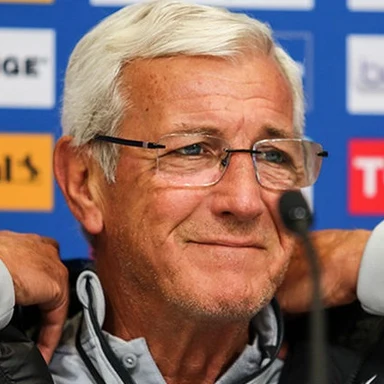 Photo: MojNews. Source and license in Image credits.
Adaptable collective organisation
A coach who progressed through Italy’s lower divisions before winning the Champions League with Juventus and the World Cup with Italy.
Italy senior national team · 2004–2006
Italy senior national team · first appointment, 2004–2006 · includes friendlies and competitive fixtures. FIGC match-result classification; shoot-out goals are not match goals.
Stored archive snapshots, not live counters. Missing values are not zero; records with different scopes are never added together.
Win rate = wins ÷ matches. Points per game requires an explicit scoring convention; cup records are not silently treated as league points.
Career origins
Lippi began coaching in Sampdoria’s youth setup in 1982 before progressing through Italian club football.
Early coaching influence
Lippi identified Bernardini as his first coaching reference: a strong personality who still respected the personalities of his players.
The youth-team role provided a different responsibility from playing: developing others rather than performing on the pitch.
A sequence of Italian appointments, including Napoli immediately before Juventus, preceded his first elite title-winning cycle.
Juventus’s domestic rise was followed by victory in the 1996 Champions League final.
The Italy appointment brought a different preparation cycle, ending with the World Cup title in Germany.
UEFA Champions League
The Ajax final confirmed his rise from the Italian coaching ladder to a European title.
The route emphasises accumulated coaching experience rather than immediate access to an elite bench.
Changing environments helps frame his emphasis on fitting roles to the group.
Tactics
Coaching identity
Lippi’s teams are best read through complementary roles: an attacking plan supported by coordinated work, rather than a formation imposed regardless of the players.
Tactical analysis
Juventus’s own account emphasises attacking intent and pressure. The interpretation here is that defensive coordination enabled ambition rather than replacing it.
Lippi’s second Juventus spell began with Zidane and Inzaghi leaving and Buffon, Thuram and Nedvěd arriving. The new side required new relationships, not a replica of 1996.
Italy’s two World Cup campaigns under Lippi ended very differently. A successful group must still be reassessed when its personnel and competitive context change.
An aggressive first challenge needs nearby cover; otherwise pressure opens the team rather than closing the opponent.
The second Juventus cycle illustrates why changing the creative reference also changes supporting movement.
Germany in 2006 is a case study in seeking a late breakthrough rather than treating extra time as a wait for penalties.
Against France in 2006, Lippi introduced De Rossi and advanced Pirlo. His explanation was to restore midfield energy while retaining a creative outlet.
Lippi described substitutions as responses to emerging opposition weaknesses. Players needed familiarity with several structures so that a change could work during the match.
Different player profiles gave Lippi different ways to alter a game; selection and tactical flexibility were connected decisions.
Illustrative sequence, not a measured event model.
Read the distance between the first receiver and the next supporting player.
The Germany semi-final illustrates an active search for the winning action.
The aggregate score and historical competition rules change the acceptable risk.
Reassess the group: the 2010 campaign cannot be explained by the 2006 title alone.
Interpretation is editorial, not an official rating or a direct quotation. Match results, team statistics and formations retain their documented sources.
Tactical analysis
Signature systems, tactical evolution and defining teams are read together. A starting formation does not describe every phase of play.
The 1994 appointment led to domestic success and the 1996 Champions League. Juventus describes the team through attacking football, pressure and detailed organisation.
From a new appointment to European champion.
With Zidane and Inzaghi departing and Buffon, Thuram and Nedvěd arriving, Lippi rebuilt the relationships between defence, midfield and attack. The tactical reading is a change of balance around different strengths, not simply another edition of the 1996 side.
A second team cycle rather than a tactical time capsule.
The final against France tested Italy’s energy after the Germany semi-final. Moving Pirlo higher and bringing De Rossi into midfield preserved technical quality while changing the balance.
Club continuity gave way to the demands of a short tournament.
World champions, 2006.
Three consecutive league titles in 2012–2014 accompanied the 2013 Asian crown. Against Seoul, a 1–1 home draw completed a 3–3 aggregate final won on away goals: a two-legged tie governed by its own risk and qualification rules.
A different football environment, with its own competitive conditions.
Ajax1–1Juventus
Final · 1–1 after extra time; Juventus won the shoot-out 4–2.
Ravanelli put Juventus ahead before Litmanen equalised. Neither side found another goal in extra time; the shoot-out decided the European title.
Germany0–2Italy
Semi-final · After extra time; 0–0 after 90 minutes.
Grosso and Del Piero scored in extra time. The result is a useful counterexample to reducing Lippi’s Italy to passive defending.
Slovakia3–2Italy
Group stage
Defeat to Slovakia eliminated the holders in the group stage. The disappointment belongs beside the 2006 triumph in a balanced account.
Interpretation is editorial, not an official rating or a direct quotation. Match results, team statistics and formations retain their documented sources.
Profile
Before Guangzhou’s 3–1 win over Jeonbuk in 2014, Muriqui and Zhao Xuri withdrew during the warm-up. Their replacements Gao Lin and Liao Lisheng scored all three goals. Lippi highlighted Liao’s training application: preparation made a late selection change workable, not merely inspirational.
Even after beating Jeonbuk, Lippi said Guangzhou had not recovered its best physical or mental condition. He separated the result from the quality of preparation. This is a useful counterpoint to Italy’s 2010 exit: previous success does not remove the need to reassess the group.
Lippi’s response to Guangzhou’s comeback against Melbourne emphasised team spirit. That is reported coaching language, not evidence for a psychological rating.
Tactical analysis
Five league titles and the 1996 European crown anchor his club record.
The 2006 title and 2010 elimination show why a career should not be reduced to its best tournament.
Guangzhou’s 2013 success added an Asian club chapter to an already significant European and international career.
A qualitative comparison of two World Cup-winning approaches, not a ranking.
| Dimension | Marcello Lippi | Vicente del Bosque ↗ |
|---|---|---|
| Team structure | Adapt the relationships around the available players | Preserve a shared technical language while changing roles |
Interpretation is editorial, not an official rating or a direct quotation. Match results, team statistics and formations retain their documented sources.
Career
| Period | Organisation | Role |
|---|---|---|
| 1982—1985 | Sampdoria youth | Youth coach |
| 1985—1986 | Pontedera | Head coach |
| 1986—1987 | Siena | Head coach |
| 1987—1988 | Pistoiese | Head coach |
| 1988—1989 | Carrarese | Head coach |
| 1989—1991 | Cesena | Head coach |
| 1991—1992 | Lucchese | Head coach |
| 1992—1993 | Atalanta | Head coach |
| 1993—1994 | Head coach | |
| 1994—1999 | Head coach | |
| 1999—2000 | Head coach | |
| 2001—2004 | Head coach | |
| 2004—2006 | Italy Italy senior national team · first appointment, 2004–2006 · includes friendlies and competitive fixtures. FIGC match-result classification; shoot-out goals are not match goals. Performance record
| National-team coach |
| 2008—2010 | Italy Italy senior national team · second appointment, 2008–2010 · includes friendlies and competitive fixtures. Separate from the World Cup-winning first appointment. Performance record
| National-team coach |
| 2012—2014 | Guangzhou Evergrande | Head coach |
| 2016—2019 | China | National-team coach |
| 2019—2019 | China | National-team coach |
Stored archive snapshots, not live counters. Missing values are not zero; records with different scopes are never added together.
Win rate = wins ÷ matches. Points per game requires an explicit scoring convention; cup records are not silently treated as league points.
| Competition | Period | Matches |
|---|---|---|
Italy senior national team Italy senior national team · first appointment, 2004–2006 · includes friendlies and competitive fixtures. FIGC match-result classification; shoot-out goals are not match goals. | 2004–2006 | 29 |
Italy senior national team Italy senior national team · second appointment, 2008–2010 · includes friendlies and competitive fixtures. Separate from the World Cup-winning first appointment. | 2008–2010 | 27 |
Juventus Juventus first team · all competitions, both appointments combined (1994–1999 and 2001–2004), as recorded by the club. Not a full coaching-career total; no unsourced split or W–D–L is inferred. | 1994–1999 / 2001–2004 | 405 |
Stored archive snapshots, not live counters. Missing values are not zero; records with different scopes are never added together.
Win rate = wins ÷ matches. Points per game requires an explicit scoring convention; cup records are not silently treated as league points.
Honours
Documented senior coaching honours: 13 with Juventus across both appointments, Italy’s 2006 World Cup, Guangzhou’s 2012–2014 league titles and 2013 Asian title. Selected coverage, not a complete career total; the Chinese FA Cup is not included in this ledger.
Juventus
Juventus
Juventus
Juventus
Guangzhou Evergrande
Juventus
Juventus
Italy
Guangzhou Evergrande
Documented senior coaching honours: 13 with Juventus across both appointments, Italy’s 2006 World Cup, Guangzhou’s 2012–2014 league titles and 2013 Asian title. Selected coverage, not a complete career total; the Chinese FA Cup is not included in this ledger.
Stored archive snapshots, not live counters. Missing values are not zero; records with different scopes are never added together.
G/M = goals ÷ appearances. G+A = goals + assists. Per-90 metrics use documented minutes.
Archive

AS Cannes · Bordeaux · Juventus
1989—2006Coached this player in senior club or international football.

Padova · Juventus · Sydney FC
1991—2014Scored Italy’s second goal in the 2006 World Cup semi-final under Lippi.

Parma · Juventus · Paris Saint-Germain
1995—2023Joined Juventus for Lippi’s second coaching cycle in 2001.
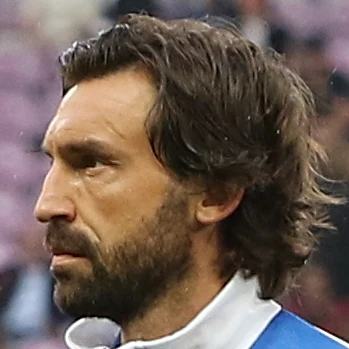 Photo: Clément Bucco-Lechat. Source and license in Image credits.
Brescia · Inter · Reggina
1995—2017Coached this player in senior club or international football.
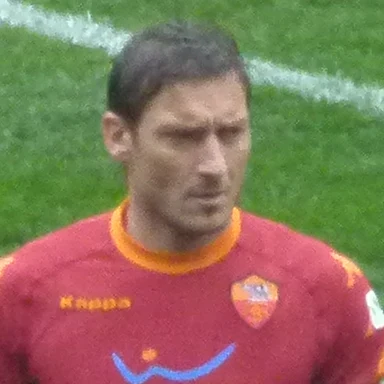 Photo: Totti_2011.jpg : Tontotti derivative work: TFCforever ( talk ). Source and license in Image credits.
AS Roma
1993—2017Coached this player in senior club or international football.

Adaptive tournament manager
1992—Present · AC Milan · Real Madrid
Elite knockout strategist
2000—Present · Real Madrid · Inter Milan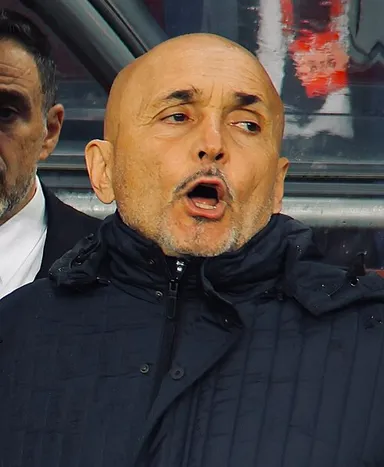 Photo: MichaelEmilio. Source and license in Image credits.
Collective movement and attacking relationships
1994—Present · Napoli · Roma
Collective pressing pioneer
1973—2001 · AC MilanCareer and honour facts cite their underlying sources, including clubs and governing bodies. Tactical readings are identified as editorial analysis.
Wikipedia (cited career reference)Marcello Lippi — coaching chronologyAccessed 2026-09-14Guinness World RecordsLippi’s three consecutive Chinese league titles, 2012–2014Accessed 2026-09-14AFCGuangzhou’s late selection changes against Jeonbuk in 2014Accessed 2026-09-14UEFALippi on selection, adaptation and the 2006 final — The Technician 35, pages 4–7Accessed 2026-09-14FIGCMarcello Lippi — coaching biographyAccessed 2026-09-14FIGCItaly managerial records — September 2023, page 9Accessed 2026-09-14JuventusMarcello Lippi — Juventus Hall of FameAccessed 2026-09-14JuventusJuventus: rebuilding under LippiAccessed 2026-09-14UEFAAjax–Juventus: the 1996 finalAccessed 2026-09-14FIGCLippi’s two Italy appointmentsAccessed 2026-09-14FIFAGermany–Italy: 2006 semi-finalAccessed 2026-09-14FIGCItaly at the 2010 World CupAccessed 2026-09-14AFCGuangzhou wins the 2013 AFC Champions LeagueAccessed 2026-09-14AFCLippi on Guangzhou’s response to adversityAccessed 2026-09-14