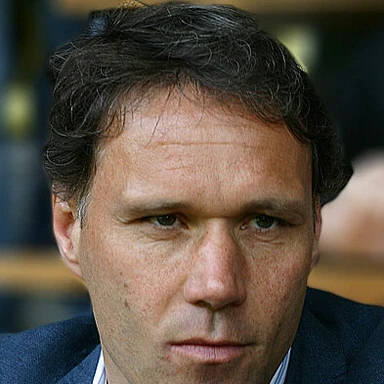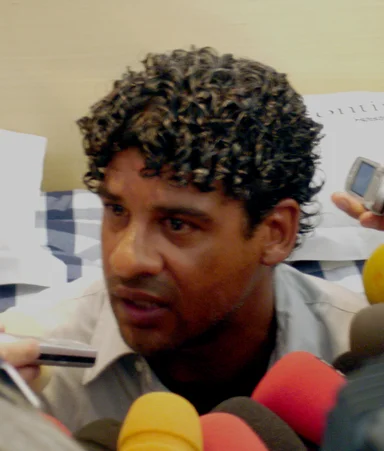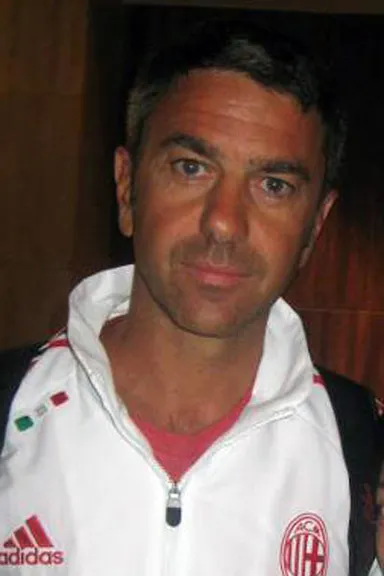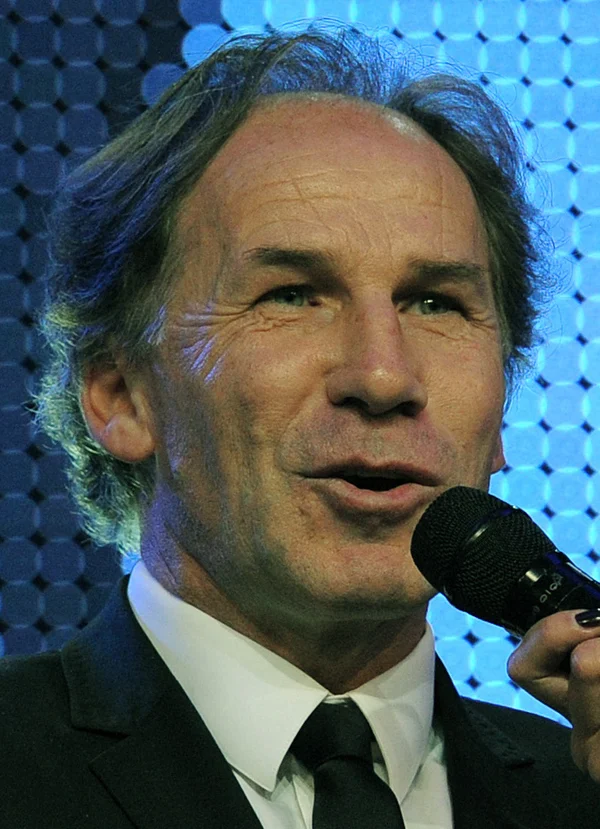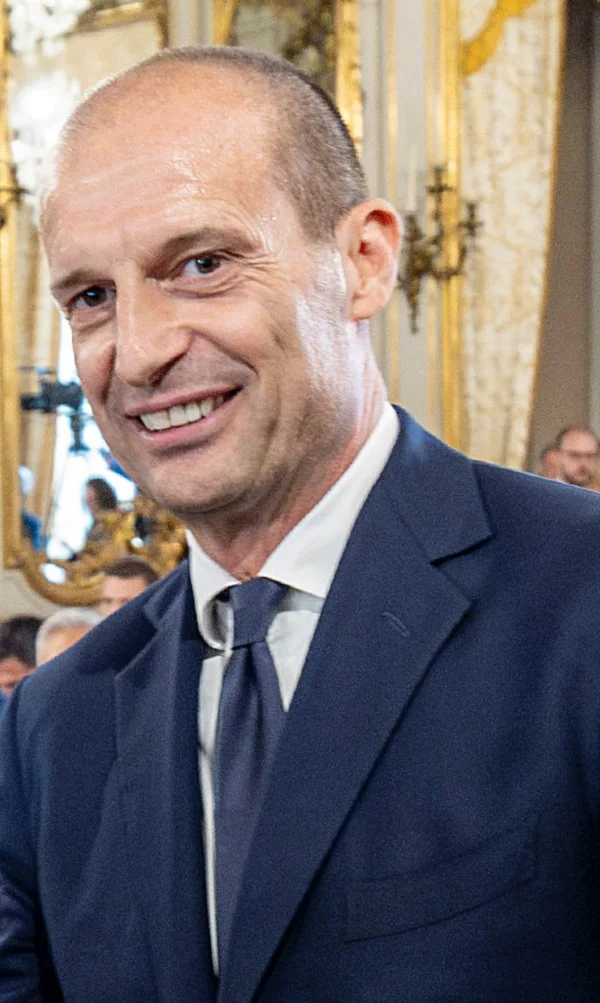
Rinus Michels ↗
Intellectual influence, not an assistant-coaching appointment
Dutch Total Football offered a reference for collective movement. This describes a footballing influence, not a claim that Sacchi worked on Michels’ staff.

Collective pressing pioneer
A coach whose Milan compressed space through a high defensive line, coordinated pressing and collective movement without the ball.
Italy senior internationals · 1991–1996
Italy senior internationals · 1991–1996 · includes friendlies. Shoot-outs do not change the match result. Excludes all club appointments; no points-per-game comparison across scoring systems.
Stored archive snapshots, not live counters. Missing values are not zero; records with different scopes are never added together.
Win rate = wins ÷ matches. Points per game requires an explicit scoring convention; cup records are not silently treated as league points.
Career origins
Sacchi reached elite coaching through amateur football, youth development and lower-division clubs. Parma’s cup performances helped persuade Milan to appoint him in 1987.
Intellectual influence, not an assistant-coaching appointment
Dutch Total Football offered a reference for collective movement. This describes a footballing influence, not a claim that Sacchi worked on Michels’ staff.
Cesena
Youth coach
A national youth title at Cesena preceded further work at Rimini and Fiorentina’s youth team.
Parma
Head coach
Promotion in 1986 was followed by cup wins against Milan. The work at a smaller club opened an unexpected route to a major appointment.
Head coach
His first Milan season ended with the Serie A title, ahead of Napoli.
Italy
National team coach
Appointed Italy coach in November 1991, he reached the 1994 World Cup final before leaving in 1996.
European Cup
The Barcelona final established the first European Cup of his Milan tenure; the title was retained the following year.
His route made coaching expertise visible independently of a famous professional playing career.
The training ground is the link: a shared picture of the game had to become repeatable collective behaviour.
Tactics
Coaching identity
Sacchi made coordinated movement the organising principle of his Milan: forwards, midfield and defence had to act on the same cues.
The back four compressed the playing area aggressively.
Movement without the ball was collective and synchronised.
Control came from territory and compactness as well as the ball.
Distances between units mattered more than decorative width.
Regains were followed by purposeful forward movement.
Tactical analysis
The first press matters only when the players behind it close the available routes. Individual pursuit without collective support opens the very spaces the team wants to remove.
A zonal team responds to the ball and its own shape. Players still perform different jobs; the aim is to connect those jobs rather than make everyone interchangeable.
Italy reached the 1994 World Cup final, then exited EURO 1996 in the group stage. National-team results offer a necessary counterweight to reading his entire career through Milan’s peak.
The nearest player engages; teammates close the next pass. A press without cover becomes a duel the opponent can bypass.
The high line reduces space behind midfield. Its effectiveness depends on shared timing and pressure on the passer.
When the opponent escapes, recover centrally and reconnect the lines before pressing again.
A defender carrying forward can draw an opponent out and free a midfield receiver.
Wide midfielders and full-backs share the flank: an inward run can release the overlapping player.
Gullit and Van Basten offered targets for forward passes as well as combinations around the box.
Illustrative sequence, not a measured event model.
Connect the first press to midfield cover; do not send a forward into an isolated chase.
Recover the centre and restore compactness before committing again.
Use wide combinations and supporting midfield runs to create a new passing angle.
Preserve the distances between units and an outlet; the final score alone does not reveal the team’s defensive height.
Interpretation is editorial, not an official rating or a direct quotation. Match results, team statistics and formations retain their documented sources.
Tactical analysis
Signature systems, tactical evolution and defining teams are read together. A starting formation does not describe every phase of play.
Parma’s promotion from Serie C1 and cup performances against Milan brought Sacchi’s work to a wider audience.
A lower-division appointment became evidence that his ideas could challenge stronger opponents.
Promotion to Serie B in 1986
The 1987/88 title gave a new coaching project immediate domestic credibility. The side finished on 45 points under the two-points-for-a-win system.
The first league success preceded the consecutive European Cups; these were distinct steps in the same project.
1987/88 Serie A champions
Serie A · 1987/88 · two points for a win
The 1989 and 1990 European finals produced different scorelines but the same outcome. Milan could win through attacking superiority or a single decisive opening.
The back-to-back titles belong to Sacchi; the later unbeaten league dynasty belongs to Capello.
European Cup winners in 1989 and 1990
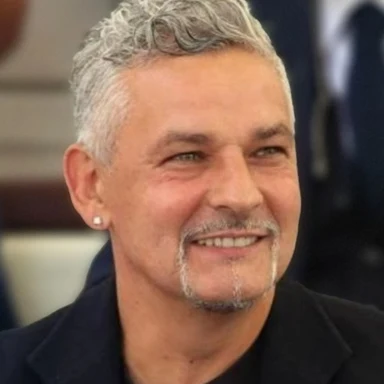
A Milan defensive core supported the national side, while Roberto Baggio supplied decisive attacking invention. Tournament football tested the relationship between organisation and individual solutions.
The 1994 final and the 1996 group-stage exit belong in the same account of his international work.
1994 FIFA World Cup runners-up
Steaua București0–4AC Milan
Final
Gullit and Van Basten each scored twice. The final gave a striking attacking expression to a project often remembered primarily for its defending.
AC Milan1–0Benfica
Final
Rijkaard scored the only goal. A narrow final illustrates why collective structure also needs well-timed attacking movement beyond the forwards.
Brazil0–0Italy
Final · 0–0 after extra time; Brazil won 3–2 on penalties.
Italy kept Brazil scoreless for 120 minutes, then lost the shoot-out. The match result remains a draw; the penalty outcome decides the trophy.
Interpretation is editorial, not an official rating or a direct quotation. Match results, team statistics and formations retain their documented sources.
Profile
UEFA describes sessions in which Sacchi called out an imaginary ball’s location and the team adjusted its positions. Practising without a ball isolated the shared movement: players had to recognise where teammates should be, not simply follow an opponent.
Tassotti recalled the change from conserving energy in training to giving full commitment. Van Basten described Sacchi’s perfectionism as demanding but important to Milan’s success. Their testimony gives substance to his standards without implying that every player experienced the method identically.
Demanding training made coordinated behaviour repeatable. The management challenge was persuading elite individuals to invest in tasks whose value appeared through the team.
Tactical analysis
Sacchi helped make the organisation of pressure central to how an ambitious attacking team was understood.
Ancelotti played in this Milan. Their connection is a documented coaching lineage, not evidence that their later methods were identical.
Two European Cups anchor his reputation. Capello’s subsequent league achievements should not be credited to Sacchi’s managerial record.
Editorial comparison of recurring approaches, not a ranking or a claim that either coach used one fixed system.
| Dimension | Arrigo Sacchi | Carlo Ancelotti ↗ |
|---|---|---|
| Starting point | Collective movement as the organising framework | A structure adapted to the available players |
| Defensive control | Synchronous pressure and a connected high line | Balance adjusted to the squad and opponent |
| Management | Rehearsal and shared tactical references | Dialogue and clarity of individual roles |
Interpretation is editorial, not an official rating or a direct quotation. Match results, team statistics and formations retain their documented sources.
Career
| Period | Organisation | Role |
|---|---|---|
| 1985—1987 | Parma | Manager |
| 1987—1991 | Manager | |
| 1991—1996 | Italy Italy senior internationals · 1991–1996 · includes friendlies. Shoot-outs do not change the match result. Excludes all club appointments; no points-per-game comparison across scoring systems. Results after extra time where played; the 1994 final is a draw.Performance record
| National team coach |
| 1996—1997 | Manager | |
| 1998—1999 | Manager | |
| 2001—2001 | Parma | Head coach |
Stored archive snapshots, not live counters. Missing values are not zero; records with different scopes are never added together.
Win rate = wins ÷ matches. Points per game requires an explicit scoring convention; cup records are not silently treated as league points.
| Competition | Period | Matches | W | D | L | Win % |
|---|---|---|---|---|---|---|
Italy senior internationals Italy senior internationals · 1991–1996 · includes friendlies. Shoot-outs do not change the match result. Excludes all club appointments; no points-per-game comparison across scoring systems. Results after extra time where played; the 1994 final is a draw. | 1991–1996Performance record
| 53 | 34 | 11 | 8 | 64.2% |
Serie A AC Milan · complete 1987/88 Serie A season only. The final table includes the awarded defeat against Roma. Two points for a win; no modern three-point PPG. Excludes cups and all other Milan seasons. | 1987/88Performance record
| 30 | 17 | 11 | 2 | 56.7% |
Stored archive snapshots, not live counters. Missing values are not zero; records with different scopes are never added together.
Win rate = wins ÷ matches. Points per game requires an explicit scoring convention; cup records are not silently treated as league points.
Honours
AC Milan senior honours only · 1987–1991. Includes the Italian and European Super Cups and Intercontinental Cups. Excludes lower-division honours and individual awards.
AC Milan
AC Milan
AC Milan
AC Milan
AC Milan
AC Milan senior honours only · 1987–1991. Includes the Italian and European Super Cups and Intercontinental Cups. Excludes lower-division honours and individual awards.
Stored archive snapshots, not live counters. Missing values are not zero; records with different scopes are never added together.
G/M = goals ÷ appearances. G+A = goals + assists. Per-90 metrics use documented minutes.
Archive
Career and honour facts cite their underlying sources, including clubs and governing bodies. Tactical readings are identified as editorial analysis.
AC MilanHistory of AC MilanAccessed 2026-09-01RSSSFItaly 1987/88 — results and final Serie A tableAccessed 2026-09-15AC MilanSupercoppa Italiana 1988 — Milan’s inaugural titleAccessed 2026-09-14UEFASacchi’s coaching methods and formative careerAccessed 2026-09-14Coaches’ VoiceArrigo Sacchi: The Tactical MastersAccessed 2026-09-14AC MilanMilan’s 1987/88 league titleAccessed 2026-09-14AC MilanMilan: Sacchi and Capello’s distinct erasAccessed 2026-09-14UEFASteaua București 0–4 Milan, 1989 finalAccessed 2026-09-14UEFAMilan 1–0 Benfica, 1990 finalAccessed 2026-09-14FIGCArrigo Sacchi: Italy head coach, 1991–1996Accessed 2026-09-14FIGCItaly at the 1994 World CupAccessed 2026-09-14FIGCItaly managerial records, November 2022 press kit, p. 9Accessed 2026-09-14UEFASacchi’s Parma return and later technical roleAccessed 2026-09-14