

Serie A
AC Milan · league
 Photo: Mutari. Source and license in Image credits.
Franklin Edmundo Rijkaard
Rijkaard connected defensive security to attacking movement. He could play at centre-back or in midfield, regain possession and carry or pass into the next line. Milan benefited from his ability to protect the centre without becoming a static anchor; Ajax later drew on his judgement to give a young, adventurous team a stable reference.
Senior club · all competitions
Completed club records only; not a complete career total.
Active club snapshots and records with another scope are excluded. Assist totals are not combined across incompatible definitions.
Stored archive snapshots, not live counters. Missing values are not zero; records with different scopes are never added together.
G/M = goals ÷ appearances. G+A = goals + assists. Per-90 metrics use documented minutes.
Senior international · all competitions
Stored archive snapshots, not live counters. Missing values are not zero; records with different scopes are never added together.
G/M = goals ÷ appearances. G+A = goals + assists. Per-90 metrics use documented minutes.
In context
Rijkaard won Europe’s leading club competition with Milan twice and Ajax once, and EURO 1988 with the Netherlands. His legacy joins defensive authority to the ability to move an attack forward. The 337-match Ajax record covers two spells, while his Milan record stands separately. Success as Barcelona’s coach belongs to a later career, not this player dossier.
Reading the game
Rijkaard connected defensive security to attacking movement. He could play at centre-back or in midfield, regain possession and carry or pass into the next line. Milan benefited from his ability to protect the centre without becoming a static anchor; Ajax later drew on his judgement to give a young, adventurous team a stable reference.
Historical references support the chronology; tactical explanations are museum editorial analysis.
Historical references: AC Milan: Rijkaard’s competitive and Serie A records ↗ · Ajax: Rijkaard’s two spells, 337 matches and honours ↗
Career
| Period | Club | Apps | Goals | G/M |
|---|---|---|---|---|
| 1980—1987 | Senior club · all competitions | 257 | 58 | 0.23 |
| 1987—1988 | Sporting CPSporting CP was part of his 1987/88 transfer route before the Zaragoza loan. No unsupported appearance total is assigned to that brief passage. | — | — | — |
| 1988—1988 | Real ZaragozaThe Zaragoza loan brought eleven Spanish league appearances before his move to Milan. Senior club · league only Loan | 11 | 0 | 0.00 |
| 1988—1993 | AC MilanAlongside Gullit and Van Basten, Rijkaard gave Sacchi’s Milan a powerful link between its press and its attack. The European Cups of 1989 and 1990 were followed by league titles under Capello in 1992 and 1993. His winning goal against Benfica in the 1990 final showed the attacking reach of a player often remembered mainly for defensive work. Senior club · all competitions Senior · #8 | 201 | 26 | 0.13 |
| 1993—1995 | Senior club · all competitions | 80 | 13 | 0.16 |
Stored archive snapshots, not live counters. Missing values are not zero; records with different scopes are never added together.
G/M = goals ÷ appearances. G+A = goals + assists. Per-90 metrics use documented minutes.
Honours
AC Milan · league
AC Milan · continental
AC Milan · continental
AC Milan · world
AC Milan · domestic cup
Netherlands · continental
Story
Club chapter
Rijkaard scored on his Ajax first-team debut in August 1980 and developed as a midfielder and defender. His first spell brought three league titles and the 1987 Cup Winners’ Cup. After leaving in September 1987, his route through Sporting CP and a Zaragoza loan preceded the 1988 move to Milan. His two Ajax spells are documented separately.
Explore club contextCareer chapter
For the Netherlands, Rijkaard played beside Ronald Koeman in the defence that won EURO 1988 under Michels. That role differed from his Milan midfield work. He later played at the 1990 and 1994 World Cups and EURO 1992. His national-team story shows how the same player could serve different structures rather than remain tied to one position.
Club chapter
Alongside Gullit and Van Basten, Rijkaard gave Sacchi’s Milan a powerful link between its press and its attack. The European Cups of 1989 and 1990 were followed by league titles under Capello in 1992 and 1993. His winning goal against Benfica in the 1990 final showed the attacking reach of a player often remembered mainly for defensive work.
Explore club contextClub chapter
Rijkaard returned to Ajax in 1993 and won two more league titles. His positioning and passing helped Van Gaal connect a young side, whose 1995 European final victory came against his former club Milan. He retired that May. Ajax’s later 1995 UEFA Super Cup and Intercontinental Cup, and Barcelona’s 2006 title under him as coach, are excluded from his playing honours.
Explore club contextProfile
Holding Midfielder
Also plays · Box-to-Box Midfielder / Ball-Playing Centre-Back
Rijkaard connected defensive security to attacking movement. He could play at centre-back or in midfield, regain possession and carry or pass into the next line. Milan benefited from his ability to protect the centre without becoming a static anchor; Ajax later drew on his judgement to give a young, adventurous team a stable reference.
Protect the centre without freezing the midfield
Carry through a line and arrive beyond it
Illustrative role zones · not tracking data
Rijkaard could leave his starting position to press or carry forward because he read who would cover behind him. When the team lost possession, recovering into the central lane restored protection for the defenders. The distinction was not between attacking and defending, but between movements that preserved the team’s connections and movements that stretched them.
A forward carry could draw an opponent away and open a pass into the next line. Rijkaard could then continue his run rather than remain behind the move, bringing a second wave into the box. His 1990 final goal provides a historical anchor for that attacking capacity. The mechanism described here is editorial analysis, not a quantified measure of progression.
Historical references: AC Milan: Rijkaard’s competitive and Serie A records ↗ · UEFA: Rijkaard’s winner in the 1990 European final ↗
Editorial assessment
Historical role analysis
Seven qualitative bands · not measured scores
Editorial assessment of this period, not an official rating.
These bands are not percentiles or an overall ranking. The chart’s geometry represents ordered bands, not equal differences in ability.
Qualitative judgments describe football actions in context. They do not measure personality or medical fitness. Category assessments are editorial summaries, not averages. A lower defensive band describes the player’s role and contribution, not their value to the team.
AC Milan: Rijkaard’s competitive and Serie A records ↗Reading the game
| Era / team | Primary Role | Tactical Character |
|---|---|---|
| 1988–1993 | Protect the centre without freezing the midfield | Rijkaard could leave his starting position to press or carry forward because he read who would cover behind him. When the team lost possession, recovering into the central lane restored protection for the defenders. The distinction was not between attacking and defending, but between movements that preserved the team’s connections and movements that stretched them. |
| 1993–1995 | Carry through a line and arrive beyond it | A forward carry could draw an opponent away and open a pass into the next line. Rijkaard could then continue his run rather than remain behind the move, bringing a second wave into the box. His 1990 final goal provides a historical anchor for that attacking capacity. The mechanism described here is editorial analysis, not a quantified measure of progression. |
Historical references: AC Milan: Rijkaard’s competitive and Serie A records ↗ · Ajax: Rijkaard’s two spells, 337 matches and honours ↗ · UEFA: Rijkaard’s winner in the 1990 European final ↗
Reading the game
Rijkaard could leave his starting position to press or carry forward because he read who would cover behind him. When the team lost possession, recovering into the central lane restored protection for the defenders. The distinction was not between attacking and defending, but between movements that preserved the team’s connections and movements that stretched them.
A forward carry could draw an opponent away and open a pass into the next line. Rijkaard could then continue his run rather than remain behind the move, bringing a second wave into the box. His 1990 final goal provides a historical anchor for that attacking capacity. The mechanism described here is editorial analysis, not a quantified measure of progression.
Historical references: AC Milan: Rijkaard’s competitive and Serie A records ↗ · UEFA: Rijkaard’s winner in the 1990 European final ↗
Reading the game
Alongside Gullit and Van Basten, Rijkaard gave Sacchi’s Milan a powerful link between its press and its attack. The European Cups of 1989 and 1990 were followed by league titles under Capello in 1992 and 1993. His winning goal against Benfica in the 1990 final showed the attacking reach of a player often remembered mainly for defensive work.
Rijkaard returned to Ajax in 1993 and won two more league titles. His positioning and passing helped Van Gaal connect a young side, whose 1995 European final victory came against his former club Milan. He retired that May. Ajax’s later 1995 UEFA Super Cup and Intercontinental Cup, and Barcelona’s 2006 title under him as coach, are excluded from his playing honours.
Historical references: Ajax: Rijkaard’s two spells, 337 matches and honours ↗ · UEFA: Rijkaard’s winner in the 1990 European final ↗ · UEFA: Ajax’s 1995 European victory against Milan ↗
Statistics
Stored archive snapshots, not live counters. Missing values are not zero; records with different scopes are never added together.
G/M = goals ÷ appearances. G+A = goals + assists. Per-90 metrics use documented minutes.
Milan records 201 competitive appearances and 26 goals, including 142 Serie A appearances and 16 league goals. Ajax records 337 official matches and 71 goals: 257/58 in the first spell and 80/13 after his return. The five Milan season rows are league-only. Zaragoza’s 11 matches are also league-only; Sporting’s figures and all-competition assists remain unquantified.
Club competitions
| Competition | Apps | Goals | G/M |
|---|---|---|---|
Serie A1988/89–1992/93Milan records 201 competitive appearances and 26 goals, including 142 Serie A appearances and 16 league goals. Ajax records 337 official matches and 71 goals: 257/58 in the first spell and 80/13 after his return. The five Milan season rows are league-only. Zaragoza’s 11 matches are also league-only; Sporting’s figures and all-competition assists remain unquantified. | 142 | 16 | 0.11 |
Stored archive snapshots, not live counters. Missing values are not zero; records with different scopes are never added together.
G/M = goals ÷ appearances. G+A = goals + assists. Per-90 metrics use documented minutes.
International
International career
The Dutch FA records 73 senior internationals and ten goals for Rijkaard, from 1981 to 1994. EURO 1988 is his senior national-team title. He also reached the EURO 1992 semi-final and the 1994 World Cup quarter-final; those finishes are results, not further championships. His playing record is separate from his later work as national-team coach.
Reading the game
Rijkaard won Europe’s leading club competition with Milan twice and Ajax once, and EURO 1988 with the Netherlands. His legacy joins defensive authority to the ability to move an attack forward. The 337-match Ajax record covers two spells, while his Milan record stands separately. Success as Barcelona’s coach belongs to a later career, not this player dossier.
Historical references: AC Milan: Rijkaard’s competitive and Serie A records ↗ · Ajax: Rijkaard’s two spells, 337 matches and honours ↗ · UEFA: the Netherlands’ EURO 1988 final line-up and title ↗
Archive
Holding Midfielder · editorial peak 1988—1990
Johan Cruyff · Arrigo Sacchi · Fabio Capello · Louis van Gaal · Rinus Michels
Paolo Maldini— Overlapping AC Milan era · Johan Cruyff— Overlapping Ajax era · Marco van Basten— Overlapping Ajax era · Ruud Gullit— Overlapping AC Milan era
Cruyff returns to the touchline —

Collective pressing pioneer
1973—2001 · AC Milan
Positional football visionary
1985—2013 ·
Architect of Total Football
1960—1992 · Photo: Barcex (Wikimedia Commons); crop by EndzoneEnthusiast. Source and license in Image credits.
Discipline and defensive balance
1982—2018 · AC Milan · Real Madrid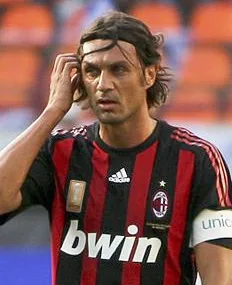
AC Milan
1985—2009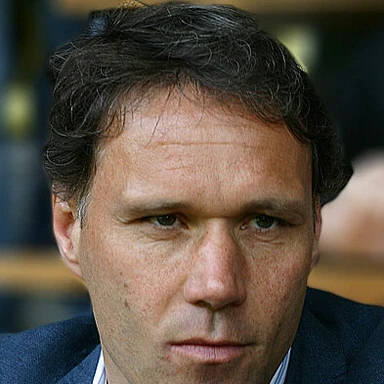 Photo: Paul Blank. Source and license in Image credits.
 Photo: Barcex. Source and license in Image credits.
Haarlem · Feyenoord · PSV
1979—1998Photo: Paul Blank. Source and license in Image credits.Photo: Barcex. Source and license in Image credits.Haarlem · Feyenoord · PSV
1979—1998
Villarreal CF · Atlético Madrid · Manchester City
2015—Present Photo: Майоров Владимир. Source and license in Image credits.
Real Madrid B · Independiente · River Plate
1996—2017Statistics are displayed only within the scope supported by each cited source.
AC MilanAC Milan: the 1988 Italian Super Cup final and line-upAC MilanAC Milan: the 1992 Italian Super Cup final and line-upUEFAUEFA: Rijkaard in Milan’s 1989 Super Cup triumphUEFAUEFA: Rijkaard’s goal in Milan’s 1990 Super Cup triumphAC MilanAC Milan: Rijkaard’s competitive and Serie A recordsAjaxAjax: Rijkaard’s two spells, 337 matches and honoursAjaxAjax: Rijkaard’s career route and 1995 farewellNational Football TeamsNational Football Teams: Rijkaard’s club league seasonsRoyal Netherlands Football AssociationDutch FA: Rijkaard’s 73 senior caps and ten goalsUEFAUEFA: Rijkaard’s winner in the 1990 European finalUEFAUEFA: Ajax’s 1995 European victory against MilanUEFAUEFA: the Netherlands’ EURO 1988 final line-up and title