League titles
First · 1917–18
Latest · 2021–22
Amsterdamsche Football Club Ajax
Amsterdam’s record champion and one of football’s defining schools: Ajax connects academy development, Total Football and four European Cup victories through a recognisable red-and-white identity.
Overview
Historical assessment
Overall Historical Index
97/100Football Legends DB editorial assessment
Football Legends DB editorial / historical index. This is not an official FIFA or UEFA ranking, a live form table or a player rating.
Version 1.0: editors assess eight dimensions from 0–100 using the cited historical record. The overall score is their equally weighted arithmetic mean, rounded to the nearest whole number. Trophy totals are evidence, not points automatically added to a formula.
Assessment guide: 0–39 limited documented impact; 40–59 established national contribution; 60–79 sustained national or continental influence; 80–94 major international influence; 95–100 a historical benchmark across generations. These are editorial judgements, not measured percentiles. Missing evidence means no published index.
World titles and sustained success across eras inform the historical and international assessments. Scores may be revised when the evidence or editorial assessment changes.
Assessment notes · Four European Cups and the influence of Total Football and youth development support the leading historical dimensions. Financial scale and interruptions between successful generations temper global reach and continuity. Scores are editorial judgments.
Current chapter
Season
2026–27Verified
Ajax appointed Míchel in June 2026 on a contract running to 2028. This new coaching chapter is recorded separately from the established honours register and the academy’s longer history.
Honours
First · 1917–18
Latest · 2021–22First · 1916–17
Latest · 2020–21First · 1993
Latest · 2019First · 1970–71
Latest · 1994–95First · 1991–92
Latest · 1991–92First · 1986–87
Latest · 1986–87First · 1973
Latest · 1995First · 1972
Latest · 1995History
Ajax was founded on 18 March 1900.
Across interrupted spells, Reynolds built coaching routines and an attacking tradition. Eight national championships established Ajax as a leading Dutch club.
Tactical identity · Combination play and organised technical training
Michels won the first European Cup in 1971. Kovács then led the 1972 and 1973 victories, extending a shared football idea across a coaching change.
Tactical identity · Pressing, positional exchange and control of space
Explore the defining match ↗With Van Basten leading the attack, Cruyff’s team won the 1987 Cup Winners’ Cup. Rijkaard and the young Bergkamp connected generations.
Tactical identity · Technical freedom within an attacking positional structure
Explore the defining match ↗The 1992 UEFA Cup preceded the 1995 Champions League and three league titles. Academy graduates played alongside recruited leaders and a returning Rijkaard.
Tactical identity · Defined triangles, wide forwards and a passing goalkeeper
Explore the defining match ↗De Boer restored consistent domestic success, winning every championship from 2011 through 2014. European progress remained a different challenge.
Tactical identity · Patient possession and positional discipline
The 2019 semi-final run accompanied a domestic double. Further league titles followed in 2021 and 2022, after the cancelled 2020 season.
Tactical identity · High pressing, mobile midfielders and a flexible front line
Explore the defining match ↗The portrait emblem returned as the club’s official crest for the new season.
A June appointment began a new coaching project with a contract through 2028.
Defining games
European Cup final
Wembley, London
Van Dijk and Haan scored as Michels’s team converted its developing football ideas into the club’s first European Cup.
European Cup final
Cruyff scored both goals against Inter. The victory completed the league, Dutch Cup and European Cup treble under Kovács.
Cup Winners’ Cup final
Olympic Stadium, Athens
Van Basten’s header decided the final, connecting the returning coach’s attacking ideas to a new generation of players.
Champions League final
Substitute Kluivert scored the winner against Milan. Ajax finished both the league and Champions League campaigns unbeaten.
Champions League · round of 16, second leg
Tadić, Ziyech, Neres and Schöne scored to eliminate the holders. The campaign later ended in the semi-final against Tottenham.
Legends
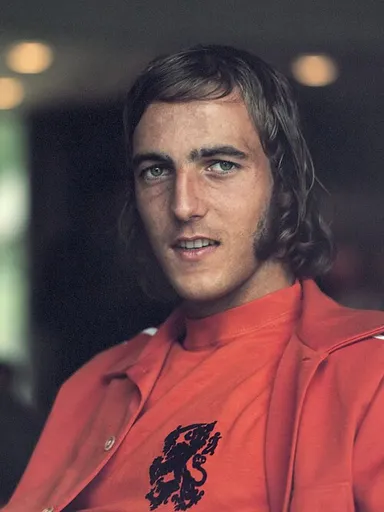
Photo: Paul Luberti. Source and license in Image credits.Forward
Mister Ajax’s wing play and longevity bridged the early European campaigns and all three consecutive European Cups.
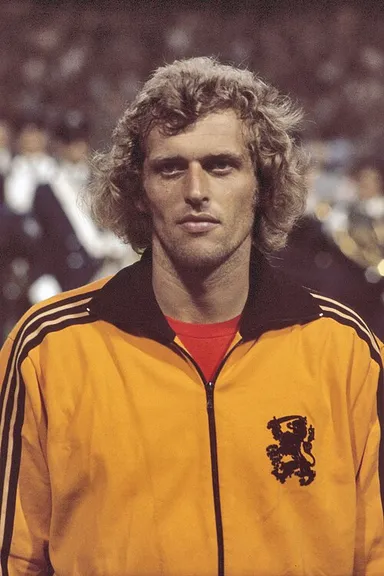
Photo: Bert Verhoeff for Anefo. Source and license in Image credits.Forward
A left winger whose dribbling and crossing gave the collective system a distinct individual rhythm.

Forward
The moving reference point of Total Football later returned to guide another generation on the pitch.
Photo: Mieremet, Rob / Anefo. Source and license in Image credits.Midfielder
His pressing, recovery runs and forward bursts made positional freedom sustainable for the team.
Photo: Christophe95. Source and license in Image credits.Defender
A technically assured defender who could advance from the back line and reorganise the space behind him.
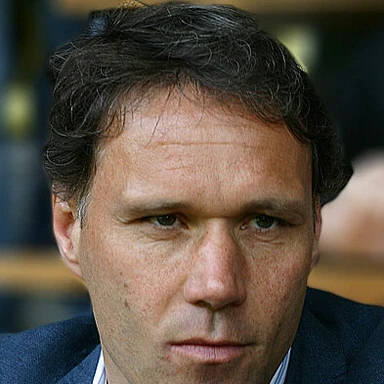
Photo: Paul Blank. Source and license in Image credits.Forward
A technically complete centre-forward whose header delivered the 1987 Cup Winners’ Cup.
Photo: Kieran Clarke. Source and license in Image credits.Forward
An academy attacker who found space between midfield and defence before the 1992 UEFA Cup triumph.
Photo: Mutari. Source and license in Image credits.Midfielder
Returned from Milan to give Van Gaal’s young side defensive judgement and experience in central areas.
Photo: Paul Blank. Source and license in Image credits.Defender
The captain and organising defender supplied continuity through the 1992 and 1995 European successes.
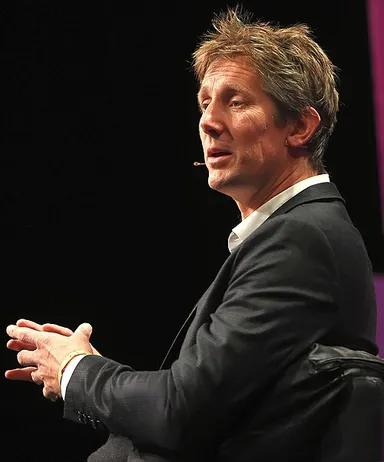
Photo: Web Summit. Source and license in Image credits.Goalkeeper
His calm distribution helped the goalkeeper become an active participant in Van Gaal’s passing structure.
Photo: Soppakanuuna. Source and license in Image credits.Attacking midfielder
A recruited Finnish playmaker whose timing and movement connected the midfield to the front line.
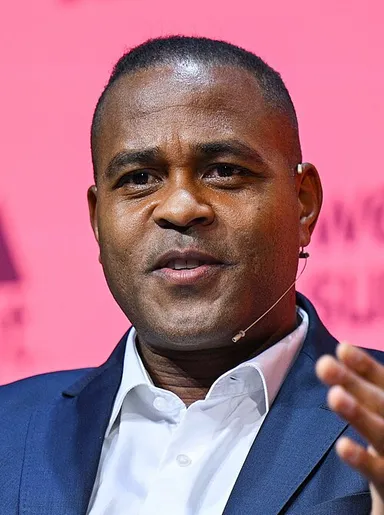
Photo: Web Summit. Source and license in Image credits.Forward
An academy striker who scored the 1995 European final winner at eighteen, in his first senior season.
Mister Ajax’s wing play and longevity bridged the early European campaigns and all three consecutive European Cups.
A left winger whose dribbling and crossing gave the collective system a distinct individual rhythm.
The moving reference point of Total Football later returned to guide another generation on the pitch.
His pressing, recovery runs and forward bursts made positional freedom sustainable for the team.
A technically assured defender who could advance from the back line and reorganise the space behind him.
A technically complete centre-forward whose header delivered the 1987 Cup Winners’ Cup.
An academy attacker who found space between midfield and defence before the 1992 UEFA Cup triumph.
Returned from Milan to give Van Gaal’s young side defensive judgement and experience in central areas.
The captain and organising defender supplied continuity through the 1992 and 1995 European successes.
His calm distribution helped the goalkeeper become an active participant in Van Gaal’s passing structure.
A recruited Finnish playmaker whose timing and movement connected the midfield to the front line.
An academy striker who scored the 1995 European final winner at eighteen, in his first senior season.
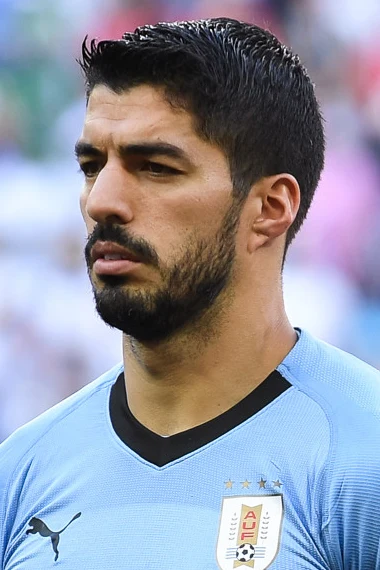
Four European titles across three clubs reflect a player who adapted his midfield work while keeping technical control and physical security at its centre.
Uruguay’s record scorer, a Copa América champion and a central partner in Barcelona’s Messi–Suárez–Neymar attack.
Coaching legacy
Club tenure only. Honours include senior first-team league, cup, super cup, continental and world titles where verified. European titles count European Cup / Champions League wins.
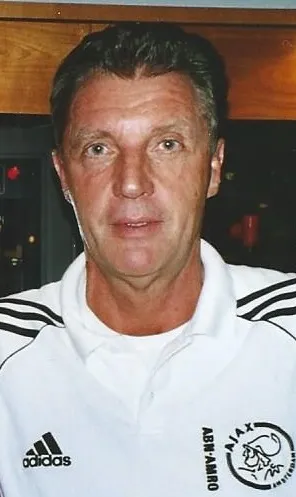
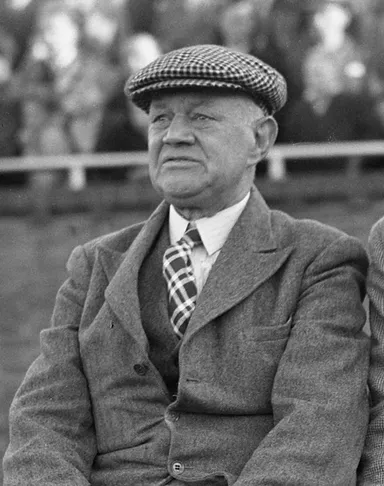
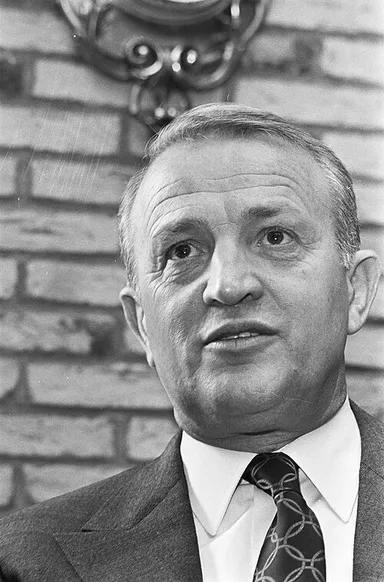
Photo: J.D. Noske / Anefo. Source and license in Image credits.1915–1925 · 1928–1940 · 1945–1947
Established combination play and organised training across separate spells, winning Ajax’s first eight national championships.

1965–1971 · 1975–1976
Turned collective movement, pressing and positional exchange into the platform for the 1971 European Cup.
Photo: Nationaal Archief, Den Haag, Rijksfotoarchief: Fotocollectie Algemeen Nederlands Fotopersbureau (ANEFO), 1945-1989 - negatiefstroken zwart/wit, nummer toegang 2.24.01.05, bestanddeelnummer 924-7419. Source and license in Image credits.1971–1973
Gave an experienced side room to improvise while retaining its collective structure and winning Europe twice.

1985–1988
Returned as coach and won the 1987 Cup Winners’ Cup with Van Basten at the point of the attack.
The 1987 Cup Winners’ Cup is separate from the European Cup column.
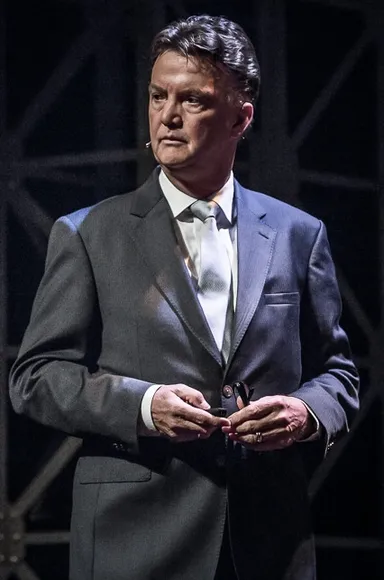
Photo: Congres in Beeld from Eindhoven, The Netherlands. Source and license in Image credits.1991–1997
Joined academy graduates to defined positional tasks, winning the 1992 UEFA Cup and 1995 Champions League.
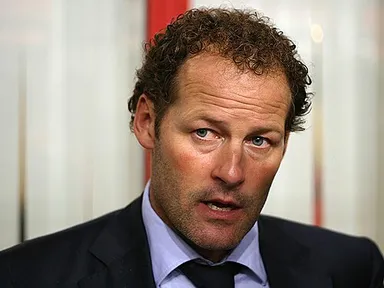
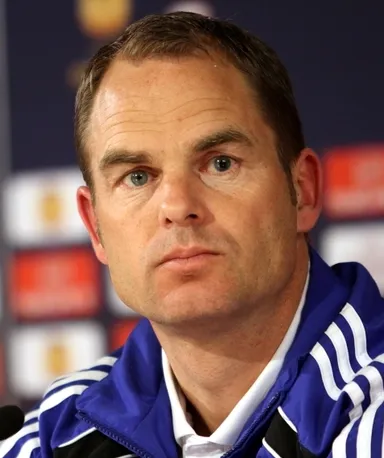
Photo: Yulia Novikova. Source and license in Image credits.2010–2016
Won four consecutive league titles from 2011 to 2014, making domestic consistency the defining achievement.
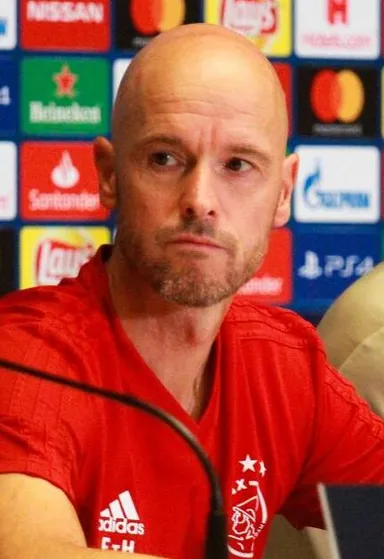
Photo: Olga Shcherbytska. Source and license in Image credits.2017–2022
Combined a flexible attack with an assertive midfield, reaching the 2019 European semi-final and winning three league titles.
Titles: 2019, 2021 and 2022. No championship was awarded in 2020.
Club identity
Collective spacing gives players freedom to exchange positions. Michels, Cruyff, Van Gaal and Ten Hag interpreted that idea in different teams.
De Meer and the ArenA mark different stages of Ajax’s place in Amsterdam, while the Klassieker connects that identity with Rotterdam.
The broad red panel and white shirt identify Ajax across generations; the classic portrait crest returned in 2025–26.
Technique, insight, personality and speed form the academy’s published development model; progression requires more than early physical maturity.
Three consecutive European Cups and the 1995 victory show two generations reaching the summit through different versions of collective attacking football.
The return of Rijkaard and the arrival of Litmanen show how selective recruitment complemented the academy in the 1995 team.
Identity
Stadium
Current home / Amsterdam
Opened as the Amsterdam ArenA in 1996, replacing De Meer; the stadium adopted Johan Cruyff’s name in 2018.
Former home / Amsterdam
The compact Watergraafsmeer ground was the everyday home of the great teams. Major European nights also used Amsterdam’s larger Olympic Stadium.
Rivalries
The historic contest between Amsterdam and Rotterdam’s leading football institutions.
Ajax and Feyenoord connect Amsterdam and Rotterdam through Dutch football’s leading cross-city rivalry. Feyenoord won the European Cup in 1970 before Ajax’s three consecutive victories.
Development
The academy evaluates technique, insight, personality and speed, while teaching players to understand their role in a collective passing game.
Historical role
Cruyff, Bergkamp and Kluivert show different generations reaching the first team. Not every legend was a youth graduate: Litmanen and Danny Blind arrived from other senior clubs, while Van der Sar joined as a young adult.
Famous graduates
Collection
Kits
Home kit / 1970–71
Home kit / 1994–95
Home kit / 2025–26
Commercial
TECHNICAL SUPPLIER
MAIN SHIRT
Kit studies are abstract colour and pattern references, not reproductions of official shirts.
Records
Edition years 1973 and 1995, played in 1974 and 1996. The unofficial 1972 contest against Rangers, played in January 1973, is excluded.
As of 2026-09-14