



The football behind Clarence Seedorf’s ratings
- Secure receiving under pressure
- Elite
- Control through contact
- Elite
- Midfield combinations
- Elite
- Shot power and technique
- Elite
- Choosing the tempo change
- Elite
- Defensive coverage
- Good
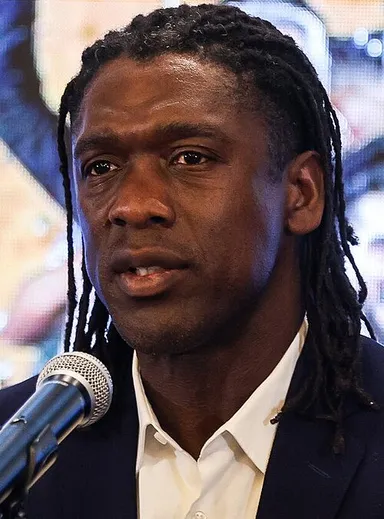 Photo: فاطمه عموزاد. Source and license in Image credits.
Clarence Clyde Seedorf
A creative midfielder whose strength, secure receiving and passing linked different generations of European champions.
Senior club · all competitions
Completed club records only; not a complete career total.
Active club snapshots and records with another scope are excluded. Assist totals are not combined across incompatible definitions.
Stored archive snapshots, not live counters. Missing values are not zero; records with different scopes are never added together.
G/M = goals ÷ appearances. G+A = goals + assists. Per-90 metrics use documented minutes.
Senior international · all competitions
Netherlands · completed senior record, 1994–2008
Stored archive snapshots, not live counters. Missing values are not zero; records with different scopes are never added together.
G/M = goals ÷ appearances. G+A = goals + assists. Per-90 metrics use documented minutes.
In context
Four European titles across three clubs reflect a player who adapted his midfield work while keeping technical control and physical security at its centre.
Reading the game
Clarence Seedorf made midfield control feel physical without making it crude. A defender could reach him, make contact and still fail to take the ball, because his first touch and body position had already protected the next action. That security let teammates move beyond him instead of remaining close enough to rescue possession. He could then change the rhythm with a short combination, a pass across the pitch or a forceful shot. The four European titles with Ajax, Real Madrid and Milan provide a remarkable outline, but they do not explain the work inside each team. His responsibilities changed from the mobile youngster in Amsterdam to the experienced connector around Milan’s creators. At his best, retaining the ball and advancing an attack were connected decisions rather than competing instincts. He helped an intricate side keep its shape while still finding room for individual invention. This dossier treats the 2006/07 Milan season as the shared evaluation point, while keeping the earlier athletic version and later leadership role distinct. It also retains the less settled spells and an international career without a senior tournament title, so that adaptability does not become a claim of uninterrupted success.
Historical references support the chronology; tactical explanations are museum editorial analysis.
Historical references: Real Madrid: Seedorf’s midfield role and club record ↗ · Seedorf: Netherlands match-by-match international register ↗ · UEFA: Seedorf’s four titles with three clubs ↗ · UEFA: Milan’s 2007 semi-final victory over Manchester United ↗
Career
| Period | Club | Apps | Goals | G/M |
|---|---|---|---|---|
| 1992—1995 | Senior club · league only Senior · #8 | 63 | 11 | 0.17 |
| 1995—1996 | SampdoriaSampdoria · league-only spell; see the separate club aggregate for wider competition coverage. Senior club · league only | 32 | 3 | 0.09 |
| 1996—1999 | Real MadridReal Madrid · league-only spell; see the separate club aggregate for wider competition coverage. Senior club · league only Senior · #10 | 121 | 15 | 0.12 |
| 2000—2002 | Inter MilanInter’s archive places the first spell segment in January 2000. Its twenty league appearances in 1999/00 are separate from the ten played for Real Madrid that season. Senior club · league only | 64 | 8 | 0.13 |
| 2002—2012 | AC MilanAC Milan · league-only spell; see the separate club aggregate for wider competition coverage. Senior club · league only Senior · #20 / 10 | 300 | 47 | 0.16 |
| 2012—2014 | BotafogoBotafogo · league-only spell; see the separate club aggregate for wider competition coverage. Senior club · league only Senior · #10 | 58 | 16 | 0.28 |
Stored archive snapshots, not live counters. Missing values are not zero; records with different scopes are never added together.
G/M = goals ÷ appearances. G+A = goals + assists. Per-90 metrics use documented minutes.
Honours
Real Madrid · domestic cup
Real Madrid · league
Real Madrid · continental
Real Madrid · world
AC Milan · league
AC Milan · continental
AC Milan · domestic cup
AC Milan · domestic cup
AC Milan · continental
AC Milan · world
Botafogo · league
Clarence Seedorf · individual
Clarence Seedorf · individual
Story
Career chapter
Seedorf entered Ajax’s first team in 1992, still sixteen, and developed within Louis van Gaal’s demanding positional framework. The young midfielder had to offer a passing angle, recognise when to advance and preserve the space another player needed. This helps explain why his later versatility was more than a list of positions. Ajax’s 1995 European triumph arrived while he was still a teenager, surrounded by a mixture of academy talent and experienced organisers. The team was the achievement’s essential setting. His departure for Sampdoria that summer began a different education, taking the same technical confidence into a league where opponents and teammates presented new tactical problems.
Historical references: Ajax: Seedorf’s emergence and first European title ↗ · Seedorf: first-team league seasons and international matches ↗ · UEFA: Seedorf’s four titles with three clubs ↗
Career chapter
After one season at Sampdoria, Seedorf joined Real Madrid in 1996. He could work beside Fernando Redondo or from the right, adding physical range and powerful striking to a midfield with several sources of invention. The league title and 1998 European Cup established another successful setting without making his duties identical to those at Ajax. His move to Inter around the turn of 2000 produced a more uneven chapter. Two goals against Juventus in March 2002 captured his ability to change a match, yet individual interventions did not create a settled team identity. The subsequent move across Milan therefore mattered as a change of football relationships, not merely shirt colour.
Historical references: Real Madrid: Seedorf’s midfield role and club record ↗ · Inter: Seedorf’s appearances by competition ↗ · Inter: Seedorf scores twice against Juventus in 2002 ↗ · Seedorf: first-team league seasons and international matches ↗
Career chapter
At Milan, Seedorf’s receiving and combinations found enduring relationships. Pirlo could organise from deeper positions, while Seedorf linked the left and central spaces to the next attacker. The 2003 European title and 2004 league championship preceded the especially revealing 2007 knockout run. Against Bayern he scored and supplied Inzaghi; against Manchester United he helped create Kaká’s opener and scored himself. Those actions showed several routes from midfield control to a decisive chance. Alongside the individual quality, Ancelotti’s structure and the covering work behind him remained essential. The final victory over Liverpool completed his fourth European title, while the best midfielder award recognised that season’s contribution rather than his entire career at once.
Historical references: UEFA: Seedorf’s four titles with three clubs ↗ · UEFA: Seedorf’s goal and assist in Munich, 2007 ↗ · UEFA: Milan’s 2007 semi-final victory over Manchester United ↗ · UEFA: Seedorf wins the 2007 best midfielder award ↗
Career chapter
Seedorf remained useful as Milan’s personnel and coaching changed, contributing to the 2011 league title and starting the Italian Super Cup victory in Beijing. Experience did not remove the need to manage space and physical effort; it changed how he could choose his interventions. Botafogo offered another setting in 2012. He helped the club win the 2013 Rio state championship and qualify for the following Libertadores, then retired in January 2014 before playing in that competition. The distinction matters: helping a team reach a tournament is different from appearing in it. His final league season was 2013, while the retirement announcement and transition into coaching belong to the following year.
Historical references: AC Milan: the Ancelotti and Allegri title-winning eras ↗ · AC Milan: the 2011 Italian Super Cup final ↗ · Botafogo: Seedorf’s retirement and the 2013 state title ↗ · Globo Esporte: Seedorf’s completed Botafogo record ↗
Profile
Advanced Playmaker
Also plays · Box-to-Box Midfielder
Receive under pressure, protect the ball and connect midfield to the next attacker. In the 2006/07 reference, work alongside Kaká behind the striker, with deeper teammates supplying distribution and defensive coverage.
Control through contact
Passing combinations and angles
Powerful ball striking
Midfield positional judgement
Illustrative role zones · not tracking data
Seedorf’s strength became most valuable when paired with preparation. He could receive with an opponent close, place his body between the challenge and the ball, and turn without rushing into a blind pass. The pause was productive when it allowed a teammate to move beyond the pressure. In editorial terms, this is the foundation of his control: physical security creates time, and a well-chosen next action makes that time useful. It should not be confused with keeping possession for its own sake.
At Milan he could move towards a touchline without becoming a conventional winger, or come inside without taking over every task of the deeper organiser. A short pass and a new receiving angle helped connect Pirlo’s distribution to the players nearer goal. When positioned with Kaká behind a striker, he could hold a useful pocket as the Brazilian accelerated away. Their differences mattered: Seedorf often sustained the connection through contact, while Kaká could turn the next opening into a direct run.
A forceful shot gave defenders a reason to leave their line, but Seedorf’s attacking value did not depend on firing from distance at every opportunity. He could combine, draw pressure and release a teammate instead. The Munich goal and assist offer both sides of that choice. At San Siro against United, control of a loose ball and a small change of angle preceded the finish. These examples connect technique to judgement rather than treating powerful striking as a separate spectacle.
His range allowed him to contribute in several zones, but the strongest Milan version was not a lone holding midfielder asked to protect every transition. Deeper teammates supplied defensive coverage while he connected attacks and recovered into the team shape. The assessments therefore separate positional understanding and strength from specialist tackling and aerial defence. Calling him complete describes a broad contribution with the ball and around it; it does not imply equal mastery of every midfield responsibility or erase the support that made his freedom possible.
Historical references: AC Milan: Seedorf’s profile and published totals ↗ · Real Madrid: Seedorf’s midfield role and club record ↗ · Inter: Seedorf scores twice against Juventus in 2002 ↗ · UEFA: Seedorf’s goal and assist in Munich, 2007 ↗ · UEFA: Milan’s 2007 semi-final victory over Manchester United ↗ · UEFA: Seedorf in the 2007 users’ Team of the Year ↗ · AC Milan: the 2011 Italian Super Cup final ↗
Reading the game
| Era / team | Primary Role | Tactical Character |
|---|---|---|
| 1992–1995Ajax | A young midfielder in a shared structure | Offer angles and time advances without closing a teammate’s space. |
| 1995–2002Sampdoria / Real Madrid / Inter Milan | Different roles across three teams | Add carrying, distribution and shooting from central or wider positions. |
| 2002–2006AC Milan | A durable link in Milan’s midfield | Connect the deeper passer to the attacking players through the left interior. |
| 2006–2009AC Milan | More influence behind the striker | Receive between lines and combine with Kaká while retaining a midfield connection. |
| 2009–2014AC Milan / Botafogo | Experience and selective interventions | Choose when to hold, release or advance as the team environment changes. |
Historical references: AC Milan: Seedorf’s profile and published totals ↗ · Ajax: Seedorf’s emergence and first European title ↗ · Real Madrid: Seedorf’s midfield role and club record ↗ · Inter: Seedorf’s appearances by competition ↗ · Seedorf: first-team league seasons and international matches ↗ · UEFA: Seedorf’s goal and assist in Munich, 2007 ↗ · UEFA: Milan’s 2007 semi-final victory over Manchester United ↗ · AC Milan: the Ancelotti and Allegri title-winning eras ↗ · Botafogo: Seedorf’s retirement and the 2013 state title ↗
Reading the game
The impressive part was often the action after the collision. Seedorf could remain balanced enough to choose a pass instead of merely surviving the challenge. This joined strength to touch and awareness. For teammates, it meant a contested reception could still become a platform for the next move, rather than an instruction to retreat and prepare for a turnover.
Ajax, Madrid and Milan did not ask exactly the same questions. Seedorf carried technical confidence and physical presence between those settings while changing where and how he supported the attack. The less stable Inter period adds a useful limit to this interpretation: adaptability creates options, but enduring effectiveness still requires a coherent role and relationships with the players around it.
The 2007 knockout matches showed a player able to connect patient midfield work to the action that changed the score. A pass, a controlled reception or a shot could each provide the final contribution. This is more precise than assuming that experience automatically wins big matches: his decisions and execution mattered inside a collective performance that created those opportunities.
The later Seedorf did not need to reproduce every run of his teenage years to remain useful. Position, protection of the ball and communication could reduce the need for repeated recovery actions. The Botafogo chapter gives that longevity a concrete setting, while its state championship and continental qualification should retain their own scale rather than borrow the prestige of his European titles.
Historical references: AC Milan: Seedorf’s profile and published totals ↗ · Ajax: Seedorf’s emergence and first European title ↗ · Real Madrid: Seedorf’s midfield role and club record ↗ · Inter: Seedorf’s appearances by competition ↗ · UEFA: Seedorf’s goal and assist in Munich, 2007 ↗ · UEFA: Milan’s 2007 semi-final victory over Manchester United ↗ · AC Milan: the 2011 Italian Super Cup final ↗ · Botafogo: Seedorf’s retirement and the 2013 state title ↗ · Globo Esporte: Seedorf’s completed Botafogo record ↗
Reading the game
Mobile midfielder in a positional framework
The 1994/95 version belongs to Van Gaal’s collective structure: an energetic young midfielder learning when to support, advance and retain the team’s spacing. The European title is the setting, not evidence that he already possessed every judgement of the later Milan player.
Left-sided midfielder linking the lines
In 2003/04, his relationship with the deeper organiser and the attacking players helped Milan sustain possession on the way to the league title. This version emphasises the supporting combinations around the forwards, keeping it distinct from the more advanced 2007 European reference.
Advanced connector alongside Kaká
Both evaluation panels use the mature Milan creator of 2006/07. The Bayern and United ties reveal how receiving, combinations and finishing could influence the same attack. The UEFA midfielder award supports the seasonal context; the assessment does not blend his teenage speed or later Brazilian leadership into this version.
Historical references: AC Milan: Seedorf’s profile and published totals ↗ · Ajax: Seedorf’s emergence and first European title ↗ · Seedorf: first-team league seasons and international matches ↗ · UEFA: Seedorf’s four titles with three clubs ↗ · UEFA: Seedorf’s goal and assist in Munich, 2007 ↗ · UEFA: Milan’s 2007 semi-final victory over Manchester United ↗ · UEFA: Seedorf wins the 2007 best midfielder award ↗ · AC Milan: the Ancelotti and Allegri title-winning eras ↗
Statistics
| Season | Club | Apps | Goals | G/M |
|---|---|---|---|---|
| 2013 | Botafogo Senior club · league only | 34 | 8 | 0.24 |
| 2012 | Botafogo Senior club · league only | 24 | 8 | 0.33 |
| 2011/12 | AC Milan Senior club · league only | 18 | 2 | 0.11 |
| 2010/11 | AC Milan Senior club · league only | 30 | 4 | 0.13 |
| 2009/10 | AC Milan Senior club · league only | 29 | 5 | 0.17 |
| 2008/09 | AC Milan Senior club · league only | 33 | 6 | 0.18 |
| 2007/08 | AC Milan Senior club · league only | 32 | 7 | 0.22 |
| 2006/07 | AC Milan Senior club · league only | 32 | 7 | 0.22 |
| 2005/06 | AC Milan Senior club · league only | 36 | 4 | 0.11 |
| 2004/05 | AC Milan Senior club · league only | 32 | 5 | 0.16 |
Stored archive snapshots, not live counters. Missing values are not zero; records with different scopes are never added together.
G/M = goals ÷ appearances. G+A = goals + assists. Per-90 metrics use documented minutes.
Twenty-three first-team league rows follow the NFT register and total 638 appearances and 100 goals. Ajax and Botafogo appearance counts can differ in other historical compilations; this is a source-specific league series, not a reconciled universal career total. The two 1999/00 rows belong to Madrid and Inter. Brazilian rows cover the national Série A only, excluding state championships. Wider club aggregates already include their league matches. All assists remain null.
Club competitions
| Competition | Apps | Goals | G/M |
|---|---|---|---|
Serie ASerie A · Sampdoria, Inter and MilanThe league subsets are 32/3, 64/8 and 300/47 respectively. Club cups and other leagues are excluded. | 396 | 58 | 0.15 |
La LigaLa Liga · Real Madrid, 1996–1999Four season entries include ten appearances before the move to Inter in 1999/00. This subset is already part of Madrid’s wider club total. | 121 | 15 | 0.12 |
UEFA Champions LeagueChampions League · main competition, 1994–2012UEFA’s main-competition record covers Ajax, Real Madrid and Milan. Qualifiers, UEFA Cup matches and Super Cups are excluded; the wider UEFA club-competition total is a different scope. | 125 | 11 | 0.09 |
Stored archive snapshots, not live counters. Missing values are not zero; records with different scopes are never added together.
G/M = goals ÷ appearances. G+A = goals + assists. Per-90 metrics use documented minutes.
International
International career
An 87-cap, eleven-goal Netherlands career included the 1998 World Cup and three European Championship finals. The Dutch finished fourth in 1998 and reached the EURO semi-finals in 2000 and 2004; he won no senior international tournament title.
Senior international · tournament splits
| Competition | Apps | Goals | G/M |
|---|---|---|---|
FIFA World CupWorld Cup finals · 1998Four appearances in the Netherlands’ seven-match campaign; team matches without a player appearance are not counted. Qualifiers are excluded. | 4 | 0 | 0.00 |
UEFA European ChampionshipEURO finals · 1996, 2000 and 2004Four appearances in 1996, two in 2000 and four in 2004. His 2008 qualifying appearances are part of the senior total, not appearances at the 2008 finals. | 10 | 0 | 0.00 |
Stored archive snapshots, not live counters. Missing values are not zero; records with different scopes are never added together.
G/M = goals ÷ appearances. G+A = goals + assists. Per-90 metrics use documented minutes.
Reading the game
Seedorf’s legacy is most useful when the medals lead back to the midfield work. He could make a difficult reception safe, keep the ball moving through a crowded area and then choose an action that changed the attack’s speed. Those qualities explain why he could share responsibility with very different teammates rather than require every team to be built around one repeated formula. The European victories across three clubs remain the clearest historical marker, but the Milan partnership offers the richest tactical picture: control, physical security and creative judgement working alongside other specialists. His career also resists a seamless success story. Inter did not provide the same continuity, and the Netherlands’ deep tournament runs produced no senior title during his international years. Later, Botafogo gave his experience a different collective purpose before he ended his playing career. None of those contexts needs to be inflated to make the whole career significant. He demonstrated that a midfielder could be powerful without depending on constant collision, inventive without abandoning team structure, and influential without owning the final pass in every successful move. That combination is the lasting lesson behind the breadth of his record.
Historical references: Inter: Seedorf’s appearances by competition ↗ · Seedorf: Netherlands match-by-match international register ↗ · UEFA: Seedorf’s four titles with three clubs ↗ · Botafogo: Seedorf’s retirement and the 2013 state title ↗
Archive
Advanced Playmaker · editorial peak 2006—2007
Louis van Gaal · Sven-Göran Eriksson · Fabio Capello · Jupp Heynckes · Carlo Ancelotti · Massimiliano Allegri · Oswaldo de Oliveira
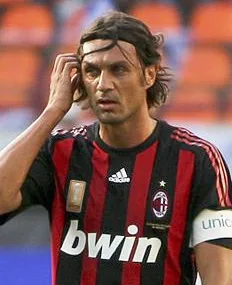
Paolo Maldini— Overlapping AC Milan era · Ronaldo Nazário— Overlapping Inter Milan era · Ronaldinho— Overlapping AC Milan era · Kaká— Overlapping AC Milan era
Van Gaal’s European champions —
AC Milan
1985—2009
Cruzeiro · PSV · Barcelona
1993—2011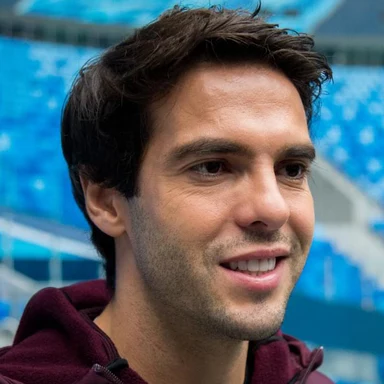 Photo: Евгений Асмолов. Source and license in Image credits.
São Paulo · AC Milan · Real Madrid
2001—2017
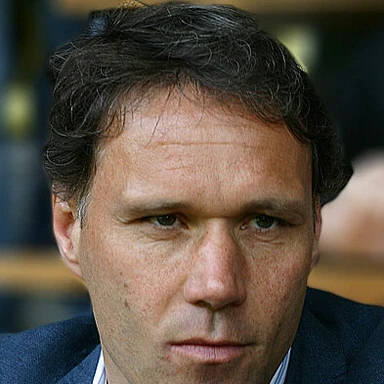 Photo: Paul Blank. Source and license in Image credits.
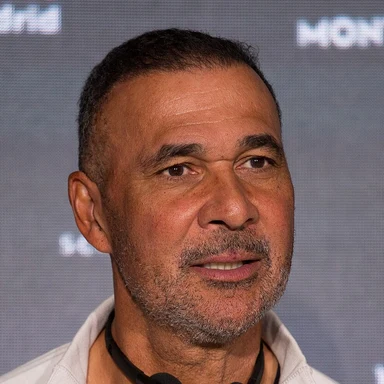 Photo: Barcex. Source and license in Image credits.
Haarlem · Feyenoord · PSV
1979—1998
AS Cannes · Bordeaux · Juventus
1989—2006
Barcelona · Al Sadd
1998—2019
Manchester United · Preston North End · Waterford
1956—1976Statistics are displayed only within the scope supported by each cited source.
Real MadridReal Madrid: the 1997 Spanish Super Cup victoryUEFAUEFA: Seedorf’s European honours and midfield careerAC MilanAC Milan: Seedorf’s profile and published totalsMaglia RossoneraMaglia Rossonera: Seedorf’s competitive Milan match registerAjaxAjax: Seedorf’s emergence and first European titleReal MadridReal Madrid: Seedorf’s midfield role and club recordInter MilanInter: Seedorf’s appearances by competitionInter MilanInter: Seedorf scores twice against Juventus in 2002National Football TeamsSeedorf: first-team league seasons and international matchesRSSSFSeedorf: Netherlands match-by-match international registerUEFAUEFA: Seedorf’s four titles with three clubsUEFAUEFA: Seedorf’s goal and assist in Munich, 2007UEFAUEFA: Milan’s 2007 semi-final victory over Manchester UnitedUEFAUEFA: Seedorf wins the 2007 best midfielder awardUEFAUEFA: Seedorf in the 2007 users’ Team of the YearAC MilanAC Milan: the Ancelotti and Allegri title-winning erasAC MilanAC Milan: the 2011 Italian Super Cup finalAC MilanAC Milan: the club’s trophy chronologyBotafogoBotafogo: Seedorf’s retirement and the 2013 state titleGlobo EsporteGlobo Esporte: Seedorf’s completed Botafogo recordAFC-Ajax.infoAjax historical register: 1993 Dutch Super CupAFC-Ajax.infoAjax historical register: 1994 Dutch Super Cup