

The centre-forward’s defining actions
- Acceleration with the ball
- Generational
- Control through contact
- Elite
- Goalkeeper manipulation
- Generational
- Central finishing
- Generational
- Defensive involvement
- Limited

Ronaldo Luís Nazário de Lima
A centre-forward who could carry through the defence and finish the move himself, later adapting through timing, positioning and selective acceleration.
Senior club · all competitions
Completed club records only; not a complete career total.
Active club snapshots and records with another scope are excluded. Assist totals are not combined across incompatible definitions.
Stored archive snapshots, not live counters. Missing values are not zero; records with different scopes are never added together.
G/M = goals ÷ appearances. G+A = goals + assists. Per-90 metrics use documented minutes.
Senior international · all competitions
Stored archive snapshots, not live counters. Missing values are not zero; records with different scopes are never added together.
G/M = goals ÷ appearances. G+A = goals + assists. Per-90 metrics use documented minutes.
In context
Ronaldo linked explosive carrying with elite finishing. His Barcelona and Inter peak, 2002 World Cup return and more economical Madrid years reveal different versions of the same central threat.
Reading the game
Ronaldo changed the problem a centre-forward posed to a defence. He could receive well away from goal and carry the ball into the chance himself, combining acceleration with touches precise enough to survive contact and change direction. A defender stepping out risked being beaten; one retreating risked giving him room to build speed. The threat was not simply that he ran fast, but that the next touch remained available while everyone around him was adjusting.
His career also shows why a great striker cannot be reduced to one physical image. The Barcelona and early Inter versions could create long routes to goal through repeated bursts. After serious interruptions, the World Cup winner of 2002 and the Madrid forward relied more visibly on positioning, selective acceleration and finishing choices. These were related versions of the same player, rather than a simple division between talent and decline. Understanding Ronaldo means following the connection from receiving to the final action: how he prepared the escape, made the goalkeeper commit and chose the simplest finish once the difficult work was done.
Historical references support the chronology; tactical explanations are museum editorial analysis.
Historical references: Barcelona: Ronaldo’s 1996 Compostela goal ↗ · UEFA: Inter’s 1998 final against Lazio ↗ · UEFA: Ronaldo’s 2003 Old Trafford hat-trick ↗ · FIFA: Ronaldo and Kahn in the 2002 final ↗
Career
| Period | Club | Apps | Goals | G/M |
|---|---|---|---|---|
| 1993—1994 | CruzeiroThe Brazilian emergence.Senior · #9 | — | — | — |
| 1994—1996 | PSVPSV’s own historical account records 57 appearances and 54 goals. This club authority is preferred over the different PSV figures in Madrid’s retrospective. Assists remain unverified. Senior club · all competitions Senior · #9 | 57 | 54 | 0.95 |
| 1996—1997 | BarcelonaThe complete 1996/97 Barcelona spell: 49 official appearances and 47 goals. League figures are part of this total, not additional matches. Assists remain unverified. Senior club · all competitions Senior · #9 | 49 | 47 | 0.96 |
| 1997—2002 | Inter MilanInter’s historical record for 1997–2002: 99 appearances and 59 goals across competitions. Assists remain unverified. Senior club · all competitions Senior · #10 / 9 | 99 | 59 | 0.60 |
| 2002—2007 | Real MadridMadrid records 177 official appearances and 104 goals. Its later retrospective credits two league titles, including 2006/07, a season in which he left the club in January. Assists remain unverified. Senior club · all competitions Senior · #11 / 9 | 177 | 104 | 0.59 |
| 2007—2008 | AC MilanMilan records 20 appearances and 9 goals. He was ineligible for their 2006/07 Champions League campaign after playing for Madrid in that competition; that title is not assigned to him here. Senior club · all competitions Senior · #99 | 20 | 9 | 0.45 |
| 2009—2011 | CorinthiansA final chapter in Brazil.Senior · #9 | — | — | — |
Stored archive snapshots, not live counters. Missing values are not zero; records with different scopes are never added together.
G/M = goals ÷ appearances. G+A = goals + assists. Per-90 metrics use documented minutes.
Honours
Real Madrid · league
Real Madrid · domestic cup
Brazil · world
France Football · individual
Inter Milan · continental
Brazil · continental
Barcelona · continental
Barcelona · domestic cup
Barcelona · domestic cup
Real Madrid · world
FIFA · individual
Brazil · individual
Brazil · individual
Brazil · world
Barcelona · individual
Story
Career chapter
Cruzeiro supplied the first senior stage, followed by PSV and a single Barcelona season in 1996/97. The young Ronaldo could receive short of the defensive line without surrendering his identity as the main scorer. Once he turned, the defender had to manage both the sprint and the ball, while supporting teammates could occupy the next opponent. His Compostela goal captures the extreme version: a long carry in which power and controlled touches remained connected. The broader change was more repeatable than that famous run. A pass to the striker could begin the penetration rather than merely finish a move already constructed by everyone else.
Historical references: Barcelona: Ronaldo’s 1996/97 season and three trophies ↗ · Barcelona: Ronaldo’s 1996 Compostela goal ↗ · PSV: Ronaldo’s 57 appearances and 54 goals ↗
Club chapter
At Inter, Ronaldo's direct threat operated alongside other forwards and a midfield able to release him into space. The 1998 UEFA Cup final showed how quickly that relationship could become decisive: Moriero sent him through and he rounded Marchegiani before finishing. Yet the Inter years cannot be treated as five uninterrupted seasons at that level. Serious knee injuries repeatedly interrupted his football and made the return itself a major part of the story. In 2002, Brazil gave him a platform with Rivaldo and Ronaldinho working around the attack. The final against Germany rewarded anticipation and finishing, illustrating a successful return without requiring every goal to begin with a spectacular dribble.
Historical references: Inter: Ronaldo’s 99 appearances and 59 goals ↗ · UEFA: Inter’s 1998 final against Lazio ↗ · FIFA: Ronaldo and Kahn in the 2002 final ↗
Explore club contextClub chapter
Madrid surrounded Ronaldo with players capable of finding a forward before the defence had fully settled. His task became choosing the receiving lane, protecting the next touch and deciding how much acceleration a chance actually required. The 2003 hat-trick at Manchester United demonstrated that economy through different finishes, rather than one repeated route to goal. The team lost the match but advanced on aggregate, a distinction worth preserving beside the individual performance. Across his Madrid years, the connection with creators such as Zidane mattered as much as the image of a striker waiting in the box. He could still manufacture a chance, but increasingly selected the moments when doing so was necessary.
Historical references: Madrid: Ronaldo’s official club appearances and goals ↗ · UEFA: Ronaldo’s 2003 Old Trafford hat-trick ↗ · Ronaldo Nazário — club legend ↗
Explore club contextCareer chapter
The move to AC Milan in 2007 and the later Corinthians spell extended the story beyond Madrid. These chapters should not be assessed as an attempt to reproduce every acceleration of the nineteen-year-old. Receiving position, body protection and the economy of the final touch became more important ways to retain a scoring role. Milan's official profile also clarifies that he was ineligible for their victorious 2006/07 Champions League campaign after appearing for Madrid in the competition. His retirement in 2011 closed a career shaped by both extraordinary execution and repeated interruption. The final lesson is adaptation: the threat of a centre-forward can survive through timing and technique even as the pattern of movement changes.
Historical references: Milan: Ronaldo’s record and European eligibility ↗ · UEFA: Ronaldo’s retirement in 2011 ↗
Profile
Complete Forward
Also plays · Mobile central attacker
Ronaldo combined sprinter’s separation with midfielder’s touch, manipulating goalkeepers after carrying directly through the centre.
Acceleration
Close control
One-on-one finishing
Improvisation
Illustrative role zones · not tracking data
Ronaldo's speed mattered because the ball remained part of the running pattern. A touch could be long enough to escape a challenge without becoming so loose that the next defender could collect it. As space narrowed, he could shorten the next action or change its direction. The advantage came from coordinating those decisions at speed, rather than treating running and technique as separate qualities.
He did not always need to begin on the shoulder of the last defender. Receiving farther back could give him room to turn and force a centre-back to decide whether to step out. A nearby forward or midfielder supplied an alternative if that turn was blocked. The useful question was where the next space would appear, not whether the striker stayed permanently in the penalty area.
A one-against-one could become another dribbling problem rather than an immediate shot. By changing his body angle or taking a step-over, Ronaldo could make the goalkeeper shift before choosing the final touch. The Lazio final supplies the classic example. Rounding the keeper was one option, not an obligation: the aim was to create a finish that demanded less precision after the initial deception.
The Old Trafford hat-trick showed that his scoring was not dependent on reaching an identical position. He could exploit an early shooting angle, complete a move supplied from the flank or strike from outside the area. The choice followed the available space and the goalkeeper's position. Later economy did not mean only close-range finishing; it meant avoiding touches that no longer improved the chance.
The 2002 final is a useful counterweight to the solo-run image. Anticipating a rebound and arriving for a prepared chance were decisive parts of his contribution. Teammates advanced the ball, drew attention and supplied the conditions for the finish. Keeping Ronaldo available high up the pitch also required others to maintain defensive connections, so his individual threat cannot explain a team's entire balance.
Historical references: Barcelona: Ronaldo’s 1996 Compostela goal ↗ · PSV: Ronaldo’s 57 appearances and 54 goals ↗ · UEFA: Inter’s 1998 final against Lazio ↗ · UEFA: Ronaldo’s 2003 Old Trafford hat-trick ↗ · FIFA: Ronaldo and Kahn in the 2002 final ↗
Reading the game
| Era / team | Primary Role | Tactical Character |
|---|---|---|
| 1993–1996Cruzeiro / PSV | From emergence to European penetration | Receives before the defensive line and turns carrying into a route towards goal. |
| 1996–1997Barcelona | A scorer who begins the breakthrough | Combines long carries with a central scoring role under Bobby Robson. |
| 1997–2002Inter Milan | Direct threat and interrupted continuity | Connects with supporting forwards and midfielders; injuries interrupt the later years. |
| 2002Brazil | Finishing within Brazil’s attack | Uses anticipation and selected movement around the work of Rivaldo and Ronaldinho. |
| 2002–2007Real Madrid | Economy among Madrid’s creators | Chooses receiving lanes and shooting moments while preserving a threat beyond the defence. |
| 2007–2011AC Milan / Corinthians | The final adaptation | Relies more on position, protection and efficient touches in the final club chapters. |
Historical references: Barcelona: Ronaldo’s 1996/97 season and three trophies ↗ · Barcelona: Ronaldo’s 1996 Compostela goal ↗ · PSV: Ronaldo’s 57 appearances and 54 goals ↗ · Inter: Ronaldo’s 99 appearances and 59 goals ↗ · UEFA: Inter’s 1998 final against Lazio ↗ · UEFA: Ronaldo’s 2003 Old Trafford hat-trick ↗ · FIFA: Ronaldo and Kahn in the 2002 final ↗ · Milan: Ronaldo’s record and European eligibility ↗ · UEFA: Ronaldo’s retirement in 2011 ↗
Reading the game
Beating the first defender did not necessarily exhaust the move. Ronaldo could adjust the ball and accelerate again before the next opponent was balanced. That made covering him difficult even when the defence had a spare player. The sequence depended on touch and coordination: speed without a playable next contact would have ended the advantage after the first escape.
His strength was useful when it protected the next touch rather than merely won a collision. A defender's attempt to slow him could be followed by another change of direction or a short burst into the gap. This helps explain why the famous carries feel continuous: surviving contact and preparing the next action often happened within the same movement.
The final defender was not always the last opponent he needed to manipulate. Ronaldo could approach the goalkeeper with enough control to delay the shot and change the finishing picture. His goal against Lazio shows the value of that option. The memorable step-over mattered because it moved the obstacle and simplified what remained, not because every chance needed an elaborate trick.
The later forward did not need to repeat a long carry to remain dangerous. A better starting position or an earlier shot could replace several touches. The World Cup final and the Manchester United hat-trick illustrate different expressions of that economy. His adaptation is most clearly understood through the action a chance required, rather than through an imagined return to an earlier body.
Historical references: Barcelona: Ronaldo’s 1996 Compostela goal ↗ · Inter: Ronaldo’s 99 appearances and 59 goals ↗ · UEFA: Inter’s 1998 final against Lazio ↗ · UEFA: Ronaldo’s 2003 Old Trafford hat-trick ↗ · FIFA: Ronaldo and Kahn in the 2002 final ↗
Reading the game
Explosive carrying centre-forward
Barcelona's 1996/97 Ronaldo could turn a reception into a direct attack on the centre of the defence. His scoring volume belonged with the carries that made some of those chances possible. The Compostela run is the famous illustration, but the wider peak was the repeated threat of a striker who could start outside the area and still become the final receiver or finisher.
Mobile central attacker
The first Inter season placed his acceleration and improvisation in a different competitive environment. The UEFA Cup final demonstrated how a through pass, a run and a goalkeeper duel could form one coherent action. This version is best understood before the later injury interruptions: a centre-forward able to attack the defensive line directly while combining with another striker and the midfield behind him.
Selective runner and finisher
The 2002 World Cup and early Madrid years provide a different high point. His threat now appeared more often through selected bursts, anticipation and a decisive final touch. The Germany final and the Old Trafford hat-trick show that reducing the number of actions did not reduce the range of finishes. This version rewards attention to when he moves and shoots, rather than only how far he carries the ball.
Historical references: Barcelona: Ronaldo’s 1996/97 season and three trophies ↗ · Barcelona: Ronaldo’s 1996 Compostela goal ↗ · Inter: Ronaldo’s 99 appearances and 59 goals ↗ · UEFA: Inter’s 1998 final against Lazio ↗ · UEFA: Ronaldo’s 2003 Old Trafford hat-trick ↗ · FIFA: Ronaldo and Kahn in the 2002 final ↗
Statistics
| Season | Club | Goals |
|---|---|---|
| 1997–98 | Inter Milan Senior club · all competitions | 34 |
| 1996–97 | Barcelona Senior club · all competitions Performance record
| 47 |
Stored archive snapshots, not live counters. Missing values are not zero; records with different scopes are never added together.
G/M = goals ÷ appearances. G+A = goals + assists. Per-90 metrics use documented minutes.
Selected verified seasons across all official competitions. The 1997/98 Inter source confirms 34 goals but does not supply an appearance total; that value and unreconciled assists remain blank. These rows are not a complete career sum.
International
International career
FIFA’s senior record of 98 appearances and 62 goals is preferred; Madrid’s published 105-appearance figure remains a separate historical scope. A non-playing champion in 1994, Ronaldo was a decisive scorer in 2002. Youth and Olympic matches are excluded from the preferred senior total.
Real Madrid historical profile: 105 appearances / — goals · Retained as a distinct published historical scope; the source does not provide a compatible goal total.
Reading the game
Ronaldo's historical importance lies in bringing the ball carrier and the penalty-area scorer into the same centre-forward. He was not the first striker to dribble, but the combination of speed, strength, coordination and finishing made defending him an unusually continuous task. Surviving the first challenge did not end the danger: he could change direction again, accelerate into another gap and still manipulate the goalkeeper. His most memorable runs are useful evidence of that connection, rather than a complete account of his value.
The injuries and the later recovery belong to the story without requiring speculation about a career that never happened. His actual achievements already contain distinct forms of excellence: the explosive young forward, the decisive international scorer and the more economical Madrid finisher. The World Cup titles also need context: he was a non-playing squad member in 1994 and an essential scorer in 2002. Likewise, a brilliant European career did not include a Champions League title. Those distinctions make the record more informative. His enduring contribution is a model of a striker who could create the route to goal as well as complete it, and later find different routes when the demands on his body changed.
Historical references: Barcelona: Ronaldo’s 1996/97 season and three trophies ↗ · UEFA: Inter’s 1998 final against Lazio ↗ · FIFA: Ronaldo and Kahn in the 2002 final ↗ · FIFA: Ronaldo’s Brazil and World Cup career ↗ · UEFA: Ronaldo’s retirement in 2011 ↗
Archive
Complete Forward · editorial peak 1996—2002
Bobby Robson · Héctor Cúper · Vicente del Bosque
Paolo Maldini— Overlapping AC Milan era · Zinedine Zidane— Overlapping Real Madrid era · Kaká— Overlapping AC Milan era · Luís Figo— Overlapping Barcelona era
Ronaldo, Figo and the centenary — Barcelona · Ronaldo in Paris — Inter Milan · Galácticos — Real Madrid · Ancelotti’s orchestra — AC Milan

Adaptive tournament manager
1992—Present · AC Milan · Real Madrid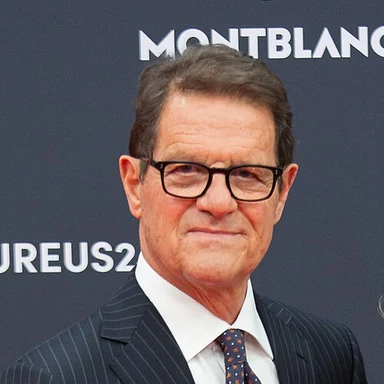 Photo: Barcex (Wikimedia Commons); crop by EndzoneEnthusiast. Source and license in Image credits.
Discipline and defensive balance
1982—2018 · AC Milan · Real Madrid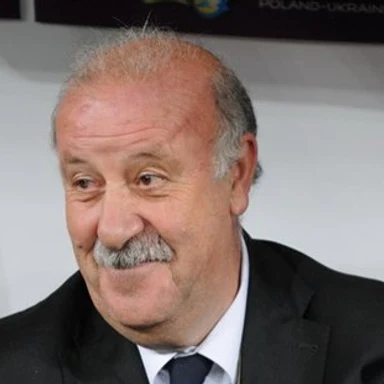 Photo: Илья Хохлов / Football.ua. Source and license in Image credits.
Continuity and technical control
1987—2016 · Real Madrid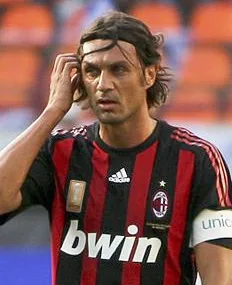
AC Milan
1985—2009
AS Cannes · Bordeaux · Juventus
1989—2006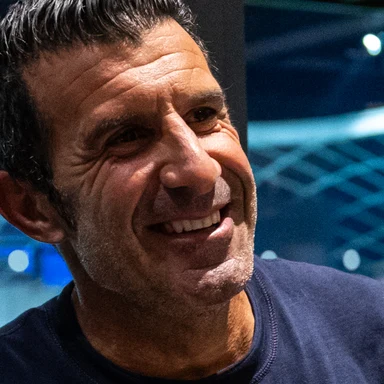 Photo: Žan Kolman. Source and license in Image credits.
Sporting CP · Barcelona · Real Madrid
1989—2009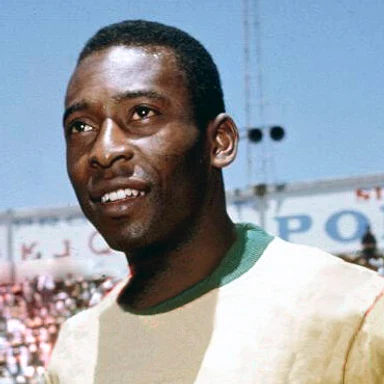 Photo: Unknown author. Source and license in Image credits.
Santos · New York Cosmos
1956—1977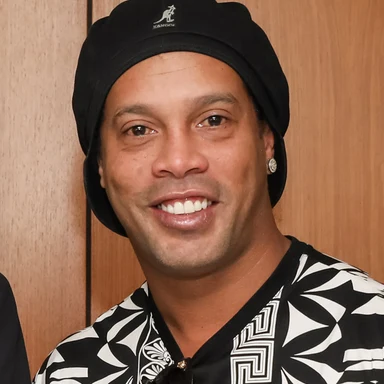 Photo: Marcos Corrêa/PR. Source and license in Image credits.
Grêmio · Paris Saint-Germain · FC Barcelona
1998—2018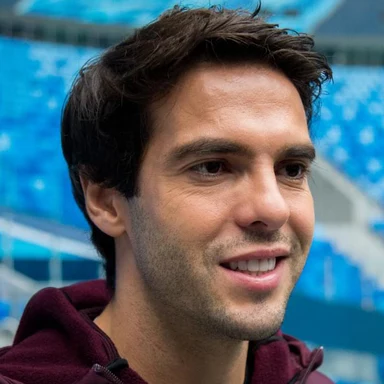 Photo: Евгений Асмолов. Source and license in Image credits.
São Paulo · AC Milan · Real Madrid
2001—2017
AS Monaco · Juventus · Arsenal
1994—2014Photo: Unknown author. Source and license in Image credits.Santos · New York Cosmos
1956—1977 Photo: Paul Blank. Source and license in Image credits.
Statistics are displayed only within the scope supported by each cited source.
FC BarcelonaBarcelona: Ronaldo’s 1996/97 season and three trophiesFC BarcelonaBarcelona: Ronaldo’s individual awards in 1996 and 1997FC BarcelonaBarcelona: Ronaldo’s 1996 Compostela goalPSVPSV: Ronaldo’s 57 appearances and 54 goalsInter MilanInter: Ronaldo’s 99 appearances and 59 goalsInter MilanInter: Ronaldo’s 34 goals in 1997/98UEFAUEFA: Inter’s 1998 final against LazioReal MadridMadrid: Ronaldo’s official club appearances and goalsReal MadridMadrid: Ronaldo’s two league titles and cup honoursUEFAUEFA: Ronaldo’s 2003 Old Trafford hat-trickFIFAFIFA: Ronaldo and Kahn in the 2002 finalFIFAFIFA: Ronaldo’s 98 senior appearances and 62 goalsFIFAFIFA: Ronaldo’s Brazil and World Cup careerFIFAFIFA: Ronaldo’s three World Player awardsAC MilanMilan: Ronaldo’s record and European eligibilityUEFAUEFA: Ronaldo’s retirement in 2011Wikipedia (cited honours reference)ronaldo nazario — selected senior honoursFIFARonaldo: Brazil record and World Cup careerReal Madrid C.F.Ronaldo Nazário — club legend