Luis Aragonés
Predecessor and footballing reference
Documented history
Del Bosque credited Aragonés with establishing Spain’s direction. This is a succession, not an assistant-coaching appointment.
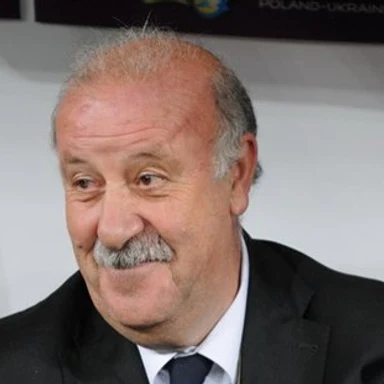 Photo: Илья Хохлов / Football.ua. Source and license in Image credits.
Continuity and technical control
A long-serving Madrid figure who moved through the reserve and caretaker roles before European titles and Spain’s World Cup victory.
Spain senior national team · 2008–2016
Spain senior national team · complete 2008–2016 appointment · includes friendlies and competitive fixtures, using the RFEF published classification. Excludes club management; no league PPG is inferred.
Stored archive snapshots, not live counters. Missing values are not zero; records with different scopes are never added together.
Win rate = wins ÷ matches. Points per game requires an explicit scoring convention; cup records are not silently treated as league points.
Career origins
Del Bosque’s coaching route grew inside Real Madrid before extending to Spain. Youth development and short first-team appointments preceded sustained top-level responsibility.
Predecessor and footballing reference
Del Bosque credited Aragonés with establishing Spain’s direction. This is a succession, not an assistant-coaching appointment.
Coaching in the youth categories and directing the academy formed part of his Madrid apprenticeship.
Temporary first-team appointments in 1994 and 1996 gave him experience before the longer tenure.
The longer Madrid spell brought European Cups in 2000 and 2002 within a seven-trophy tenure.
He succeeded Aragonés after EURO 2008, then led Spain to the 2010 world title and EURO 2012.
UEFA Champions League
The Paris final gave his longer Madrid appointment a defining competitive achievement.
His route shows how institutional knowledge can support independent leadership, rather than merely temporary stewardship.
Continuity becomes useful when shared understanding still allows changes in personnel and roles.
Tactics
Coaching identity
Del Bosque inherited a successful Spanish football identity and adapted the roles within it. Calm leadership and tactical decisions were complementary, not alternatives.
Tactical analysis
Aragonés’ 2008 European title preceded Del Bosque’s appointment. The inheritance matters: continuity is an achievement, but the earlier title is not his coaching honour.
The Alba–Iniesta partnership against France illustrates how combinations on one side can open a forward route. Passing control needs penetration to become dangerous.
Using Fàbregas or a recognised striker changed the attacking reference. It did not mean that Spain had abandoned its underlying football.
Before the 2012 final, Del Bosque identified Pirlo and De Rossi as Italy’s organisers and Marchisio and Montolivo as support for Cassano and Balotelli. His analysis treated Italy as a connected attacking and defensive unit, not merely a formation to label.
A withdrawn central player creates an invitation for others to attack space; withdrawing everyone would remove the threat.
Alba’s connection with Iniesta is a concrete example of a full-back adding a different route to a technically strong midfield.
Morientes described Spain’s defensive work through mutual support and familiarity. This is a qualitative explanation, not a measured defensive score.
Del Bosque stressed that all squad members remained available to influence a changing game. Stability did not require an unchanging eleven.
Morientes highlighted how Ramos and Piqué compensated for one another. Individual ability became more useful through familiar positioning and mutual cover.
Illustrative sequence, not a measured event model.
Use the shared passing structure to offer an escape route.
The Alba–Iniesta connection offers a documented example of adding depth.
Preserve forward movement whether the reference is Fàbregas, Torres or another striker.
The 2010 final required extra time; patient control still needed a decisive action.
Interpretation is editorial, not an official rating or a direct quotation. Match results, team statistics and formations retain their documented sources.
Tactical analysis
Signature systems, tactical evolution and defining teams are read together. A starting formation does not describe every phase of play.
Short appointments in 1994 and 1996 preceded the longer spell beginning in 1999. The 2000 European title confirmed his authority at the highest level.
An internal appointment becomes a European-winning project.
His Madrid tenure yielded seven trophies, including European Cups in 2000 and 2002. The record belongs to coaching, separate from his playing honours.
Manage a changing squad without losing collective responsibilities.
Taking over after EURO 2008, Del Bosque guided Spain to its first World Cup. The opening defeat to Switzerland did not end the project.
Confidence in the shared game survived an early setback.
World champions, 2010.
Fàbregas offered a withdrawn central reference, while Negredo started the semi-final against Portugal as a recognised striker. Morientes explained the selection through the players available, not a fixed coaching preference. The schematic shows a reference structure; it does not imply that Spain used a false nine in every match.
Different attacking roles inside a familiar technical structure.
European champions, 2012.
Real Madrid3–0Valencia
Final
Morientes, McManaman and Raúl scored in the 3–0 win over Valencia. A coach associated with internal continuity delivered a decisive European final.
Netherlands0–1Spain
Final · After extra time; 0–0 after 90 minutes.
Iniesta’s goal won Spain its first World Cup. The final score records the match after extra time, not a regulation-time victory.
Spain4–0Italy
Final
The 4–0 win retained the European title. Del Bosque also acknowledged Italy’s fatigue and Motta’s injury rather than presenting the score as a timeless tactical verdict.
Interpretation is editorial, not an official rating or a direct quotation. Match results, team statistics and formations retain their documented sources.
Profile
The RFEF retrospective highlights unity and mutual respect. Those conditions helped technical players from different clubs work within a common idea.
Del Bosque credited Aragonés after the 2012 triumph, but continuity was not passive. Before the final he stressed that all 23 players remained available and that changing games demanded selection and substitution decisions. Shared principles gave the squad a purpose beyond any one starting line-up.
Del Bosque’s account includes choosing eleven from a larger group and making changes as matches develop. Calmness was compatible with difficult choices.
Tactical analysis
His playing career and coaching trophies are separate chapters of a long association with the club.
Spain won the 2010 World Cup and EURO 2012 under Del Bosque. The earlier EURO 2008 success belongs to Aragonés.
The full Spain record includes defeats as well as titles. Its scope covers the entire 2008–2016 appointment, not only the championship years.
Qualitative comparison of national-team methods, without cross-era numerical ratings.
| Dimension | Vicente del Bosque | Marcello Lippi ↗ |
|---|---|---|
| Team structure | Preserve a shared technical language while changing roles | Adapt the relationships around the available players |
Interpretation is editorial, not an official rating or a direct quotation. Match results, team statistics and formations retain their documented sources.
Career
| Period | Organisation | Role |
|---|---|---|
| 1987—1990 | Real Madrid Castilla | Head coach |
| 1994—1994 | Caretaker | |
| 1996—1996 | Caretaker | |
| 1999—2003 | Head coach | |
| 2004—2005 | Beşiktaş | Head coach |
| 2008—2016 | Spain Spain senior national team · complete 2008–2016 appointment · includes friendlies and competitive fixtures, using the RFEF published classification. Excludes club management; no league PPG is inferred. Performance record
| National-team coach |
Stored archive snapshots, not live counters. Missing values are not zero; records with different scopes are never added together.
Win rate = wins ÷ matches. Points per game requires an explicit scoring convention; cup records are not silently treated as league points.
| Competition | Period | Matches | W | D | L | Win % | Trophies |
|---|---|---|---|---|---|---|---|
Spain senior national team Spain senior national team · complete 2008–2016 appointment · includes friendlies and competitive fixtures, using the RFEF published classification. Excludes club management; no league PPG is inferred. | 2008–2016 | 114 | 87 | 10 | 17 | 76.3% | 2 |
UEFA European Championship Spain · EURO 2012 finals only, six matches · excludes qualifying. Portugal’s semi-final is a draw after extra time; the 4–2 shoot-out is excluded from match goals and wins. This tournament is a subset of the Spain appointment, not an additional career total. | 2012 | 6 | 4 | 2 | 0 | 66.7% | 1 |
Stored archive snapshots, not live counters. Missing values are not zero; records with different scopes are never added together.
Win rate = wins ÷ matches. Points per game requires an explicit scoring convention; cup records are not silently treated as league points.
Honours
Documented senior coaching honours: Real Madrid’s seven titles from the 1999–2003 appointment, plus Spain’s 2010 World Cup and EURO 2012. Earlier caretaker appointments and playing honours are outside this ledger; EURO 2008 belongs to Luis Aragonés.
Real Madrid
Real Madrid
Real Madrid
Real Madrid
Real Madrid
Spain
Spain
Documented senior coaching honours: Real Madrid’s seven titles from the 1999–2003 appointment, plus Spain’s 2010 World Cup and EURO 2012. Earlier caretaker appointments and playing honours are outside this ledger; EURO 2008 belongs to Luis Aragonés.
Stored archive snapshots, not live counters. Missing values are not zero; records with different scopes are never added together.
G/M = goals ÷ appearances. G+A = goals + assists. Per-90 metrics use documented minutes.
Archive

AS Cannes · Bordeaux · Juventus
1989—2006Coached this player in senior club or international football.

Cruzeiro · PSV · Barcelona
1993—2011Coached this player in senior club or international football.
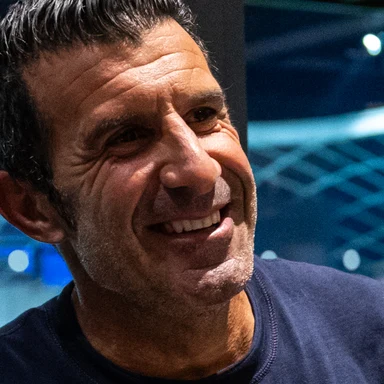 Photo: Žan Kolman. Source and license in Image credits.
Sporting CP · Barcelona · Real Madrid
1989—2009Coached this player in senior club or international football.
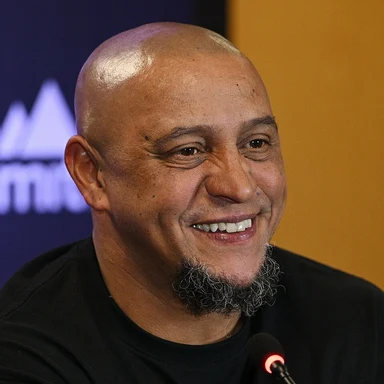 Photo: Web Summit. Source and license in Image credits.
União São João · Palmeiras · Inter Milan
1991—2016Coached this player in senior club or international football.
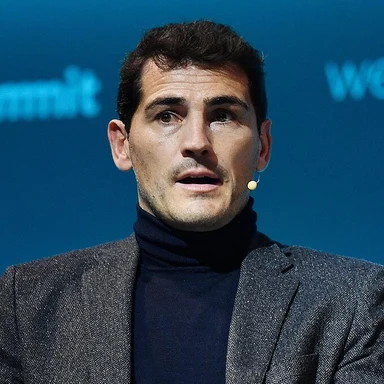 Photo: Web Summit. Source and license in Image credits.
Real Madrid · FC Porto
1999—2020Coached this player in senior club or international football.

Barcelona · Al Sadd
1998—2019Coached this player in senior club or international football.
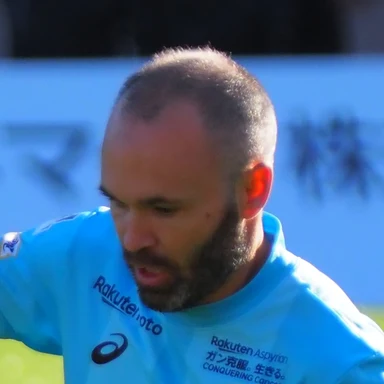 Photo: Tam Tam. Source and license in Image credits.
FC Barcelona · Vissel Kobe · Emirates Club
2002—2024Scored the extra-time winner in Del Bosque’s 2010 World Cup final.
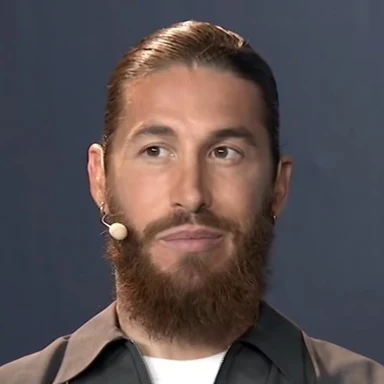 Photo: Real Madrid. Source and license in Image credits.
Sevilla · Real Madrid · Paris Saint-Germain
2004—PresentFormed Spain’s central defensive partnership with Piqué at EURO 2012.

Adaptive tournament manager
1992—Present · AC Milan · Real Madrid
Elite knockout strategist
2000—Present · Real Madrid · Inter Milan
Balanced high-tempo organiser
1979—2018 · Bayern Munich · Real Madrid
Positional football architect
2007—2026 · Barcelona · Bayern MunichCareer and honour facts cite their underlying sources, including clubs and governing bodies. Tactical readings are identified as editorial analysis.
Wikipedia (cited career reference)Vicente del Bosque — coaching chronologyAccessed 2026-09-14Vicente del Bosque Football AcademyDel Bosque’s coaching honours — academy dossier, page 10Accessed 2026-09-14UEFAEURO 2012 complete results — UEFA Direct 119, page 6Accessed 2026-09-14Real MadridReal Madrid’s 2000/01 league titleAccessed 2026-09-14Real MadridReal Madrid’s 2002/03 league titleAccessed 2026-09-14UEFASpain–Italy: the 2012 European finalAccessed 2026-09-14Real MadridVicente del Bosque — Real Madrid archiveAccessed 2026-09-14RFEFVicente del Bosque — Spain match recordAccessed 2026-09-14RFEFDel Bosque’s Spain tenure in reviewAccessed 2026-09-14UEFAMadrid–Valencia: the 2000 finalAccessed 2026-09-14FIFANetherlands–Spain: 2010 World Cup final highlightsAccessed 2026-09-14UEFADel Bosque on the 2012 European finalAccessed 2026-09-14UEFAMorientes on Spain’s false nine and collective defenceAccessed 2026-09-14UEFADel Bosque: continuity, selection and changes during gamesAccessed 2026-09-14UEFASpain–France: the Alba–Iniesta connectionAccessed 2026-09-14