
The preparation behind Casillas’s saves
- Reflexes
- Elite
- Recovery after a save
- Elite
- One-on-one judgment
- Elite
- Aerial decisions
- Very Good
- Distribution
- Good
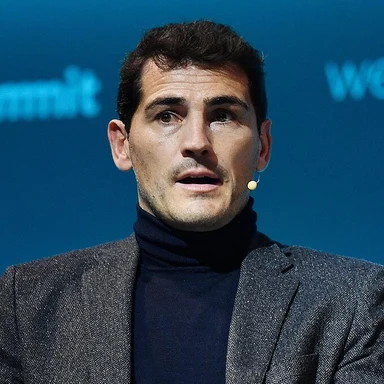 Photo: Web Summit. Source and license in Image credits.
Iker Casillas Fernández
A goalkeeper whose readiness, recovery and one-on-one judgment protected Madrid and Spain through defining European and world finals.
Senior club · all competitions
Completed club records only; not a complete career total.
Active club snapshots and records with another scope are excluded. Assist totals are not combined across incompatible definitions.
Stored archive snapshots, not live counters. Missing values are not zero; records with different scopes are never added together.
G/M = goals ÷ appearances. G+A = goals + assists. Per-90 metrics use documented minutes.
Senior international · all competitions
Spain · completed senior record, 2000–2016
Stored archive snapshots, not live counters. Missing values are not zero; records with different scopes are never added together.
G/M = goals ÷ appearances. G+A = goals + assists. Per-90 metrics use documented minutes.
In context
Elite goal protection across Madrid’s changing teams and Spain’s three consecutive major titles.
Reading the game
Iker Casillas explains why a goalkeeper’s influence cannot be measured by how often his team lets him touch the ball. Spain could control long passages of a match and still require him to solve a single chance that threatened the entire plan. His task was to remain ready through the quiet interval, judge the attacker’s options and make the right body shape available when the shot came. The 2010 final gives that idea a famous image, but it also describes a broader responsibility at Madrid. Reflexes mattered because they were joined to preparation and the ability to recover for another action. He was not an identical solution to every goalkeeping problem: high crosses, passing under pressure and defending far outside the box deserve separate judgments. This dossier uses 2011/12 as the shared rating reference and treats the earlier European finals and Spain’s tournaments as distinct chapters. The result is a portrait of elite goal protection within changing teams, rather than a claim that every trophy was won by a save.
Historical references support the chronology; tactical explanations are museum editorial analysis.
Historical references: Real Madrid: Casillas’s career and honours ↗ · National Football Teams: Casillas’s league seasons and match classifications ↗ · FIFA: Spain’s 2010 title and Casillas’s final interventions ↗
Career
| Period | Club | Apps | Goals | G/M |
|---|---|---|---|---|
| 1999—2015 | Real MadridFirst-team competitive total from Real Madrid’s official legend profile. The league rows below are a subset; reserve-team appearances are excluded. Senior club · all competitions Senior · #1 | 725 | 0 | 0.00 |
| 2015—2020 | FC PortoPorto’s farewell records 156 appearances. His last competitive matches were in 2019; the spell ends with formal retirement in August 2020. Those dates describe different things. Senior club · all competitions Senior · #12 / 1 | 156 | 0 | 0.00 |
Stored archive snapshots, not live counters. Missing values are not zero; records with different scopes are never added together.
G/M = goals ÷ appearances. G+A = goals + assists. Per-90 metrics use documented minutes.
Honours
Real Madrid · continental
Real Madrid · league
Real Madrid · domestic cup
Real Madrid · domestic cup
Real Madrid · continental
Real Madrid · world
Real Madrid · world
FC Porto · league
FC Porto · domestic cup
Spain · world
Spain · continental
Spain · individual
Story
Career chapter
Madrid’s first-team debut in 1999 quickly led to the 2000 European final. Two years later, the route to another final intervention was very different: Casillas entered from the bench after César was injured. His late saves against Leverkusen are remembered precisely because the preparation had to survive time outside the starting side. This is an early theme of the career, not a story of inevitable promotion. A goalkeeper needs technical readiness even when the next appearance is uncertain. The comparison between those finals is more revealing than combining them into a single image of youthful success.
Historical references: Real Madrid: Casillas’s career and honours ↗ · UEFA: Casillas recalls the 2000, 2002 and 2014 European titles ↗
Career chapter
The established Madrid goalkeeper had to deal with more than spectacular shots. Defenders changed, matches opened up, and an initial save could leave another problem in front of goal. His best work involved small adjustments before the decisive movement, followed by a rapid recovery if the ball remained live. The 2007/08 league-winning season gives this mature club version a useful reference. Our interpretation treats the quick hands as part of a sequence rather than a gift that cancelled the need for positioning. The quality of the first action depended on how well he had prepared for it.
Historical references: Real Madrid: Casillas’s career and honours ↗ · National Football Teams: Casillas’s league seasons and match classifications ↗
Career chapter
Spain’s passing could reduce the number of dangerous situations without removing them. Casillas’s importance in this period lay partly in the contrast between long spells of team control and the sudden need for a decisive intervention. The 2010 World Cup knockout wins were all by one goal; the saves in the final therefore protected a very narrow margin. EURO 2012 brought another winning campaign alongside a Madrid league title in the same year. These achievements belong to complete teams, but they show why goalkeeping readiness remains essential even when midfielders appear to determine the rhythm of the match.
Historical references: National Football Teams: Casillas’s league seasons and match classifications ↗ · FIFA: Casillas’s 2010 Golden Glove statistics ↗ · FIFA: Spain’s 2010 title and Casillas’s final interventions ↗ · UEFA: Spain’s 2012 final and a third consecutive major title ↗
Career chapter
The final Madrid years complicate an account built only around captaincy and trophies. In 2013/14, Casillas made only two league appearances while playing in the successful European campaign, so a league table alone would badly misrepresent his season. Porto then supplied a new club setting and another league title. His last competitive appearances came in 2019, while the formal retirement announcement followed in August 2020. The distinction keeps squad membership separate from matches actually played. Later honours and institutional affection should not be used to manufacture an extra season of goalkeeping performances.
Historical references: National Football Teams: Casillas’s league seasons and match classifications ↗ · Real Madrid: Casillas announces retirement in August 2020 ↗ · Diário de Notícias: Porto’s farewell and Casillas’s 156 matches ↗ · UEFA: Casillas recalls the 2000, 2002 and 2014 European titles ↗
Profile
Goalkeeper
Adjusts before the shot, stays available for the second action and judges when to close a striker. His goal-line strengths are assessed separately from aerial command, distribution and sweeping.
Reflex saves
One-on-one judgment
Recovery between saves
Readiness through quiet spells
Illustrative role zones · not tracking data
Casillas’s quick reaction was most effective when his feet had already brought him into a usable position. Small adjustments could align him with the ball while preserving the ability to move either way. The distinction matters: an explosive dive can rescue a difficult situation, but constant movement at the instant of the shot can also make a save harder. Our evaluation rewards the connection between preparation and the final extension.
A one-on-one requires a goalkeeper to manage distance while reading the attacker’s touch. Moving forward can reduce the visible target, but committing too early gives the forward a route around the body. Casillas could preserve a late blocking action with a hand or foot. The Robben intervention in 2010 is a concrete reference for that problem, not proof that every duel had the same solution or that anticipation removed uncertainty.
A save does not always end an attack. Catching securely, directing a parry away from the next striker and regaining balance are different technical tasks. Casillas’s ability to get ready again could make a sequence of close-range actions possible. It should be evaluated alongside handling rather than used to excuse every rebound. The best outcome remains possession or a safe clearance, with the second save available when the first action cannot provide it.
Dealing with a high cross asks for a different judgment from reacting to a close shot: flight, traffic and the route back to goal all matter. Passing under pressure and sweeping outside the area introduce further decisions. Casillas offered practical releases and could support the defensive line, but those qualities do not require the same rating as his reactions. Spain’s possession structure involved many receivers; its success cannot be credited to the goalkeeper’s distribution alone.
Historical references: Real Madrid: Casillas’s career and honours ↗ · UEFA: Casillas recalls the 2000, 2002 and 2014 European titles ↗ · FIFA: Spain’s 2010 title and Casillas’s final interventions ↗ · UEFA: Spain’s 2012 final and a third consecutive major title ↗
Reading the game
| Era / team | Primary Role | Tactical Character |
|---|---|---|
| 1999–2002Real Madrid | Young goalkeeper, changing selection | Keep match readiness even when outside the starting team. |
| 2002–2008Real Madrid | Established goal protector | Prepare the first action and recover for the second. |
| 2008–2012Real Madrid / Spain | Captain behind a controlling team | Stay ready when long possession spells end in an isolated chance. |
| 2012–2020Real Madrid / FC Porto | Changing club responsibilities | Separate cup and league selection; adapt to Porto before the final playing year. |
Historical references: Real Madrid: Casillas’s career and honours ↗ · National Football Teams: Casillas’s league seasons and match classifications ↗ · Diário de Notícias: Porto’s farewell and Casillas’s 156 matches ↗ · UEFA: Casillas recalls the 2000, 2002 and 2014 European titles ↗ · FIFA: Spain’s 2010 title and Casillas’s final interventions ↗ · UEFA: Spain’s 2012 final and a third consecutive major title ↗
Reading the game
The value of a reflex is that it can preserve a response after the attacker has chosen the finish. Casillas’s hands and feet could still influence the ball at very short range. That final adjustment mattered most when the preparation had kept his body capable of making it.
A goalkeeper in a controlling side may have little involvement before facing the match’s most important chance. Casillas’s tournament role illustrates the need to stay connected to the play without demanding constant activity. Concentration means reading the developing risk early enough to prepare, not merely appearing calm between saves.
An initial block can leave the goalkeeper on the ground while the ball remains dangerous. Quick recovery gave Casillas another opportunity to protect the goal. It is a specific component of his shot-stopping, separate from the height or reach needed for other tasks, and it relies on reading where the next threat will appear.
Lifting the trophy is the visible image of captaincy, but the goalkeeper’s first responsibility remains the next intervention. Casillas’s place in Spain’s winning cycle connects leadership with a clearly defined technical task. It should not turn every team clean sheet into an individual achievement or make communication a substitute for the save itself.
Historical references: RFEF: Casillas’s senior international record ↗ · UEFA: Casillas recalls the 2000, 2002 and 2014 European titles ↗ · FIFA: Spain’s 2010 title and Casillas’s final interventions ↗
Reading the game
Goalkeeper
The Leverkusen final is a defining intervention within an uneven selection story. Coming on after César’s injury required immediate readiness. It is a representative version of his ability to react and recover, rather than evidence that he dominated every match of that club season.
Goalkeeper
The league-winning Madrid season represents the established keeper before the national-team trophy cycle. Repeated responsibility and shot preparation are the focus. It complements the tournament images by showing why a goalkeeper’s standing also depends on a long sequence of ordinary and difficult interventions.
Goalkeeper
The World Cup version belongs to Spain: seven appearances, five clean sheets and the Golden Glove. The final’s one-on-one interventions show how a small number of moments could decide a controlled match. Tournament statistics remain separate from the Madrid season used by the ratings.
Goalkeeper
Madrid’s league-winning season is the common reference for both evaluations. Quick goal protection and mature decisions lead, with aerial control and distribution rated separately. EURO 2012 follows as an international achievement in the same year; it does not add club appearances or automatically raise every attribute.
Historical references: Real Madrid: Casillas’s career and honours ↗ · National Football Teams: Casillas’s league seasons and match classifications ↗ · UEFA: Casillas recalls the 2000, 2002 and 2014 European titles ↗ · FIFA: Casillas’s 2010 Golden Glove statistics ↗ · FIFA: Spain’s 2010 title and Casillas’s final interventions ↗ · UEFA: Spain’s 2012 final and a third consecutive major title ↗
Statistics
| Season | Club | Apps | Goals | G/M |
|---|---|---|---|---|
| 2018–19 | FC Porto Senior club · league only | 31 | 0 | 0.00 |
| 2017–18 | FC Porto Senior club · league only | 20 | 0 | 0.00 |
| 2016–17 | FC Porto Senior club · league only | 33 | 0 | 0.00 |
| 2015–16 | FC Porto Senior club · league only | 32 | 0 | 0.00 |
| 2014–15 | Real Madrid Senior club · league only | 32 | 0 | 0.00 |
| 2013–14 | Real Madrid Senior club · league only | 2 | 0 | 0.00 |
| 2012–13 | Real Madrid Senior club · league only | 19 | 0 | 0.00 |
| 2011–12 | Real Madrid Senior club · league only | 37 | 0 | 0.00 |
| 2010–11 | Real Madrid Senior club · league only | 35 | 0 | 0.00 |
| 2009–10 | Real Madrid Senior club · league only | 38 | 0 | 0.00 |
Stored archive snapshots, not live counters. Missing values are not zero; records with different scopes are never added together.
G/M = goals ÷ appearances. G+A = goals + assists. Per-90 metrics use documented minutes.
League-only seasons from the senior debut through 2018/19. Madrid’s 510 league appearances and Porto’s 116 are included within their all-competition totals. The two league matches in 2013/14 do not describe Casillas’s cup workload. No 2019/20 playing row is invented from his retirement date. Assists and season clean sheets remain unknown where not reconciled.
International
International career
Spain’s captain through the 2008 and 2012 European titles and the 2010 World Cup. The federation recognises 167 senior appearances, with the last in June 2016. Tournament squad membership is kept separate from appearances.
Senior international · tournament splits
| Competition | Apps | Goals | G/M |
|---|---|---|---|
FIFA World CupWorld Cup finals · 2002–2014Final-tournament appearances only. Qualifiers and unused squad selections are excluded. | 17 | 0 | 0.00 |
UEFA European ChampionshipEURO finals · 2004–2012Actual appearances in 2004, 2008 and 2012. Selection without playing in 2000 and 2016 adds no appearances. | 14 | 0 | 0.00 |
FIFA World Cup2010 · Golden Glove campaignFIFA records seven matches, five clean sheets and two goals conceded across 660 minutes. This campaign is already included in the World Cup total. Performance record
| 7 | 0 | 0.00 |
Stored archive snapshots, not live counters. Missing values are not zero; records with different scopes are never added together.
G/M = goals ÷ appearances. G+A = goals + assists. Per-90 metrics use documented minutes.
Reading the game
Casillas links two different ways of remembering a goalkeeper. One is the isolated intervention: a late save in a European final, or a block when a striker has escaped the defence. The other is continuity, the repeated responsibility of protecting the same club and captaining a national side through its most successful tournament cycle. Neither image is complete alone. A collection of highlights can hide routine positioning and handling; a list of medals can hide the contribution of the defenders and midfielders in front of him. His career is most useful when those layers are considered together. He showed that a keeper could be central to a possession team’s success without being the principal organiser of its passing game. Later changes in Madrid’s selection and the move to Porto also prevent the story from becoming a single uninterrupted peak. The playing record ends before the retirement announcement, a distinction worth preserving. His historical place rests on the quality and timing of his goal protection, alongside the collective achievements in which it mattered.
Historical references: Real Madrid: Casillas’s career and honours ↗ · Real Madrid: Casillas announces retirement in August 2020 ↗ · Diário de Notícias: Porto’s farewell and Casillas’s 156 matches ↗ · UEFA: Casillas recalls the 2000, 2002 and 2014 European titles ↗
Archive
Goalkeeper · editorial peak 2011—2012
Vicente del Bosque · Fabio Capello · Bernd Schuster · José Mourinho · Carlo Ancelotti · Julen Lopetegui · Sérgio Conceição · Luis Aragonés
Cristiano Ronaldo— Overlapping Real Madrid era · Ronaldo Nazário— Overlapping Real Madrid era · Zinedine Zidane— Overlapping Real Madrid era · Kaká— Overlapping Real Madrid era
Galácticos — Real Madrid · Mourinho’s record league — Real Madrid · Four European Cups in five years — Real Madrid · Conceição’s seven seasons — FC Porto

Adaptive tournament manager
1992—Present · AC Milan · Real Madrid
Elite knockout strategist
2000—Present · Real Madrid · Inter Milan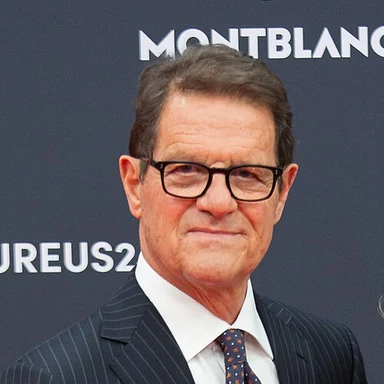 Photo: Barcex (Wikimedia Commons); crop by EndzoneEnthusiast. Source and license in Image credits.
Discipline and defensive balance
1982—2018 · AC Milan · Real Madrid Photo: Илья Хохлов / Football.ua. Source and license in Image credits.
Continuity and technical control
1987—2016 · Real Madrid
Sporting CP · Manchester United · Real Madrid
2002—Present
AS Cannes · Bordeaux · Juventus
1989—2006 Photo: Real Madrid. Source and license in Image credits.
Sevilla · Real Madrid · Paris Saint-Germain
2004—Present
Barcelona
1999—2014
Barcelona · Al Sadd
1998—2019 Photo: Tam Tam. Source and license in Image credits.
FC Barcelona · Vissel Kobe · Emirates Club
2002—2024
Parma · Juventus · Paris Saint-Germain
1995—2023
KRC Genk · Atlético Madrid · Chelsea
2008—Present Photo: Steffen Prößdorf. Source and license in Image credits.
Karlsruher SC · Bayern Munich
1987—2008Statistics are displayed only within the scope supported by each cited source.
Real MadridReal Madrid: Casillas’s career and honoursRFEFRFEF: Casillas’s senior international recordNational Football TeamsNational Football Teams: Casillas’s league seasons and match classificationsReal MadridReal Madrid: Casillas announces retirement in August 2020Diário de NotíciasDiário de Notícias: Porto’s farewell and Casillas’s 156 matchesUEFAUEFA: Casillas recalls the 2000, 2002 and 2014 European titlesFIFAFIFA: Casillas’s 2010 Golden Glove statisticsFIFAFIFA: Spain’s 2010 title and Casillas’s final interventionsUEFAUEFA: Spain’s 2012 final and a third consecutive major titleWikipedia (cited biographical reference)Iker Casillas — biographical and career reference